Building Blocks
Subcategories of "Building Blocks"
- Boronic Acids & Boronic Acid Derivatives(5,805 products)
- Chiral Building Blocks(1,248 products)
- Hydrocarbon Building Blocks(6,118 products)
- Organic Building Blocks(61,447 products)
Found 208423 products of "Building Blocks"
5-Chloro-4-methyl-1H-indole-2-carboxylic acid
CAS:Versatile small molecule scaffoldFormula:C10H8ClNO2Purity:Min. 95%Molecular weight:209.63 g/mol5-Fluoro-4-methyl-1H-indole-2-carboxylic acid
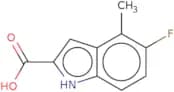
CAS:Versatile small molecule scaffold
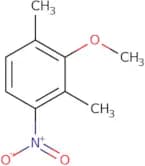
Formula:C10H8FNO2Purity:Min. 95%Molecular weight:193.2 g/mol2-Methoxy-1,3-dimethyl-4-nitrobenzene
CAS:Versatile small molecule scaffold
Formula:C9H11NO3Purity:Min. 95%Molecular weight:181.19 g/mol3-(6-Methylpyridin-3-yl)propan-1-ol
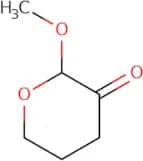
CAS:Versatile small molecule scaffoldFormula:C9H13NOPurity:Min. 95%Molecular weight:151.21 g/mol2-Methoxyoxan-3-one
CAS:Versatile small molecule scaffold
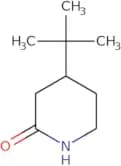
Formula:C6H10O3Purity:Min. 95%Molecular weight:130.14 g/mol4-tert-Butylpiperidin-2-one
CAS:Versatile small molecule scaffold
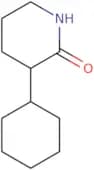
Formula:C9H17NOPurity:Min. 95%Molecular weight:155.24 g/mol3-Cyclohexylpiperidin-2-one
CAS:Versatile small molecule scaffold
Formula:C11H19NOPurity:Min. 95%Molecular weight:181.27 g/mol5-(Trifluoromethyl)piperidin-2-one
CAS:Versatile small molecule scaffold
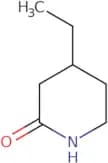
Formula:C6H8F3NOPurity:Min. 95%Molecular weight:167.13 g/mol4-Ethylpiperidin-2-one
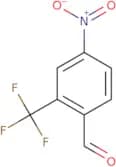
CAS:4-Ethylpiperidin-2-one is a receptor tyrosine kinase inhibitor that binds to the ATP binding site of the enzyme, thereby inhibiting its activity. 4-Ethylpiperidin-2-one has been shown to inhibit the growth of xenograft tumor cells in mice by blocking tyrosine kinases, which are involved in cellular proliferation and differentiation. This drug has also been shown to have anti-inflammatory effects in rats due to its ability to inhibit prostaglandin synthesis. 4-Ethylpiperidin-2-one is metabolized by CYP3A4 and CYP2D6. It is also an organometallic compound that can bind to metal ions such as iron or copper with high affinity. The chemical structure of 4-ethylpiperidin-2-one consists of a piperidine ring connected at one end to an aldehyde group and at the other end to an oxindFormula:C7H13NOPurity:Min. 95%Molecular weight:127.18 g/mol4-Nitro-2-(trifluoromethyl)benzaldehyde
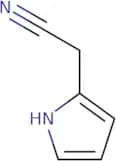
CAS:Versatile small molecule scaffoldFormula:C8H4F3NO3Purity:Min. 95%Molecular weight:219.12 g/mol2-(1H-Pyrrol-2-yl)acetonitrile
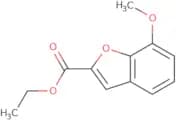
CAS:2-(1H-Pyrrol-2-yl)acetonitrile is an inorganic compound that is used as a synthetic intermediate. It is a salt form of the chemical, which is soluble in water and has a pH value of 10. 2-(1H-Pyrrol-2-yl)acetonitrile reacts with alkali metals to produce hydrogen gas and ammonia. This reaction can be used for the treatment of organic wastes such as composting or wastewater treatment. 2-(1H-Pyrrol-2-yl)acetonitrile has been shown to react with cyclic hydrocarbons and aromatic heterocycles under acidic conditions at room temperature. The rate of this reaction depends on the flow rate and persulfate concentration.Formula:C6H6N2Purity:Min. 95%Molecular weight:106.13 g/molEthyl 7-methoxy-1-benzofuran-2-carboxylate
CAS:Versatile small molecule scaffoldFormula:C12H12O4Purity:Min. 95%Molecular weight:220.22 g/mol6-Methoxybenzofuran-2-carboxylic acid
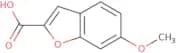
CAS:6-Methoxybenzofuran-2-carboxylic acid is a synthetic compound that can be used as an intermediate in organic synthesis. It is stable and resistant to aqueous conditions, making it suitable for use in organic synthesis. 6-Methoxybenzofuran-2-carboxylic acid is also analogous to benzofurancarboxylic acids, which are characterized by their dianionic character. It has been shown to react with aldehydes at low temperatures and form tetrahydrofuran derivatives. 6-Methoxybenzofuran-2-carboxylic acid can be metallated with various metals to form stable complexes.
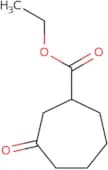
Formula:C10H8O4Purity:Min. 95%Molecular weight:192.17 g/molEthyl 3-oxocycloheptane-1-carboxylate
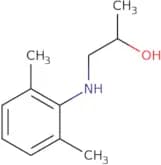
CAS:Versatile small molecule scaffoldFormula:C10H16O3Purity:Min. 95%Molecular weight:184.23 g/mol1-(2,6-Dimethylphenylamino)-propan-2-ol
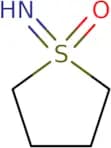
CAS:Versatile small molecule scaffoldFormula:C11H17NOPurity:Min. 95%Molecular weight:179.26 g/molS,S-Tetramethylenesulphoximide
CAS:Versatile small molecule scaffoldFormula:C4H9NOSPurity:Min. 95%Molecular weight:119.19 g/mol2-(N-Methyl3-nitrobenzenesulfonamido)acetic acid
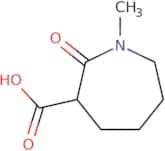
CAS:2-(N-Methyl3-nitrobenzenesulfonamido)acetic acid, also known as 2-NMBSA or MTSEA, is a cell biology research tool that can be used to study ion channels, peptides and receptors. 2-NMBSA is primarily used to study the interaction between ligands and their receptors. It has been shown to activate potassium channels. This product is a white solid with a molecular weight of 258.2 g/mol.Formula:C9H10N2O6SPurity:Min. 95%Molecular weight:274.25 g/mol1-Methyl-2-oxoazepane-3-carboxylic acid
CAS:Versatile small molecule scaffoldFormula:C8H13NO3Purity:Min. 95%Molecular weight:171.19 g/molMethyl 1-benzylpiperidine-3-carboxylate
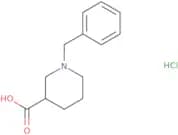
CAS:Methyl 1-benzylpiperidine-3-carboxylate is a neurotoxin that causes Parkinson's disease, which is characterized by the death of dopamine neurons in the substantia nigra. It has been shown to bind to dopamine receptors and inhibit neurotransmission. The biological activity of methyl 1-benzylpiperidine-3-carboxylate was demonstrated as a result of its ability to inhibit the binding of oxadiazole derivatives, which are ligands for these receptors. Methyl 1-benzylpiperidine-3-carboxylate also has an agonistic effect on oxadiazole analogues and increases their biological activity.Formula:C14H19NO2Purity:Min. 95%Molecular weight:233.31 g/mol1-Benzylpiperidine-3-carboxylic acid hydrochloride
CAS:Versatile small molecule scaffoldFormula:C13H18ClNO2Purity:Min. 95%Molecular weight:255.75 g/mol