Building Blocks
Subcategories of "Building Blocks"
- Boronic Acids & Boronic Acid Derivatives(5,805 products)
- Chiral Building Blocks(1,248 products)
- Hydrocarbon Building Blocks(6,118 products)
- Organic Building Blocks(61,447 products)
Found 208423 products of "Building Blocks"
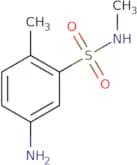
5-Amino-N,2-dimethylbenzenesulfonamide
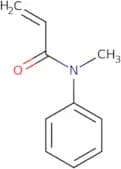
CAS:Versatile small molecule scaffoldFormula:C8H12N2O2SPurity:Min. 95%Molecular weight:200.26 g/molN-Methyl-N-phenylprop-2-enamide
CAS:N-Methyl-N-phenylprop-2-enamide is a perfluorinated compound with acrylate functional groups. It is a monomer that can react with other compounds to form polymers. It has been shown to be useful in the production of polyacrylates, which are used in industrial and medical applications. NMPEA has a bond cleavage reaction when it reacts with triphosgene, which can lead to the formation of acrylonitrile and chlorobenzene. This type of reaction also exhibits hydrogen bonding interactions and can be activated by an amide or an alcohol.
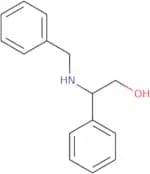
Formula:C10H11NOPurity:Min. 95%Molecular weight:161.2 g/mol2-(Benzylamino)-2-phenylethanol
CAS:Versatile small molecule scaffold
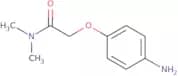
Formula:C15H17NOPurity:Min. 95%Molecular weight:227.3 g/mol2-(4-Aminophenoxy)-N,N-dimethylacetamide
CAS:Versatile small molecule scaffold
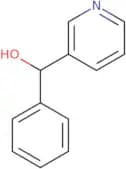
Formula:C10H14N2O2Purity:Min. 95%Molecular weight:194.23 g/molPhenyl(pyridin-3-yl)methanol
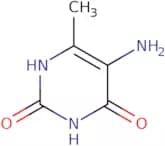
CAS:Phenyl(pyridin-3-yl)methanol is an organic compound that can be used as a chemical reagent. It reacts with alcohols to form phenols and has been shown to selectively react with heteroarenes and amino groups. Phenyl(pyridin-3-yl)methanol is able to oxidize cyclic, aromatic, and diamino compounds using oxidants such as hydrogen peroxide or sodium hypochlorite. It has also been shown to be catalyzed by palladium in the oxidation of amines.Formula:C12H11NOPurity:Min. 95%Molecular weight:185.23 g/mol5-Amino-6-methyl-pyrimidine-2,4-diol
CAS:5-Amino-6-methyl-pyrimidine-2,4-diol is a tautomer of 5-Aminouracil. It is an antiradical agent that has been shown to have hydroxyl radical scavenging activity in the presence of peroxide. The mechanism of the reaction involves the formation of a hydrated form of 5-amino-6-methylpyrimidine 2,4-diol, which reacts with the peroxide to form a stable product. The hydration step is required for this reaction to occur and may be rate limiting. The measurements obtained from nmr spectra are consistent with this mechanism. 5 aminouracil has been shown to inhibit growth and DNA synthesis in tumor cells in vitro.
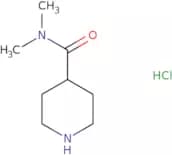
Formula:C5H7N3O2Purity:Min. 95%Molecular weight:141.13 g/molPiperidine-4-carboxylic acid dimethylamide HCl
CAS:Versatile small molecule scaffold
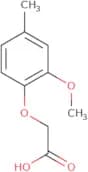
Formula:C8H16N2O·HClPurity:Min. 95%Molecular weight:192.69 g/mol(2-Methoxy-4-methyl-phenoxy)-acetic acid
CAS:Versatile small molecule scaffold
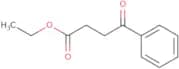
Formula:C10H12O4Purity:Min. 95%Molecular weight:196.2 g/molEthyl 4-oxo-4-phenylbutyrate
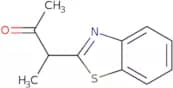
CAS:Ethyl 4-oxo-4-phenylbutyrate is a butyrophenone that is used as an intermediate in organic synthesis. It is produced by the reaction of ethyl diazoacetate with peroxide, followed by the addition of propiophenone and regiospecific solvents. This reaction can be carried out using organocatalysts or without them. The optimised conditions for this type of reaction are: a temperature of 20 °C, an alkylation time of 1 hour, and a molecular weight range from 200 to 600 g/mol. Ethyl 4-oxo-4-phenylbutyrate has been shown to react with carbenes and stereospecific solvents in order to produce levulinate.Formula:C12H14O3Purity:Min. 95%Molecular weight:206.24 g/mol3-(1,3-Benzothiazol-2-yl)butan-2-one
CAS:Versatile small molecule scaffold
Formula:C11H11NOSPurity:Min. 95%Molecular weight:205.28 g/mol2-[(Methoxycarbonyl)amino]benzoic acid
CAS:Versatile small molecule scaffold
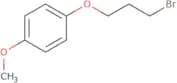
Formula:C9H9NO4Purity:Min. 95%Molecular weight:195.17 g/mol1-(3-Bromo-propoxy)-4-methoxy-benzene
CAS:Versatile small molecule scaffold
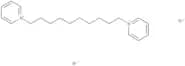
Formula:C10H13BrO2Purity:Min. 95%Molecular weight:245.12 g/molDecamethylenebispyridinium dibromide
CAS:Versatile small molecule scaffoldFormula:C20H30Br2N2Purity:Min. 95%Molecular weight:458.3 g/mol4-Amino-5-nitropyrimidine-2-thiol
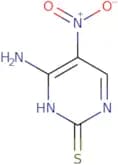
CAS:Versatile small molecule scaffold
Formula:C4H4N4O2SPurity:Min. 95%Molecular weight:172.17 g/mol4-(1,3-Benzothiazol-2-yl)phenol
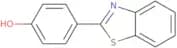
CAS:4-(1,3-Benzothiazol-2-yl)phenol is an antibacterial agent that contains a methoxy group. It has been shown to have potent cytotoxicity against cancer cells and may be used for the treatment of cancer. 4-(1,3-Benzothiazol-2-yl)phenol is an oxidant that is able to form covalent bonds with proteins and other molecules through hydrogen bonding. The oxidation products of 4-(1,3-Benzothiazol-2-yl)phenol are also potent cytotoxins and inhibitors of bacterial growth. The molecular modeling studies on this compound indicate that it binds to DNA by intermolecular hydrogen bonding. This drug targets the enzyme thymidylate synthase, which catalyzes the conversion of dUMP to dTMP in the de novo pathway of DNA synthesis. 4-(1,3-Benzothiazol-2-yl)phenol has been
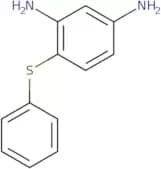
Formula:C13H9NOSPurity:Min. 95%Molecular weight:227.29 g/mol4-(Phenylsulfanyl)benzene-1,3-diamine
CAS:Versatile small molecule scaffold
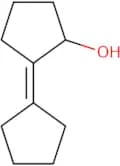
Formula:C12H12N2SPurity:Min. 95%Molecular weight:216.3 g/mol2-Cyclopentylidenecyclopentan-1-ol
CAS:2-Cyclopentylidenecyclopentan-1-ol is a cyclic ether with the chemical formula of C10H14O. It is a reactive, exploratory molecule that contains a hydrogenated, hydrochloric acid, and photolyzed dipole. This compound is a hydroxyl group with an epoxide that yields centrosymmetric molecules. 2-Cyclopentylidenecyclopentan-1-ol has been shown to have yields of 54%.
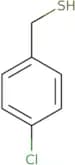
Formula:C10H16OPurity:Min. 95%Molecular weight:152.23 g/mol4-Chlorobenzyl Mercaptan
CAS:4-Chlorobenzyl Mercaptan is a metastable, reactive chemical that is used in the synthesis of β-unsaturated ketones. It is also an intermediate for the synthesis of carbofuran, an acylation reaction product, and has been shown to be reactive with chloride ions. 4-Chlorobenzyl Mercaptan can be used in the treatment of infectious diseases, such as malaria and African trypanosomiasis (sleeping sickness). This compound has been shown to have anti-malarial activity in animals and has been found to inhibit the growth of HIV. 4-Chlorobenzyl Mercaptan reacts with fatty acids at high temperatures to form β-unsaturated ketones.
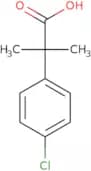
Formula:C7H7ClSPurity:Min. 95%Molecular weight:158.64 g/mol4-Chloro-alpha,alpha-dimethylphenylacetic acid
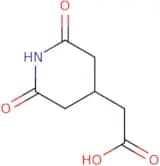
CAS:Versatile small molecule scaffoldFormula:C10H11ClO2Purity:Min. 95%Molecular weight:198.64 g/mol(2,6-Dioxo-piperidin-4-yl)-acetic acid
CAS:Versatile small molecule scaffold
Formula:C7H9NO4Purity:Min. 95%Molecular weight:171.15 g/mol

![2-[(Methoxycarbonyl)amino]benzoic acid](/_next/image/?url=https%3A%2Fstatic.cymitquimica.com%2Fproducts%2F3D%2Fthumb-webp%2FGAA26838.webp&w=3840&q=75)