


Building Blocks
Subcategories of "Building Blocks"
- Boronic Acids & Boronic Acid Derivatives(5,805 products)
- Chiral Building Blocks(1,248 products)
- Hydrocarbon Building Blocks(6,118 products)
- Organic Building Blocks(61,447 products)
Found 208423 products of "Building Blocks"
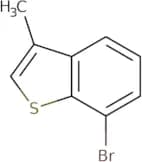
7-Bromo-3-methyl-1-benzothiophene
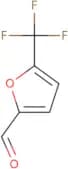
CAS:Versatile small molecule scaffoldFormula:C9H7BrSPurity:Min. 95%Molecular weight:227.12 g/mol5-(Trifluoromethyl)-2-furaldehyde
CAS:5-(Trifluoromethyl)-2-furaldehyde is a trifluoroacetate that is used for the trifluoromethylation of organic compounds. It can be used to produce 5,5-difluoro-2-pentanol, which is an organic solvent. The reaction proceeds through an electrophilic substitution mechanism.
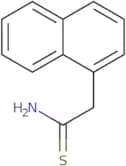
Formula:C6H3F3O2Purity:Min. 95%Molecular weight:164.08 g/mol2-(Naphthalen-1-yl)ethanethioamide
CAS:2-(Naphthalen-1-yl)ethanethioamide is a phytohormone that belongs to the class of ethylene. It is involved in the regulation of many processes, including apical dominance, peduncle elongation, leaf senescence, and fruit ripening. 2-(Naphthalen-1-yl)ethanethioamide is an active form of ethylene that binds to the receptor protein ETR1. This binding stimulates the synthesis of proteins that regulate these processes. It has been shown to be effective in treating flowers with inflorescence stems and fruits with peduncles. The transformation process may involve hydrocarbon molecules with long aliphatic chains.
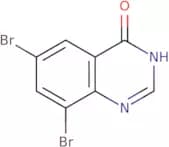
Formula:C12H11NSPurity:Min. 95%Molecular weight:201.29 g/mol6,8-Dibromo-3,4-dihydroquinazolin-4-one
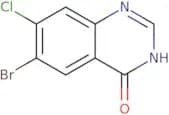
CAS:Versatile small molecule scaffoldFormula:C8H4Br2N2OPurity:Min. 95%Molecular weight:303.94 g/mol6-Bromo-7-chloroquinazolin-4(3H)-one
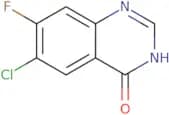
CAS:Versatile small molecule scaffoldFormula:C8H4BrClN2OPurity:Min. 95%Molecular weight:259.49 g/mol6-Chloro-7-fluoro-3,4-dihydroquinazolin-4-one
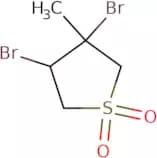
CAS:Versatile small molecule scaffoldFormula:C8H4ClFN2OPurity:Min. 95%Molecular weight:198.58 g/mol3,4-Dibromo-3-methyltetrahydrothiophene 1,1-dioxide
CAS:Versatile small molecule scaffoldFormula:C5H8Br2O2SPurity:Min. 95%Molecular weight:291.99 g/mol5-(4-Methoxyphenyl)-3H,4H-thieno[2,3-d]pyrimidin-4-one
CAS:Versatile small molecule scaffoldFormula:C13H10N2O2SPurity:Min. 95%Molecular weight:258.3 g/mol2-Bromonaphthalene-1-carboxylic acid
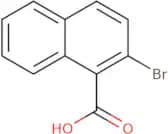
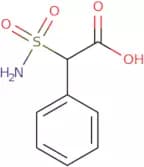
CAS:2-Bromonaphthalene-1-carboxylic acid is a carboxylic acid that is converted to 2-bromo-1,2-diphenylethane by the action of deuterium. This reaction was rationalized by invoking an intramolecular nucleophilic substitution. The yields of the reaction were investigated and found to be dependent on the conditions employed. The mechanism of this reaction is unknown but was shown to be stereoselective due to the use of copper as a catalyst. The molecular ion peaks for this compound were observed at m/z 219 and 160, which corresponded to CBrNO and CBrN respectively. The fragmentation patterns for these ions are characteristic of a carboxylic acid with one para substituent and one ortho substituent. This compound has not been studied in great detail due to its uninvestigated nature.Formula:C11H7BrO2Purity:Min. 95%Molecular weight:251.08 g/mol2-Phenyl-2-sulfamoylacetic acid
CAS:Versatile small molecule scaffold
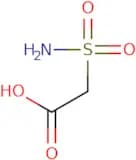
Formula:C8H9NO4SPurity:Min. 95%Molecular weight:215.23 g/mol2-Sulfamoylacetic acid
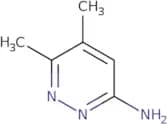
CAS:2-Sulfamoylacetic acid is a sulfonamide drug that is used in the treatment of blood pressure and insulin resistance. It is an activated form of 2-sulfamoylacetamide, which has been shown to inhibit cholesterol acyltransferase. This inhibition reduces cholesterol synthesis and subsequently lowers blood pressure levels. It also inhibits fatty acid synthesis, which prevents the accumulation of triglycerides in the bloodstream, reducing insulin resistance. The conversion of 2-sulfamoylacetic acid to 2-sulfamoylacetamide is facilitated by hydroxyl groups and logistic regression analysis confirmed that this conversion was dependent on wastewater treatment.Formula:C2H5NO4SPurity:Min. 95%Molecular weight:139.13 g/mol5,6-Dimethylpyridazin-3-amine
CAS:Versatile small molecule scaffold
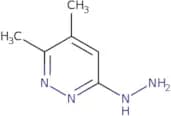
Formula:C6H9N3Purity:Min. 95%Molecular weight:123.16 g/mol6-Hydrazinyl-3,4-dimethylpyridazine
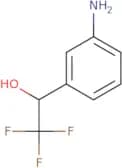
CAS:Versatile small molecule scaffoldFormula:C6H10N4Purity:Min. 95%Molecular weight:138.17 g/mol1-(3-Aminophenyl)-2,2,2-trifluoroethan-1-ol
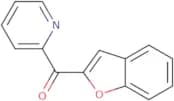
CAS:Versatile small molecule scaffoldFormula:C8H8F3NOPurity:Min. 95%Molecular weight:191.15 g/mol2-(1-Benzofuran-2-carbonyl)pyridine
CAS:Versatile small molecule scaffoldFormula:C14H9NO2Purity:Min. 95%Molecular weight:223.23 g/mol2-[(E)-2-(4-Methoxyphenyl)ethenyl]-1H-pyrrole
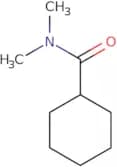
CAS:Versatile small molecule scaffoldFormula:C13H13NOPurity:Min. 95%Molecular weight:199.2 g/molN,N-Dimethylcyclohexanecarboxamide
CAS:N,N-Dimethylcyclohexanecarboxamide is an acid salt of besylate that is used as a drug for the treatment of hyperglycemia. It has been shown to have a rapid onset and short duration of action. The chemical name for N,N-Dimethylcyclohexanecarboxamide is 1-[2-(2-methoxyethoxy)ethyl]-4-methyl-1,4-dihydropyridine 2,4-dicarboxylic acid methyl ester. This compound inhibits insulin release from the pancreas and stimulates glucagon release from the alpha cells in the pancreas. These effects lead to an increase in blood glucose levels.
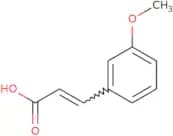
Formula:C9H17NOPurity:Min. 95%Molecular weight:155.24 g/mol3-(3-Methoxyphenyl)prop-2-enoic acid
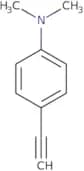
CAS:3-(3-Methoxyphenyl)prop-2-enoic acid is a phenolic compound that has been shown to have anti-inflammatory effects in bowel disease. It also has antioxidant properties and can inhibit the production of acetate, a toxic byproduct of lipid peroxidation. This compound is found in many natural products, such as coffee beans and green tea leaves. 3-(3-methoxyphenyl)prop-2-enoic acid exhibits strong free radical scavenging activity and may be used for the prevention of metabolic disorders due to its ability to inhibit mitochondrial membrane potential. 3-(3-methoxyphenyl)prop-2-enoic acid also inhibits the growth of carcinoma cells, which may be due to its inhibition of tumor cell proliferation or induction of apoptosis.Formula:C10H10O3Purity:Min. 95%Molecular weight:178.18 g/mol4-Ethynyl-N,N-dimethylaniline
CAS:4-Ethynyl-N,N-dimethylaniline (EDMA) is a potential drug candidate for the treatment of cancer. EDMA has been shown to have anti-cancer activity in vitro and in vivo. It inhibits the growth of cancer cells by binding to amines and other functional groups, which prevents their use by enzymes. This binding also prevents the production of reactive oxygen species, leading to cell death. The structure of EDMA has been determined using X-ray crystallography, which showed that it binds to chloride ions in a catalytic mechanism. The chloride ion was found to be an important component for the drug’s activity. EDMA also has anti-inflammatory properties due to its ability to inhibit hydroxamic acid synthesis in neutrophils and macrophages.Formula:C10H11NPurity:Min. 95%Molecular weight:145.2 g/mol2-[(Hydroxyimino)methyl]-6-nitrophenol
CAS:Versatile small molecule scaffoldFormula:C7H6N2O4Purity:Min. 95%Molecular weight:182.13 g/mol

![5-(4-Methoxyphenyl)-3H,4H-thieno[2,3-d]pyrimidin-4-one](/_next/image/?url=https%3A%2Fstatic.cymitquimica.com%2Fproducts%2F3D%2Fthumb-webp%2FSAA53776.webp&w=3840&q=75)
![2-[(E)-2-(4-Methoxyphenyl)ethenyl]-1H-pyrrole](/_next/image/?url=https%3A%2Fstatic.cymitquimica.com%2Fproducts%2F3D%2Fthumb-webp%2FSAA55959.webp&w=3840&q=75)
![2-[(Hydroxyimino)methyl]-6-nitrophenol](/_next/image/?url=https%3A%2Fstatic.cymitquimica.com%2Fproducts%2F3D%2Fthumb-webp%2FSAA58064.webp&w=3840&q=75)