Building Blocks
This section contains fundamental products for the synthesis of organic and biological compounds. Building blocks are the essential starting materials used to construct complex molecules through various chemical reactions. They play a critical role in drug discovery, material science, and chemical research. At CymitQuimica, we offer a diverse range of high-quality building blocks to support your innovative research and industrial projects, ensuring you have the essential components for successful synthesis.
Subcategories of "Building Blocks"
- Boronic Acids & Boronic Acid Derivatives(5,756 products)
- Chiral Building Blocks(1,242 products)
- Hydrocarbon Building Blocks(6,095 products)
- Organic Building Blocks(61,055 products)
Found 199650 products of "Building Blocks"
Sort by
Purity (%)
0
100
|
0
|
50
|
90
|
95
|
100
3-[(Piperidin-1-yl)methyl]benzoic acid hydrochloride
CAS:<p>Versatile small molecule scaffold</p>Formula:C13H18ClNO2Purity:Min. 95%Molecular weight:255.74 g/mol4-Hydroxy-1-benzofuran-6-carboxylic acid
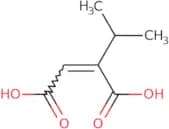
CAS:Versatile small molecule scaffoldFormula:C9H6O4Purity:Min. 95%Molecular weight:178.14 g/mol(2E)-2-(Propan-2-yl)but-2-enedioic acid
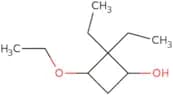
CAS:<p>(2E)-2-(Propan-2-yl)but-2-enedioic acid is a solid catalyst for the oxidation of alcohols to carbonyl compounds. It is used in vitro to study the effects of genotoxic agents on cells and to evaluate the efficacy of cancer treatments. (2E)-2-(Propan-2-yl)but-2-enedioic acid has been shown to induce mutations in corynebacterium, corynebacterium glutamicum, and other bacteria. This compound can also be used as a neutral pH buffer in assays. The gene product catalyzes the conversion of oxaloacetate into acetyl coenzyme A (acetyl CoA). Acetyl CoA is an important intermediate in cellular respiration that helps to generate energy. In vivo tests have shown that (2E)-2-(Propan-2-yl)but-2-enedioic acid inhibits the growth</p>Formula:C7H10O4Purity:Min. 95%Molecular weight:158.15 g/mol3-Ethoxy-2,2-diethylcyclobutan-1-ol
CAS:<p>Versatile small molecule scaffold</p>Formula:C10H20O2Purity:Min. 95%Molecular weight:172.26 g/mol1-(4-Methyl-1,3-thiazol-2-yl)ethan-1-ol
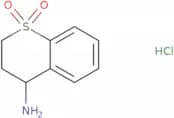
CAS:<p>Versatile small molecule scaffold</p>Formula:C6H9NOSPurity:Min. 95%Molecular weight:143.21 g/mol3,4-Dihydro-2H-thiochromen-4-amine 1,1-dioxide hydrochloride
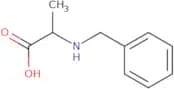
CAS:<p>Versatile small molecule scaffold</p>Formula:C9H12ClNO2SPurity:Min. 95%Molecular weight:233.72 g/mol(2S)-2-(Benzylamino)propanoic acid
CAS:<p>(2S)-2-(Benzylamino)propanoic acid is an optical prodrug that has a high selectivity index against viruses. It is hydrolyzed to formamide and benzylamine in the presence of water, which can be used as a precursor for the synthesis of purines. 2-(Benzylamino)propanoic acid also has antiviral activity and can be used to synthesize nitroaromatic compounds. This compound displays nonlinear optical properties with an effective wavelength range of 400-500 nm, making it useful for applications such as laser treatment and photodynamic therapy. The solvents used in this reaction are n-dimethyl formamide (DMF) and hydrochloric acid.</p>Formula:C10H13NO2Purity:Min. 95%Molecular weight:179.22 g/molOctahydroimidazolidino[1,5-a]piperazin-3-one hydrochloride
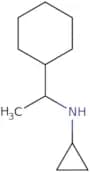
CAS:<p>Versatile small molecule scaffold</p>Formula:C6H12ClN3OPurity:Min. 95%Molecular weight:177.63 g/molN-(1-Cyclohexylethyl)cyclopropanamine
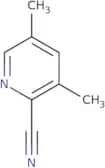
CAS:<p>Versatile small molecule scaffold</p>Formula:C11H21NPurity:Min. 95%Molecular weight:167.29 g/mol3,5-Dimethylpyridine-2-carbonitrile
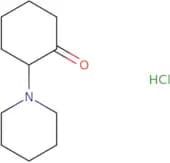
CAS:<p>3,5-Dimethylpyridine-2-carbonitrile is a chiral organic compound that has the formula CHNO. It is used in organic syntheses as a building block for various products. 3,5-Dimethylpyridine-2-carbonitrile can be synthesized by nitroaldol reaction of 3,5-dimethoxybenzaldehyde and formaldehyde catalyzed by copper(II) acetate. This product is also an important intermediate in the synthesis of bipyridines and oxazolines, which are useful in the manufacture of catalysts and amino alcohols.</p>Formula:C8H8N2Purity:Min. 95%Molecular weight:132.17 g/mol2-(Piperidin-1-yl)cyclohexan-1-one hydrochloride
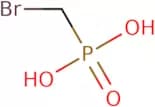
CAS:<p>Versatile small molecule scaffold</p>Formula:C11H20ClNOPurity:Min. 95%Molecular weight:217.73 g/mol(Bromomethyl)phosphonic acid
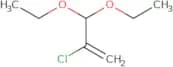
CAS:<p>Bromomethylphosphonic acid is a molecule that contains a carbonyl group, aliphatic hydrocarbon and an aromatic hydrocarbon. When reacted with humans, the molecule can be found in the reaction solution. Bromomethylphosphonic acid has been shown to have chemical stability and is not affected by alcohol residue or nitro groups. It has also been observed to inhibit fatty acid synthesis and to inhibit the activity of animal enzymes such as carboxylesterases in animals. This compound has optical properties that are acidic and are used in pharmaceutical preparations.</p>Formula:CH4BrO3PPurity:Min. 95%Molecular weight:174.92 g/mol2-Chloro-3,3-diethoxyprop-1-ene
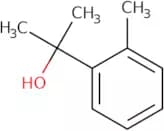
CAS:<p>Versatile small molecule scaffold</p>Formula:C7H13ClO2Purity:Min. 95%Molecular weight:164.63 g/mol2-(2-Methylphenyl)propan-2-ol
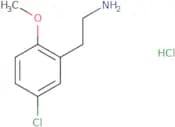
CAS:<p>2-(2-Methylphenyl)propan-2-ol is an abiotic chemical that is used as a solvent for ethanol. It has been shown to be toxic to microalgae and fatty acids, by inhibiting the conversion of nitrate into nitrogen gas. 2-(2-Methylphenyl)propan-2-ol has also been shown to inhibit denitrification in the presence of nitrate and carbon sources. The mechanism of inhibition is unknown, but it may be due to the formation of an unidentified aromatic hydrocarbon that prevents nitrite reduction.</p>Formula:C10H14OPurity:Min. 95%Molecular weight:150.22 g/mol2-(5-Chloro-2-methoxyphenyl)ethan-1-amine hydrochloride
CAS:Controlled ProductVersatile small molecule scaffoldFormula:C9H13Cl2NOPurity:Min. 95%Molecular weight:222.11 g/mol2-(5-Chloro-2-methoxyphenyl)ethan-1-ol
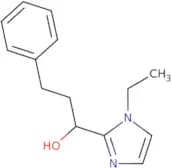
CAS:<p>Versatile small molecule scaffold</p>Formula:C9H11ClO2Purity:Min. 95%Molecular weight:186.63 g/mol1-(1-Ethyl-1H-imidazol-2-yl)-3-phenylpropan-1-ol
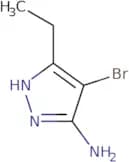
CAS:<p>Versatile small molecule scaffold</p>Formula:C14H18N2OPurity:Min. 95%Molecular weight:230.31 g/mol4-bromo-3-ethyl-1H-pyrazol-5-amine
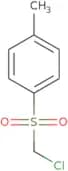
CAS:<p>Versatile small molecule scaffold</p>Formula:C5H8N3BrPurity:Min. 95%Molecular weight:190.04 g/molp-Toluenesulfonylmethyl Chloride
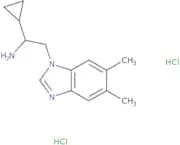
CAS:<p>p-Toluenesulfonylmethyl Chloride is a reactive compound that can be used as an alkylating agent. It has a carbonyl group, which reacts with nucleophiles and can be used to form carbon-carbon bonds. p-Toluenesulfonylmethyl Chloride is also able to react with aldehydes and sulfoxides, forming anions and pyridazine. This chemical is used in the synthesis of organic compounds, including acetaldehyde. In addition, it can be used in magnetic resonance spectroscopy (MRS) experiments to identify the structure of aldehydes.</p>Formula:C8H9ClO2SPurity:Min. 95%Molecular weight:204.67 g/mol1-Cyclopropyl-2-(5,6-dimethyl-1H-1,3-benzodiazol-1-yl)ethan-1-amine dihydrochloride
CAS:<p>Versatile small molecule scaffold</p>Formula:C14H21Cl2N3Purity:Min. 95%Molecular weight:302.2 g/mol
![3-[(Piperidin-1-yl)methyl]benzoic acid hydrochloride](/_next/image/?url=https%3A%2Fstatic.cymitquimica.com%2Fproducts%2F3D%2Fthumb-webp%2FHAA59682.webp&w=3840&q=75)



![Octahydroimidazolidino[1,5-a]piperazin-3-one hydrochloride](/_next/image/?url=https%3A%2Fstatic.cymitquimica.com%2Fproducts%2F3D%2Fthumb-webp%2FBFC34066.webp&w=3840&q=75)