Building Blocks
This section contains fundamental products for the synthesis of organic and biological compounds. Building blocks are the essential starting materials used to construct complex molecules through various chemical reactions. They play a critical role in drug discovery, material science, and chemical research. At CymitQuimica, we offer a diverse range of high-quality building blocks to support your innovative research and industrial projects, ensuring you have the essential components for successful synthesis.
Subcategories of "Building Blocks"
- Boronic Acids & Boronic Acid Derivatives(5,778 products)
- Chiral Building Blocks(1,242 products)
- Hydrocarbon Building Blocks(6,098 products)
- Organic Building Blocks(61,092 products)
Found 199296 products of "Building Blocks"
Sort by
Purity (%)
0
100
|
0
|
50
|
90
|
95
|
100
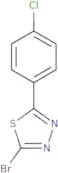
2-Bromo-5-(4-chlorophenyl)-1,3,4-thiadiazole
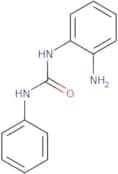
CAS:<p>Versatile small molecule scaffold</p>Formula:C8H4BrClN2SPurity:Min. 95%Molecular weight:275.55 g/mol3-(2-Aminophenyl)-1-phenylurea
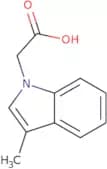
CAS:3-(2-Aminophenyl)-1-phenylurea is a chemical compound that has a phenyl ring and isocyanate group. It has high selectivity for the phenyl isocyanate domain, which provides a selective reactivity to the chain with amino groups. This product can be used as an intermediate in organic synthesis of pharmaceuticals, agrochemicals, and other organic compounds. 3-(2-Aminophenyl)-1-phenylurea can also be used as a reagent for the preparation of polyurethane resins by reacting with isocyanates.Formula:C13H13N3OPurity:Min. 95%Color and Shape:PowderMolecular weight:227.26 g/mol2-(3-Methyl-1H-indol-1-yl)acetic acid
CAS:<p>Versatile small molecule scaffold</p>Formula:C11H11NO2Purity:Min. 95%Molecular weight:189.21 g/molcis-hexahydro-1h-furo[3,4-c]pyrrole hcl
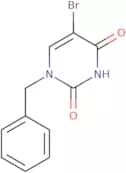
CAS:<p>Versatile small molecule scaffold</p>Formula:C6H12ClNOPurity:Min. 95%Molecular weight:149.62 g/mol1-Benzyl-5-bromo-1,2,3,4-tetrahydropyrimidine-2,4-dione
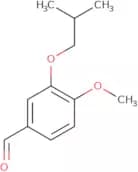
CAS:1-Benzyl-5-bromo-1,2,3,4-tetrahydropyrimidine-2,4-dione is an experimental molecule and has not been studied extensively. It has been shown that this molecule binds to uracil in the cavity of a quadruplex and can form a functional quadruplex. The 1H NMR spectrum of 1-benzyl-5-bromo-1,2,3,4-tetrahydropyrimidine-2,4-dione shows the presence of two peaks at 3.34 and 3.06 ppm corresponding to the protons on the methylene group attached to the nitrogen atom of the pyrimidine ring.Formula:C11H9BrN2O2Purity:Min. 95%Molecular weight:281.1 g/mol4-Methoxy-3-(2-methylpropoxy)benzaldehyde
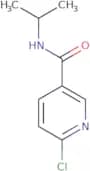
CAS:<p>Versatile small molecule scaffold</p>Formula:C12H16O3Purity:Min. 95%Molecular weight:208.25 g/mol6-Chloro-N-(propan-2-yl)pyridine-3-carboxamide
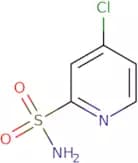
CAS:<p>Versatile small molecule scaffold</p>Formula:C9H11ClN2OPurity:Min. 95%Molecular weight:198.65 g/mol4-Chloro-2-pyridinesulfonamide
CAS:Versatile small molecule scaffoldFormula:C5H5ClN2O2SPurity:Min. 95%Molecular weight:192.62 g/mol4H,6H-Furo[3,4-c][1,2]oxazol-6-one
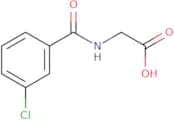
CAS:<p>Versatile small molecule scaffold</p>Formula:C5H3NO3Purity:Min. 95%Molecular weight:125.1 g/mol3-Chlorohippuric acid
CAS:<p>3-Chlorohippuric acid is a drug that inhibits the activity of human liver and pancreatic lipase. This compound has been shown to reduce oxidative injury in animal models. 3-Chlorohippuric acid is also used as an antidiabetic agent, which may be due to its ability to inhibit transcriptional regulation in the pancreas. 3-Chlorohippuric acid binds to siderophores, which are iron-binding molecules present in bacteria. The uptake of this drug into bacteria is mediated by siderophores and may be one mechanism for the bactericidal effect of 3-chlorohippurate.</p>Formula:C9H8ClNO3Purity:Min. 95%Molecular weight:213.62 g/mol2-[(3-bromophenyl)formamido]acetic acid
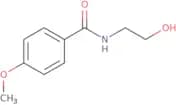
CAS:<p>Versatile small molecule scaffold</p>Formula:C9H8BrNO3Purity:Min. 95%Molecular weight:258.1 g/molN-(2-Hydroxyethyl)-4-methoxybenzamide
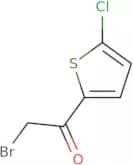
CAS:<p>Versatile small molecule scaffold</p>Formula:C10H13NO3Purity:Min. 95%Molecular weight:195.21 g/mol2-bromo-1-(5-chloro-thiophen-2-yl)-ethanone
CAS:<p>Versatile small molecule scaffold</p>Formula:C6H4BrClOSPurity:Min. 95%Molecular weight:239.52 g/mol1-{6-Methylimidazo[2,1-b][1,3]thiazol-5-yl}ethan-1-one
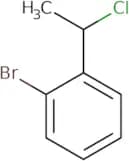
CAS:<p>Versatile small molecule scaffold</p>Formula:C8H8N2OSPurity:Min. 95%Molecular weight:180.23 g/mol1-Bromo-2-(1-chloroethyl)benzene
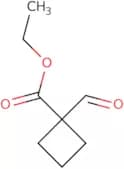
CAS:<p>Versatile small molecule scaffold</p>Formula:C8H8BrClPurity:Min. 95%Molecular weight:219.5 g/molEthyl 1-formylcyclobutane-1-carboxylate
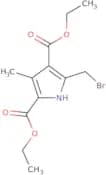
CAS:<p>Versatile small molecule scaffold</p>Formula:C8H12O3Purity:Min. 95%Molecular weight:156.18 g/mol2,4-Diethyl 5-(bromomethyl)-3-methyl-1H-pyrrole-2,4-dicarboxylate
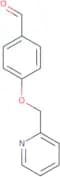
CAS:Versatile small molecule scaffoldFormula:C12H16BrNO4Purity:Min. 95%Molecular weight:318.16 g/mol4-(Pyridin-2-ylmethoxy)benzaldehyde
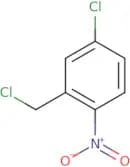
CAS:<p>Versatile small molecule scaffold</p>Formula:C13H11NO2Purity:Min. 95%Molecular weight:213.23 g/mol4-chloro-2-(chloromethyl)-1-nitrobenzene
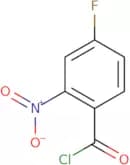
CAS:<p>Versatile small molecule scaffold</p>Formula:C7H5Cl2NO2Purity:Min. 95%Molecular weight:206.02 g/mol4-Fluoro-2-nitrobenzoyl chloride
CAS:Versatile small molecule scaffoldFormula:C7H3ClFNO3Purity:Min. 95%Molecular weight:203.55 g/mol

![cis-hexahydro-1h-furo[3,4-c]pyrrole hcl](/_next/image/?url=https%3A%2Fstatic.cymitquimica.com%2Fproducts%2F3D%2Fthumb-webp%2FHCA71036.webp&w=3840&q=75)
![4H,6H-Furo[3,4-c][1,2]oxazol-6-one](/_next/image/?url=https%3A%2Fstatic.cymitquimica.com%2Fproducts%2F3D%2Fthumb-webp%2FHCA72815.webp&w=3840&q=75)
![2-[(3-bromophenyl)formamido]acetic acid](/_next/image/?url=https%3A%2Fstatic.cymitquimica.com%2Fproducts%2F3D%2Fthumb-webp%2FHCA72860.webp&w=3840&q=75)
![1-{6-Methylimidazo[2,1-b][1,3]thiazol-5-yl}ethan-1-one](/_next/image/?url=https%3A%2Fstatic.cymitquimica.com%2Fproducts%2F3D%2Fthumb-webp%2FHCA73811.webp&w=3840&q=75)