Building Blocks
This section contains fundamental products for the synthesis of organic and biological compounds. Building blocks are the essential starting materials used to construct complex molecules through various chemical reactions. They play a critical role in drug discovery, material science, and chemical research. At CymitQuimica, we offer a diverse range of high-quality building blocks to support your innovative research and industrial projects, ensuring you have the essential components for successful synthesis.
Subcategories of "Building Blocks"
- Boronic Acids & Boronic Acid Derivatives(5,780 products)
- Chiral Building Blocks(1,241 products)
- Hydrocarbon Building Blocks(6,100 products)
- Organic Building Blocks(61,023 products)
Found 205289 products of "Building Blocks"
Sort by
Purity (%)
0
100
|
0
|
50
|
90
|
95
|
100
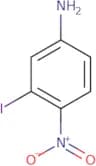
3-Iodo-4-nitroaniline
CAS:Versatile small molecule scaffoldFormula:C6H5IN2O2Purity:Min. 95%Molecular weight:264.02 g/mol2-[4-[(Fmoc-amino)methyl]phenoxy]acetic acid
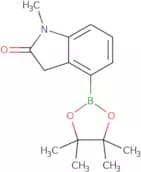
CAS:Versatile small molecule scaffoldFormula:C24H21NO5Purity:Min. 95%Molecular weight:403.4 g/mol(1-Methyl-2-oxoindolin-4-yl)boronic acid pinacol ester
CAS:Versatile small molecule scaffold
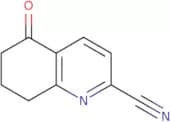
Formula:C15H20BNO3Purity:Min. 95%Molecular weight:273.14 g/mol5-Oxo-5,6,7,8-tetrahydroquinoline-2-carbonitrile
CAS:Versatile small molecule scaffoldFormula:C10H8N2OPurity:Min. 95%Molecular weight:172.18 g/mol2-Methyl-5-{[3-(tetramethyl-1,3,2-dioxaborolan-2-yl)phenyl]methyl}-1,3,4-oxadiazole
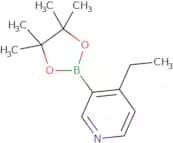
CAS:Versatile small molecule scaffoldFormula:C16H21BN2O3Purity:Min. 95%Molecular weight:300.2 g/mol4-Ethyl-3-(4,4,5,5-tetramethyl-1,3,2-dioxaborolan-2-yl)pyridine
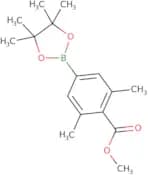
CAS:Versatile small molecule scaffoldFormula:C13H20BNO2Purity:Min. 95%Molecular weight:233.12 g/mol3,5-Dimethyl-4-methoxycarbonylphenylboronic acid, pinacol ester
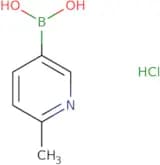
CAS:Versatile small molecule scaffoldFormula:C16H23BO4Purity:Min. 95%Molecular weight:290.2 g/mol6-Methylpyridine-3-boronic acid hydrochloride
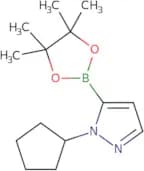
CAS:Versatile small molecule scaffoldFormula:C6H8BNO2·HClPurity:Min. 95%Molecular weight:173.4 g/mol1-Cyclopentyl-1H-pyrazole-5-boronic acid, pinacol ester
CAS:Versatile small molecule scaffold
Formula:C14H23BN2O2Purity:Min. 95%Molecular weight:262.16 g/mol5-(4,4,5,5-Tetramethyl-1,3,2-dioxaborolan-2-yl)benzo[C]isothiazole
CAS:Versatile small molecule scaffoldFormula:C13H16BNO2SPurity:Min. 95%Molecular weight:261.2 g/mol[6-Fluoro-2-(trifluoromethyl)pyridin-3-yl]boronic acid
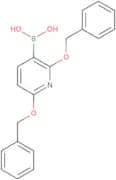
CAS:Versatile small molecule scaffoldFormula:C6H4BF4NO2Purity:Min. 95%Molecular weight:208.91 g/mol2,6-Bis(benzyloxy)pyridine-3-boronic acid
CAS:Versatile small molecule scaffoldFormula:C19H18BNO4Purity:Min. 95%Molecular weight:335.16 g/mol2-{[4-(Tetramethyl-1,3,2-dioxaborolan-2-yl)phenyl]methyl}-1,3,4-oxadiazole
CAS:Versatile small molecule scaffoldFormula:C15H19BN2O3Purity:Min. 95%Molecular weight:286.14 g/mol2-Methyl-5-[[4-(4,4,5,5-tetramethyl-1,3,2-dioxaborolan-2-yl)phenyl]methyl]-1,3,4-oxadiazole
CAS:Versatile small molecule scaffold
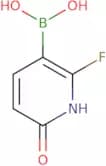
Formula:C16H21BN2O3Purity:Min. 95%Molecular weight:300.2 g/mol(2-Fluoro-6-hydroxypyridin-3-yl)boronic acid
CAS:Versatile small molecule scaffoldFormula:C5H5BFNO3Purity:Min. 95%Molecular weight:156.91 g/mol2-(3-Aminobicyclo[1.1.1]pentan-1-yl)acetic acid hydrochloride
CAS:Versatile small molecule scaffoldFormula:C7H12ClNO2Purity:Min. 95%Molecular weight:177.63 g/mol2-(3-((tert-butoxycarbonyl)amino)bicyclo[1.1.1]pentan-1-yl)acetic acid
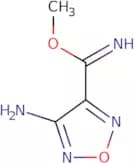
CAS:Versatile small molecule scaffoldFormula:C12H19NO4Purity:Min. 95%Molecular weight:241.28 g/molMethyl 4-amino-1,2,5-oxadiazole-3-carboximidate
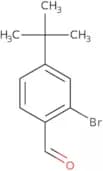
CAS:Methyl 4-amino-1,2,5-oxadiazole-3-carboximidate is a small molecule that can be synthesized from amines and triazoles. It undergoes an intramolecular cyclization to form a hydrazine and an acylhydrazine. This reaction is facilitated by the presence of nitrogen containing groups such as amidines or amidrazones. The yields of these reactions are high, making this compound a good starting material for the synthesis of aromatic amines.Formula:C4H6N4O2Purity:Min. 95%Molecular weight:142.12 g/mol2-Bromo-4-tert-butylbenzaldehyde
CAS:2-Bromo-4-tert-butylbenzaldehyde (2BBBA) is an active natural product that is used in the synthesis of tetrabromomethane. 2BBBA can be synthesized from 2,4-dichlorobenzaldehyde and bromine gas. This reaction is called a Corey-Fuchs reaction. The synthesis of this compound involves the conversion of a terminal alkene to an aldehyde followed by olefination with the bromide ion. The Corey-Fuchs reaction involves the addition of an organohalogen to an unsaturated carbon atom in an organic molecule to form a new carbon-carbon bond.Formula:C11H13BrOPurity:Min. 95%Molecular weight:241.12 g/mol

![2-[4-[(Fmoc-amino)methyl]phenoxy]acetic acid](/_next/image/?url=https%3A%2Fstatic.cymitquimica.com%2Fproducts%2F3D%2Fthumb-webp%2FWDB93961.webp&w=3840&q=75)
![2-Methyl-5-{[3-(tetramethyl-1,3,2-dioxaborolan-2-yl)phenyl]methyl}-1,3,4-oxadiazole](/_next/image/?url=https%3A%2Fstatic.cymitquimica.com%2Fproducts%2F3D%2Fthumb-webp%2FWID33021.webp&w=3840&q=75)
![5-(4,4,5,5-Tetramethyl-1,3,2-dioxaborolan-2-yl)benzo[C]isothiazole](/_next/image/?url=https%3A%2Fstatic.cymitquimica.com%2Fproducts%2F3D%2Fthumb-webp%2FWID33796.webp&w=3840&q=75)
![[6-Fluoro-2-(trifluoromethyl)pyridin-3-yl]boronic acid](/_next/image/?url=https%3A%2Fstatic.cymitquimica.com%2Fproducts%2F3D%2Fthumb-webp%2FWID33979.webp&w=3840&q=75)
![2-{[4-(Tetramethyl-1,3,2-dioxaborolan-2-yl)phenyl]methyl}-1,3,4-oxadiazole](/_next/image/?url=https%3A%2Fstatic.cymitquimica.com%2Fproducts%2F3D%2Fthumb-webp%2FWID33994.webp&w=3840&q=75)
![2-Methyl-5-[[4-(4,4,5,5-tetramethyl-1,3,2-dioxaborolan-2-yl)phenyl]methyl]-1,3,4-oxadiazole](/_next/image/?url=https%3A%2Fstatic.cymitquimica.com%2Fproducts%2F3D%2Fthumb-webp%2FWID34021.webp&w=3840&q=75)
![2-(3-Aminobicyclo[1.1.1]pentan-1-yl)acetic acid hydrochloride](/_next/image/?url=https%3A%2Fstatic.cymitquimica.com%2Fproducts%2F3D%2Fthumb-webp%2FWID99216.webp&w=3840&q=75)
![2-(3-((tert-butoxycarbonyl)amino)bicyclo[1.1.1]pentan-1-yl)acetic acid](/_next/image/?url=https%3A%2Fstatic.cymitquimica.com%2Fproducts%2F3D%2Fthumb-webp%2FWID99227.webp&w=3840&q=75)