Building Blocks
This section contains fundamental products for the synthesis of organic and biological compounds. Building blocks are the essential starting materials used to construct complex molecules through various chemical reactions. They play a critical role in drug discovery, material science, and chemical research. At CymitQuimica, we offer a diverse range of high-quality building blocks to support your innovative research and industrial projects, ensuring you have the essential components for successful synthesis.
Subcategories of "Building Blocks"
- Boronic Acids & Boronic Acid Derivatives(5,756 products)
- Chiral Building Blocks(1,242 products)
- Hydrocarbon Building Blocks(6,095 products)
- Organic Building Blocks(61,038 products)
Found 196817 products of "Building Blocks"
Sort by
Purity (%)
0
100
|
0
|
50
|
90
|
95
|
100
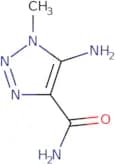
5-Amino-1-methyl-1H-1,2,3-triazole-4-carboxamide
CAS:<p>Versatile small molecule scaffold</p>Formula:C4H7N5OPurity:Min. 95%Molecular weight:141.13 g/mol3-Bromo-1H,6H,7H-pyrazolo[4,3-d]pyrimidin-7-one
CAS:<p>Versatile small molecule scaffold</p>Formula:C5H3BrN4OPurity:Min. 95%Molecular weight:215.01 g/mol7-Bromo-1H,2H,3H,4H,5H-pyrrolo[3,2-d]pyrimidine-2,4-dione
CAS:<p>Versatile small molecule scaffold</p>Formula:C6H4BrN3O2Purity:Min. 95%Molecular weight:230.02 g/mol3-Methyl-3H,6H,7H-[1,2,3]triazolo[4,5-d]pyrimidin-7-one
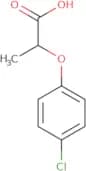
CAS:<p>Versatile small molecule scaffold</p>Formula:C5H5N5OPurity:Min. 95%Molecular weight:151.13 g/mol(2S)-2-(4-Chlorophenoxy)propanoic acid
CAS:<p>Versatile small molecule scaffold</p>Formula:C9H9ClO3Purity:Min. 95%Molecular weight:200.62 g/mol1-Benzylazepane
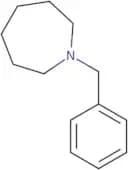
CAS:<p>Benzylazepane is a triacetoxyborohydride that can be used for the reductive amination of aldehydes to form amines. Benzylazepane has been shown to react with sodium triacetoxyborohydride and amines to produce acrylonitrile, which is useful in the synthesis of polymers. The reductive amination of benzaldehyde with ethyl cyanoacetate forms acrylonitrile and acetaldehyde, which is then oxidized using ozonolysis. This reaction produces nitroethane, nitromethane, and acrylamide. Benzylazepane is also used in the synthesis of nature-inspired molecules such as polysaccharides and nucleotides.</p>Formula:C13H19NPurity:Min. 95%Molecular weight:189.3 g/mol(Trimethylfuran-3-yl)methanol
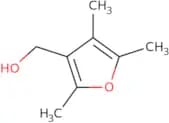
CAS:<p>Versatile small molecule scaffold</p>Formula:C8H12O2Purity:Min. 95%Molecular weight:140.18 g/mol3,4-dihydro-2H-1-benzopyran-4-carboxylic acid
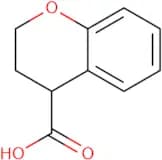
CAS:<p>3,4-Dihydro-2H-1-benzopyran-4-carboxylic acid is a chromanone with an enantiomeric ratio of S:R. It is a synthetic compound and a member of the acid compounds group. 3,4-Dihydro-2H-1-benzopyran-4-carboxylic acid is used as an intermediate in organic chemistry to produce sorbinil sodium salt and ganate, which are also synthetic compounds. This chemical has been shown to be effective for oral hypoglycemia in rats when administered with amines. The racemic mixture contains two enantiomers that are not identical but are related to each other as mirror images. Phenylacetic acid (PAA) is another member of the same class of molecules that can be complicating when purified from this chemical. 3,4-Dihydro-2H-1-ben</p>Formula:C10H10O3Purity:Min. 95%Molecular weight:178.19 g/mol(1R,2S)-2-Methylamino-cyclohexanol
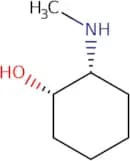
CAS:<p>(1R,2S)-2-Methylamino-cyclohexanol is an alkanolamine that has been shown to have antioxidant properties. It is synthesized from hydrogen chloride and ethanolamine by a dehydration reaction. This compound can be used as a co-catalyst for the catalytic oxidation of chlorides in organic solvents and has been shown to inhibit the growth of membranes in E. coli. (1R,2S)-2-Methylamino-cyclohexanol also has potential applications in preventing atherosclerosis or treatment of zinc deficiency.</p>Formula:C7H15NOPurity:Min. 95%Molecular weight:129.2 g/mol2-Amino-N-benzylacetamide hydrochloride
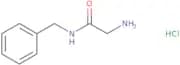
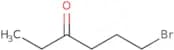
CAS:<p>Versatile small molecule scaffold</p>Formula:C9H13ClN2OPurity:Min. 95%Molecular weight:200.67 g/mol6-Bromohexan-3-one
CAS:<p>6-Bromohexan-3-one is a pheromone that belongs to the group of skeleton-targeted pheromones. It binds to an unknown receptor in the insect and causes specific behavioral changes such as attraction, orientation, and oviposition. 6-Bromohexan-3-one has been shown to be effective against male gypsy moths, although it is not active against other insects. The structure of 6-Bromohexan-3-one consists of a phosphonium group with a six member ring and a double bond between carbons 3 and 4.</p>Formula:C6H11BrOPurity:Min. 95%Molecular weight:179.05 g/molSpiro[4.5]decan-6-amine
CAS:<p>Versatile small molecule scaffold</p>Formula:C10H19NPurity:Min. 95%Molecular weight:153.26 g/molSpiro[4.4]nonan-1-amine
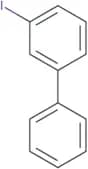
CAS:<p>Versatile small molecule scaffold</p>Formula:C9H17NPurity:Min. 95%Molecular weight:139.24 g/mol3-Iodobiphenyl
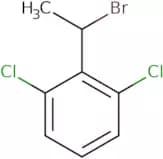
CAS:<p>3-Iodobiphenyl is a synthetic chemical compound that has been used in the manufacture of dyes, pesticides, and other organic chemicals. 3-Iodobiphenyl is a low molecular weight soluble solid with a high solubility in most organic solvents. It is insoluble in water and may be produced as one of two different isomeric forms, depending on the conditions used to synthesize it. The physical properties of these two forms are similar but they differ in their reactivity. 3-Iodobiphenyl can adsorb onto amine groups on proteins and phospholipid membranes, forming a monolayer that alters the permeability of membrane bilayers. This organocatalytic reaction can also be facilitated by metal ions such as copper or zinc. 3-Iodobiphenyl also reacts with halides such as chloride or bromide to form soluble complexes that may be used for solute separation during phase chrom</p>Formula:C12H9IPurity:Min. 95%Molecular weight:280.11 g/mol2-(1-Bromoethyl)-1,3-dichlorobenzene
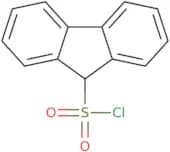
CAS:<p>Versatile small molecule scaffold</p>Formula:C8H7BrCl2Purity:Min. 95%Molecular weight:253.95 g/mol9H-Fluorene-9-sulfonyl chloride
CAS:<p>Versatile small molecule scaffold</p>Formula:C13H9ClO2SPurity:Min. 95%Molecular weight:264.73 g/molSpiro[bicyclo[2.2.1]heptane-7,1'-cyclopropan]-6-one
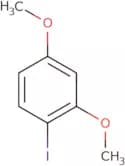
CAS:<p>Versatile small molecule scaffold</p>Formula:C9H12OPurity:Min. 95%Molecular weight:136.2 g/mol2,4-Dimethoxyiodobenzene
CAS:<p>2,4-Dimethoxyiodobenzene is a methyl ketone that has three methoxy groups. It is used as a building block in organic synthesis and can be synthesized by the reaction of 2,4-dimethoxybenzaldehyde with peroxide and methylamine. 2,4-Dimethoxyiodobenzene inhibits radical formation by reacting with an activated metal halide to form a covalent bond between the two molecules. The terminal alkyne reacts with a halogen to form an alkynyl radical which then reacts with another activated metal halide to form a second covalent bond. This process creates a new radical that has been deactivated by the addition of two bonds, preventing it from initiating another chain reaction. 2,4-Dimethoxyiodobenzene also exhibits inhibitory potency against β-amino acid decomposition through the same mechanism.</p>Formula:C8H9IO2Purity:Min. 95%Molecular weight:264.06 g/molEthyl 4-chloro-1,3-dimethylpyrazolo[3,4-b]pyridine-5-carboxylate
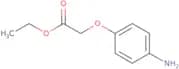
CAS:<p>Versatile small molecule scaffold</p>Formula:C11H12ClN3O2Purity:Min. 95%Molecular weight:253.69 g/molEthyl 2-(4-aminophenoxy)acetate
CAS:<p>Versatile small molecule scaffold</p>Formula:C10H13NO3Purity:Min. 95%Molecular weight:195.21 g/mol

![3-Bromo-1H,6H,7H-pyrazolo[4,3-d]pyrimidin-7-one](/_next/image/?url=https%3A%2Fstatic.cymitquimica.com%2Fproducts%2F3D%2Fthumb-webp%2FVAA41967.webp&w=3840&q=75)
![7-Bromo-1H,2H,3H,4H,5H-pyrrolo[3,2-d]pyrimidine-2,4-dione](/_next/image/?url=https%3A%2Fstatic.cymitquimica.com%2Fproducts%2F3D%2Fthumb-webp%2FVAA41974.webp&w=3840&q=75)
![3-Methyl-3H,6H,7H-[1,2,3]triazolo[4,5-d]pyrimidin-7-one](/_next/image/?url=https%3A%2Fstatic.cymitquimica.com%2Fproducts%2F3D%2Fthumb-webp%2FVAA42086.webp&w=3840&q=75)
![Spiro[4.5]decan-6-amine](/_next/image/?url=https%3A%2Fstatic.cymitquimica.com%2Fproducts%2F3D%2Fthumb-webp%2FVAA44070.webp&w=3840&q=75)
![Spiro[4.4]nonan-1-amine](/_next/image/?url=https%3A%2Fstatic.cymitquimica.com%2Fproducts%2F3D%2Fthumb-webp%2FVAA44071.webp&w=3840&q=75)
![Spiro[bicyclo[2.2.1]heptane-7,1'-cyclopropan]-6-one](/_next/image/?url=https%3A%2Fstatic.cymitquimica.com%2Fproducts%2F3D%2Fthumb-webp%2FVAA45477.webp&w=3840&q=75)
![Ethyl 4-chloro-1,3-dimethylpyrazolo[3,4-b]pyridine-5-carboxylate](/_next/image/?url=https%3A%2Fstatic.cymitquimica.com%2Fproducts%2F3D%2Fthumb-webp%2FVAA48115.webp&w=3840&q=75)