Building Blocks
This section contains fundamental products for the synthesis of organic and biological compounds. Building blocks are the essential starting materials used to construct complex molecules through various chemical reactions. They play a critical role in drug discovery, material science, and chemical research. At CymitQuimica, we offer a diverse range of high-quality building blocks to support your innovative research and industrial projects, ensuring you have the essential components for successful synthesis.
Subcategories of "Building Blocks"
- Boronic Acids & Boronic Acid Derivatives(5,756 products)
- Chiral Building Blocks(1,242 products)
- Hydrocarbon Building Blocks(6,095 products)
- Organic Building Blocks(61,055 products)
Found 199650 products of "Building Blocks"
Sort by
Purity (%)
0
100
|
0
|
50
|
90
|
95
|
100
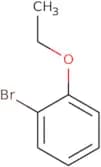
1-Bromo-2-ethoxy-benzene
CAS:<p>1-Bromo-2-ethoxy-benzene is a chemical that belongs to the group of hydroxybenzenes. It is a colorless liquid with a pleasant odor. 1-Bromo-2-ethoxy-benzene can be used as an industrial preparation in the production of peptide hormones and other chemicals, as well as in the manufacture of dyes and agrochemicals. It has been shown to have antihistaminergic, adrenergic receptor agonistic, and fibroblast proliferation effects. 1-Bromo-2-ethoxy-benzene is also used as a histone methylation inhibitor and can be used for the treatment of depression.</p>Formula:C8H9BrOPurity:Min. 95%Molecular weight:201.06 g/mol2-Methylcyclohexanone
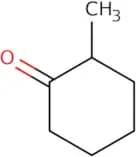
CAS:<p>2-Methylcyclohexanone is an organic compound that is a colorless liquid at room temperature. It is classified as an enolate and has the chemical formula of CH3COCHO. The asymmetric synthesis of 2-methylcyclohexanone can be achieved by adding sodium ethoxide to ethyl formate in the presence of anhydrous sodium. This method produces a 1,3-diketone that can be hydrolyzed to give 2-methylcyclohexanone. Hydrogen bonding interactions between the methyl group and the carbonyl group are important for the stability of this molecule. The solubility data for 2-methylcyclohexanone ranges from 0.015 g/mL at 20 °C to 0.05 g/mL at 100 °C. Activation energies for this molecule range from -2.4 kcal/mol to -1.9 kcal/mol, with a viscosity of 8 cP at</p>Formula:C7H12OPurity:Min. 95%Color and Shape:Clear LiquidMolecular weight:112.17 g/mol4-Hydroxy-2-methyl-5-(propan-2-yl)benzoic acid
CAS:<p>Versatile small molecule scaffold</p>Formula:C11H14O3Purity:Min. 95%Molecular weight:194.23 g/molN-(2-Methylphenyl)benzamide
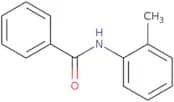
CAS:<p>N-(2-Methylphenyl)benzamide is a derivative of benzamide that can be prepared by reacting aniline with benzoyl chloride. The reaction products are chlorides, nitrobenzene, and benzamide. N-(2-Methylphenyl)benzamide is used in the synthesis of semiconductors and pharmaceuticals. It is also used as a reagent in the preparation of other compounds.</p>Formula:C14H13NOPurity:Min. 95%Molecular weight:211.26 g/mol2-Allyl-4-methoxyphenol
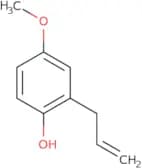
CAS:<p>2-Allyl-4-methoxyphenol is a monomer that is used in synthetic antioxidants. It has been shown to scavenge free radicals and inhibit the production of 4-allyl-2-methoxyphenol (AMPM) from carthamus tinctorius. Inhibition rates have been observed at different concentrations and microwaves. 2-Allyl-4-methoxyphenol has also been shown to enhance the antioxidant activity of phenethyl propionate, and it has a dry weight of 522 g/mol. This compound is synthetically derived and can be found in submandibular gland secretions, as well as eugenol and fusarium oxysporum f.</p>Formula:C10H12O2Purity:Min. 95%Molecular weight:164.2 g/moltert-Butyl Methacrylate Monomer (stabilized with MEHQ)
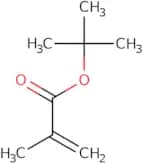
CAS:<p>Tert-Butyl methacrylate monomer is a monomer used in the production of polymers. It can be polymerized to form poly(tert-butyl methacrylate) and is used as a biocompatible polymer in medical devices. The chemical stability of this compound has been shown by the use of an electrochemical impedance spectroscopy to measure the effect of temperature on its reactivity. Tert-Butyl methacrylate monomer has been found to be a good fluorescence probe for activated polymerization, which can be used for measuring pH changes in biological systems. This compound also has high resistance to steric interactions and high values for mechanical properties.</p>Formula:C8H14O2Purity:Min. 95%Molecular weight:142.2 g/mol2-Methylpropyl 2-hydroxypropanoate
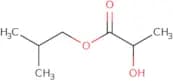
CAS:<p>2-Methylpropyl 2-hydroxypropanoate is a hydrocarbon solvent that contains a hydroxyl group and a hydroxy group. It is used as an organic solvent for industrial purposes, such as patterning in semiconductor fabrication. It is also used in the production of polymers, pharmaceuticals, and other chemical products. This compound may be degraded by radiation or hydrolyzed to produce butanol and benzoic acid.</p>Formula:C7H14O3Purity:Min. 95%Molecular weight:146.18 g/mol2-[3-(Trifluoromethyl)phenoxymethyl]oxirane
CAS:<p>Versatile small molecule scaffold</p>Formula:C10H9F3O2Purity:Min. 95%Molecular weight:218.17 g/mol(1-Bromoethyl)benzene
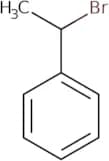
CAS:<p>1-Bromoethylbenzene is a solvent and an initiator for the polymerization of polymers. It is used in the production of polyvinyl chloride, polyurethane, and polyester. The deuterium isotope has been used to study kinetic data and reaction mechanisms of 1-bromoethylbenzene. It can be oxidized by hydrochloric acid or hydrogen chloride with irreversible oxidation to produce bromine gas. This process can also be reversed by adding hydrogen fluoride or a halide salt to the reaction mixture.</p>Formula:C8H9BrPurity:Min. 95%Molecular weight:185.06 g/mol3,5-Dinitrophenol
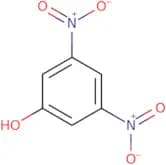
CAS:Controlled Product<p>3,5-Dinitrophenol is a yellowish crystalline solid that is soluble in water. It has a molecular weight of 162.2 g/mol and it's deprotonated form is 3,5-dinitrophenoxide. The thermodynamic parameters of this compound are not well known because the compound cannot be studied at equilibrium conditions. The experimental spectra were measured by electron spin resonance (ESR) and Fourier transform infrared (FTIR) spectroscopy. Theory-based equations have been used to calculate the parameters for the theoretical spectra and these equations are in agreement with the experimental results. Constant temperature measurements have shown that nitro groups can be protonated at high temperatures, but not at low temperatures. This protonation causes an increase in acidity, which leads to a decrease in pKa values of nitro groups when compared to their values at lower temperatures.</p>Formula:C6H4N2O5Purity:Min. 95%Molecular weight:184.11 g/molTerpinolene
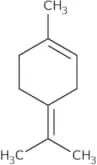
CAS:<p>Terpinolene is a terpene and an important component of pine oil. It has been shown to have antimicrobial activity against Gram-positive bacteria, such as Bacillus subtilis and Staphylococcus aureus. Terpinolene also inhibits the nitrate reductase enzyme in plants, which may be responsible for its effect on coronary heart diseases. This molecule is a signal peptide that can be found in CDNA clone sequences. The rate constant for terpinolene has been determined by chromatographic analysis and it appears to have a higher affinity for copper chloride than other molecules. Terpinolene was also used to create polymer compositions, which were analyzed using x-ray crystal structures to determine their molecular structure. Terpinolene has been shown to have water vapor adsorption properties that are similar to those of polyacrylonitrile (PAN). Finally, terpinolene was used as a model system for investigating the enzyme activities</p>Formula:C10H16Purity:Min. 95%Molecular weight:136.23 g/mol2-Hydroxy-N-[3-(trifluoromethyl)phenyl]benzamide
CAS:<p>2-Hydroxy-N-[3-(trifluoromethyl)phenyl]benzamide is an experimental drug that has been shown to bind to the benzodiazepine receptor in urine samples. It is used in bronchial orientations, with chemical stability and sample preparation for diazepine reconstitution and implanting. 2-Hydroxy-N-[3-(trifluoromethyl)phenyl]benzamide can be orally administered and analyzed by diagnostic methods such as solid phase microextraction and iontophoresis.</p>Formula:C14H10F3NO2Purity:Min. 95%Molecular weight:281.23 g/mol2-(3,5-Dichlorophenoxy)acetic acid
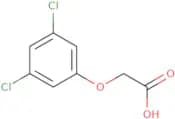
CAS:<p>2-(3,5-Dichlorophenoxy)acetic acid is an organic compound that has both a carboxylate and a hydroxyl group. It is used as an herbicide and has been shown to be effective in preventing uptake of radioactive elements by plants. 2-(3,5-Dichlorophenoxy)acetic acid can be prepared from butanoic acid and sodium chloride. The molecular formula for 2-(3,5-Dichlorophenoxy)acetic acid is CHClOOC(CHCOCH).</p>Formula:C8H6O3Cl2Purity:Min. 95%Molecular weight:221.03 g/mol2-Chloro-N-phenylacetamide
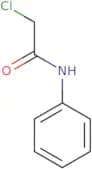
CAS:<p>2-Chloro-N-phenylacetamide (2CPA) is a chemical that is stable in the presence of strong acids, bases, and oxidizing agents. It can be used as an herbicide and has been shown to inhibit plant metabolism by interfering with the synthesis of picolinic acid. 2CPA also binds to proteins, causing inhibition of protein synthesis. This may occur by competitively binding to the enzyme polymerase chain reaction (PCR). 2CPA is metabolized into trifluoroacetic acid and chloroacetanilides in mammals. The detoxification enzymes glutathione S-transferase (GST) and cytochrome P450 can reactivate 2CPA by conjugation with glutathione or methyl ethyl. This detoxification process is known as phase II metabolism.</p>Formula:C8H8NOClPurity:Min. 95%Molecular weight:169.61 g/mol1-(3-Methylphenyl)propan-2-amine
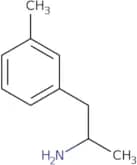
CAS:Controlled Product<p>Versatile small molecule scaffold</p>Formula:C10H15NPurity:Min. 95%Molecular weight:149.23 g/mol3'-Chloroacetanilide
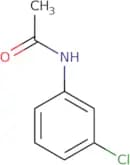
CAS:<p>3'-Chloroacetanilide is a chemical compound that has been shown to inhibit the acetylation of adenosine nucleotides in vitro, leading to an increase in ATP levels. 3'-Chloroacetanilide also inhibits the deamination of guanosine nucleotides and blocks the synthesis of purines. The molecular modeling studies of this chemical have shown that it could be a potential inhibitor for cancer cells. In vivo experiments have shown that 3'-chloroacetanilide can cause a decrease in tumor size and weight as well as an increase in apoptosis. When incubated with rat hepatocytes, 3'-chloroacetanilide caused a significant drop in ATP levels and an increase in AMP levels. This study also showed that 3'-chloroacetanilide is metabolized into its glucuronide conjugate, which is excreted by the kidneys.br>br><br>br><br>3'-Chlor</p>Formula:C8H8ClNOPurity:Min. 95%Molecular weight:169.61 g/molN-(3-Methoxyphenyl)acetamide
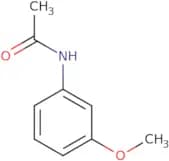
CAS:<p>N-(3-Methoxyphenyl)acetamide is a reactive and efficient chemical for the synthesis of N-(3-methoxyphenyl)acetamide-N′,O′-diacetate. It is used as a fluorescent probe in analytical chemistry. This chemical reacts with formaldehyde to produce a formyl group, which can be detected by magnetic resonance spectroscopy (MRS). The acetanilide moiety in this compound is an active substance that is effective against pyridinium, which is a reactive substance. Methylating this acetanilide leads to pro-apoptotic proteins that are fluorescent and can be detected using fluorescent probes.</p>Formula:C9H11NO2Purity:Min. 95%Molecular weight:165.19 g/mol2-(3,4-Dichlorophenoxy)acetic acid
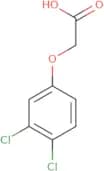
CAS:<p>2-(3,4-Dichlorophenoxy)acetic acid is a herbicide that has a phenoxyacetic structure. It inhibits photosynthesis in plants by blocking the action of the enzyme ribulose-1,5-bisphosphate carboxylase. This causes chlorophyll synthesis to be disrupted and the plant to die. 2-(3,4-Dichlorophenoxy)acetic acid also inhibits acetolactate synthase and other enzymes in plants that are necessary for amino acid synthesis.</p>Formula:C8H6Cl2O3Purity:Min. 95%Molecular weight:221.04 g/mol4-Bromophenetole
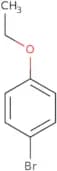
CAS:<p>4-Bromophenetole is a hydrogen bond acceptor, an amine, and a palladium complex. It is considered a drug target for the treatment of amines and fatty acids. 4-Bromophenetole has been shown to have antibacterial properties against fatty acid-producing bacteria such as Escherichia coli and Pseudomonas aeruginosa. This compound can be synthesized from phenol, acetone, and bromine in high yields. 4-Bromophenetole also has synergistic effects with other drugs that bind to fatty acid synthase (FAS), including insulin, which may help to treat type 2 diabetes.</p>Formula:C8H9BrOPurity:Min. 95%Molecular weight:201.06 g/molN-Allylaniline
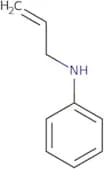
CAS:<p>N-Allylaniline is a hydrogen bond donor. It is an organic compound that belongs to the group of allylamines, which are heterocyclic amines having one nitrogen atom in the ring. N-Allylaniline has been shown to be biologically relevant for alkene metabolism and as a precursor for 3,4-dimethoxyphenylacetic acid, which is used as a starting material for the synthesis of pharmaceuticals. The molecule has four methoxy groups and two nitrogen atoms with one lone pair of electrons on each atom. N-Allylaniline also has intermolecular hydrogen bonding capabilities between the methoxy groups and the nitrogen atoms.</p>Formula:C9H11NPurity:Min. 95%Molecular weight:133.19 g/mol


![2-[3-(Trifluoromethyl)phenoxymethyl]oxirane](/_next/image/?url=https%3A%2Fstatic.cymitquimica.com%2Fproducts%2F3D%2Fthumb-webp%2FAAA58545.webp&w=3840&q=75)
![2-Hydroxy-N-[3-(trifluoromethyl)phenyl]benzamide](/_next/image/?url=https%3A%2Fstatic.cymitquimica.com%2Fproducts%2F3D%2Fthumb-webp%2FAAA58749.webp&w=3840&q=75)