Building Blocks
This section contains fundamental products for the synthesis of organic and biological compounds. Building blocks are the essential starting materials used to construct complex molecules through various chemical reactions. They play a critical role in drug discovery, material science, and chemical research. At CymitQuimica, we offer a diverse range of high-quality building blocks to support your innovative research and industrial projects, ensuring you have the essential components for successful synthesis.
Subcategories of "Building Blocks"
- Boronic Acids & Boronic Acid Derivatives(5,756 products)
- Chiral Building Blocks(1,242 products)
- Hydrocarbon Building Blocks(6,095 products)
- Organic Building Blocks(61,038 products)
Found 196817 products of "Building Blocks"
Sort by
Purity (%)
0
100
|
0
|
50
|
90
|
95
|
100
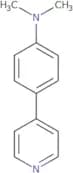
N,N-Dimethyl-4-(pyridin-4-yl)aniline
CAS:<p>N,N-Dimethyl-4-(pyridin-4-yl)aniline is an antimicrobial agent that belongs to the group of diazotization agents. It is used as a precursor for the synthesis of various diazonium salts. N,N-Dimethyl-4-(pyridin-4-yl)aniline is also used in the production of dyes and pharmaceuticals. It has been shown to be active against many types of bacteria, including luteum cultures and some strains of Staphylococcus aureus. The mechanism of action is not fully understood but it may be due to its ability to hydrolyze chloride or nitrate. N,N-Dimethyl-4-(pyridin-4-yl)aniline can also be converted into intermediates for the synthesis of other chemicals such as diazonium salts, which are useful for producing synthetic rubber and other products.</p>Formula:C13H14N2Purity:Min. 95%Molecular weight:198.26 g/mol4-Hydroxy-3-(3-methylbut-2-en-1-yl)benzoic acid
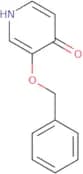
CAS:<p>4-Hydroxy-3-(3-methylbut-2-en-1-yl)benzoic acid is a cyclohexane ring with a hydroxyl group and a phenolic acid. It is synthesized using chemoenzymatic reactions. 4HBB is a substrate for gyrase, an enzyme that functions as part of the bacterial DNA replication machinery. As such, it can be used in studies of the molecular biology of this enzyme. The 4HBB mutant strain has been sequenced and shown to have the same base sequence as its wild type counterpart, but differs in its chemical structure. The 4HBB mutant strain was able to be used as a model system for studying the effects of p-hydroxybenzoic acid on gyrase activity.</p>Formula:C12H14O3Purity:Min. 95%Molecular weight:206.24 g/mol3-(Benzyloxy)-1,4-dihydropyridin-4-one
CAS:<p>Versatile small molecule scaffold</p>Formula:C12H11NO2Purity:Min. 95%Molecular weight:201.22 g/mol3,5-Dimethyl-1-octyl-1H-pyrazole
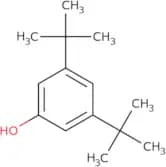
CAS:<p>Boceprevir is a non-peptide small molecule that prevents the hepatitis C virus from replicating by inhibiting the NS3/4A serine protease. It has been shown to be active against both genotype 1 and 4 of the hepatitis C virus in vitro. Boceprevir is used to treat chronic hepatitis C in adults who have not been previously treated or who are treatment-experienced with compensated liver disease. The drug is given as a tablet, taken once daily, with or without food. Side effects include nausea, vomiting, diarrhea, headache, dizziness, insomnia, and rash. Boceprevir can also cause birth defects if taken during pregnancy so it should not be used by women who are pregnant or planning to become pregnant during treatment.</p>Formula:C13H24N2Purity:Min. 95%Molecular weight:208.34 g/mol3,5-Di-tert-butylphenol
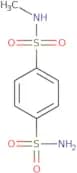
CAS:<p>3,5-Di-tert-butylphenol is a reactive compound that has been used as an analytical control agent. It has been shown to have an absorption maximum at 230 nm and a strong absorption band in the ultraviolet region of the spectrum. 3,5-Di-tert-butylphenol is also known to have a high uptake capacity for citric acid and sodium carbonate in uptake assays. The hydrogen bond between 3,5-Di-tert-butylphenol and p-hydroxybenzoic acid is intramolecular and can be broken by heating with acetate extract. This compound has been shown to be toxic in Sprague Dawley rats. 3,5-Di-tert-butylphenol undergoes activation energies of 2.6 kcal/mol (1) and 10 kcal/mol (2).</p>Formula:C14H22OPurity:Min. 95%Molecular weight:206.33 g/mol1-N-Methylbenzene-1,4-disulfonamide
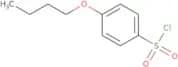
CAS:<p>Versatile small molecule scaffold</p>Formula:C7H10N2O4S2Purity:Min. 95%Molecular weight:250.3 g/mol4-Butoxybenzenesulfonyl Chloride
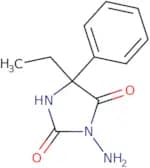
CAS:<p>4-Butoxybenzenesulfonyl Chloride is an inhibitor of pancreatic lipase, which is a digestive enzyme that hydrolyzes triglycerides and phospholipids. 4-Butoxybenzenesulfonyl Chloride has been shown to inhibit the synthesis of triglycerides and cholesterol from dietary lipids in rats. It also inhibits the activity of esterases, which are enzymes that catalyze the hydrolysis of esters, leading to a decrease in the concentration of plasma lipids. This drug also lowers triglyceride levels in human plasma and intestinal cells in culture.</p>Formula:C10H13ClO3SPurity:Min. 95%Molecular weight:248.72 g/mol3-Amino-5-ethyl-5-phenylimidazolidine-2,4-dione
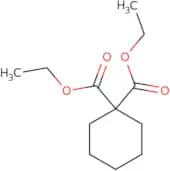
CAS:<p>Versatile small molecule scaffold</p>Formula:C11H13N3O2Purity:Min. 95%Molecular weight:219.24 g/molDiethyl 1,1-cyclohexanedicarboxylate
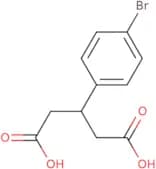
CAS:<p>Diethyl 1,1-cyclohexanedicarboxylate is an ester that can be hydrolyzed by alkaline conditions. It can be used as a solvent and as a raw material in the production of other chemicals. Diethyl 1,1-cyclohexanedicarboxylate is more soluble in water than diethyl ether and diethylene glycol. The cyclohexane ring helps to prevent the formation of peroxides when exposed to air. This product is mainly used as a solvent for lacquer thinners, paints, varnishes, and resins.</p>Formula:C12H20O4Purity:Min. 95%Molecular weight:228.29 g/mol3-(4-Bromophenyl)pentanedioic acid
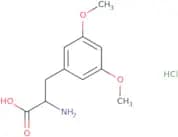
CAS:<p>Versatile small molecule scaffold</p>Formula:C11H11BrO4Purity:Min. 95%Molecular weight:287.11 g/mol2-Amino-3-(3,5-dimethoxyphenyl)propanoic acid hydrochloride
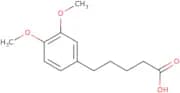
CAS:<p>Versatile small molecule scaffold</p>Formula:C11H16ClNO4Purity:Min. 95%Molecular weight:261.7 g/mol5-(3,4-Dimethoxyphenyl)pentanoic acid
CAS:<p>Versatile small molecule scaffold</p>Formula:C13H18O4Purity:Min. 95%Molecular weight:238.28 g/mol4-(3-Chlorophenoxy)-benzoic acid
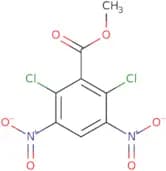
CAS:<p>Versatile small molecule scaffold</p>Formula:C13H9ClO3Purity:Min. 95%Molecular weight:248.66 g/molMethyl 2,6-dichloro-3,5-dinitrobenzoate
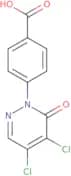
CAS:<p>Versatile small molecule scaffold</p>Formula:C8H4Cl2N2O6Purity:Min. 95%Molecular weight:295.03 g/mol4-(4,5-Dichloro-6-oxo-1,6-dihydropyridazin-1-yl)benzoic acid
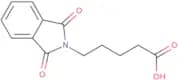
CAS:<p>Versatile small molecule scaffold</p>Formula:C11H6Cl2N2O3Purity:Min. 95%Molecular weight:285.08 g/mol5-(1,3-Dioxo-2,3-dihydro-1H-isoindol-2-yl)pentanoic acid
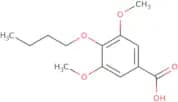
CAS:<p>5-(1,3-Dioxo-2,3-dihydro-1H-isoindol-2-yl)pentanoic acid is a synthetic compound that belongs to the class of enzyme inhibitors. It inhibits the catalytic activity of various enzymes and is used as a research tool for studying enzyme function. 5-(1,3-Dioxo-2,3-dihydro-1H-isoindol-2-yl)pentanoic acid is synthesized by introducing an amide bond between an aldehyde and a carboxylic acid. This compound has been found to focus on peptidyl and phosphonamidate bonds in proteins.</p>Formula:C13H13NO4Purity:Min. 95%Molecular weight:247.25 g/mol4-Butoxy-3,5-dimethoxybenzoic acid
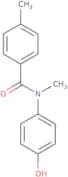
CAS:<p>Versatile small molecule scaffold</p>Formula:C13H18O5Purity:Min. 95%Molecular weight:254.28 g/molN-(4-Hydroxyphenyl)-N,4-dimethylbenzamide
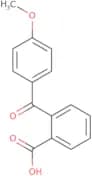
CAS:<p>Versatile small molecule scaffold</p>Formula:C15H15NO2Purity:Min. 95%Molecular weight:241.28 g/mol2-(4-Methoxybenzoyl)benzenecarboxylic acid
CAS:<p>2-(4-Methoxybenzoyl)benzenecarboxylic acid is a sweetener that is found in the class of benzophenones. It has a taste that is similar to benzoic acid, which is also considered to be a sweetener. 2-(4-Methoxybenzoyl)benzenecarboxylic acid has been shown to be an effective sweetener and can replace sugar in some applications. This compound has been found to have antimicrobial properties, but it is not yet known how these activities compare with those of other compounds in the same class.</p>Formula:C15H12O4Purity:Min. 95%Molecular weight:256.26 g/mol6-Methoxy-2-phenylquinazolin-4(3H)-one
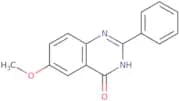
CAS:<p>Versatile small molecule scaffold</p>Formula:C15H12N2O2Purity:Min. 95%Molecular weight:252.27 g/mol