Building Blocks
Subcategories of "Building Blocks"
- Boronic Acids & Boronic Acid Derivatives(5,778 products)
- Chiral Building Blocks(1,243 products)
- Hydrocarbon Building Blocks(6,099 products)
- Organic Building Blocks(61,038 products)
Found 205373 products of "Building Blocks"
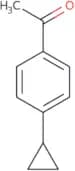
1-(4-Cyclopropylphenyl)ethanone
CAS:Versatile small molecule scaffold
Formula:C11H12OPurity:Min. 95%Molecular weight:160.22 g/mol1-(4-Cyclobutylphenyl)ethan-1-one
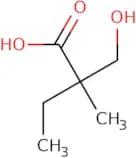
CAS:Versatile small molecule scaffoldFormula:C12H14OPurity:Min. 95%Molecular weight:174.24 g/mol2-(Hydroxymethyl)-2-methylbutanoic acid
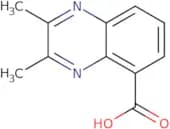
CAS:2-(Hydroxymethyl)-2-methylbutanoic acid is an inducer of microbial growth that can be used in the synthesis of organic acids. It has been shown to be efficient in the synthesis of 2-methyl-3-oxobutyric acid, which is a byproduct of L-malate degradation. The enantiomeric form of 2-(hydroxymethyl)-2-methylbutanoic acid is more effective at inducing the production of organic acids than its enantiomer. The source for this chemical is either from natural sources or from chemical synthesis. The carbon source for this chemical can be sugars, starch, or cellulose. This chemical has been found to increase efficiency in the production of organic acids through enzymatic reactions when used as a culture medium additive.Formula:C6H12O3Purity:Min. 95%Molecular weight:132.16 g/mol2,3-Dimethyl-quinoxaline-5-carboxylic acid
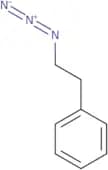
CAS:Versatile small molecule scaffoldFormula:C11H10N2O2Purity:Min. 95%Molecular weight:202.21 g/mol(2-Azidoethyl)benzene
CAS:2-Azidoethylbenzene is a coumarin derivative that has been identified as an important bioactive molecule. It is synthesized by the reaction of azides and benzene using a reaction solution. The compound reacts with hydroxyl groups to form a C-N bond, which may be responsible for its biological activity. 2-Azidoethylbenzene has been shown to have anti-leukemia effects in radiation-sensitive leukemia cells. It also has vasodilatory properties that may be related to the increase in blood pressure induced by the compound. 2-Azidoethylbenzene has also been shown to be effective against hypoxia inducible factors such as HIF1α, which are proteins involved in cell growth and proliferation.
Formula:C8H9N3Purity:Min. 95%Molecular weight:147.18 g/mol1-Azidohexane
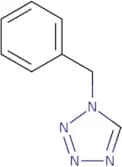
CAS:1-Azidohexane is a nitro-containing molecule that can be used as a receptor binding agent. It binds to the dopamine receptor and has been shown to inhibit tumor growth in mice. 1-Azidohexane has been found to bind to the polymerase chain reaction (PCR) enzyme, which is an enzyme that replicates DNA as part of the process of DNA amplification. The hydroxyl group on the molecule reacts with azides to form cationic polymers that are able to cross membranes and enter cells, which then polymerize inside the cell. This process can be used for gene delivery or for DNA sequencing.Formula:C6H13N3Purity:Min. 95%Molecular weight:127.19 g/mol1-Benzyl-1H-1,2,3,4-tetrazole
CAS:1-Benzyl-1H-1,2,3,4-tetrazole (BTT) is a tetrazole compound that can be used as an alkylating agent. It reacts with primary amines to form a 1:1 adduct by N-alkylation. The reaction of BTT with azide results in the formation of an azido group. BTT has shown minimal inhibitory concentration against gram-negative bacteria such as Salmonella enterica and Escherichia coli. It also interacts with the molecule's p2 orbital which is predicted to have minimal interaction and reaction intermediates.Formula:C8H8N4Purity:Min. 95%Molecular weight:160.18 g/mol3-Amino-1-(2-methoxyethyl)thiourea
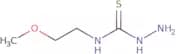
CAS:Versatile small molecule scaffold
Formula:C4H11N3OSPurity:Min. 95%Molecular weight:149.22 g/mol4,4-Dimethyl-3-thiosemicarbazide
CAS:Versatile small molecule scaffold
Formula:C3H9N3SPurity:Min. 95%Molecular weight:119.19 g/mol2-[2-(Methoxycarbonyl)phenyl]benzoic acid
CAS:2-[2-(Methoxycarbonyl)phenyl]benzoic acid is a colorless crystalline compound that is soluble in water and insoluble in alcohol. It has a constant boiling point at 310°C, with a melting point of 186°C. 2-[2-(Methoxycarbonyl)phenyl]benzoic acid reacts with methyl alcohol and heat to produce methyl benzoate. The reaction rate increases with increasing concentrations of alkaline hydrolysis, monomethyl, and methyl alcohol. The product of the reaction is an anion that can be alkenyl or diphenic depending on the other reactants present. The parameters for this reaction are temperature, kinetics, alkaline hydrolysis, monomethyl, and isopropyl alcohol.Formula:C15H12O4Purity:Min. 95%Molecular weight:256.25 g/mol1,7,7-Trimethylspiro[bicyclo[2.2.1]heptane-2,4'-imidazolidine]-2',5'-dione
CAS:Versatile small molecule scaffold
Formula:C12H18N2O2Purity:Min. 95%Molecular weight:222.28 g/mol6,6-Dimethylspiro[bicyclo[3.1.1]heptane-2,2'-oxirane]
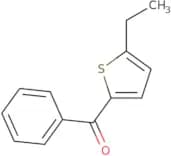
CAS:6,6-Dimethylspiro[bicyclo[3.1.1]heptane-2,2'-oxirane] is an inorganic compound that can be synthesized through the reaction of diphenyl sulfoxide with hydroxyl group. It is a polymerization initiator that is used to produce polymers with cationic polymerization and has been shown to have bactericidal activity against gram-positive bacteria such as Staphylococcus aureus. 6,6-Dimethylspiro[bicyclo[3.1.1]heptane-2,2'-oxirane] is also an excellent chemical for producing epoxides and other organic compounds as products of its reactions.Formula:C10H16OPurity:Min. 95%Molecular weight:152.23 g/mol(5-Ethylthiophen-2-yl)(phenyl)methanone
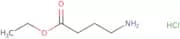
CAS:Extensive studies have been conducted to investigate the photochemical reactivity of (5-ethylthiophen-2-yl)(phenyl)methanone. The compound is activated by irradiation, and the rate of reaction increases with the intensity of light. Potassium clavulanate enhances this process, increasing the yield of products formed. Studies have shown that carprofen and benoxaprofen inhibit this reaction, which suggests that these drugs may be useful for treating skin diseases caused by bacteria. The ethyl group in (5-ethylthiophen-2-yl)(phenyl)methanone is a nonsteroidal moiety that produces an antibacterial effect. Hplc analysis has shown that clavulanic acid can be used as a constant in a model system to study the interaction between (5-ethylthiophen-2-yl)(phenyl)methanone and bacterial cells in vivo.Formula:C13H12OSPurity:Min. 95%Molecular weight:216.3 g/molEthyl 4-aminobutyrate hydrochloride
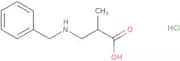
CAS:Ethyl 4-aminobutyrate hydrochloride is a potent inhibitor of matrix metalloproteinases that is used in the treatment of cancer. It has been shown to inhibit the production of lipofuscin and oxidative stress in cell cultures. Ethyl 4-aminobutyrate hydrochloride has also been shown to inhibit the uptake of toxic substances by cells, as well as to suppress degenerative diseases such as Parkinson's disease. This compound is able to inhibit MMPs by competitive inhibition of zinc binding or by binding to the active site. It can also be synthesized chemically using a fluorophore and chemoenzymatic method. The synthesis requires a hydroxide solution and a sodium hydroxide solution.Formula:C6H13NO2·HClPurity:Min. 95%Molecular weight:167.63 g/mol3-(Benzylamino)-2-methylpropanoic acid hydrochloride
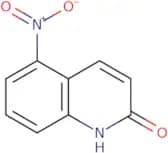
CAS:Versatile small molecule scaffoldFormula:C11H16ClNO2Purity:Min. 95%Molecular weight:229.7 g/mol5-Nitro-1H-quinolin-2-one
CAS:Versatile small molecule scaffold
Formula:C9H6N2O3Purity:Min. 95%Molecular weight:190.16 g/mol1-Bromodocosane
CAS:1-Bromodocosane is a microcapsule that is used as an antimicrobial agent. It consists of a water-soluble polymer, polyvinyl alcohol, which forms a shell around the active ingredient, 1-bromodocosane. The brominated derivative of docosane has been shown to have a profound effect on aliphatic hydrocarbons in plant physiology.
Formula:C22H45BrPurity:Min. 95%Molecular weight:389.5 g/mol2-(Heptylamino)acetic acid hydrochloride
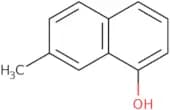
CAS:Versatile small molecule scaffoldFormula:C9H20ClNO2Purity:Min. 95%Molecular weight:209.71 g/mol7-Methyl-1-naphthol
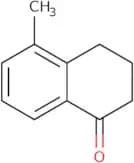
CAS:7-Methyl-1-naphthol is a prenylated aromatic compound that has been shown to have antioxidative properties. This compound has been found in Streptomyces coelicolor and was shown to have an inhibitory effect on the growth of monosubstituted benzenes. 7-Methyl-1-naphthol has also been found to be insoluble in water and does not dissolve in organic solvents, making it difficult to analyse. It is presumed that this compound is present in environmental pollution because it is resistant to peroxide degradation.Formula:C11H10OPurity:Min. 95%Molecular weight:158.2 g/mol5-Methyl-3,4-dihydronaphthalen-1(2H)-one
CAS:Versatile small molecule scaffoldFormula:C11H12OPurity:Min. 95%Molecular weight:160.22 g/mol




![2-[2-(Methoxycarbonyl)phenyl]benzoic acid](/_next/image/?url=https%3A%2Fstatic.cymitquimica.com%2Fproducts%2F3D%2Fthumb-webp%2FGAA92684.webp&w=3840&q=75)
![1,7,7-Trimethylspiro[bicyclo[2.2.1]heptane-2,4'-imidazolidine]-2',5'-dione](/_next/image/?url=https%3A%2Fstatic.cymitquimica.com%2Fproducts%2F3D%2Fthumb-webp%2FGAA92930.webp&w=3840&q=75)
![6,6-Dimethylspiro[bicyclo[3.1.1]heptane-2,2'-oxirane]](/_next/image/?url=https%3A%2Fstatic.cymitquimica.com%2Fproducts%2F3D%2Fthumb-webp%2FGAA93154.webp&w=3840&q=75)