Building Blocks
This section contains fundamental products for the synthesis of organic and biological compounds. Building blocks are the essential starting materials used to construct complex molecules through various chemical reactions. They play a critical role in drug discovery, material science, and chemical research. At CymitQuimica, we offer a diverse range of high-quality building blocks to support your innovative research and industrial projects, ensuring you have the essential components for successful synthesis.
Subcategories of "Building Blocks"
- Boronic Acids & Boronic Acid Derivatives(5,756 products)
- Chiral Building Blocks(1,242 products)
- Hydrocarbon Building Blocks(6,095 products)
- Organic Building Blocks(61,037 products)
Found 196200 products of "Building Blocks"
Sort by
Purity (%)
0
100
|
0
|
50
|
90
|
95
|
100
2-(Bromomethyl)bicyclo[2.2.2]octane
CAS:<p>Versatile small molecule scaffold</p>Formula:C9H15BrPurity:Min. 95%Molecular weight:203.12 g/mol1-Cyclobutoxy-4-ethynylbenzene
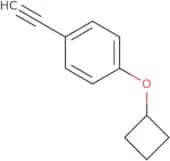
CAS:<p>Versatile small molecule scaffold</p>Formula:C12H12OPurity:Min. 95%Molecular weight:172.22 g/mol1,3-Dimethoxypropane-2-sulfonamide
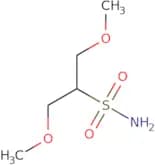
CAS:<p>Versatile small molecule scaffold</p>Formula:C5H13NO4SPurity:Min. 95%Molecular weight:183.23 g/mol2-Fluoro-5-(methanesulfinylamino)benzoic acid
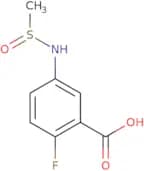
CAS:<p>Versatile small molecule scaffold</p>Formula:C8H8FNO3SPurity:Min. 95%Molecular weight:217.22 g/mol1-Cyclopropylcycloheptan-1-amine
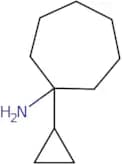
CAS:<p>Versatile small molecule scaffold</p>Formula:C10H19NPurity:Min. 95%Molecular weight:153.3 g/mol4-Bromobenzaldehyde
CAS:<p>Please enquire for more information about 4-Bromobenzaldehyde including the price, delivery time and more detailed product information at the technical inquiry form on this page</p>Formula:C7H5BrOMolecular weight:185.03 g/mol6-Aminonaphthalene-1-sulfonamide
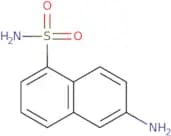
CAS:<p>6-Aminonaphthalene-1-sulfonamide is a monoclonal antibody that binds to the tissue-type plasminogen activator (tPA) receptor and stabilizes the tPA molecule. It has been shown to have a protective effect on tPA from inactivation by serine proteases, which may be useful in life-threatening conditions such as myocardial infarction or stroke. 6-Aminonaphthalene-1-sulfonamide is a potential treatment for thromboembolic disease.</p>Formula:C10H10N2O2SPurity:Min. 95%Molecular weight:222.27 g/mol1-(2,6-Dimethylphenyl)-2,5-dihydro-1H-pyrrole-2,5-dione
CAS:<p>1-(2,6-Dimethylphenyl)-2,5-dihydro-1H-pyrrole-2,5-dione is a pharmaceutical agent that acts as an agonist at the adenosine receptor A2A. It has shown to have a high affinity for the A2A receptor and is selective for the A2A receptor over the other adenosine receptors. 1-(2,6-Dimethylphenyl)-2,5-dihydro-1H-pyrrole-2,5-dione has been used in research to study the role of the A2A adenosine receptor in regulating blood pressure and heart rate.</p>Formula:C12H11NO2Purity:Min. 95%Molecular weight:201.22 g/mol4,8-Dichloro-5-methoxy-2-methylquinoline
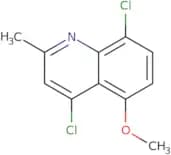
CAS:<p>Versatile small molecule scaffold</p>Formula:C11H9Cl2NOPurity:Min. 95%Molecular weight:242.1 g/molPhenothiazine 5-oxide
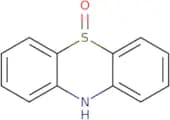
CAS:<p>Phenothiazine 5-oxide is a potent inhibitor of oxidative reactions that can be used to oxidize phenoxazine. Phenothiazine 5-oxide has been shown to inhibit the oxidation of phenoxazine by sodium hydroxide solution in an electrochemical study. This vibrational, irreversible oxidation reaction was introduced by the introduction of sodium salts, which are potent inhibitors of oxidative reactions. Phenothiazine 5-oxide has been shown to have potent inhibitory activity against cervical cancer cells and shows promise as a chemotherapeutic agent for this type of cancer.</p>Formula:C12H9NOSPurity:Min. 95%Molecular weight:215.27 g/mol4-Chloro-2-methyl-6-nitroquinoline
CAS:<p>4-Chloro-2-methyl-6-nitroquinoline is an antimicrobial agent that exhibits a broad spectrum of activity against both gram-positive and gram-negative bacteria. It also has antifungal properties. 4-Chloro-2-methyl-6-nitroquinoline inhibits the growth of bacteria by binding to DNA and RNA in the bacterial cell, thereby inhibiting transcription and replication. It also inhibits the synthesis of proteins in fungi, which may be due to its ability to bind to fungal ribosomes and inhibit protein synthesis.</p>Formula:C10H7ClN2O2Purity:Min. 95%Molecular weight:222.63 g/mol3-Phenyl-5-(trichloromethyl)-1,2,4-oxadiazole
CAS:<p>Versatile small molecule scaffold</p>Formula:C9H5Cl3N2OPurity:Min. 95%Molecular weight:263.5 g/molMethyl 3-(aminosulfonyl)-4-chlorobenzoate
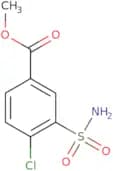
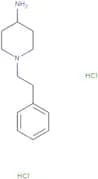
CAS:<p>Versatile small molecule scaffold</p>Formula:C8H8ClNO4SPurity:Min. 95%Molecular weight:249.67 g/mol1-(2-Phenylethyl)-4-piperidinamine dihydrochloride
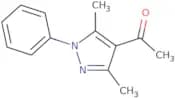
CAS:Controlled Product<p>Versatile small molecule scaffold</p>Formula:C13H22Cl2N2Purity:Min. 95%Molecular weight:277.23 g/mol1-(3,5-dimethyl-1-phenyl-1H-pyrazol-4-yl)ethan-1-one
CAS:<p>Versatile small molecule scaffold</p>Formula:C13H14N2OPurity:Min. 95%Molecular weight:214.27 g/mol5-(1H-Indol-3-yl)pentanoic acid
CAS:<p>5-(1H-Indol-3-yl)pentanoic acid is a potent and selective serotonin reuptake inhibitor (SSRI). It has been shown to have a high affinity for the serotonin transporter (SERT), with a binding constant of about 5 nM. The compound has been shown to be bifunctional, which means it can inhibit both serotonin and dopamine reuptake. 5-(1H-Indol-3-yl)pentanoic acid is also orally active, so it can be used in vivo as well as in vitro. This drug has been found to have pharmacokinetic properties that are similar to those of fluoxetine and citalopram. Pharmacophore modeling studies have revealed that this drug binds to the SERT by creating hydrogen bonds with amino acids such as serine, threonine, tyrosine and tryptophan.</p>Formula:C13H15NO2Purity:Min. 95%Molecular weight:217.26 g/mol1-Nitro-4-(2-nitrobut-1-en-1-yl)benzene
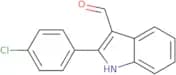
CAS:<p>Versatile small molecule scaffold</p>Formula:C10H10N2O4Purity:Min. 95%Molecular weight:222.2 g/mol2-(4-Chlorophenyl)-1H-indole-3-carbaldehyde
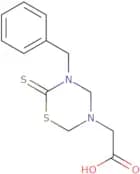
CAS:<p>Versatile small molecule scaffold</p>Formula:C15H10ClNOPurity:Min. 95%Molecular weight:255.7 g/mol2-(5-Benzyl-6-thioxo-1,3,5-thiadiazinan-3-yl)acetic acid
CAS:<p>2-(5-Benzyl-6-thioxo-1,3,5-thiadiazinan-3-yl)acetic acid is a hydroxyl group containing fatty acid. It is an implanting agent that has biological properties including skin condition and choroidal neovascularization. Inhibitor compounds have been shown to be effective in preventing the growth of δ opioid receptor agonists in vitro. Sodium citrate can be used as a reconstituted cross linking agent for 2-(5-benzyl-6-thioxo-1,3,5-thiadiazinan-3-yl)acetic acid. Fatty acids are also a cross linking agents for 2-(5-benzyl-6-thioxo-1,3,5 thiadiazinan 3 yl)acetic acid. Furthermore, herpes simplex virus and other viruses are inhibited by 2-(5 benzyl</p>Formula:C12H14N2O2S2Purity:Min. 95%Molecular weight:282.4 g/mol(2S)-4-Methyl-2-(4-methylbenzenesulfonamido)pentanoic acid
CAS:<p>(2S)-4-Methyl-2-(4-methylbenzenesulfonamido)pentanoic acid is an inhibitor of aminopeptidases, which are enzymes that catalyze the hydrolysis of peptides and proteins. This drug binds to the active site of the enzyme and inhibits its activity. The inhibition is reversible and competitive. It has been shown that this drug has a high inhibitory effect on aminopeptidases in vitro, but the concentration required for inhibition is higher than the therapeutic level. The interaction between (2S)-4-Methyl-2-(4-methylbenzenesulfonamido)pentanoic acid and chloromethylketone has not been investigated yet.<br>(2S)-4-Methyl-2-(4-methylbenzenesulfonamido)pentanoic acid is an inhibitor of pancreatic aminopeptidases A, B, C, D,</p>Formula:C13H19NO4SPurity:Min. 95%Molecular weight:285.36 g/mol
![2-(Bromomethyl)bicyclo[2.2.2]octane](/_next/image/?url=https%3A%2Fstatic.cymitquimica.com%2Fproducts%2F3D%2Fthumb-webp%2FAZC91876.webp&w=3840&q=75)