Building Blocks
This section contains fundamental products for the synthesis of organic and biological compounds. Building blocks are the essential starting materials used to construct complex molecules through various chemical reactions. They play a critical role in drug discovery, material science, and chemical research. At CymitQuimica, we offer a diverse range of high-quality building blocks to support your innovative research and industrial projects, ensuring you have the essential components for successful synthesis.
Subcategories of "Building Blocks"
- Boronic Acids & Boronic Acid Derivatives(5,756 products)
- Chiral Building Blocks(1,242 products)
- Hydrocarbon Building Blocks(6,095 products)
- Organic Building Blocks(61,055 products)
Found 199650 products of "Building Blocks"
Sort by
Purity (%)
0
100
|
0
|
50
|
90
|
95
|
100
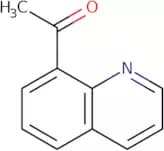
1-(Quinolin-8-yl)ethanone
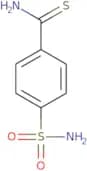
CAS:<p>Versatile small molecule scaffold</p>Formula:C11H9NOPurity:Min. 95%Molecular weight:171.2 g/mol4-Sulfamoylbenzene-1-carbothioamide
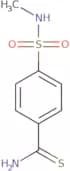
CAS:<p>Versatile small molecule scaffold</p>Formula:C7H8N2O2S2Purity:Min. 95%Molecular weight:216.3 g/mol4-(Methylsulfamoyl)benzene-1-carbothioamide
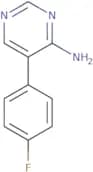
CAS:<p>Versatile small molecule scaffold</p>Formula:C8H10N2O2S2Purity:Min. 95%Molecular weight:230.3 g/mol5-(4-Fluorophenyl)pyrimidin-4-amine
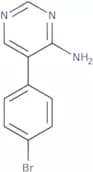
CAS:<p>Versatile small molecule scaffold</p>Formula:C10H8FN3Purity:Min. 95%Molecular weight:189.19 g/mol5-(4-Bromophenyl)pyrimidin-4-amine
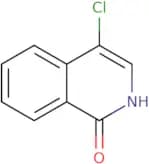
CAS:<p>Versatile small molecule scaffold</p>Formula:C10H8BrN3Purity:Min. 95%Molecular weight:250.09 g/mol4-Chloro-1(2H)-isoquinolone
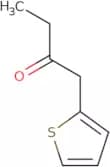
CAS:<p>Versatile small molecule scaffold</p>Formula:C9H6ClNOPurity:Min. 95%Molecular weight:179.6 g/mol1-(Thiophen-2-yl)butan-2-one
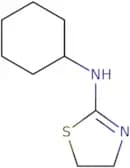
CAS:Versatile small molecule scaffoldFormula:C8H10OSPurity:Min. 95%Molecular weight:154.23 g/molN-Cyclohexyl-4,5-dihydro-1,3-thiazol-2-amine
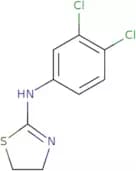
CAS:<p>Versatile small molecule scaffold</p>Formula:C9H16N2SPurity:Min. 95%Molecular weight:184.3 g/molN-(3,4-Dichlorophenyl)-4,5-dihydro-1,3-thiazol-2-amine
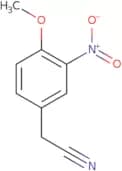
CAS:<p>Versatile small molecule scaffold</p>Formula:C9H8Cl2N2SPurity:Min. 95%Molecular weight:247.14 g/mol2-(4-Methoxy-3-nitrophenyl)acetonitrile
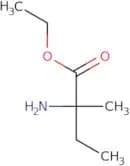
CAS:<p>Versatile small molecule scaffold</p>Formula:C9H8N2O3Purity:Min. 95%Molecular weight:192.17 g/molEthyl 2-amino-2-methylbutanoate
CAS:<p>Ethyl 2-amino-2-methylbutanoate is a type of chemical compound that belongs to the group of organic compounds called esters. It has been shown to be a potential anti-cancer drug that inhibits DNA replication and induces apoptosis in cancer cells. Ethyl 2-amino-2-methylbutanoate has also been shown to have an effect on the histone lysine residues, which are important for cell proliferation and differentiation. Animal studies have suggested that this compound may also protect against breast cancer, with the ability to reduce tumor growth by inhibiting the production of estrogen receptors in mammary glands. The anticancer activity of Ethyl 2-amino-2-methylbutanoate is due to its ability to inhibit diltiazem hydrochloride, which is an enzyme involved in the synthesis of DNA and RNA.</p>Formula:C7H15NO2Purity:Min. 95%Molecular weight:145.2 g/mol4-phenyl-1H-imidazole-2-carbaldehyde
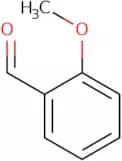
CAS:<p>Versatile small molecule scaffold</p>Formula:C10H7N2OPurity:Min. 95%Molecular weight:171.17 g/mol2-Methoxybenzaldehyde-d3
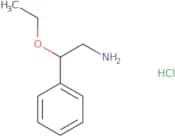
CAS:<p>Versatile small molecule scaffold</p>Formula:C8H8O2Purity:Min. 95%Molecular weight:139.17 g/mol2-Ethoxy-2-phenylethan-1-amine hydrochloride
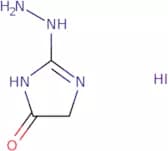
CAS:Controlled Product<p>Versatile small molecule scaffold</p>Formula:C10H16ClNOPurity:Min. 95%Molecular weight:201.69 g/mol2-Hydrazinyl-4,5-dihydro-1H-imidazol-5-one hydroiodide
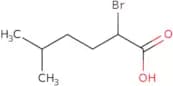
CAS:<p>Versatile small molecule scaffold</p>Formula:C3H7IN4OPurity:Min. 95%Molecular weight:242.02 g/mol2-Bromo-5-methylhexanoic acid
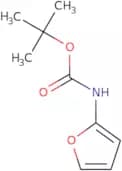
CAS:<p>Versatile small molecule scaffold</p>Formula:C7H13BrO2Purity:Min. 95%Molecular weight:209.08 g/moltert-Butyl N-(2-furyl)carbamate
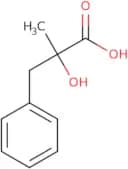
CAS:<p>Versatile small molecule scaffold</p>Formula:C9H13NO3Purity:Min. 95%Molecular weight:183.21 g/mol2-Hydroxy-2-methyl-3-phenylpropanoic acid
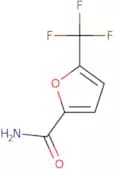
CAS:<p>2-Hydroxy-2-methyl-3-phenylpropanoic acid is a chlorinating agent that can be used as a cancer drug. It is one of the active substances in the plant didemnin, which has shown anticancer effects. 2-Hydroxy-2-methyl-3-phenylpropanoic acid reacts with oxindole to form 2,4,5,6,7 tetrahydrooxindole and 2,4,5,6 tetrahydrodideoxyoxindole. The chlorination reaction is catalyzed by corynebacterium glutamicum and produces epoxides. The epoxide ring opens under physiological conditions and reacts with hydroxyl groups on other molecules to form chlorohydrins or hydroxylamines.</p>Formula:C10H12O3Purity:Min. 95%Molecular weight:180.2 g/mol5-(Trifluoromethyl)furan-2-carboxamide
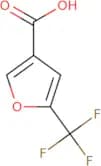
CAS:<p>Versatile small molecule scaffold</p>Formula:C6H4F3NO2Purity:Min. 95%Molecular weight:179.1 g/mol5-(Trifluoromethyl)furan-3-carboxylic acid
CAS:<p>Versatile small molecule scaffold</p>Formula:C6H3F3O3Purity:Min. 95%Molecular weight:180.08 g/mol