


Building Blocks
This section contains fundamental products for the synthesis of organic and biological compounds. Building blocks are the essential starting materials used to construct complex molecules through various chemical reactions. They play a critical role in drug discovery, material science, and chemical research. At CymitQuimica, we offer a diverse range of high-quality building blocks to support your innovative research and industrial projects, ensuring you have the essential components for successful synthesis.
Subcategories of "Building Blocks"
- Boronic Acids & Boronic Acid Derivatives(5,756 products)
- Chiral Building Blocks(1,242 products)
- Hydrocarbon Building Blocks(6,095 products)
- Organic Building Blocks(61,038 products)
Found 196817 products of "Building Blocks"
Sort by
Purity (%)
0
100
|
0
|
50
|
90
|
95
|
100
3-[2-(methoxycarbonyl)phenyl]propanoic acid
CAS:<p>Versatile small molecule scaffold</p>Formula:C11H12O4Purity:Min. 95%Molecular weight:208.2 g/mol6-Chloropyrimidine-4-carboxamide
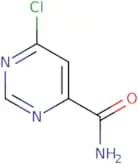
CAS:<p>Versatile small molecule scaffold</p>Formula:C5H4ClN3OPurity:Min. 95%Molecular weight:157.56 g/molImazapyr
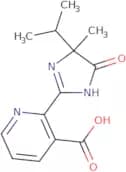
CAS:<p>Imazapyr is a herbicide that inhibits the activity of acetolactate synthase, an enzyme essential for plant growth. Imazapyr binds to the active site of acetolactate synthase and forms a stable complex with the enzyme, thereby inhibiting its activity. Imazapyr has been shown to have a low toxicity in mammals and is not absorbed through skin or lungs. This herbicide is also toxic to plants and fish, as it inhibits their growth by disrupting photosynthesis. Imazapyr does not bind to DNA, thus it does not induce mutations in bacterial chromosomes.</p>Formula:C13H15N3O3Purity:Min. 95%Molecular weight:261.28 g/mol2-(4-Bromophenyl)pent-4-en-2-ol
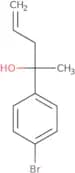
CAS:<p>Versatile small molecule scaffold</p>Formula:C11H13BrOPurity:Min. 95%Molecular weight:241.12 g/mol4-(1H-1,3-Benzodiazol-1-yl)phenol
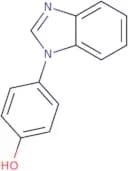
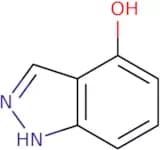
CAS:<p>Versatile small molecule scaffold</p>Formula:C13H10N2OPurity:Min. 95%Molecular weight:210.23 g/mol1H-Indazol-4-ol
CAS:<p>1H-Indazol-4-ol is a synthetic chemical with the molecular formula CHNO. It is the chloride, nitro, diammonium, enamine, divalent, methyl ester, acrylonitrile, polyethylene terephthalate and anion form of 1H-indazole. 1H-Indazol-4-ol is used in the synthesis of aminonaphthalenes and triazoles. The polymerization reaction for the production of cellulose acetate is also catalyzed by 1H-indazole. This chemical has been shown to have anion properties in solvents such as water and alcohols.</p>Formula:C7H6N2OPurity:Min. 95%Molecular weight:134.14 g/mol1-[(Benzyloxy)methyl]-4-bromobenzene
CAS:<p>Versatile small molecule scaffold</p>Formula:C14H13BrOPurity:Min. 95%Molecular weight:277.16 g/mol2,3-Dihydrospiro[indene-1,3'-pyrrolidine]-2',5'-dione
CAS:<p>Versatile small molecule scaffold</p>Formula:C12H11NO2Purity:Min. 95%Molecular weight:201.22 g/mol1,3-Dihydrospiro[indene-2,3'-pyrrolidine]-2',5'-dione
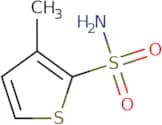
CAS:<p>Versatile small molecule scaffold</p>Formula:C12H11NO2Purity:Min. 95%Molecular weight:201.22 g/mol3-Methylthiophene-2-sulfonamide
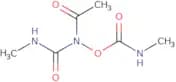
CAS:<p>Versatile small molecule scaffold</p>Formula:C5H7NO2S2Purity:Min. 95%Molecular weight:177.2 g/molN-(Methylcarbamoyl)acetamido N-methylcarbamate
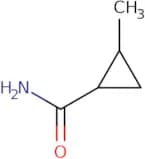
CAS:<p>N-(Methylcarbamoyl)acetamido N-methylcarbamate (NMCA) is a novel anti-cancer compound that selectively binds to the CB2 receptor. NMCA has been shown to inhibit the growth of cancer cells in vitro and in vivo, as well as reduce the size of bowel tumors. It also has a beneficial effect on cardiac function. The mechanism of action is not completely understood, but it may be due to binding to the CB2 receptor and blocking the activation of other receptors such as TNF-α. NMCA can be formulated into biocompatible polymers that are suitable for drug delivery. Furthermore, this compound can be used for treating inflammatory bowel disease and renal cell cancer.</p>Formula:C6H11N3O4Purity:Min. 95%Molecular weight:189.17 g/mol2-Methylcyclopropanecarboxamide
CAS:<p>2-Methylcyclopropanecarboxamide is a compound that has been shown to have anticoagulant properties. It binds to the active site of coagulation factor Xa and inhibits its activity, thereby preventing blood clots from forming. 2-Methylcyclopropanecarboxamide has also been shown to be an immunosuppressant, demonstrating a decrease in antibody response and reduced intestinal inflammation in mice. This drug has potential use as an anti-inflammatory agent or for the treatment of autoimmune diseases.</p>Formula:C5H9NOPurity:Min. 95%Molecular weight:99.13 g/mol2-[(4-Bromophenyl)methanesulfinyl]acetic acid
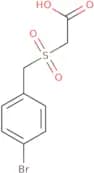
CAS:<p>Versatile small molecule scaffold</p>Formula:C9H9BrO3SPurity:Min. 95%Molecular weight:277.14 g/mol2-(4-Bromobenzylsulfonyl)acetic acid
CAS:<p>Versatile small molecule scaffold</p>Formula:C9H9BrO4SPurity:Min. 95%Molecular weight:293.14 g/molEthyl 7-Bromo-2-methylimidazo[1,2-a]pyridine-3-carboxylate
CAS:<p>Versatile small molecule scaffold</p>Formula:C11H11BrN2O2Purity:Min. 95%Molecular weight:283.12 g/mol6-Bromo-2-methylimidazo[1,2-a]pyridine-3-carboxylic acid
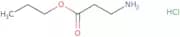
CAS:<p>Versatile small molecule scaffold</p>Formula:C9H7BrN2O2Purity:Min. 95%Molecular weight:255.07 g/molPropyl 3-aminopropanoate hydrochloride
CAS:<p>Versatile small molecule scaffold</p>Formula:C6H14ClNO2Purity:Min. 95%Molecular weight:167.63 g/mol[4-(Thien-2-yl)phenyl]methanol
CAS:<p>Versatile small molecule scaffold</p>Formula:C11H10OSPurity:Min. 95%Molecular weight:190.26 g/mol2-[4-(Bromomethyl)phenyl]thiophene
CAS:<p>Versatile small molecule scaffold</p>Formula:C11H9BrSPurity:Min. 95%Molecular weight:253.16 g/mol5-Chlorobicyclo[4.2.0]octa-1,3,5-trien-7-one
CAS:<p>Versatile small molecule scaffold</p>Formula:C8H5ClOPurity:Min. 95%Molecular weight:152.58 g/mol
![3-[2-(methoxycarbonyl)phenyl]propanoic acid](/_next/image/?url=https%3A%2Fstatic.cymitquimica.com%2Fproducts%2F3D%2Fthumb-webp%2FGDA32974.webp&w=3840&q=75)

![1-[(Benzyloxy)methyl]-4-bromobenzene](/_next/image/?url=https%3A%2Fstatic.cymitquimica.com%2Fproducts%2F3D%2Fthumb-webp%2FGDA39527.webp&w=3840&q=75)
![2,3-Dihydrospiro[indene-1,3'-pyrrolidine]-2',5'-dione](/_next/image/?url=https%3A%2Fstatic.cymitquimica.com%2Fproducts%2F3D%2Fthumb-webp%2FGDA40216.webp&w=3840&q=75)
![1,3-Dihydrospiro[indene-2,3'-pyrrolidine]-2',5'-dione](/_next/image/?url=https%3A%2Fstatic.cymitquimica.com%2Fproducts%2F3D%2Fthumb-webp%2FGDA40221.webp&w=3840&q=75)
![2-[(4-Bromophenyl)methanesulfinyl]acetic acid](/_next/image/?url=https%3A%2Fstatic.cymitquimica.com%2Fproducts%2F3D%2Fthumb-webp%2FGDA43133.webp&w=3840&q=75)
![Ethyl 7-Bromo-2-methylimidazo[1,2-a]pyridine-3-carboxylate](/_next/image/?url=https%3A%2Fstatic.cymitquimica.com%2Fproducts%2F3D%2Fthumb-webp%2FGDA43856.webp&w=3840&q=75)
![6-Bromo-2-methylimidazo[1,2-a]pyridine-3-carboxylic acid](/_next/image/?url=https%3A%2Fstatic.cymitquimica.com%2Fproducts%2F3D%2Fthumb-webp%2FGDA43857.webp&w=3840&q=75)
![[4-(Thien-2-yl)phenyl]methanol](/_next/image/?url=https%3A%2Fstatic.cymitquimica.com%2Fproducts%2F3D%2Fthumb-webp%2FGDA44344.webp&w=3840&q=75)
![2-[4-(Bromomethyl)phenyl]thiophene](/_next/image/?url=https%3A%2Fstatic.cymitquimica.com%2Fproducts%2F3D%2Fthumb-webp%2FGDA44346.webp&w=3840&q=75)
![5-Chlorobicyclo[4.2.0]octa-1,3,5-trien-7-one](/_next/image/?url=https%3A%2Fstatic.cymitquimica.com%2Fproducts%2F3D%2Fthumb-webp%2FGDA44763.webp&w=3840&q=75)