Building Blocks
This section contains fundamental products for the synthesis of organic and biological compounds. Building blocks are the essential starting materials used to construct complex molecules through various chemical reactions. They play a critical role in drug discovery, material science, and chemical research. At CymitQuimica, we offer a diverse range of high-quality building blocks to support your innovative research and industrial projects, ensuring you have the essential components for successful synthesis.
Subcategories of "Building Blocks"
- Boronic Acids & Boronic Acid Derivatives(5,756 products)
- Chiral Building Blocks(1,242 products)
- Hydrocarbon Building Blocks(6,095 products)
- Organic Building Blocks(61,055 products)
Found 199650 products of "Building Blocks"
Sort by
Purity (%)
0
100
|
0
|
50
|
90
|
95
|
100
1-[(3-Aminophenyl)methyl]-1,2,3,6-tetrahydropyridazine-3,6-dione
CAS:Controlled Product<p>1-[(3-Aminophenyl)methyl]-1,2,3,6-tetrahydropyridazine-3,6-dione is a potent inhibitor of ion channels and ligands. It has been shown to inhibit the activity of voltage-gated potassium channels. 1-[(3-Aminophenyl)methyl]-1,2,3,6-tetrahydropyridazine-3,6-dione is used as a research tool for cell biology studies such as studying the effects of peptides on ion channel activation.</p>Formula:C11H11N3O2Purity:Min. 95%Molecular weight:217.22 g/mol2-({[4-(Trifluoromethoxy)phenyl]methyl}sulfanyl)acetic acid
CAS:<p>Versatile small molecule scaffold</p>Formula:C10H9F3O3SPurity:Min. 95%Molecular weight:266.24 g/mol3-[5-(4-Bromophenyl)-4-methyl-1,3-oxazol-2-yl]propanoic acid
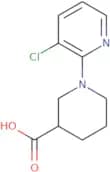
CAS:<p>Versatile small molecule scaffold</p>Formula:C13H12BrNO3Purity:Min. 95%Molecular weight:310.14 g/mol1-(3-Chloropyridin-2-yl)piperidine-3-carboxylic acid
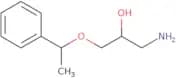
CAS:<p>Versatile small molecule scaffold</p>Formula:C11H13ClN2O2Purity:Min. 95%Molecular weight:240.68 g/mol1-Amino-3-(1-phenylethoxy)propan-2-ol
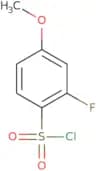
CAS:<p>Versatile small molecule scaffold</p>Formula:C11H17NO2Purity:Min. 95%Molecular weight:195.26 g/mol2-Fluoro-4-methoxybenzenesulfonyl chloride
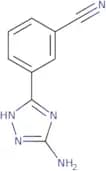
CAS:<p>Versatile small molecule scaffold</p>Formula:C7H6ClFO3SPurity:Min. 95%Molecular weight:224.64 g/mol3-(5-Amino-1H-1,2,4-triazol-3-yl)benzonitrile
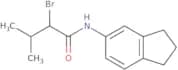
CAS:<p>Versatile small molecule scaffold</p>Formula:C9H7N5Purity:Min. 95%Molecular weight:185.19 g/mol2-Bromo-N-(2,3-dihydro-1H-inden-5-yl)-3-methylbutanamide
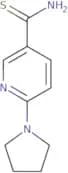
CAS:<p>Versatile small molecule scaffold</p>Formula:C14H18BrNOPurity:Min. 95%Molecular weight:296.2 g/mol6-(Pyrrolidin-1-yl)pyridine-3-carbothioamide
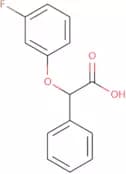
CAS:<p>Versatile small molecule scaffold</p>Formula:C10H13N3SPurity:Min. 95%Molecular weight:207.3 g/mol2-(3-Fluorophenoxy)-2-phenylacetic acid
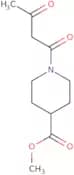
CAS:<p>Versatile small molecule scaffold</p>Formula:C14H11FO3Purity:Min. 95%Molecular weight:246.23 g/molMethyl 1-(3-oxobutanoyl)piperidine-4-carboxylate
CAS:<p>Versatile small molecule scaffold</p>Formula:C11H17NO4Purity:Min. 95%Molecular weight:227.26 g/mol2-[(2-Fluorophenyl)sulfanyl]-2-phenylacetic acid
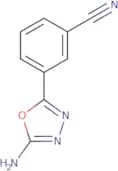
CAS:<p>2-[(2-Fluorophenyl)sulfanyl]-2-phenylacetic acid (FPSA) is a potent activator of the G protein-coupled receptor, GPR18. It has been shown to inhibit ion channels and to interact with antibodies. FPSA has been used in research as a tool for studying protein interactions and ligand receptor pharmacology.</p>Formula:C14H11FO2SPurity:Min. 95%Molecular weight:262.3 g/mol3-(5-Amino-1,3,4-oxadiazol-2-yl)benzonitrile
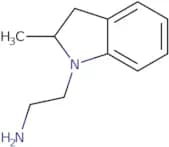
CAS:<p>Versatile small molecule scaffold</p>Formula:C9H6N4OPurity:Min. 95%Molecular weight:186.17 g/mol2-(2-Methyl-2,3-dihydro-1H-indol-1-yl)ethan-1-amine
CAS:<p>Versatile small molecule scaffold</p>Formula:C11H16N2Purity:Min. 95%Molecular weight:176.26 g/mol3-[(2-Methoxyethyl)carbamoyl]benzene-1-sulfonyl chloride
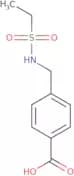
CAS:<p>Versatile small molecule scaffold</p>Formula:C10H12ClNO4SPurity:Min. 95%Molecular weight:277.73 g/mol4-(Ethanesulfonamidomethyl)benzoic acid
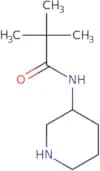
CAS:<p>Versatile small molecule scaffold</p>Formula:C10H13NO4SPurity:Min. 95%Molecular weight:243.28 g/mol2,2-Dimethyl-N-(piperidin-3-yl)propanamide
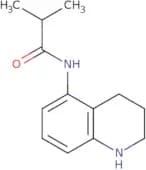
CAS:<p>2,2-Dimethyl-N-(piperidin-3-yl)propanamide is a potent, selective and competitive inhibitor of the N-methyl-D-aspartate (NMDA) receptor. This compound binds to the glutamate recognition site of the NMDA receptor channel, blocking ion flux and thereby inhibiting neuronal activity. In vitro, 2,2-dimethyl-N-(piperidin-3-yl)propanamide has been shown to inhibit NMDA receptor current with IC50 values in the range of 0.5–1 μM.</p>Formula:C10H20N2OPurity:Min. 95%Molecular weight:184.28 g/mol2-Methyl-N-(1,2,3,4-tetrahydroquinolin-5-yl)propanamide
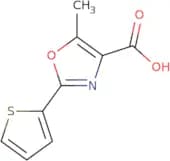
CAS:<p>Versatile small molecule scaffold</p>Formula:C13H18N2OPurity:Min. 95%Molecular weight:218.29 g/mol5-Methyl-2-(thiophen-2-yl)-1,3-oxazole-4-carboxylic acid
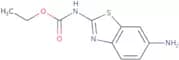
CAS:<p>Versatile small molecule scaffold</p>Formula:C9H7NO3SPurity:Min. 95%Molecular weight:209.22 g/molEthyl N-(6-amino-1,3-benzothiazol-2-yl)carbamate
CAS:<p>Versatile small molecule scaffold</p>Formula:C10H11N3O2SPurity:Min. 95%Molecular weight:237.28 g/mol
![1-[(3-Aminophenyl)methyl]-1,2,3,6-tetrahydropyridazine-3,6-dione](/_next/image/?url=https%3A%2Fstatic.cymitquimica.com%2Fproducts%2F3D%2Fthumb-webp%2FRQB51424.webp&w=3840&q=75)

![2-({[4-(Trifluoromethoxy)phenyl]methyl}sulfanyl)acetic acid](/_next/image/?url=https%3A%2Fstatic.cymitquimica.com%2Fproducts%2F3D%2Fthumb-webp%2FRQB51445.webp&w=3840&q=75)
![3-[5-(4-Bromophenyl)-4-methyl-1,3-oxazol-2-yl]propanoic acid](/_next/image/?url=https%3A%2Fstatic.cymitquimica.com%2Fproducts%2F3D%2Fthumb-webp%2FRQB51582.webp&w=3840&q=75)
![2-[(2-Fluorophenyl)sulfanyl]-2-phenylacetic acid](/_next/image/?url=https%3A%2Fstatic.cymitquimica.com%2Fproducts%2F3D%2Fthumb-webp%2FRQB52182.webp&w=3840&q=75)
![3-[(2-Methoxyethyl)carbamoyl]benzene-1-sulfonyl chloride](/_next/image/?url=https%3A%2Fstatic.cymitquimica.com%2Fproducts%2F3D%2Fthumb-webp%2FRQB52259.webp&w=3840&q=75)