Building Blocks
This section contains fundamental products for the synthesis of organic and biological compounds. Building blocks are the essential starting materials used to construct complex molecules through various chemical reactions. They play a critical role in drug discovery, material science, and chemical research. At CymitQuimica, we offer a diverse range of high-quality building blocks to support your innovative research and industrial projects, ensuring you have the essential components for successful synthesis.
Subcategories of "Building Blocks"
- Boronic Acids & Boronic Acid Derivatives(5,756 products)
- Chiral Building Blocks(1,242 products)
- Hydrocarbon Building Blocks(6,093 products)
- Organic Building Blocks(60,522 products)
Found 195533 products of "Building Blocks"
Sort by
Purity (%)
0
100
|
0
|
50
|
90
|
95
|
100
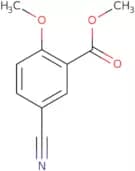
Methyl 5-cyano-2-methoxybenzoate
CAS:<p>Versatile small molecule scaffold</p>Formula:C10H9NO3Purity:Min. 95%Molecular weight:191.18 g/molBis(1,5-cyclooctadiene)(duroquinone) nickel(0)
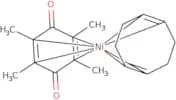
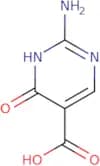
CAS:<p>Bis(1,5-cyclooctadiene)(duroquinone) nickel(0) is a synthetic compound that belongs to the class of organometallic compounds. It is used as a ligand in cross-coupling reactions and as a catalyst in organic synthesis. Bis(1,5-cyclooctadiene)(duroquinone) nickel(0) has been shown to react with Grignard reagents and boronic acids to form complex molecules with stereospecificity. This compound also reacts with aldehydes and triflates to form alkenylation products. The mechanism for this reaction is not well understood, but it is thought that the bis(1,5-cyclooctadiene)(duroquinone) nickel(0) binds to the electrophilic carbon atom of the carbonyl group through its duroquinone moiety and then undergoes oxidative addition with the Grignard reagent</p>Formula:C18H24NiO2Purity:Min. 95%Molecular weight:331.08 g/mol2-Amino-4-hydroxypyrimidine-5-carboxylic acid
CAS:<p>Versatile small molecule scaffold</p>Formula:C5H5N3O3Purity:Min. 95%Molecular weight:155.11 g/mol1,5-Dihydroxy-1,2,3,4-tetrahydronaphthalene
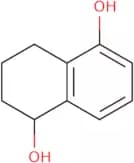
CAS:<p>1,5-Dihydroxy-1,2,3,4-tetrahydronaphthalene is an experimentally studied chemical compound. It has been studied for its ability to catalyze the transesterification of vinyl acetate and tetrahydrofuran. This reaction is a good example of a ternary catalyst that is operational under both kinetic and optimal conditions. 1,5-Dihydroxy-1,2,3,4-tetrahydronaphthalene is also an enantiomeric mixture with a selectivity of the order of 90% for the (S)-enantiomer.</p>Formula:C10H12O2Purity:Min. 95%Molecular weight:164.2 g/mol5-Propyl-[1,2,4]triazolo[1,5-a]pyrimidin-7-ol
CAS:<p>Versatile small molecule scaffold</p>Formula:C8H10N4OPurity:Min. 95%Molecular weight:178.19 g/mol1-(2-Aminoethyl)imidazolidine-2-thione
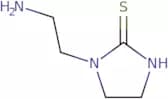
CAS:<p>1-(2-Aminoethyl)imidazolidine-2-thione is a hydrocarbon that inhibits corrosion by binding to metal ions and preventing the formation of corrosion products. It has been shown to be a potent inhibitor of corrosion in water, with more than 50% inhibition at pH 7.1. 1-(2-Aminoethyl)imidazolidine-2-thione has been shown to inhibit the deprotonation of thiourea in acidic conditions, which is an important step in the corrosion process. In addition, 1-(2-Aminoethyl)imidazolidine-2-thione binds to metal ions via its electron donor group and prevents the formation of anions. The molecular structure consists of a heterocyclic ring with five members, with the nitrogen atom occupying one position on the ring. As such, it can be classified as a heterocyclic amine or imidazolidineth</p>Formula:C5H11N3SPurity:Min. 95%Molecular weight:145.23 g/mol1-Bromo-4-(1-methylcyclopropyl)benzene
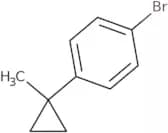
CAS:<p>Versatile small molecule scaffold</p>Formula:C10H11BrPurity:Min. 95%Molecular weight:211.1 g/mol1-(2,5-Dimethoxyphenyl)-1H-pyrrole-2,5-dione
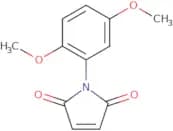
CAS:<p>Versatile small molecule scaffold</p>Formula:C12H11NO4Purity:Min. 95%Molecular weight:233.22 g/mol2-(2-tert-Butylphenoxymethyl)oxirane
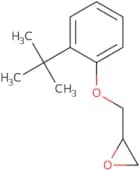
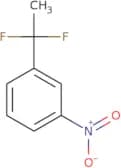
CAS:<p>Versatile small molecule scaffold</p>Formula:C13H18O2Purity:Min. 95%Molecular weight:206.28 g/mol1-(1,1-Difluoroethyl)-3-nitrobenzene
CAS:<p>Versatile small molecule scaffold</p>Formula:C8H7F2NO2Purity:Min. 95%Molecular weight:187.15 g/mol5-Ethylcyclohex-2-en-1-one
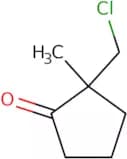
CAS:<p>Versatile small molecule scaffold</p>Formula:C8H12OPurity:Min. 95%Molecular weight:124.18 g/mol2-(Chloromethyl)-2-methylcyclopentan-1-one
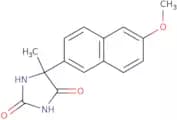
CAS:<p>Versatile small molecule scaffold</p>Formula:C7H11ClOPurity:Min. 95%Molecular weight:146.61 g/mol5-(6-Methoxynaphthalen-2-yl)-5-methylimidazolidine-2,4-dione
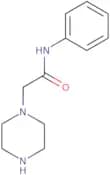
CAS:<p>Versatile small molecule scaffold</p>Formula:C15H14N2O3Purity:Min. 95%Molecular weight:270.28 g/molN-Phenyl-2-(piperazin-1-yl)acetamide
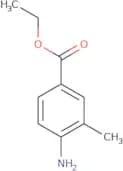
CAS:<p>Versatile small molecule scaffold</p>Formula:C12H17N3OPurity:Min. 95%Molecular weight:219.28 g/molEthyl 4-amino-3-methylbenzoate
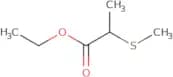
CAS:<p>Ethyl 4-amino-3-methylbenzoate is a dimer that can be formed by the reaction of ethyl benzoate with anilines. This dimer has been shown to have an asymmetric center and can form hydrogen bonds with other molecules. The reactivity of this molecule is similar to benzocaine, which is also a dimer, but it does not contain any nitrogen atoms.</p>Formula:C10H13NO2Purity:Min. 95%Molecular weight:179.22 g/molEthyl 2-(methylsulfanyl)propanoate
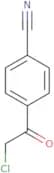
CAS:<p>Versatile small molecule scaffold</p>Formula:C6H12O2SPurity:Min. 95%Molecular weight:148.23 g/mol4-(2-Chloroacetyl)benzonitrile
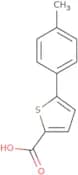
CAS:<p>Versatile small molecule scaffold</p>Formula:C9H6ClNOPurity:Min. 95%Molecular weight:179.6 g/mol5-(4-Methylphenyl)-2-thiophenecarboxylic acid
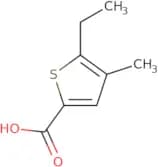
CAS:<p>Versatile small molecule scaffold</p>Formula:C12H10O2SPurity:Min. 95%Molecular weight:218.27 g/mol5-Ethyl-4-methylthiophene-2-carboxylic acid
CAS:<p>Versatile small molecule scaffold</p>Formula:C8H10O2SPurity:Min. 95%Molecular weight:170.23 g/mol2-(4-Methoxypyridin-2-yl)acetonitrile
CAS:<p>Versatile small molecule scaffold</p>Formula:C8H8N2OPurity:Min. 95%Molecular weight:148.16 g/mol

![5-Propyl-[1,2,4]triazolo[1,5-a]pyrimidin-7-ol](/_next/image/?url=https%3A%2Fstatic.cymitquimica.com%2Fproducts%2F3D%2Fthumb-webp%2FQBA77587.webp&w=3840&q=75)