Building Blocks
This section contains fundamental products for the synthesis of organic and biological compounds. Building blocks are the essential starting materials used to construct complex molecules through various chemical reactions. They play a critical role in drug discovery, material science, and chemical research. At CymitQuimica, we offer a diverse range of high-quality building blocks to support your innovative research and industrial projects, ensuring you have the essential components for successful synthesis.
Subcategories of "Building Blocks"
- Boronic Acids & Boronic Acid Derivatives(5,778 products)
- Chiral Building Blocks(1,243 products)
- Hydrocarbon Building Blocks(6,097 products)
- Organic Building Blocks(61,052 products)
Found 201390 products of "Building Blocks"
Sort by
Purity (%)
0
100
|
0
|
50
|
90
|
95
|
100
2-Methyl-2-[4-(trifluoromethyl)phenoxy]propanoic acid
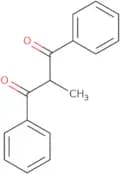
CAS:Versatile small molecule scaffoldFormula:C11H11F3O3Purity:Min. 95%Molecular weight:248.2 g/mol2-Methyl-1,3-diphenylpropane-1,3-dione
CAS:<p>2-Methyl-1,3-diphenylpropane-1,3-dione is a divalent hydrocarbon that has been used as a coating for metals and plastics. It has also been used as a solid catalyst in organic reactions. This compound has shown the ability to inhibit the uptake of gemini surfactants by cells, thereby reducing the viscosity of cell culture media. 2-Methyl-1,3-diphenylpropane-1,3-dione is an inhibitor of cachexia (wasting syndrome) in mice and rats due to its regulatory effect on tumor necrosis factor (TNF). TNF is an inflammatory cytokine that regulates many other proinflammatory cytokines and chemokines. This compound has also been shown to increase the reaction time for benzyl groups with primary amino groups when exposed to light.</p>Formula:C16H14O2Purity:Min. 95%Molecular weight:238.28 g/mol2-Chloro-1-N,1-N-dimethylbenzene-1,4-diamine
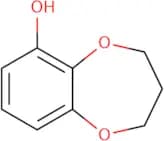
CAS:<p>2-Chloro-1-N,1-N-dimethylbenzene-1,4-diamine is a chemical compound that belongs to the class of organic compounds. It is used as an analytical reagent for flow cells and has been shown to be adsorbed onto activated carbon under acidic conditions. The flow rate of 2CBDD can be determined by measuring the optical density at 250 nm. The elution time can be determined by measuring the absorption at 280 nm.</p>Formula:C8H11ClN2Purity:Min. 95%Molecular weight:170.64 g/mol3,4-Dihydro-2H-1,5-benzodioxepin-6-ol
CAS:<p>Versatile small molecule scaffold</p>Formula:C9H10O3Purity:Min. 95%Molecular weight:166.17 g/mol2-Chloro-1-N-methylbenzene-1,4-diamine
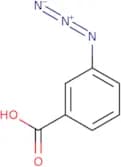
CAS:Versatile small molecule scaffoldFormula:C7H9ClN2Purity:Min. 95%Molecular weight:156.61 g/mol3-Azidobenzoic acid
CAS:Versatile small molecule scaffoldFormula:C7H5N3O2Purity:Min. 95%Molecular weight:163.13 g/molo-(Butan-2-yl)hydroxylamine hydrochloride
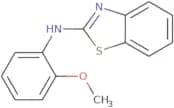
CAS:Versatile small molecule scaffoldFormula:C4H12ClNOPurity:Min. 95%Molecular weight:125.6 g/molN-(2-Methoxyphenyl)-1,3-benzothiazol-2-amine
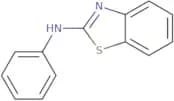
CAS:Versatile small molecule scaffoldFormula:C14H12N2OSPurity:Min. 95%Molecular weight:256.32 g/molN-Phenyl-1,3-benzothiazol-2-amine
CAS:<p>N-Phenyl-1,3-benzothiazol-2-amine is a synthetic aromatic compound that has been used as an antiviral agent. It inhibits the replication of RNA by binding to the carbon disulphide group in the ribose moiety of nucleosides. This prevents formation of the helix structure and stops synthesis of viral DNA. N-Phenyl-1,3-benzothiazol-2-amine is also active against influenza A virus and some other viruses. The molecular descriptors for this compound are nitrogen atoms (N), stabilization (S), cb1 receptor (Cb1) and virus activity (V). This substance is an active ingredient in many pharmaceuticals, such as cough syrup, pain relief tablets, and eye drops. It can be synthesized from copper oxide and chloride or introduced into a drug formulation by impurities.</p>Formula:C13H10N2SPurity:Min. 95%Molecular weight:226.3 g/mol2-Hydroxy-3-iodo-5-methylbenzoic acid
CAS:Versatile small molecule scaffoldFormula:C8H7IO3Purity:Min. 95%Molecular weight:278.04 g/mol3-[3-(2-Carboxyethyl)phenyl]propanoic acid
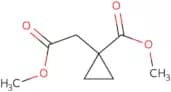
CAS:3-[3-(2-Carboxyethyl)phenyl]propanoic acid is a reagent used in oxidation reactions. It has been shown to be a good catalyst for the amination of alkanes, as well as oxidation of benzylic substrates. 3-[3-(2-Carboxyethyl)phenyl]propanoic acid is a dinuclear molecule with two sulfamoyl groups. The sulfamoyl group can be oxidized by adding an oxidizing agent such as hydrogen peroxide or potassium permanganate. This then leads to the formation of the sulfonamide and carboxylic acid products.Formula:C12H14O4Purity:Min. 95%Molecular weight:222.24 g/molMethyl 1-(2-methoxy-2-oxoethyl)cyclopropane-1-carboxylate
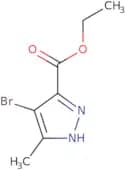
CAS:Versatile small molecule scaffoldFormula:C8H12O4Purity:Min. 95%Molecular weight:172.18 g/molEthyl 4-bromo-5-methyl-1H-pyrazole-3-carboxylate
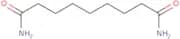
CAS:Versatile small molecule scaffoldFormula:C7H9BrN2O2Purity:Min. 95%Molecular weight:233.06 g/molNonanediamide
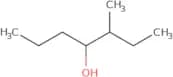
CAS:<p>Nonanediamide is a polyamide polymer with a hydroxyl group at each end. It is used in the manufacture of polymeric matrices for biomedical applications, such as sealants and adhesives. Nonanediamide has shown to be an effective sealant against water vapor, which may be due to its high resistance to hydrolysis. This chemical also facilitates the enzyme activities of thrombotic thrombocytopenic purpura (TTP) and hemolytic uremic syndrome (HUS). The amide bond that connects the monomer units together can be easily cleaved by enzymes, making it easier for blood cells to break down the polyamide polymer into smaller compounds.</p>Formula:C9H18N2O2Purity:Min. 95%Color and Shape:PowderMolecular weight:186.25 g/mol3-Methyl-4-heptanol
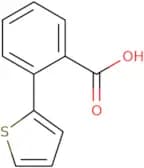
CAS:<p>Versatile small molecule scaffold</p>Formula:C8H18OPurity:Min. 95%Molecular weight:130.23 g/mol2-(Thien-2-yl)benzoic acid
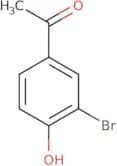
CAS:2-(Thien-2-yl)benzoic acid (TBA) is an organic compound. It is a structural analog of thiophene, with the sulfur replaced by a carbon atom. TBA has been shown to have functional groups that are activated by spontaneous reactions and is classified as an organic acid. TBA has been seen to have biological properties, such as being able to protect against radiation damage in the heart, and it also has been shown to be effective at lowering blood pressure in rats. TBA's chemical formula can be written as C6H5COOH.Formula:C11H8O2SPurity:Min. 95%Molecular weight:204.25 g/mol3'-Bromo-4'-hydroxyacetophenone
CAS:<p>3'-Bromo-4'-hydroxyacetophenone is an epoxy that is used in the synthesis of a variety of chemical products. The mechanisms for its aerobic oxidation are not well understood, but it has been shown that it undergoes transformation reactions to form methides and phenols. It also participates in the aerobic oxidation process, which is a chemical reaction that occurs with oxygen and hydrogen peroxide as catalysts. 3'-Bromo-4'-hydroxyacetophenone has been shown to be a competitive inhibitor of cytochrome P450 enzymes.</p>Formula:C8H7BrO2Purity:Min. 95%Molecular weight:215.05 g/molIsothiocyanatocyclobutane
CAS:Versatile small molecule scaffoldFormula:C5H7NSPurity:Min. 95%Molecular weight:113.18 g/mol(Isothiocyanatomethyl)cyclopropane
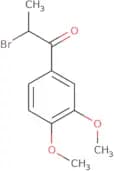
CAS:<p>(Isothiocyanatomethyl)cyclopropane is a cyclopropane derivative that has been used to study the conformational properties of molecules in solution. It has been shown that the vibrational frequencies of (isothiocyanatomethyl)cyclopropane are strongly dependent on the solvent, temperature, and concentration. FT-IR spectra show that the molecule has a strong dipole moment and symmetrical vibrations. The theory behind this work is based on the functional theory of quantum mechanics, which predicts that the frequency of vibration should depend on the functions, intensities, and parameters of a molecule. This work also shows how conformational studies can be used to investigate different types of molecules.</p>Formula:C5H7NSPurity:Min. 95%Molecular weight:113.18 g/mol2-Bromo-1-(3,4-dimethoxyphenyl)propan-1-one
CAS:Versatile small molecule scaffoldFormula:C11H13BrO3Purity:Min. 95%Molecular weight:273.12 g/mol
![2-Methyl-2-[4-(trifluoromethyl)phenoxy]propanoic acid](/_next/image/?url=https%3A%2Fstatic.cymitquimica.com%2Fproducts%2F3D%2Fthumb-webp%2FBBA00248.webp&w=3840&q=75)





![3-[3-(2-Carboxyethyl)phenyl]propanoic acid](/_next/image/?url=https%3A%2Fstatic.cymitquimica.com%2Fproducts%2F3D%2Fthumb-webp%2FGAA08286.webp&w=3840&q=75)