Building Blocks
This section contains fundamental products for the synthesis of organic and biological compounds. Building blocks are the essential starting materials used to construct complex molecules through various chemical reactions. They play a critical role in drug discovery, material science, and chemical research. At CymitQuimica, we offer a diverse range of high-quality building blocks to support your innovative research and industrial projects, ensuring you have the essential components for successful synthesis.
Subcategories of "Building Blocks"
- Boronic Acids & Boronic Acid Derivatives(5,778 products)
- Chiral Building Blocks(1,243 products)
- Hydrocarbon Building Blocks(6,097 products)
- Organic Building Blocks(61,052 products)
Found 201390 products of "Building Blocks"
Sort by
Purity (%)
0
100
|
0
|
50
|
90
|
95
|
100
1-{4-[(2-Methylphenyl)methoxy]phenyl}ethan-1-one
CAS:<p>1-{4-[(2-Methylphenyl)methoxy]phenyl}ethan-1-one is a small molecule that has been shown to inhibit the activity of ion channels. It binds to the receptor site, which is located on the outside of the cell membrane. This binding prevents the passage of ions through the channel, thereby preventing electrical signals from being transmitted by ligand gated ion channels. 1-{4-[(2-Methylphenyl)methoxy]phenyl}ethan-1-one is also an inhibitor of peptides and can be used as a research tool in cell biology and as an antibody in immunology.</p>Formula:C16H16O2Purity:Min. 95%Molecular weight:240.3 g/mol1-Methoxy-3-phenylpropan-2-amine
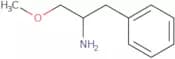
CAS:Versatile small molecule scaffoldFormula:C10H15NOPurity:Min. 95%Molecular weight:165.23 g/mol2-(5-Chloro-2-nitrophenyl)acetonitrile
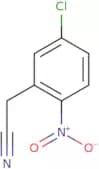
CAS:2-(5-Chloro-2-nitrophenyl)acetonitrile is a n-oxide and carbanion that has been used as a model for the study of acrylonitrile. 2-(5-Chloro-2-nitrophenyl)acetonitrile can be synthesized by nitrating aniline with nitric acid, followed by oxidation with potassium permanganate. The resulting product is then reacted with acrylonitrile in the presence of an acid to form 2-(5-chloro-2-nitrophenyl)acrylonitrile. This compound is unstable and decomposes when it is heated to 150 degrees Celsius.Formula:C8H5ClN2O2Purity:Min. 95%Molecular weight:196.59 g/mol5-Cyclopropyl-6-methyl-2-sulfanyl-1,4-dihydropyrimidin-4-one
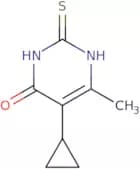
CAS:Versatile small molecule scaffoldFormula:C8H10N2OSPurity:Min. 95%Molecular weight:182.25 g/mol3-Methanesulfonylpropane-1-sulfonyl chloride
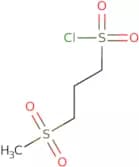
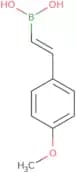
CAS:Versatile small molecule scaffoldFormula:C4H9ClO4S2Purity:Min. 95%Molecular weight:220.7 g/moltrans-2-(4-Methoxyphenyl)vinylboronic acid
CAS:<p>Versatile small molecule scaffold</p>Formula:C9H11BO3Purity:Min. 95%Molecular weight:177.99 g/mol5-Cyclobutyl-2-sulfanylidene-1,2,3,4-tetrahydropyrimidin-4-one
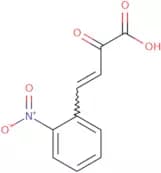
CAS:Versatile small molecule scaffoldFormula:C8H10N2OSPurity:Min. 95%Molecular weight:182.2 g/mol4-(2-Nitrophenyl)-2-oxobut-3-enoic acid
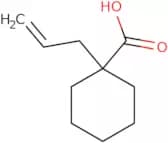
CAS:4-(2-Nitrophenyl)-2-oxobut-3-enoic acid is an asymmetric synthesis of benazepril, a drug used to treat congestive heart failure. It is synthesized from formate and formaldehyde. The synthesis of 4-(2-nitrophenyl)-2-oxobut-3-enoic acid has been shown to be effective in reducing the severity of congestive heart failure in rats by inhibiting the production of l-glutamate. This compound also inhibits transamination reactions and glutamate dehydrogenase, which are enzymes that are involved in ammonia detoxification.Formula:C10H7NO5Purity:Min. 95%Molecular weight:221.17 g/mol1-(Prop-2-en-1-yl)cyclohexane-1-carboxylic acid
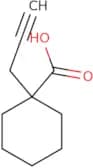
CAS:<p>1-(Prop-2-en-1-yl)cyclohexane-1-carboxylic acid is a functionalized, chloride salt. It has been shown to be an allylating agent in the presence of ultrasonication.</p>Formula:C10H16O2Purity:Min. 95%Molecular weight:168.23 g/mol1-(Prop-2-yn-1-yl)cyclohexane-1-carboxylic acid
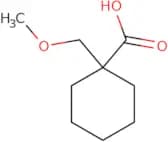
CAS:Versatile small molecule scaffoldFormula:C10H14O2Purity:Min. 95%Molecular weight:166.22 g/mol1-(Methoxymethyl)cyclohexane-1-carboxylic acid
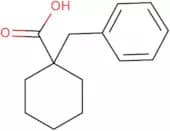
CAS:Versatile small molecule scaffoldFormula:C9H16O3Purity:Min. 95%Molecular weight:172.22 g/mol1-Benzyl-1-cyclohexanecarboxylic acid
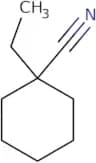
CAS:<p>Versatile small molecule scaffold</p>Formula:C14H18O2Purity:Min. 95%Molecular weight:218.29 g/mol1-Ethylcyclohexane-1-carbonitrile
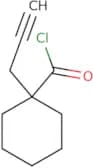
CAS:Versatile small molecule scaffoldFormula:C9H15NPurity:Min. 95%Molecular weight:137.22 g/mol1-(Prop-2-yn-1-yl)cyclohexane-1-carbonyl chloride
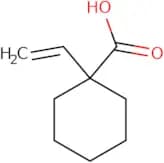
CAS:<p>Versatile small molecule scaffold</p>Formula:C10H13ClOPurity:Min. 95%Molecular weight:184.66 g/mol1-Ethenylcyclohexane-1-carboxylic acid
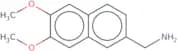
CAS:<p>Versatile small molecule scaffold</p>Formula:C9H14O2Purity:Min. 95%Molecular weight:154.2 g/mol(6,7-Dimethoxynaphthalen-2-yl)methanamine
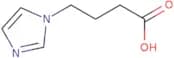
CAS:<p>Versatile small molecule scaffold</p>Formula:C13H15NO2Purity:Min. 95%Molecular weight:217.3 g/mol4-Imidazol-1-yl-butyric acid
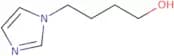
CAS:<p>4-Imidazol-1-yl-butyric acid is a coordination polymer with a carboxylate group. It can be synthesized by the reaction of butyric acid with isopropoxide in the presence of titanium tetrachloride and benzimidazole. The resulting product has a dimerization ability, which allows it to bind to metal ions. This binding leads to chelation and polymerization, which have been shown to have many applications, including pharmaceuticals and biomedicine.</p>Formula:C7H10N2O2Purity:Min. 95%Molecular weight:154.17 g/mol4-(1H-Imidazol-1-yl)butan-1-ol
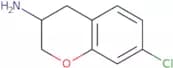
CAS:Versatile small molecule scaffoldFormula:C7H12N2OPurity:Min. 95%Molecular weight:140.18 g/mol7-Chloro-3,4-dihydro-2H-1-benzopyran-3-amine
CAS:Versatile small molecule scaffoldFormula:C9H10ClNOPurity:Min. 95%Molecular weight:183.63 g/mol1-Benzylpyridin-4(1H)-one
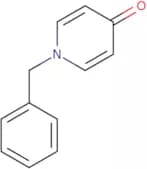
CAS:<p>1-Benzylpyridin-4(1H)-one is an organic compound that belongs to the group of benzyl compounds. It is a colorless oil with a sweet, floral odor. 1-Benzylpyridin-4(1H)-one is used as an intermediate in organic chemistry and reacts with alkenes, sulfoxides, and sulfides to form intermediates. It also reacts with alkynes to form triflic acid esters. The hydrolysis of this compound produces pyridine and benzaldehyde. This compound has been used in the synthesis of sulfoxide antibiotics such as cefotaxime and ceftazidime.</p>Formula:C12H11NOPurity:Min. 95%Molecular weight:185.22 g/mol
![1-{4-[(2-Methylphenyl)methoxy]phenyl}ethan-1-one](/_next/image/?url=https%3A%2Fstatic.cymitquimica.com%2Fproducts%2F3D%2Fthumb-webp%2FXCA29394.webp&w=3840&q=75)