Building Blocks
This section contains fundamental products for the synthesis of organic and biological compounds. Building blocks are the essential starting materials used to construct complex molecules through various chemical reactions. They play a critical role in drug discovery, material science, and chemical research. At CymitQuimica, we offer a diverse range of high-quality building blocks to support your innovative research and industrial projects, ensuring you have the essential components for successful synthesis.
Subcategories of "Building Blocks"
- Boronic Acids & Boronic Acid Derivatives(5,778 products)
- Chiral Building Blocks(1,242 products)
- Hydrocarbon Building Blocks(6,098 products)
- Organic Building Blocks(61,084 products)
Found 198714 products of "Building Blocks"
Sort by
Purity (%)
0
100
|
0
|
50
|
90
|
95
|
100
3-[(Furan-2-ylmethyl)-amino]-propan-1-ol
CAS:<p>Versatile small molecule scaffold</p>Formula:C8H13NO2Purity:Min. 95%Molecular weight:155.2 g/mol2-[(2-Hydroxyethyl)(pyridin-2-yl)amino]ethan-1-ol
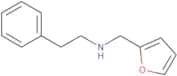
CAS:<p>Versatile small molecule scaffold</p>Formula:C9H14N2O2Purity:Min. 95%Molecular weight:182.22 g/molFuran-2-ylmethyl-phenethyl-amine
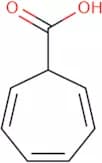
CAS:Controlled Product<p>Versatile small molecule scaffold</p>Formula:C13H15NOPurity:Min. 95%Molecular weight:201.27 g/molCyclohepta-2,4,6-triene-1-carboxylic acid
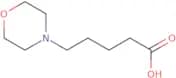
CAS:<p>Versatile small molecule scaffold</p>Formula:C8H8O2Purity:Min. 95%Molecular weight:136.15 g/mol5-(Morpholin-4-yl)pentanoic acid
CAS:<p>Versatile small molecule scaffold</p>Formula:C9H17NO3Purity:Min. 95%Molecular weight:187.24 g/molButyl[(2,3-dihydro-1,4-benzodioxin-2-yl)methyl]amine
CAS:<p>Butyl[(2,3-dihydro-1,4-benzodioxin-2-yl)methyl]amine is a hydrophobic diluent that is used as a solvent or as a vehicle for drugs. It has been shown to interact with the immune system and is immunogenic. Butyl[(2,3-dihydro-1,4-benzodioxin-2-yl)methyl]amine can be used to reconstitute antigen and targetable molecules in order to increase their concentration and make them more detectable. Butyl[(2,3-dihydro-1,4-benzodioxin-2-yl)methyl]amine has been shown to have effects on blood pressure and can be used as a diagnostic agent for this disease.</p>Formula:C13H19NO2Purity:Min. 95%Molecular weight:221.29 g/mol2-(2-Methyl-1,3-dioxaindan-2-yl)acetic acid
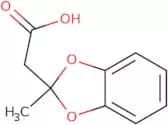
CAS:<p>Versatile small molecule scaffold</p>Formula:C10H10O4Purity:Min. 95%Molecular weight:194.18 g/mol2-Cyclohexylethanol
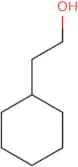
CAS:<p>2-Cyclohexylethanol is a molecule that is used in wastewater treatment. It is a solid phase microextraction (SPME) extraction technique that utilizes cyclohexane rings to adsorb hydrophobic compounds, such as fatty acids and alkoxy radicals, from water samples. 2-Cyclohexylethanol has been shown to be an effective agent for the cleavage of fatty acid molecules and for the synthesis of fatty acid esters. The biodiesel production process uses 2-cyclohexylethanol as a catalyst to remove water from the reaction mixture. This product also has photochemical properties that have been used to synthesize ketones and other organic molecules.</p>Formula:C8H16OPurity:Min. 95%Molecular weight:128.22 g/mol2-Cyclohexyl-1-phenylethanol
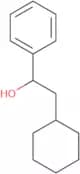
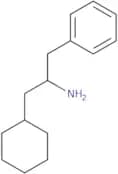
CAS:<p>Versatile small molecule scaffold</p>Formula:C14H20OPurity:Min. 95%Molecular weight:204.31 g/mol1-Cyclohexyl-3-phenylpropan-2-amine
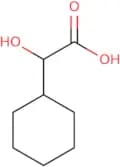
CAS:Controlled Product<p>Versatile small molecule scaffold</p>Formula:C15H23NPurity:Min. 95%Molecular weight:217.35 g/mol2-Cyclohexyl-2-hydroxyacetic acid
CAS:<p>2-Cyclohexyl-2-hydroxyacetic acid is a linker that is used in the synthesis of pharmaceuticals and agrochemicals. It acts as a polymerization catalyst, which means it can increase the rate at which two molecules join together to form a larger molecule. The active substances in this compound are sodium carbonate and piperidine, which are both found in other compounds. 2-Cyclohexyl-2-hydroxyacetic acid has been shown to be effective in treating bladder conditions such as urinary tract infections and benign prostatic hyperplasia (BPH). This drug also has anti-inflammatory properties.</p>Formula:C8H14O3Purity:Min. 95%Molecular weight:158.19 g/molN-(Sec-butyl)-1-butanamine
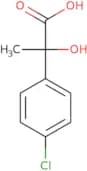
CAS:<p>N-(sec-butyl)-1-butanamine is a switchable cationic surfactant that can be used in a variety of applications. The reaction system consists of amines and imines, which react to form intramolecular hydrogen bonds, resulting in the formation of an antimicrobial agent. N-(sec-butyl)-1-butanamine has been shown to have good absorption properties, as well as being catalytic in the process. This molecule is synthesized from secondary butylamine, which reacts with terminal alkynes, forming an iminium intermediate.</p>Formula:C8H19NPurity:Min. 95%Molecular weight:129.24 g/mol2-(4-Chlorophenyl)-2-hydroxypropanoic acid
CAS:<p>Versatile small molecule scaffold</p>Formula:C9H9ClO3Purity:Min. 95%Molecular weight:200.62 g/mol5-Furan-2-yl-[1,3,4]thiadiazol-2-ylamine
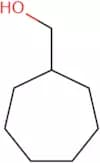
CAS:<p>Versatile small molecule scaffold</p>Formula:C6H5N3OSPurity:Min. 95%Molecular weight:167.19 g/molcycloheptylmethanol
CAS:<p>Cycloheptylmethanol is a compound that activates adrenergic receptors. It has been shown to inhibit the sodium borohydride reduction of cholesterol, which is responsible for the formation of amyloid plaques in Alzheimer's disease. Cycloheptylmethanol also inhibits the synthesis of sclerotic proteins and has been found to be an effective treatment against cancer and neuropathic pain. Due to its chemical structure, cycloheptylmethanol is known as a chiral compound. There are three stereoisomers: (3"R")-cycloheptylmethanol, (3"S")-cycloheptylmethanol, and (3"R",3"S")-cycloheptylmethanol. The 3"R",3"S"-isomer is more potent than the other two stereoisomers because it binds more tightly to opioid receptors and has greater receptor activity.</p>Formula:C8H16OPurity:Min. 95%Molecular weight:128.22 g/mol3-Cycloheptylpropanoic acid
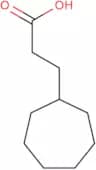
CAS:<p>3-Cycloheptylpropanoic acid is a derivative of cycloaliphatic, piperidine, and carboxylic acids. It is a white crystalline solid with a melting point of 87°C. 3-Cycloheptylpropanoic acid is an intermediate in the synthesis of other compounds, including gastrin and cholecystokinin, which are involved in the regulation of digestive system activity. The receptor ligands for these two hormones are also intermediates in their synthesis. 3-Cycloheptylpropanoic acid has been shown to inhibit gastric acid secretion and increase the production of pancreatic enzymes.</p>Formula:C10H18O2Purity:Min. 95%Molecular weight:170.25 g/molEthyl 5-cyanopentanoate
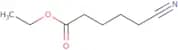
CAS:<p>Ethyl 5-cyanopentanoate is a carbanionic compound that is used as a catalyst in the synthesis of amides, pyridines, and dieckmann condensation products. It can also be used to catalyze the conversion of five-membered heterocycles to six-membered ones. This product yields high yields in reactions involving pressure or temperatures up to 100°C.</p>Formula:C8H13NO2Purity:Min. 95%Molecular weight:155.19 g/molDicyclohexylmethanol
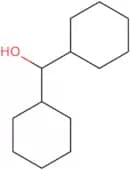
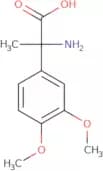
CAS:<p>Dicyclohexylmethanol is a trifunctional compound that contains a hydroxyl group, and can be used as a hydrogen bond donor or acceptor. The chemical structure of dicyclohexylmethanol can be seen in the figure below. Dicyclohexylmethanol has been used for sample preparation for hydrogen chloride gas. It has also been used to determine the concentration of blood ethanol levels and to measure blood pH in humans. Dicyclohexylmethanol is an important reactant in asymmetric synthesis reactions due to its ability to form hydrogen bonds with both reactants.</p>Formula:C13H24OPurity:Min. 95%Molecular weight:196.33 g/mol2-Amino-2-(3,4-dimethoxyphenyl)propanoic acid
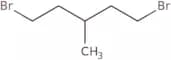
CAS:Versatile small molecule scaffoldFormula:C11H15NO4Purity:Min. 95%Molecular weight:225.24 g/mol1,5-dibromo-3-methylpentane
CAS:<p>1,5-Dibromo-3-methylpentane is an organic compound that contains a pyridine ring. It is used in biocontrol to control insects and has been found to be useful against virus, fungi, and protozoa. 1,5-Dibromo-3-methylpentane can act as an antibiotic and antifungal agent by inhibiting the synthesis of fatty acids. The chemical structure of 1,5-dibromo-3-methylpentane is very similar to that of natural pheromones in insects. This similarity allows the chemical to be used for insect biocontrol because it disrupts the reproductive cycle of the insect population.<br>1,5-Dibromo-3-methylpentane also has a conformation that prevents formation of hydrogen bonds with amino groups on other molecules and therefore inhibits biological activity.</p>Formula:C6H12Br2Purity:Min. 95%Molecular weight:243.97 g/mol
![3-[(Furan-2-ylmethyl)-amino]-propan-1-ol](/_next/image/?url=https%3A%2Fstatic.cymitquimica.com%2Fproducts%2F3D%2Fthumb-webp%2FEAA43922.webp&w=3840&q=75)

![2-[(2-Hydroxyethyl)(pyridin-2-yl)amino]ethan-1-ol](/_next/image/?url=https%3A%2Fstatic.cymitquimica.com%2Fproducts%2F3D%2Fthumb-webp%2FEAA43934.webp&w=3840&q=75)
![Butyl[(2,3-dihydro-1,4-benzodioxin-2-yl)methyl]amine](/_next/image/?url=https%3A%2Fstatic.cymitquimica.com%2Fproducts%2F3D%2Fthumb-webp%2FEAA44260.webp&w=3840&q=75)
![5-Furan-2-yl-[1,3,4]thiadiazol-2-ylamine](/_next/image/?url=https%3A%2Fstatic.cymitquimica.com%2Fproducts%2F3D%2Fthumb-webp%2FEAA44745.webp&w=3840&q=75)