Building Blocks
This section contains fundamental products for the synthesis of organic and biological compounds. Building blocks are the essential starting materials used to construct complex molecules through various chemical reactions. They play a critical role in drug discovery, material science, and chemical research. At CymitQuimica, we offer a diverse range of high-quality building blocks to support your innovative research and industrial projects, ensuring you have the essential components for successful synthesis.
Subcategories of "Building Blocks"
- Boronic Acids & Boronic Acid Derivatives(5,756 products)
- Chiral Building Blocks(1,242 products)
- Hydrocarbon Building Blocks(6,095 products)
- Organic Building Blocks(61,038 products)
Found 196817 products of "Building Blocks"
Sort by
Purity (%)
0
100
|
0
|
50
|
90
|
95
|
100
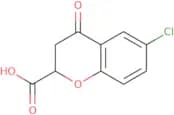
6-Chloro-4-oxo-3,4-dihydro-2H-1-benzopyran-2-carboxylic acid
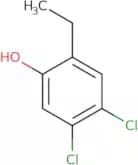
CAS:<p>Versatile small molecule scaffold</p>Formula:C10H7ClO4Purity:Min. 95%Molecular weight:226.61 g/mol4,5-Dichloro-2-ethylphenol
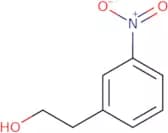
CAS:<p>Versatile small molecule scaffold</p>Formula:C8H8Cl2OPurity:Min. 95%Molecular weight:191.05 g/mol3-Nitrophenethyl alcohol
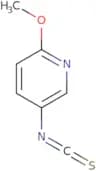
CAS:<p>3-Nitrophenethyl alcohol is a trifluoroacetic acid derivative that has been shown to have antimicrobial activity against multidrug resistant Gram-negative bacteria. 3NPHA is an electrophilic compound that reacts with the nucleophilic amino acids in proteins, causing the protein to be irreversibly denatured. 3NPHA has been shown to inhibit the growth of bacteria by binding to ribosomal RNA, preventing protein synthesis and cell division. The specificities of this drug are not yet well understood, but it has been found to bind to both isomers of the nucleotide erythromycin A. 3-Nitrophenethyl alcohol may be used as a catalyst for reactions involving isoxazoles, which are compounds that can act as anticancer agents.</p>Formula:C8H9NO3Purity:Min. 95%Molecular weight:167.16 g/mol5-Isothiocyanato-2-methoxypyridine
CAS:<p>Versatile small molecule scaffold</p>Formula:C7H6N2OSPurity:Min. 95%Molecular weight:166.2 g/mol3-Isothiocyanato-2-methoxypyridine
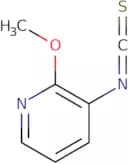
CAS:<p>Versatile small molecule scaffold</p>Formula:C7H6N2OSPurity:Min. 95%Molecular weight:166.2 g/mol6-(Ethylsulfanyl)pyridin-3-amine
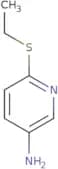
CAS:<p>Versatile small molecule scaffold</p>Formula:C7H10N2SPurity:Min. 95%Molecular weight:154.24 g/mol6-Propoxypyridin-3-amine
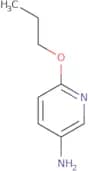
CAS:<p>Versatile small molecule scaffold</p>Formula:C8H12N2OPurity:Min. 95%Molecular weight:152.19 g/mol2-N-Ethylpyridine-2,5-diamine
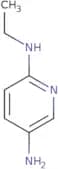
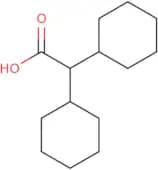
CAS:<p>Versatile small molecule scaffold</p>Formula:C7H11N3Purity:Min. 95%Molecular weight:137.18 g/molDicyclohexylacetic acid
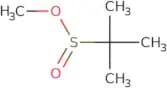
CAS:<p>Dicyclohexylacetic acid is an organic compound that is used as a reagent to measure the binding constants of proteins. It has a hydrophobic effect, which may be due to its particle size, and it has been shown to have antioxidant properties. Dicyclohexylacetic acid is also used in the production of chemical structures, such as hydrogen bond and carboxylate. It can be used in the treatment of autoimmune diseases by inhibiting serine protease activity and radiation therapy. Naphthenic acids are found in crude oil, and FT-IR spectroscopy can be used to detect these acids.</p>Formula:C14H24O2Purity:Min. 95%Molecular weight:224.35 g/molMethyl 2-methylpropane-2-sulfinate
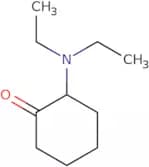
CAS:<p>Methyl 2-methylpropane-2-sulfinate is a chemical compound that can be used for epigenetic profiling and the study of regulatory processes. It has been shown to induce clastogenic effects in cells, leading to chromosomal aberrations. Methyl 2-methylpropane-2-sulfinate also interacts with actin filaments, which are involved in cell motility, and may affect cancer progression. It methylates lysine residues in proteins and DNA molecules, including histones. Methyl 2-methylpropane-2-sulfinate has been used as a diagnostic agent for the detection of N6-methyladenosine (m6A) methylation levels in lung cancer specimens.</p>Formula:C5H12O2SPurity:Min. 95%Molecular weight:136.22 g/mol2-(Diethylamino)cyclohexan-1-one
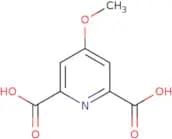
CAS:<p>Versatile small molecule scaffold</p>Formula:C10H19NOPurity:Min. 95%Molecular weight:169.26 g/mol4-Methoxypyridine-2,6-dicarboxylic acid
CAS:<p>4-Methoxypyridine-2,6-dicarboxylic acid is a molecule that can act as a ligand to bind metal ions. It has been shown to be able to form dicarboxylate complexes with chloride and nucleophilic metals such as zinc and copper. 4-Methoxypyridine-2,6-dicarboxylic acid has also been shown to have the ability to form duplexes with DNA, which could potentially inhibit transcription and replication. X-ray crystallography studies of 4-methoxypyridine-2,6-dicarboxylic acid reveal that it adopts a tetradentate coordination geometry with four oxygen atoms in the equatorial plane of the molecule. The molecule is also capable of forming molecular orbitals through its interactions with ligands and metal ions.</p>Formula:C8H7NO5Purity:Min. 95%Molecular weight:197.14 g/mol1-(2-Thienylcarbonyl)piperazine HCl
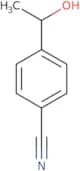
CAS:<p>Versatile small molecule scaffold</p>Formula:C9H13ClN2OSPurity:Min. 95%Molecular weight:232.73 g/mol4-(1-Hydroxyethyl)-benzonitrile
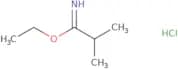
CAS:<p>4-(1-Hydroxyethyl)-benzonitrile (HOB) is a versatile and environmentally friendly reducing agent that can be used as a switchable, recyclable, and reusable reducing agent for reductive coupling reactions. HOB efficiently reduces nitroarenes to amines in the presence of hydrogen gas, but does not reduce other functional groups. The HOB-catalyzed reduction process is an aerobic reaction system that produces no hazardous byproducts.</p>Formula:C9H9NOPurity:Min. 95%Molecular weight:147.17 g/molethyl isobutyrimidate hydrochloride
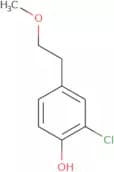
CAS:<p>Ethyl isobutyrimidate hydrochloride (EIBH) is an organic solution that belongs to the class of furyl compounds. It has been shown to bind with csf-1r, a receptor for a cytokine that regulates the immune system. The binding of EIBH to csf-1r inhibits the production of proinflammatory cytokines and leads to a decrease in autoimmune diseases. EIBH also has anti-cancer properties and can be used as a chloride binding agent or as an antibiotic.</p>Formula:C6H14ClNOPurity:Min. 95%Molecular weight:151.63 g/mol2-Chloro-4-(2-methoxyethyl)phenol
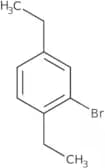
CAS:<p>Versatile small molecule scaffold</p>Formula:C9H11ClO2Purity:Min. 95%Molecular weight:186.63 g/mol2-Bromo-1,4-diethylbenzene
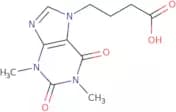
CAS:<p>Versatile small molecule scaffold</p>Formula:C10H13BrPurity:Min. 95%Molecular weight:213.11 g/mol4-(1,3-Dimethyl-2,6-dioxo-2,3,6,7-tetrahydro-1H-purin-7-yl)butanoic acid
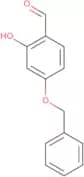
CAS:Controlled Product<p>Versatile small molecule scaffold</p>Formula:C11H14N4O4Purity:Min. 95%Molecular weight:266.25 g/mol4-(Benzyloxy)-2-hydroxybenzaldehyde
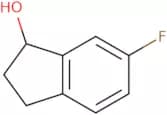
CAS:<p>4-(Benzyloxy)-2-hydroxybenzaldehyde is a functional compound that has various tautomeric forms. It can be found in the mesomorphic form at low temperatures and in the imine form at higher temperatures. It is also active as an anti-inflammatory agent, inhibiting cyclooxygenase and lipoxygenase enzymes. 4-(Benzyloxy)-2-hydroxybenzaldehyde has been shown to have a protective effect on cells from Alzheimer's disease and other neurodegenerative diseases by preventing the aggregation of beta-amyloid proteins that are implicated in these diseases.</p>Formula:C14H12O3Purity:Min. 95%Molecular weight:228.24 g/mol6-Fluoro-2,3-dihydro-1H-inden-1-ol
CAS:<p>Versatile small molecule scaffold</p>Formula:C9H9FOPurity:Min. 95%Molecular weight:152.16 g/mol