Building Blocks
This section contains fundamental products for the synthesis of organic and biological compounds. Building blocks are the essential starting materials used to construct complex molecules through various chemical reactions. They play a critical role in drug discovery, material science, and chemical research. At CymitQuimica, we offer a diverse range of high-quality building blocks to support your innovative research and industrial projects, ensuring you have the essential components for successful synthesis.
Subcategories of "Building Blocks"
- Boronic Acids & Boronic Acid Derivatives(5,756 products)
- Chiral Building Blocks(1,242 products)
- Hydrocarbon Building Blocks(6,095 products)
- Organic Building Blocks(61,051 products)
Found 199813 products of "Building Blocks"
Sort by
Purity (%)
0
100
|
0
|
50
|
90
|
95
|
100
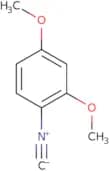
1-Isocyano-2,4-dimethoxybenzene
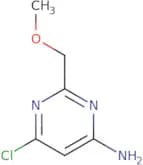
CAS:<p>Versatile small molecule scaffold</p>Formula:C9H9NO2Purity:Min. 95%Molecular weight:163.17 g/mol6-Chloro-2-(methoxymethyl)pyrimidin-4-amine
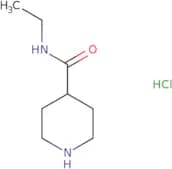
CAS:<p>Versatile small molecule scaffold</p>Formula:C6H8ClN3OPurity:Min. 95%Molecular weight:173.6 g/molN-Ethyl-4-piperidinecarboxamide hydrochloride
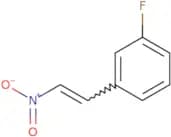
CAS:<p>Versatile small molecule scaffold</p>Formula:C8H17ClN2OPurity:Min. 95%Molecular weight:192.69 g/mol1-Fluoro-3-(2-nitroethenyl)benzene
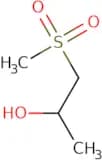
CAS:<p>Versatile small molecule scaffold</p>Formula:C8H6FNO2Purity:Min. 95%Molecular weight:167.14 g/mol1-Methanesulfonylpropan-2-ol
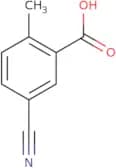
CAS:<p>Methanesulfonylpropan-2-ol is a sulfonic acid that is used in clinical chemistry for the measurement of the concentration of mercaptans. This liquid has an acidic character, which distinguishes it from other sulfonic acids. Methanesulfonylpropan-2-ol also has a magnetic property and can be used to detect the presence of this substance in urine or blood samples. <br>Methanesulfonylpropan-2-ol is excreted by the kidneys and intestines and is diluted when mixed with water. This substance can be detected using chromatographic science, such as gas chromatography, to identify its presence in biological samples. Methanesulfonylpropan-2-ol may have anticancer properties due to its ability to inhibit cell growth and proliferation. It binds to DNA, disrupting the production of new cells. The intestinal absorption of this drug leads to an increased concentration in the intestine, which may lead to anticancer effects</p>Formula:C4H10O3SPurity:Min. 95%Molecular weight:138.19 g/mol5-Cyano-2-methylbenzoic acid
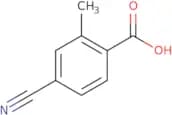
CAS:<p>Versatile small molecule scaffold</p>Formula:C9H7NO2Purity:Min. 95%Molecular weight:161.16 g/mol4-Cyano-2-methylbenzoic acid
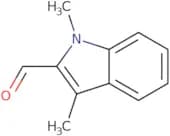
CAS:<p>4-Cyano-2-methylbenzoic acid is an organic compound with the formula CH3CNOC(O)CH2CO2H. It is a white, water soluble solid that is an intermediate in the conversion of 4-cyanoacetophenone to methyl benzoate. The compound has been used in research as an oxime and has shown biological activity against viruses, bacteria, and tumors. As a result of its antiviral activity, 4-Cyano-2-methylbenzoic acid has been studied for treatment of HIV/AIDS patients. The compound also inhibits insect growth by inhibiting chitin production and can be used as a pesticide or acaricide.</p>Formula:C9H7NO2Purity:Min. 95%Molecular weight:161.16 g/mol1,3-Dimethyl-1H-indole-2-carbaldehyde
CAS:<p>Diethyl succinate (DES) is a chemical compound that has reversible photochromic properties. It absorbs ultraviolet light and converts to 1,3-dimethyl-1H-indole-2-carbaldehyde (DMICA), which can be reverted back to DES by exposure to visible light. DMICA is chemically stable in the absence of oxygen and air, but it decomposes in the presence of strong oxidizing agents. The absorption spectrum of DMICA shows maxima at 230 nm and 270 nm with a peak at 254 nm. Diethyl succinate is an isomer of diethyl malonate, which has a similar structure. Diethyl succinate has no solubility in water, but it dissolves readily in organic solvents such as acetone or ethanol.</p>Formula:C11H11NOPurity:Min. 95%Molecular weight:173.21 g/mol[3,3'-Bipyridine]-5-carboxylic acid
CAS:<p>Versatile small molecule scaffold</p>Formula:C11H8N2O2Purity:Min. 95%Molecular weight:200.19 g/mol3-Hydroxy-2-(hydroxymethyl)-4H-pyran-4-one
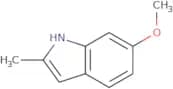
CAS:<p>3-Hydroxy-2-(hydroxymethyl)-4H-pyran-4-one is a manganate compound that is used in the synthesis of carboxylic acid derivatives. The reaction is performed in a solvent mixture of methanol, acetone and triethylamine (1:1:1 v/v). The reaction proceeds through an intermediate formation of a tetrahedral ether, which is then hydrolyzed to yield the desired product. This process can be carried out in batch or continuous mode.</p>Formula:C6H6O4Purity:Min. 95%Molecular weight:142.11 g/mol6-Methoxy-2-methyl-1H-indole
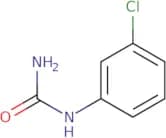
CAS:<p>Versatile small molecule scaffold</p>Formula:C10H11NOPurity:Min. 95%Molecular weight:161.2 g/mol3-Chlorophenylurea
CAS:<p>3-Chlorophenylurea is a quinazolinone that inhibits the growth of candida glabrata. This compound has been shown to inhibit efflux pumps, which are proteins that pump out drugs from the cell. 3-Chlorophenylurea has been shown to inhibit the efflux of fluconazole, a drug used to treat fungal infections, and thiourea, a compound that is known for its cytotoxicity. The inhibition of these two compounds suggests that 3-chlorophenylurea could be an efflux pump inhibitor.</p>Formula:C7H7ClN2OPurity:Min. 95%Molecular weight:170.6 g/molrac-(1R,2R,5R)-Bicyclo[3.2.1]octan-2-ol, exo
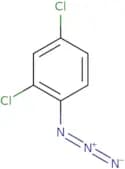
CAS:<p>Versatile small molecule scaffold</p>Formula:C8H14OPurity:Min. 95%Molecular weight:126.2 g/mol1-Azido-2,4-dichlorobenzene
CAS:<p>Versatile small molecule scaffold</p>Formula:C6H3Cl2N3Purity:Min. 95%Molecular weight:188.01 g/mol3,5-Dimethyl benzo[b]thiophene
CAS:<p>3,5-Dimethyl benzo[b]thiophene is a linear molecule containing an unsaturated thiophene ring. This compound is reactive and can undergo bond cleavage reactions with oxygen. It is used in analytical methods such as chromatographic analysis and linear regression analysis. 3,5-Dimethyl benzo[b]thiophene can also be used for the desulfurization of petroleum products and hydrogenated to produce polymers. The molecular descriptors for this compound are C=0, H=1, N=1, O=0, S=0.</p>Formula:C10H10SPurity:Min. 95%Molecular weight:162.26 g/mol1,4-dibutyl benzene-1,4-dicarboxylate
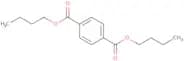
CAS:<p>1,4-Dibutylbenzene-1,4-dicarboxylate (DBDC) is a cationic surfactant that reacts with an acid to form a light emitting compound. It has been shown to have optimum concentrations of 0.5% and 1% in the presence of pueraria lobata extract. DBDC has also been used as sealant, hydroxyl group, glycol ester, and fatty acid. DBDC has been found to be a solid catalyst for dehydrocostus lactone with particle size below 10 microns.</p>Formula:C16H22O4Purity:Min. 95%Color and Shape:PowderMolecular weight:278.35 g/mol1-(2-Fluorophenyl)-2-methylpropan-2-ol
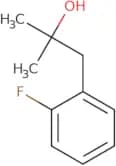
CAS:<p>Versatile small molecule scaffold</p>Formula:C10H13FOPurity:Min. 95%Molecular weight:168.21 g/mol2-Methyl-4-nitrobenzotrifluoride
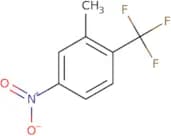
CAS:<p>Versatile small molecule scaffold</p>Formula:C8H6F3NO2Purity:Min. 95%Molecular weight:205.14 g/mol2-Amino-3-(pyridin-4-yl)propanoic acid
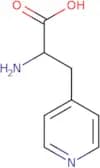
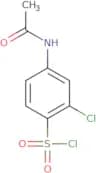
CAS:<p>Versatile small molecule scaffold</p>Formula:C8H10N2O2Purity:Min. 95%Molecular weight:166.18 g/mol4-Acetamido-2-chlorobenzenesulfonyl chloride
CAS:Versatile small molecule scaffoldFormula:C8H7Cl2NO3SPurity:Min. 95%Molecular weight:268.12 g/mol

![[3,3'-Bipyridine]-5-carboxylic acid](/_next/image/?url=https%3A%2Fstatic.cymitquimica.com%2Fproducts%2F3D%2Fthumb-webp%2FBAA97081.webp&w=3840&q=75)

![rac-(1R,2R,5R)-Bicyclo[3.2.1]octan-2-ol, exo](/_next/image/?url=https%3A%2Fstatic.cymitquimica.com%2Fproducts%2F3D%2Fthumb-webp%2FBAA96538.webp&w=3840&q=75)
![3,5-Dimethyl benzo[b]thiophene](/_next/image/?url=https%3A%2Fstatic.cymitquimica.com%2Fproducts%2F3D%2Fthumb-webp%2FBAA96445.webp&w=3840&q=75)