


Building Blocks
Subcategories of "Building Blocks"
- Boronic Acids & Boronic Acid Derivatives(5,781 products)
- Chiral Building Blocks(1,242 products)
- Hydrocarbon Building Blocks(6,101 products)
- Organic Building Blocks(61,038 products)
Found 205338 products of "Building Blocks"
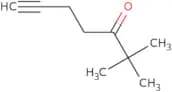
2,2-Dimethylhept-6-yn-3-one
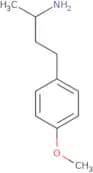
CAS:Versatile small molecule scaffoldFormula:C9H14OPurity:Min. 95%Molecular weight:138.21 g/mol3-(4-Methoxy-phenyl)-1-methyl-propylamine
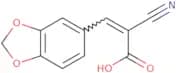
CAS:3-(4-Methoxy-phenyl)-1-methyl-propylamine is a chiral compound that inhibits the growth of bacteria. It has significant growth inhibition against Gram-positive bacteria, including Staphylococcus aureus and Enterococcus faecalis. 3-(4-Methoxy-phenyl)-1-methyl-propylamine also has significant growth inhibition against Gram-negative bacteria, including Salmonella typhimurium, Escherichia coli, and Pseudomonas aeruginosa. This drug has antifeedant activity as well as significant growth inhibition against certain fungi and protozoa.Formula:C11H17NOPurity:Min. 95%Molecular weight:179.26 g/mol3-(1,3-Dioxaindan-5-yl)-2-cyanoprop-2-enoic acid
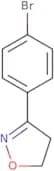
CAS:Versatile small molecule scaffoldFormula:C11H7NO4Purity:Min. 95%Molecular weight:217.18 g/mol3-(4-Bromophenyl)-4,5-dihydro-1,2-oxazole
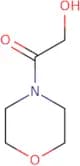
CAS:Versatile small molecule scaffoldFormula:C9H8BrNOPurity:Min. 95%Molecular weight:226.07 g/mol2-hydroxy-1-(morpholin-4-yl)ethan-1-one
CAS:2-Hydroxy-1-(morpholin-4-yl)ethan-1-one is an anti-tuberculosis drug that inhibits the synthesis of the mycolic acid layer in Mycobacterium tuberculosis. It binds to the nitrogen and electrons of the muramic acid residues and prevents their condensation with amines, thereby inhibiting the synthesis of glycolic acid and disubstituted acids. 2HME also has inhibitory effects on growth at concentrations below its MIC. This drug may have a structural similarity to amides, which are known as inhibitors for bacterial cell wall biosynthesis. 2HME has been shown to be effective against Mycobacterium tuberculosis strains resistant to other drugs such as isoniazid and rifampin.Formula:C6H11NO3Purity:Min. 95%Molecular weight:145.15 g/molMethyl 1-azabicyclo[2.2.2]octane-4-carboxylate
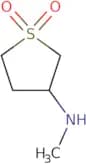
CAS:Versatile small molecule scaffoldFormula:C9H15NO2Purity:Min. 95%Molecular weight:169.22 g/mol3-(Methylamino)tetrahydrothiophene 1,1-dioxide
CAS:Versatile small molecule scaffold
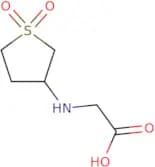
Formula:C5H11NO2SPurity:Min. 95%Molecular weight:149.21 g/mol(1,1-Dioxotetrahydro-1-lambda*6*-thiophen-3-yl-amino)acetic acid
CAS:Versatile small molecule scaffold
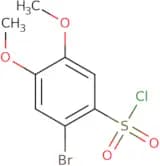
Formula:C6H11NO4SPurity:Min. 95%Molecular weight:193.22 g/mol2-Bromo-4,5-dimethoxybenzene-1-sulfonyl chloride
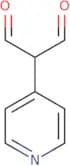
CAS:Versatile small molecule scaffoldFormula:C8H8BrClO4SPurity:Min. 95%Molecular weight:315.57 g/mol2-(4-Pyridyl)malondialdehyde
CAS:2-(4-Pyridyl)malondialdehyde (2-PMAL) is a zwitterionic molecule that is soluble in polar organic solvents. It forms hydrogen bonds with other molecules and has a microporous structure. 2-PMAL has been shown to be an x-ray contrast agent for imaging biological systems. The connectivity of 2-PMAL and the x-ray structure have been determined by single crystal x-ray diffraction studies. The adsorption of 2-PMAL on polymers has been studied experimentally, and its topology has been determined using helical modelling.
2-(4-Pyridyl)malondialdehyde is a compound with both planar and helical structures, which may give it the ability to adsorb onto surfaces or dissolve in water or organic solvents.Formula:C8H7NO2Purity:Min. 95%Molecular weight:149.15 g/mol1-[(tert-butoxy)carbonyl]-2,5-dihydro-1H-pyrrole-2-carboxylic acid
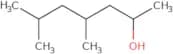
CAS:Versatile small molecule scaffoldFormula:C10H15NO4Purity:Min. 95%Molecular weight:213.2 g/mol4,6-Dimethylheptan-2-ol
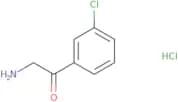
CAS:Versatile small molecule scaffoldFormula:C9H20OPurity:Min. 95%Molecular weight:144.25 g/mol2-Amino-1-(3-chlorophenyl)ethanone hydrochloride
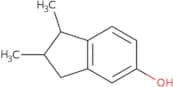
CAS:Controlled ProductVersatile small molecule scaffoldFormula:C8H9Cl2NOPurity:Min. 95%Molecular weight:206.07 g/mol1,2-Dimethyl-2,3-dihydro-1H-inden-5-ol
CAS:Versatile small molecule scaffoldFormula:C11H14OPurity:Min. 95%Molecular weight:162.23 g/mol2-[(4-Ethoxyphenyl)sulfanyl]acetic acid
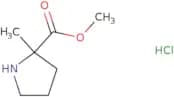
CAS:Versatile small molecule scaffoldFormula:C10H12O3SPurity:Min. 95%Molecular weight:212.27 g/molMethyl 2-methylpyrrolidine-2-carboxylate hydrochloride
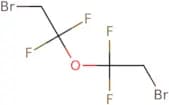
CAS:Versatile small molecule scaffoldFormula:C7H14ClNO2Purity:Min. 95%Molecular weight:179.64 g/mol2-Bromo-1-(2-bromo-1,1-difluoroethoxy)-1,1-difluoroethane
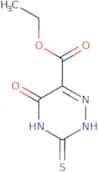
CAS:Versatile small molecule scaffoldFormula:C4H4Br2F4OPurity:Min. 95%Molecular weight:303.88 g/molEthyl 5-oxo-3-thioxo-2H-1,2,4-triazine-6-carboxylate
CAS:Ethyl 5-oxo-3-thioxo-2H-1,2,4-triazine-6-carboxylate is an acid ethyl ester of the triazine compound ethyl 3,5,6,7,8,-tetrahydro-2H-[1]benzothiopyran-2,4(3H)-dione. It has been shown to inhibit bacterial growth by binding to the enzyme ribonucleotide reductase.Formula:C6H7N3O3SPurity:Min. 95%Molecular weight:201.21 g/mol4-(Iodomethyl)pyrrolidin-2-one
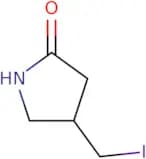
CAS:Versatile small molecule scaffoldFormula:C5H8INOPurity:Min. 95%Molecular weight:225.03 g/mol3-Methyl-3,8-diaza-bicyclo[3.2.1]octane
CAS:Versatile small molecule scaffoldFormula:C7H14N2Purity:Min. 95%Molecular weight:126.2 g/mol

![Methyl 1-azabicyclo[2.2.2]octane-4-carboxylate](/_next/image/?url=https%3A%2Fstatic.cymitquimica.com%2Fproducts%2F3D%2Fthumb-webp%2FBCA06926.webp&w=3840&q=75)
![1-[(tert-butoxy)carbonyl]-2,5-dihydro-1H-pyrrole-2-carboxylic acid](/_next/image/?url=https%3A%2Fstatic.cymitquimica.com%2Fproducts%2F3D%2Fthumb-webp%2FBCA07713.webp&w=3840&q=75)
![2-[(4-Ethoxyphenyl)sulfanyl]acetic acid](/_next/image/?url=https%3A%2Fstatic.cymitquimica.com%2Fproducts%2F3D%2Fthumb-webp%2FBCA09445.webp&w=3840&q=75)
![3-Methyl-3,8-diaza-bicyclo[3.2.1]octane](/_next/image/?url=https%3A%2Fstatic.cymitquimica.com%2Fproducts%2F3D%2Fthumb-webp%2FBCA10241.webp&w=3840&q=75)