Building Blocks
This section contains fundamental products for the synthesis of organic and biological compounds. Building blocks are the essential starting materials used to construct complex molecules through various chemical reactions. They play a critical role in drug discovery, material science, and chemical research. At CymitQuimica, we offer a diverse range of high-quality building blocks to support your innovative research and industrial projects, ensuring you have the essential components for successful synthesis.
Subcategories of "Building Blocks"
- Boronic Acids & Boronic Acid Derivatives(5,786 products)
- Chiral Building Blocks(1,246 products)
- Hydrocarbon Building Blocks(6,107 products)
- Organic Building Blocks(61,080 products)
Found 205478 products of "Building Blocks"
Sort by
Purity (%)
0
100
|
0
|
50
|
90
|
95
|
100
2-Bromo-4-(methoxymethyl)pyridine
CAS:Versatile small molecule scaffold
Formula:C7H8BrNOPurity:Min. 95%Molecular weight:202.05 g/mol4-[3-(Hydroxymethyl)piperidine-1-carbonyl]-1,2-dihydropyridin-2-one
CAS:Versatile small molecule scaffoldFormula:C12H16N2O3Purity:Min. 95%Molecular weight:236.3 g/mol5-Cyclopropyl-1,3,4-oxadiazole-2-thiol
CAS:Versatile small molecule scaffoldFormula:C5H6N2OSPurity:Min. 95%Molecular weight:142.18 g/mol3-Amino-5-bromo-1,2-dihydropyridine-2-thione
CAS:Versatile small molecule scaffoldFormula:C5H5BrN2SPurity:Min. 95%Molecular weight:205.08 g/mol(2-Cyclohexylpropyl)(methyl)amine hydrochloride
CAS:Controlled ProductVersatile small molecule scaffold
Formula:C10H22ClNPurity:Min. 95%Molecular weight:191.74 g/mol5-(2,6-Dimethylphenoxymethyl)-4-phenyl-4H-1,2,4-triazole-3-thiol
CAS:Versatile small molecule scaffoldFormula:C17H17N3OSPurity:Min. 95%Molecular weight:311.4 g/mol3-Amino-N-benzylpropanamide
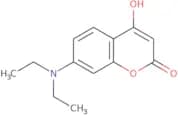
CAS:Versatile small molecule scaffoldFormula:C10H14N2OPurity:Min. 95%Molecular weight:178.23 g/mol7-Diethylamino-4-hydroxy-chromen-2-one
CAS:7-Diethylamino-4-hydroxy-chromen-2-one is a fluorescent chemical compound that belongs to the family of atypical fluorophores. It has a number of photophysical properties, including fluorescence and regression, which are characteristic of amines. 7-Diethylamino-4-hydroxy-chromen-2-one can be synthesized from diazonium salt and 4-hydroxycoumarin. This chemical compound has been used as a fluorescent probe for nucleophilic reactions in various types of organic molecules. The nature of this fluorophore is unknown, but it may be due to its ability to shift the wavelength of fluorescence by up to 400 nm.Formula:C13H15NO3Purity:Min. 95%Molecular weight:233.26 g/mol5-Methyl-3-oxohexanenitrile
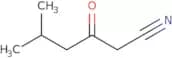
CAS:5-Methyl-3-oxohexanenitrile is a dialkylamino compound that has been used as a reagent in organic chemistry. It is tautomeric and can exist as both an amide and an isoxazole. The pyridine ring of 5-methyl-3-oxohexanenitrile can be either substituted with a carbamate, nitro, or alkenyl group, depending on the substitution pattern. 5-Methyl-3-oxohexanenitrile reacts with dinitrophenyl to form an N–N bond, which is then cleaved by amines in order to generate the corresponding carbamate or amide. 5-Methyl-3-oxohexanenitrile also reacts with copper to form the corresponding nitro or alkenyl group.
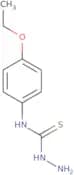
Formula:C7H11NOPurity:Min. 95%Molecular weight:125.17 g/mol3-Amino-1-(4-ethoxyphenyl)thiourea
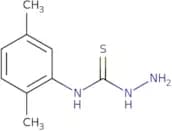
CAS:Versatile small molecule scaffoldFormula:C9H13N3OSPurity:Min. 95%Molecular weight:211.29 g/mol3-Amino-1-(2,5-dimethylphenyl)thiourea
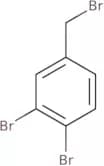
CAS:Versatile small molecule scaffoldFormula:C9H13N3SPurity:Min. 95%Molecular weight:195.29 g/mol1,2-Dibromo-4-(bromomethyl)benzene
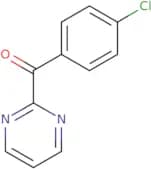
CAS:1,2-Dibromo-4-(bromomethyl)benzene is a brominated organic compound that has been shown to act as a potent agonist for the peroxisome proliferator-activated receptor delta (PPARδ). It has been shown to have structural and biological effects on PPARδ. This compound has been used as a template in the synthesis of many other compounds. 1,2-Dibromo-4-(bromomethyl)benzene is non-selective and bioavailable, which means it can be taken orally or applied topically.Formula:C7H5Br3Purity:Min. 95%Molecular weight:328.83 g/mol2-(4-Chlorobenzoyl)pyrimidine
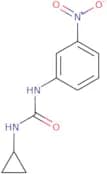
CAS:Versatile small molecule scaffoldFormula:C11H7ClN2OPurity:Min. 95%Molecular weight:218.64 g/mol3-Cyclopropyl-1-(3-nitrophenyl)urea
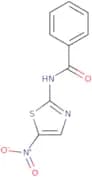
CAS:Versatile small molecule scaffoldFormula:C10H11N3O3Purity:Min. 95%Molecular weight:221.21 g/molN-(5-Nitro-thiazol-2-yl)-benzamide
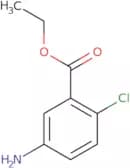
CAS:N-(5-Nitro-thiazol-2-yl)-benzamide is a noncompetitive inhibitor of the enzyme succinate dehydrogenase and is used as an molluscicide. It binds to the active site of the enzyme, which is located in the mitochondrial membrane, and prevents electron transfer from succinate to ubiquinone. This leads to a decrease in production of ATP, which is needed for cell growth and division. N-(5-Nitro-thiazol-2-yl)-benzamide has been shown to inhibit inflammation by inhibiting prostaglandin synthesis in mice. The drug also inhibits neutrophil infiltration into inflamed areas, which may be due to its effect on 5HT2A receptors.Formula:C10H7N3O3SPurity:Min. 95%Molecular weight:249.25 g/molEthyl 5-amino-2-chlorobenzoate
CAS:Versatile small molecule scaffold
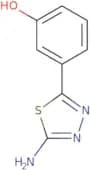
Formula:C9H10ClNO2Purity:Min. 95%Molecular weight:199.63 g/mol3-(5-Amino-1,3,4-thiadiazol-2-yl)phenol
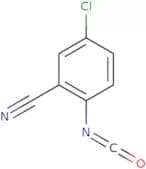
CAS:Versatile small molecule scaffoldFormula:C8H7N3OSPurity:Min. 95%Molecular weight:193.23 g/mol5-Chloro-2-isocyanatobenzonitrile
CAS:Versatile small molecule scaffold
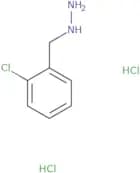
Formula:C8H3ClN2OPurity:Min. 95%Molecular weight:178.58 g/mol(2-chlorobenzyl)hydrazine 2hcl
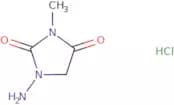
CAS:Versatile small molecule scaffoldFormula:C7H11Cl3N2Purity:Min. 95%Molecular weight:229.53 g/mol1-Amino-3-methylimidazolidine-2,4-dione hydrochloride
CAS:Versatile small molecule scaffoldFormula:C4H8ClN3O2Purity:Min. 95%Molecular weight:165.58 g/mol


![4-[3-(Hydroxymethyl)piperidine-1-carbonyl]-1,2-dihydropyridin-2-one](/_next/image/?url=https%3A%2Fstatic.cymitquimica.com%2Fproducts%2F3D%2Fthumb-webp%2FPBD97024.webp&w=3840&q=75)