Building Blocks
This section contains fundamental products for the synthesis of organic and biological compounds. Building blocks are the essential starting materials used to construct complex molecules through various chemical reactions. They play a critical role in drug discovery, material science, and chemical research. At CymitQuimica, we offer a diverse range of high-quality building blocks to support your innovative research and industrial projects, ensuring you have the essential components for successful synthesis.
Subcategories of "Building Blocks"
- Boronic Acids & Boronic Acid Derivatives(5,786 products)
- Chiral Building Blocks(1,246 products)
- Hydrocarbon Building Blocks(6,107 products)
- Organic Building Blocks(61,080 products)
Found 205472 products of "Building Blocks"
Sort by
Purity (%)
0
100
|
0
|
50
|
90
|
95
|
100
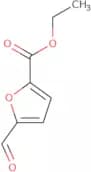
Ethyl 5-formylfuran-2-carboxylate
CAS:Versatile small molecule scaffoldFormula:C8H8O4Purity:Min. 95%Molecular weight:168.15 g/mol1,2-Dimethoxy-4-[(E)-2-nitroethenyl]benzene
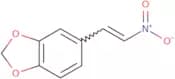
CAS:Versatile small molecule scaffoldFormula:C10H11NO4Purity:Min. 95%Molecular weight:209.2 g/mol5-(2-Nitroethenyl)-2H-1,3-benzodioxole
CAS:Versatile small molecule scaffoldFormula:C9H7NO4Purity:Min. 95%Molecular weight:193.16 g/mol2-({4-[(Carboxymethyl)carbamoyl]phenyl}formamido)acetic acid
CAS:Versatile small molecule scaffold
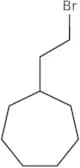
Formula:C12H12N2O6Purity:Min. 95%Molecular weight:280.23 g/mol(2-Bromoethyl)cycloheptane
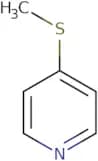
CAS:Versatile small molecule scaffoldFormula:C9H17BrPurity:Min. 95%Molecular weight:205.13 g/mol4-(Methylsulfanyl)pyridine
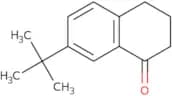
CAS:4-Methylsulfanylpyridine is a ligand, chiral, and metallophilic. It has a pyridine ring that is magnetic. 4-Methylsulfanylpyridine also shows oxidation process profiles in hexane and tetrahydrofuran. 4-Methylsulfanylpyridine interacts with other compounds through a number of spectroscopies, including photoelectron, diffraction, and single-crystal x-ray diffraction. 4-Methylsulfanylpyridine can be used to catalyze reactions.Formula:C6H7NSPurity:Min. 95%Molecular weight:125.19 g/mol7-tert-Butyl-1,2,3,4-tetrahydronaphthalen-1-one
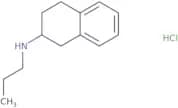
CAS:Versatile small molecule scaffoldFormula:C14H18OPurity:Min. 95%Molecular weight:202.29 g/molN-Propyl-1,2,3,4-tetrahydronaphthalen-2-amine hydrochloride
CAS:Controlled ProductVersatile small molecule scaffold
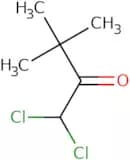
Formula:C13H20ClNPurity:Min. 95%Molecular weight:225.76 g/mol1,1-Dichloropinacolone
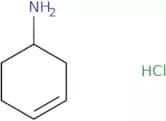
CAS:1,1-Dichloropinacolone is a chlorinated derivative of the organic compound 1,1-dichloropinacol. It is used as a precursor to produce chloride gas and hydrogen chloride. The reaction of 1,1-dichloropinacolone with hydrochloric acid produces hydrogen and chlorine gas. This method has been used to remove nitro compounds from wastewater as well as to produce pesticides. The reaction products include hydrogen peroxide which can be used for wastewater treatment. Treatment methods include the use of organic solvents or catalysts to speed up the reaction rate.Formula:C6H10Cl2OPurity:Min. 95%Molecular weight:169.05 g/molCyclohex-3-en-1-amine hydrochloride
CAS:Versatile small molecule scaffold
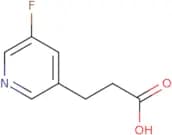
Formula:C6H11N·HClPurity:Min. 95%Molecular weight:133.62 g/mol3-(5-fluoropyridin-3-yl)propanoic acid
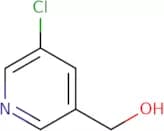
CAS:Versatile small molecule scaffoldFormula:C8H8NO2FPurity:Min. 95%Molecular weight:169.15 g/mol(5-Chloro-3-pyridinyl)methanol
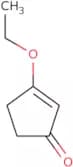
CAS:Versatile small molecule scaffoldFormula:C6H6ClNOPurity:Min. 95%Molecular weight:143.57 g/mol3-Ethoxy-2-cyclopentenone
CAS:3-Ethoxy-2-cyclopentenone is an unsaturated fatty acid that is used in the synthesis of prostaglandins and other biologically active compounds. It can be synthesized by the hydrogenation of 3-ethoxy-2-cyclohexenecarboxaldehyde, which is an analog of a natural product. 3-Ethoxy-2-cyclopentenone has been used as a radioisotope for medical diagnosis, yielding high specific activity with low radiation dosages. This compound can also be produced by formylation and hydrogenation of 2-(3'-formoxyphenoxy)propane. 3-Ethoxy-2-cyclopentenone has shown inhibitory effects on glycosidases and can be diluted at 1:10 to produce a 10% concentration.
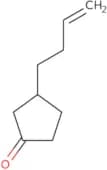
Formula:C7H10O2Purity:Min. 95%Molecular weight:126.15 g/mol3-(3-Butenyl)cyclopentanone
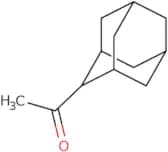
CAS:Versatile small molecule scaffoldFormula:C9H14OPurity:Min. 95%Molecular weight:138.21 g/mol1-(Adamantan-2-yl)ethan-1-one
CAS:Adamantan-2-yl ethan-1-one is a carbocation with an electron deficient double bond. This compound has been shown to react with alkyl halides, such as benzyl chloride, to form a 1,3-diphenylpropane. Adamantan-2-yl ethan-1-one was synthesized by radical intermediates in the course of hydrocarbon activation and has shown to be an important reaction intermediate for the synthesis of carbonyl compounds. The activation of hydrocarbons by adamantan-2-yl ethan-1-one has been studied extensively and has led to advances in medicinal chemistry.Formula:C12H18OPurity:Min. 95%Molecular weight:178.27 g/mol3-(Dimethylamino)propanohydrazide
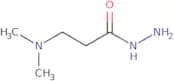
CAS:3-(Dimethylamino)propanohydrazide is a potent inhibitor of lipoxygenases in the nanomolar range. It has been shown to inhibit a number of lipoxygenases, including 5-lipoxygenase and 15-lipoxygenase, which are enzymes that catalyze the conversion of arachidonic acid to leukotrienes. 3-(Dimethylamino)propanohydrazide was also found to be an efficient inhibitor of acylhydrazone formation and is being used as a lead compound for drug discovery. This compound has been shown to be potent inhibitors of regulatory enzymes in the lung disease screening reaction mixtures, such as those that regulate inflammation or blood pressure.Formula:C5H13N3OPurity:Min. 95%Molecular weight:131.18 g/mol3-{Bicyclo[2.2.1]heptan-2-yl}propanoic acid
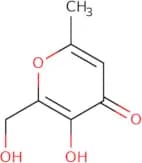
CAS:Versatile small molecule scaffoldFormula:C10H16O2Purity:Min. 95%Molecular weight:168.23 g/mol3-Hydroxy-2-(hydroxymethyl)-6-methyl-4H-pyran-4-one
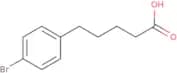
CAS:Versatile small molecule scaffoldFormula:C7H8O4Purity:Min. 95%Molecular weight:156.14 g/mol5-(4-bromophenyl)pentanoic acid
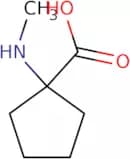
CAS:5-(4-Bromophenyl)pentanoic acid is a molecule that is synthetically derived from the natural product pentalenene. It can be used to debrominate ccr5 in vitro, and has been envisaged as a synthetic chemotherapeutic agent for HIV infection. 5-(4-Bromophenyl)pentanoic acid is an amide of pentanoic acid and dibenzoylmethane. It is a biomolecular agent that has been shown to induce chromosomal rearrangements and chemokine modifications in cancer cells. 5-(4-Bromophenyl)pentanoic acid also prevents apoptosis by binding to survivin, thereby inhibiting its ability to trigger apoptosis.Formula:C11H13BrO2Purity:Min. 95%Molecular weight:257.1 g/mol1-(Methylamino)cyclopentane-1-carboxylic acid
CAS:Versatile small molecule scaffoldFormula:C7H13NO2Purity:Min. 95%Molecular weight:143.18 g/mol

![1,2-Dimethoxy-4-[(E)-2-nitroethenyl]benzene](/_next/image/?url=https%3A%2Fstatic.cymitquimica.com%2Fproducts%2F3D%2Fthumb-webp%2FXAA56847.webp&w=3840&q=75)
![2-({4-[(Carboxymethyl)carbamoyl]phenyl}formamido)acetic acid](/_next/image/?url=https%3A%2Fstatic.cymitquimica.com%2Fproducts%2F3D%2Fthumb-webp%2FXAA57894.webp&w=3840&q=75)
![3-{Bicyclo[2.2.1]heptan-2-yl}propanoic acid](/_next/image/?url=https%3A%2Fstatic.cymitquimica.com%2Fproducts%2F3D%2Fthumb-webp%2FXAA63741.webp&w=3840&q=75)