Building Blocks
Subcategories of "Building Blocks"
- Boronic Acids & Boronic Acid Derivatives(5,784 products)
- Chiral Building Blocks(1,244 products)
- Hydrocarbon Building Blocks(6,105 products)
- Organic Building Blocks(61,073 products)
Found 205446 products of "Building Blocks"
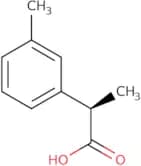
(R)-2-m-Tolyl-propionic acid ee
CAS:Versatile small molecule scaffoldFormula:C10H12O2Purity:Min. 95%Molecular weight:164.2 g/mol4-(4-Chlorophenyl)-4H,5H,6H,7H-thieno[3,2-c]pyridine
CAS:4-(4-Chlorophenyl)-4H,5H,6H,7H-thieno[3,2-c]pyridine is a thiophene derivative that has been used as an imine. It is a protonated molecule with strong metal ion affinity and can be used to bind to Alzheimer's disease or obsessive compulsive disorder. 4-(4-Chlorophenyl)-4H,5H,6H,7H-thieno[3,2-c]pyridine has been shown to inhibit the activity of acetylcholinesterase by binding to the active site of this enzyme. This inhibition leads to an increase in the levels of acetylcholine in the brain and an increase in the number of neurons activated. 4-(4-Chlorophenyl)-4H,5H,6H,7H-thieno[3,2-c]pyridine also inhibits serotonin
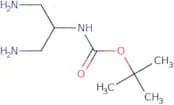
Formula:C13H12ClNSPurity:Min. 95%Molecular weight:249.76 g/moltert-Butyl N-(1,3-diaminopropan-2-yl)carbamate
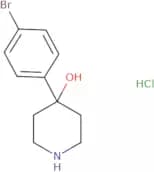
CAS:Versatile small molecule scaffoldFormula:C8H19N3O2Purity:Min. 95%Molecular weight:189.26 g/mol4-Piperidinol, 4-(4-bromophenyl)-, hydrochloride (1:1)
CAS:Versatile small molecule scaffoldFormula:C11H15BrClNOPurity:Min. 95%Molecular weight:292.6 g/mol9-[(2,4-Dichlorophenyl)methyl]-9H-purin-6-amine
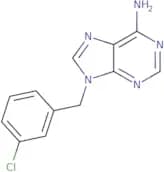
CAS:Versatile small molecule scaffoldFormula:C12H9Cl2N5Purity:Min. 95%Molecular weight:294.14 g/mol9-(3-Chlorobenzyl)-9H-purin-6-amine
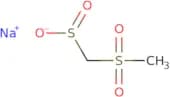
CAS:Versatile small molecule scaffoldFormula:C12H10ClN5Purity:Min. 95%Molecular weight:259.69 g/molSodium methanesulfonylmethanesulfinate
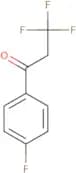
CAS:Versatile small molecule scaffoldFormula:C2H5NaO4S2Purity:Min. 95%Molecular weight:180.18 g/mol3,3,3-Trifluoro-1-(4-fluorophenyl)propan-1-one
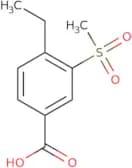
CAS:Versatile small molecule scaffoldFormula:C9H6F4OPurity:Min. 95%Molecular weight:206.14 g/mol4-Ethyl-3-methanesulfonylbenzoic acid
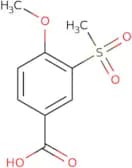
CAS:Versatile small molecule scaffoldFormula:C10H12O4SPurity:Min. 95%Molecular weight:228.27 g/mol3-Methanesulfonyl-4-methoxybenzoic acid
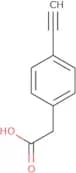
CAS:Versatile small molecule scaffoldFormula:C9H10O5SPurity:Min. 95%Molecular weight:230.24 g/mol2-(4-ethynylphenyl)acetic acid
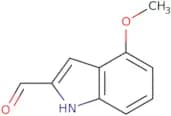
CAS:Versatile small molecule scaffoldFormula:C10H8O2Purity:Min. 95%Molecular weight:160.2 g/mol4-Methoxy-1H-indole-2-carbaldehyde
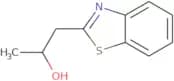
CAS:Versatile small molecule scaffoldFormula:C10H9NO2Purity:Min. 95%Molecular weight:175.18 g/mol1-(1,3-Benzothiazol-2-yl)propan-2-ol
CAS:1-(1,3-Benzothiazol-2-yl)propan-2-ol is an organic compound with the chemical formula CHCHNOS. It is a white solid that is soluble in organic solvents. The molecule consists of a cyclic ether bound to an aromatic ring. This compound has been shown to be a potent inhibitor of HIV replication and can be used as a potential drug to treat HIV infection.Formula:C10H11NOSPurity:Min. 95%Molecular weight:193.27 g/mol2-Chloro-4-[(4-methylphenyl)sulfanyl]pyrimidine
CAS:Versatile small molecule scaffold
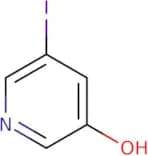
Formula:C11H9ClN2SPurity:Min. 95%Molecular weight:236.72 g/mol5-Iodopyridin-3-ol
CAS:5-Iodopyridin-3-ol is a nicotinic acetylcholine analog that has been shown to have high affinity for the nicotinic acetylcholine receptor. It has been used in pharmacological studies to determine the profile of neuronal nicotinic acetylcholine receptors and to identify analogs with selectivity for this receptor. 5-Iodopyridin-3-ol has been labeled with azide, which can be detected by electron microscopy. The photoaffinity label allows for the detection of specific proteins in a tissue sample. This is done by attaching the 5-iodopyridin-3-ol to an antibody or other protein and then exposing the tissue sample to light which causes the labeling reaction.
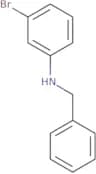
Formula:C5H4INOPurity:Min. 95%Molecular weight:221 g/molN-benzyl-3-bromoaniline
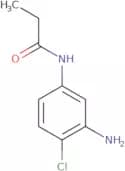
CAS:N-benzyl-3-bromoaniline is a potent compound that is used as an intermediate in the synthesis of chlorobenzyl chloride, which is a precursor for the production of pesticides. It also has significant growth inhibitory activity against erythrocytes from mice, rabbits and rats. The chlorobenzyl chloride derivative of this compound inhibits the development of malaria by inhibiting photosynthesis. This process may be due to its ability to react with chlorophyll and other biomolecules in plants and animals.Formula:C13H12BrNPurity:Min. 95%Molecular weight:262.15 g/molN-(3-Amino-4-chlorophenyl)propanamide
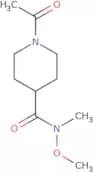
CAS:Versatile small molecule scaffoldFormula:C9H11ClN2OPurity:Min. 95%Molecular weight:198.65 g/mol1-Acetyl-N-methoxy-N-methylpiperidine-4-carboxamide
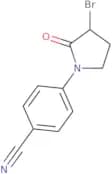
CAS:Versatile small molecule scaffoldFormula:C10H18N2O3Purity:Min. 95%Molecular weight:214.26 g/mol4-(3-Bromo-2-oxopyrrolidin-1-yl)benzonitrile
CAS:4-(3-Bromo-2-oxopyrrolidin-1-yl)benzonitrile is a chemical compound that belongs to the group of chloro, carbonate, butyryl, potassium, ammonium and ammonium hydroxide. The chemical formula is C6H5BrNO2. 4-(3-Bromo-2-oxopyrrolidin-1-yl)benzonitrile is used as a precursor in the synthesis of pharmaceuticals such as antibiotics, beta blockers and antihistamines. This molecule also has antiinflammatory properties. It has been shown to be effective against methicillin resistant Staphylococcus aureus (MRSA).Formula:C11H9BrN2OPurity:Min. 95%Molecular weight:265.11 g/mol2-(4-Aminophenyl)-N-(4-methyl-1,3-thiazol-2-yl)acetamide
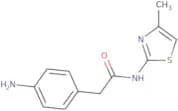
CAS:Versatile small molecule scaffold
Formula:C12H13N3OSPurity:Min. 95%Molecular weight:247.32 g/mol

![4-(4-Chlorophenyl)-4H,5H,6H,7H-thieno[3,2-c]pyridine](/_next/image/?url=https%3A%2Fstatic.cymitquimica.com%2Fproducts%2F3D%2Fthumb-webp%2FNIA46212.webp&w=3840&q=75)
![9-[(2,4-Dichlorophenyl)methyl]-9H-purin-6-amine](/_next/image/?url=https%3A%2Fstatic.cymitquimica.com%2Fproducts%2F3D%2Fthumb-webp%2FNIA52801.webp&w=3840&q=75)
![2-Chloro-4-[(4-methylphenyl)sulfanyl]pyrimidine](/_next/image/?url=https%3A%2Fstatic.cymitquimica.com%2Fproducts%2F3D%2Fthumb-webp%2FNIA74765.webp&w=3840&q=75)