


Building Blocks
This section contains fundamental products for the synthesis of organic and biological compounds. Building blocks are the essential starting materials used to construct complex molecules through various chemical reactions. They play a critical role in drug discovery, material science, and chemical research. At CymitQuimica, we offer a diverse range of high-quality building blocks to support your innovative research and industrial projects, ensuring you have the essential components for successful synthesis.
Subcategories of "Building Blocks"
- Boronic Acids & Boronic Acid Derivatives(5,756 products)
- Chiral Building Blocks(1,242 products)
- Hydrocarbon Building Blocks(6,095 products)
- Organic Building Blocks(61,038 products)
Found 196817 products of "Building Blocks"
Sort by
Purity (%)
0
100
|
0
|
50
|
90
|
95
|
100
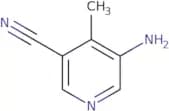
5-Amino-4-methylnicotinonitrile
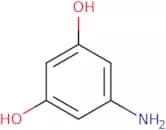
CAS:<p>Versatile small molecule scaffold</p>Formula:C7H7N3Purity:Min. 95%Molecular weight:133.15 g/mol5-aminoresorcinol
CAS:<p>5-aminoresorcinol is a nucleophilic compound that can be used in oriented photocatalysis. It has good operational stability and high photoreactivity, with a hydroxyl group and an aromatic benzyl group. The product has been shown to have neutral pH levels, which is suitable for the environment. 5-Aminoresorcinol can be reused for photoelectron mineralization and nitrate reduction.</p>Formula:C6H7NO2Purity:Min. 95%Molecular weight:125.13 g/mol4-[[5-[(4-Carboxyphenyl)amino]-2,4-dioxo-3-thiazolidinyl]methyl]benzoic acid
CAS:<p>Please enquire for more information about 4-[[5-[(4-Carboxyphenyl)amino]-2,4-dioxo-3-thiazolidinyl]methyl]benzoic acid including the price, delivery time and more detailed product information at the technical inquiry form on this page</p>Formula:C1814N2O6SPurity:Min. 95%Molecular weight:386.38 g/mol1-(2-Amino-4-methylthiazol-5-yl)-2-bromoethanone
CAS:<p>Versatile small molecule scaffold</p>Formula:C6H7BrN2OSPurity:Min. 95%Molecular weight:235.1 g/mol1-[(4-Chlorophenyl)phenylmethyl]-4-[(3-methylphenyl)methyl]-piperazine hydrochloride
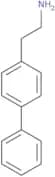
CAS:Please enquire for more information about 1-[(4-Chlorophenyl)phenylmethyl]-4-[(3-methylphenyl)methyl]-piperazine hydrochloride including the price, delivery time and more detailed product information at the technical inquiry form on this pageFormula:C25H27ClN2•HClPurity:Min. 95%Molecular weight:427.41 g/mol2-(4-Biphenyl)ethylamine
CAS:<p>2-(4-Biphenyl)ethylamine is a monovalent cation with a quaternary ammonium group. It has been shown to be an effective crystallization agent for the synthesis of 4-biphenylcarboxylic acid. The compound can be used as a standard for evaporative techniques and has been studied by x-ray crystallography. 2-(4-Biphenyl)ethylamine is soluble in water, ethanol, and chloroform but insoluble in ether. It appears as a white solid or colorless liquid with an amine odor that melts at 138 °C. 2-(4-Biphenyl)ethylamine exhibits optical properties similar to those of tetramethylenediamine and x-ray diffraction patterns similar to those of divalent metal ions such as iron.</p>Formula:C14H15NPurity:Min. 95%Color and Shape:PowderMolecular weight:197.28 g/mol1-tert-Butyl-1H-pyrazol-4-amine hydrochloride
CAS:<p>Versatile small molecule scaffold</p>Formula:C10H14ClN3O4Purity:Min. 95%Molecular weight:275.69 g/molIsostearic acid
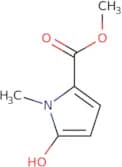
CAS:<p>Please enquire for more information about Isostearic acid including the price, delivery time and more detailed product information at the technical inquiry form on this page</p>Formula:C18H36O2Molecular weight:284.48 g/molMethyl 5-hydroxy-1-methyl-1H-pyrrole-2-carboxylate
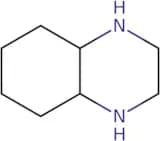
CAS:<p>Please enquire for more information about Methyl 5-hydroxy-1-methyl-1H-pyrrole-2-carboxylate including the price, delivery time and more detailed product information at the technical inquiry form on this page</p>Formula:C7H9NO3Purity:Min. 95%Color and Shape:PowderMolecular weight:155.2 g/molDecahydroquinoxaline
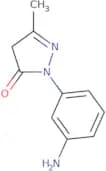
CAS:<p>Decahydroquinoxaline is a heterocyclic compound that contains a nitrogen atom in its structure. The hydroxyl group on the ring can act as an electron-donating group, which can be important for receptor binding and neurotransmission. It also has anti-inflammatory properties. Decahydroquinoxaline has been shown to have anticancer and anti-inflammatory effects, as well as being used for the treatment of chronic arthritis, bowel disease, and dopamine production.</p>Formula:C8H16N2Purity:Min. 95%Molecular weight:140.23 g/mol1-(3-Aminophenyl)-3-methyl-1H-pyrazol-5(4H)-one
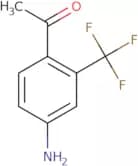
CAS:<p>Versatile small molecule scaffold</p>Formula:C10H11N3OPurity:90%MinColor and Shape:PowderMolecular weight:189.21 g/mol1-(4-Amino-2-trifluoromethyl-phenyl)-ethanone
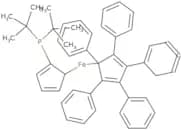
CAS:<p>Versatile small molecule scaffold</p>Formula:C9H8F3NOPurity:Min. 95%Molecular weight:203.16 g/mol1,2,3,4,5-Pentaphenyl-1'-(di-tert-butylphosphino)ferrocene
CAS:<p>1,2,3,4,5-Pentaphenyl-1'-(di-tert-butylphosphino)ferrocene (Pd(dba)2) is a reagent in the form of a dark brown liquid that can be used to synthesize benzene derivatives. It has been shown to be soluble in chloroform and toluene. This compound is stable at room temperature and it can be eluted with phenyl chloride. Pd(dba)2 is a ligand that binds to the metal palladium in order to facilitate the formation of complex compounds.</p>Formula:C48H47FePPurity:Min. 95%Color and Shape:Pink To Dark Red SolidMolecular weight:710.71 g/molLithium orotate monohydrate
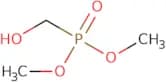
CAS:<p>Please enquire for more information about Lithium orotate monohydrate including the price, delivery time and more detailed product information at the technical inquiry form on this page</p>Formula:C5H3LiN2O4Purity:Min. 95%Molecular weight:162.10 g/molDimethyl (hydroxymethyl)phosphonate
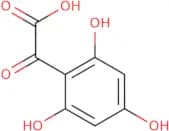
CAS:<p>Dimethyl (hydroxymethyl)phosphonate is a research chemical that has various applications in different fields. It is commonly used as a precursor in the synthesis of organic compounds and pharmaceuticals. Dimethyl (hydroxymethyl)phosphonate has been found to be a potent inhibitor of biosynthesis enzymes, making it useful in drug discovery and development. In addition, this compound has been studied for its electrochemical properties, showing potential for use in electrode materials. It has also been investigated for its antioxidant properties, with studies suggesting that it may have protective effects against oxidative stress. Furthermore, Dimethyl (hydroxymethyl)phosphonate has been used as an intermediate in the production of various chemicals such as potassium, 1-nitropyrene, isobutyl ketone, ascorbic acid, aluminum compounds, alkaloids, isopropyl palmitate, eugenol, methyl ethyl ketone, dimethyl fumarate, and</p>Formula:C3H9O4PPurity:90%MinMolecular weight:140.07 g/mol2-Oxo-2-(2,4,6-trihydroxyphenyl)acetic acid
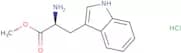
CAS:<p>2-Oxo-2-(2,4,6-trihydroxyphenyl)acetic acid is a useful synthetic building block/scaffold.</p>Formula:C8H6O6Purity:Min. 95%Molecular weight:198.13 g/molL-Tryptophan methyl ester hydrochloride
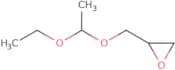
CAS:L-Tryptophan methyl ester hydrochloride is an allylation product of L-tryptophan, which is a precursor to serotonin and melatonin. It is used in the synthesis of benzodiazepine receptor ligands and has serotonergic activity. L-Tryptophan methyl ester hydrochloride can be synthesized from L-tryptophan by amination reaction with methylamine and formaldehyde in the presence of a base. This chemical compound was also shown to have antitumour activity against MDA-MB231 breast cancer cells, which may be due to its ability to inhibit cell proliferation.Formula:C12H15ClN2O2Purity:Min. 95%Color and Shape:PowderMolecular weight:254.71 g/mol2,3-Epoxy-1-(1-ethoxyethoxy)propane
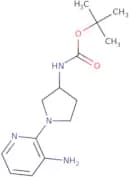
CAS:<p>2,3-Epoxy-1-(1-ethoxyethoxy)propane is a water-insoluble solid that has been shown to form stable complexes with metal ions. It is soluble in hydrochloric acid and is polymerized by cationic polymerization. 2,3-Epoxy-1-(1-ethoxyethoxy)propane reacts with the hydroxyl group of polymers to produce epoxides. The epoxide ring can be opened to produce ethers or oxiranes through ring opening reactions. 2,3-Epoxy-1-(1-ethoxyethoxy)propane is an acidic compound and reacts with water vapor to form hydroxy groups. This compound can also be synthesized by transfer reactions from 1,2,4,5-tetrahydrobenzene and ethylene oxide.</p>Formula:C7H14O3Purity:Min. 95%Molecular weight:146.18 g/mol(R)-tert-Butyl 1-(3-aminopyridin-2-yl)pyrrolidin-3-ylcarbamate
CAS:<p>Versatile small molecule scaffold</p>Formula:C14H22N4O2Purity:Min. 95%Molecular weight:278.35 g/mol6-Bromo-4-methoxy-1H-pyrrolo[3,2-c]pyridine
CAS:<p>Versatile small molecule scaffold</p>Formula:C8H7BrN2OPurity:Min. 95%Molecular weight:227.06 g/mol

![4-[[5-[(4-Carboxyphenyl)amino]-2,4-dioxo-3-thiazolidinyl]methyl]benzoic acid](/_next/image/?url=https%3A%2Fstatic.cymitquimica.com%2Fproducts%2F3D%2Fthumb-webp%2FFC183981.webp&w=3840&q=75)
![1-[(4-Chlorophenyl)phenylmethyl]-4-[(3-methylphenyl)methyl]-piperazine hydrochloride](/_next/image/?url=https%3A%2Fstatic.cymitquimica.com%2Fproducts%2F3D%2Fthumb-webp%2FFC183829.webp&w=3840&q=75)

![6-Bromo-4-methoxy-1H-pyrrolo[3,2-c]pyridine](/_next/image/?url=https%3A%2Fstatic.cymitquimica.com%2Fproducts%2F3D%2Fthumb-webp%2FAQB34281.webp&w=3840&q=75)