


Building Blocks
This section contains fundamental products for the synthesis of organic and biological compounds. Building blocks are the essential starting materials used to construct complex molecules through various chemical reactions. They play a critical role in drug discovery, material science, and chemical research. At CymitQuimica, we offer a diverse range of high-quality building blocks to support your innovative research and industrial projects, ensuring you have the essential components for successful synthesis.
Subcategories of "Building Blocks"
- Boronic Acids & Boronic Acid Derivatives(5,756 products)
- Chiral Building Blocks(1,242 products)
- Hydrocarbon Building Blocks(6,095 products)
- Organic Building Blocks(61,055 products)
Found 199650 products of "Building Blocks"
Sort by
Purity (%)
0
100
|
0
|
50
|
90
|
95
|
100
Pyrazolo[1,5-a]pyridine-3-carboxylic acid methyl ester
CAS:<p>Versatile small molecule scaffold</p>Formula:C9H8N2O2Purity:Min. 95%Molecular weight:176.17 g/mol9-Oxo-bicyclo[3.3.1]nonane-3-carboxylic acid
CAS:<p>Versatile small molecule scaffold</p>Formula:C10H14O3Purity:Min. 95%Molecular weight:182.22 g/molethyl 2-amino-5-bromobenzoate
CAS:<p>Versatile small molecule scaffold</p>Formula:C9H10BrNO2Purity:Min. 95%Molecular weight:244.1 g/mol2-{[(Benzyloxy)carbonyl]amino}benzoic acid
CAS:<p>Versatile small molecule scaffold</p>Formula:C15H13NO4Purity:Min. 95%Color and Shape:PowderMolecular weight:271.27 g/molMethyl 2-amino-5-methyl-1,3-thiazole-4-carboxylate
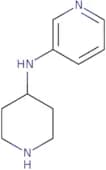
CAS:<p>Versatile small molecule scaffold</p>Formula:C6H8N2O2SPurity:Min. 95%Molecular weight:172.2 g/molN-(Piperidin-4-yl)pyridin-3-amine
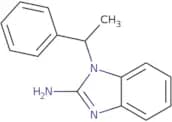
CAS:Controlled Product<p>Versatile small molecule scaffold</p>Formula:C10H15N3Purity:Min. 95%Molecular weight:177.25 g/mol1-(1-Phenylethyl)-1H-1,3-benzodiazol-2-amine
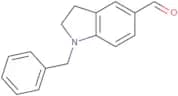
CAS:<p>Versatile small molecule scaffold</p>Formula:C15H15N3Purity:Min. 95%Molecular weight:237.3 g/mol1-Benzyl-2,3-dihydro-1H-indole-5-carbaldehyde
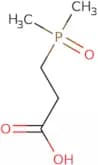
CAS:<p>Versatile small molecule scaffold</p>Formula:C16H15NOPurity:Min. 95%Molecular weight:237.3 g/mol3-(Dimethylphosphoryl)propanoic acid
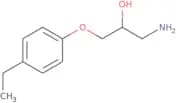
CAS:<p>Versatile small molecule scaffold</p>Formula:C5H11O3PPurity:Min. 95%Molecular weight:150.1 g/mol1-Amino-3-(4-ethyl-phenoxy)-propan-2-ol
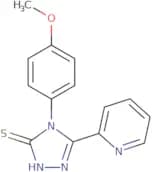
CAS:<p>Versatile small molecule scaffold</p>Formula:C11H17NO2Purity:Min. 95%Molecular weight:195.26 g/mol4-(4-Methoxyphenyl)-5-(pyridin-2-yl)-4H-1,2,4-triazole-3-thiol
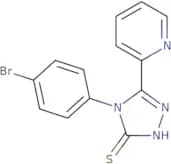
CAS:<p>Versatile small molecule scaffold</p>Formula:C14H12N4OSPurity:Min. 95%Molecular weight:284.34 g/mol4-(4-Bromophenyl)-5-(pyridin-2-yl)-4H-1,2,4-triazole-3-thiol
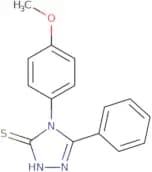
CAS:<p>Versatile small molecule scaffold</p>Formula:C13H9BrN4SPurity:Min. 95%Molecular weight:333.21 g/mol4-(4-Methoxyphenyl)-5-phenyl-4H-1,2,4-triazole-3-thiol
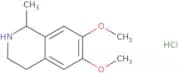
CAS:<p>Versatile small molecule scaffold</p>Formula:C15H13N3OSPurity:Min. 95%Molecular weight:283.4 g/mol6,7-Dimethoxy-1-methyl-1,2,3,4-tetrahydroisoquinoline hydrochloride
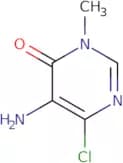
CAS:<p>Puerarin is a natural compound that is found in the roots of the plant Pueraria lobata. It has been shown to inhibit the binding of dopamine receptor agonists to their receptors, which may be due to its structural similarity to dopamine. Puerarin also inhibits the activity of an enzyme called tyrosine hydroxylase, which converts tyrosine into l-dopa and is a key enzyme in the synthesis of neurotransmitters such as dopamine and norepinephrine. Puerarin has been shown to have anti-inflammatory effects in tissue culture experiments, and it may possess potential for treating autoimmune diseases due to its ability to inhibit inflammatory responses.</p>Formula:C12H17NO2·HClPurity:Min. 95%Molecular weight:243.73 g/mol5-Amino-6-chloro-3-methyl-3,4-dihydropyrimidin-4-one
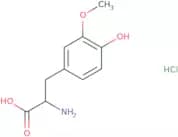
CAS:<p>Versatile small molecule scaffold</p>Formula:C5H6ClN3OPurity:Min. 95%Molecular weight:159.57 g/mol(2S)-2-Amino-3-(4-hydroxy-3-methoxyphenyl)propanoic acid hydrochloride
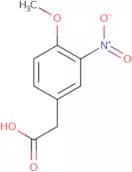
CAS:Controlled Product<p>Versatile small molecule scaffold</p>Formula:C10H14ClNO4Purity:Min. 95%Molecular weight:247.67 g/mol2-(4-methoxy-3-nitrophenyl)acetic acid
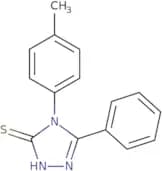
CAS:2-(4-Methoxy-3-nitrophenyl)acetic acid is a linker used in peptide synthesis. It reacts with benzylic alcohols to form stable, cleavable linkages. 2-(4-Methoxy-3-nitrophenyl)acetic acid preferentially reacts with phenylacetic acid and deprotects the benzyl group from a peptide. This product is stable at room temperature and can be used in solid phase chemistry, such as peptide synthesis.Formula:C9H9NO5Purity:Min. 95%Molecular weight:211.2 g/mol4-(4-Methylphenyl)-5-phenyl-4H-1,2,4-triazole-3-thiol
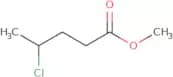
CAS:<p>Versatile small molecule scaffold</p>Formula:C15H13N3SPurity:Min. 95%Molecular weight:267.4 g/molMethyl 4-chloropentanoate
CAS:<p>Methyl 4-chloropentanoate is a piperidine derivative and an intermediate in the reductive amination of ketones. It is used as a reagent for the synthesis of pyridine derivatives, carbamates, and other functionalized compounds. Methyl 4-chloropentanoate can be prepared by hydrogenation of methyl 4-chlorobutyrate or by electrochemical oxidation of methyl 4-aminobenzoate. This compound has been used in organic process research and electrochemical preparations.</p>Formula:C6H11ClO2Purity:Min. 95%Molecular weight:150.6 g/mol{2-[(Dimethylamino)methyl]phenyl}methanol
CAS:<p>Versatile small molecule scaffold</p>Formula:C10H15NOPurity:Min. 95%Molecular weight:165.23 g/mol
![Pyrazolo[1,5-a]pyridine-3-carboxylic acid methyl ester](/_next/image/?url=https%3A%2Fstatic.cymitquimica.com%2Fproducts%2F3D%2Fthumb-webp%2FNCA23784.webp&w=3840&q=75)

![9-Oxo-bicyclo[3.3.1]nonane-3-carboxylic acid](/_next/image/?url=https%3A%2Fstatic.cymitquimica.com%2Fproducts%2F3D%2Fthumb-webp%2FNCA24200.webp&w=3840&q=75)

![2-{[(Benzyloxy)carbonyl]amino}benzoic acid](/_next/image/?url=https%3A%2Fstatic.cymitquimica.com%2Fproducts%2F3D%2Fthumb-webp%2FNCA25488.webp&w=3840&q=75)

![{2-[(Dimethylamino)methyl]phenyl}methanol](/_next/image/?url=https%3A%2Fstatic.cymitquimica.com%2Fproducts%2F3D%2Fthumb-webp%2FNCA32179.webp&w=3840&q=75)