


Building Blocks
This section contains fundamental products for the synthesis of organic and biological compounds. Building blocks are the essential starting materials used to construct complex molecules through various chemical reactions. They play a critical role in drug discovery, material science, and chemical research. At CymitQuimica, we offer a diverse range of high-quality building blocks to support your innovative research and industrial projects, ensuring you have the essential components for successful synthesis.
Subcategories of "Building Blocks"
- Boronic Acids & Boronic Acid Derivatives(5,756 products)
- Chiral Building Blocks(1,242 products)
- Hydrocarbon Building Blocks(6,095 products)
- Organic Building Blocks(61,037 products)
Found 196200 products of "Building Blocks"
Sort by
Purity (%)
0
100
|
0
|
50
|
90
|
95
|
100
1-Methoxy-4,4-dimethylcycloheptane-1-carboxylic acid
CAS:<p>Versatile small molecule scaffold</p>Formula:C11H20O3Purity:Min. 95%Molecular weight:200.3 g/molRef: 3D-BPC90017
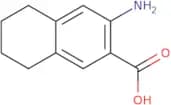
Discontinued product3-Amino-5,6,7,8-tetrahydronaphthalene-2-carboxylic acid
CAS:<p>Versatile small molecule scaffold</p>Formula:C11H13NO2Purity:Min. 95%Molecular weight:191.23 g/molRef: 3D-EEA87713
Discontinued product1,4-Dibromo-2,5-difluoro-3-nitrobenzene
CAS:<p>Versatile small molecule scaffold</p>Formula:C6HBr2F2NO2Purity:Min. 95%Molecular weight:316.88 g/molRef: 3D-CDB64058
Discontinued productPB-22 3-carboxyindole metabolite solution
CAS:Controlled Product<p>PB-22 is a synthetic cannabinoid, which can be classified as a CB1 receptor agonist. It is one of the many cannabinoids that have been created in an attempt to circumvent drug laws by creating compounds that are similar to those found in cannabis but have different chemical structures. PB-22 has shown to increase locomotor activity and stimulate the cb1 receptor in mice. Magnetic resonance spectroscopy (MRS) and assays were used to determine the binding affinity of PB-22 for the CB1 receptor. The MRS data showed that PB-22 bound with high affinity to the CB1 receptor and had a lower affinity for CB2 receptors. This suggests that PB-22 may be more potent than other synthetic cannabinoids, such as JWH-018 and CP 55,940, which bind better with CB2 receptors than CB1 receptors.<br>PB-22 is an analog of JWH-073 and has been shown to have a stronger effect on locomotor activity than JWH</p>Formula:C14H17NO2Purity:Min. 95%Molecular weight:231.29 g/molDicyclohexylmethanol
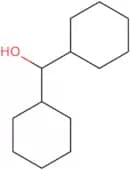
CAS:<p>Dicyclohexylmethanol is a trifunctional compound that contains a hydroxyl group, and can be used as a hydrogen bond donor or acceptor. The chemical structure of dicyclohexylmethanol can be seen in the figure below. Dicyclohexylmethanol has been used for sample preparation for hydrogen chloride gas. It has also been used to determine the concentration of blood ethanol levels and to measure blood pH in humans. Dicyclohexylmethanol is an important reactant in asymmetric synthesis reactions due to its ability to form hydrogen bonds with both reactants.</p>Formula:C13H24OPurity:Min. 95%Molecular weight:196.33 g/mol3-(2-Aminoethyl)aminotetrahydrothiophene1,1-dioxide dihydrochloride
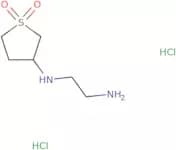
CAS:<p>Versatile small molecule scaffold</p>Formula:C6H16Cl2N2O2SPurity:Min. 95%Molecular weight:251.17 g/mol3-[1-Ethyl-5-(morpholine-4-sulfonyl)-1H-1,3-benzodiazol-2-yl]propanoic acid
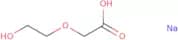
CAS:<p>Versatile small molecule scaffold</p>Formula:C16H21N3O5SPurity:Min. 95%Molecular weight:367.4 g/molSodium ²-Hydroxyethoxyacetate
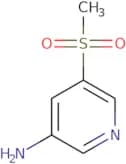
CAS:<p>Sodium 2-hydroxyethoxyacetate is a cross-linker that is used to immobilize proteins and enzymes. It has been shown to be effective in the treatment of autoimmune diseases, such as rheumatoid arthritis. This chemical can also be used as a cross-linking agent for the production of biodegradable polymers. The synthesis of this chemical was first reported in 1874 and it has been used for copolymerization with other compounds to form particles with potential biomedical applications.</p>Formula:C4H7NaO4Purity:Min. 95%Molecular weight:142.09 g/mol5-(methylsulfonyl)pyridin-3-amine
CAS:<p>Versatile small molecule scaffold</p>Formula:C6H8N2O2SPurity:Min. 95%Molecular weight:172.21 g/mol2-(2-Bromoethyl)-1,4-dichlorobenzene
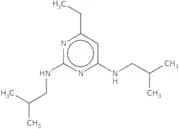
CAS:<p>Versatile small molecule scaffold</p>Formula:C8H7BrCl2Purity:Min. 95%Molecular weight:253.95 g/mol6-Ethyl-2-N,4-N-bis(2-methylpropyl)pyrimidine-2,4-diamine
CAS:<p>Versatile small molecule scaffold</p>Formula:C14H26N4Purity:Min. 95%Molecular weight:250.4 g/molRef: 3D-SSB67952
Discontinued product5-Methyl-1H-indol-6-amine
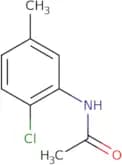
CAS:<p>Versatile small molecule scaffold</p>Formula:C9H10N2Purity:Min. 95%Molecular weight:146.19 g/molN-(2-Chloro-5-methylphenyl)acetamide
CAS:<p>Versatile small molecule scaffold</p>Formula:C9H10ClNOPurity:Min. 95%Molecular weight:183.63 g/molRef: 3D-TAA93183
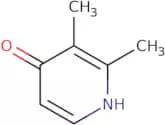
Discontinued product2,3-Dimethyl-1,4-dihydropyridin-4-one
CAS:<p>Versatile small molecule scaffold</p>Formula:C7H9NOPurity:Min. 95%Molecular weight:123.15 g/mol5-ethyl-2-methylmorpholine
CAS:<p>Versatile small molecule scaffold</p>Formula:C7H15NOPurity:Min. 95%Molecular weight:129.2 g/molRef: 3D-TEB44485
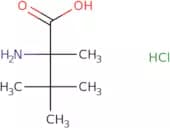
Discontinued product2-Amino-2-t-butylpropanoic acid HCl
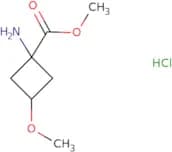
CAS:<p>Versatile small molecule scaffold</p>Formula:C7H15NO2·HClPurity:Min. 95%Molecular weight:181.66 g/molMethyl 1-amino-3-methoxycyclobutane-1-carboxylate hydrochloride
CAS:<p>Versatile small molecule scaffold</p>Formula:C7H14ClNO3Purity:Min. 95%Molecular weight:195.6 g/molRef: 3D-TMD05888
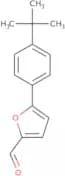
Discontinued product5-(4-tert-Butylphenyl)furan-2-carbaldehyde
CAS:<p>Versatile small molecule scaffold</p>Formula:C15H16O2Purity:Min. 95%Molecular weight:228.29 g/molRef: 3D-TNA60413
Discontinued product3,4-Dimethyl-6H,7H-[1,2]oxazolo[5,4-b]pyridin-6-one
CAS:<p>Versatile small molecule scaffold</p>Formula:C8H8N2O2Purity:Min. 95%Molecular weight:164.16 g/molBicyclo[3.3.1]nonan-3-amine hydrochloride
CAS:<p>Versatile small molecule scaffold</p>Formula:C9H18ClNPurity:Min. 95%Molecular weight:175.7 g/molRef: 3D-UAA38864
Discontinued product




![3-[1-Ethyl-5-(morpholine-4-sulfonyl)-1H-1,3-benzodiazol-2-yl]propanoic acid](/_next/image/?url=https%3A%2Fstatic.cymitquimica.com%2Fproducts%2F3D%2Fthumb-webp%2FQGB27067.webp&w=3840&q=75)



![3,4-Dimethyl-6H,7H-[1,2]oxazolo[5,4-b]pyridin-6-one](/_next/image/?url=https%3A%2Fstatic.cymitquimica.com%2Fproducts%2F3D%2Fthumb-webp%2FUAA38556.webp&w=3840&q=75)
![Bicyclo[3.3.1]nonan-3-amine hydrochloride](/_next/image/?url=https%3A%2Fstatic.cymitquimica.com%2Fproducts%2F3D%2Fthumb-webp%2FUAA38864.webp&w=3840&q=75)