Building Blocks
This section contains fundamental products for the synthesis of organic and biological compounds. Building blocks are the essential starting materials used to construct complex molecules through various chemical reactions. They play a critical role in drug discovery, material science, and chemical research. At CymitQuimica, we offer a diverse range of high-quality building blocks to support your innovative research and industrial projects, ensuring you have the essential components for successful synthesis.
Subcategories of "Building Blocks"
- Boronic Acids & Boronic Acid Derivatives(5,756 products)
- Chiral Building Blocks(1,242 products)
- Hydrocarbon Building Blocks(6,095 products)
- Organic Building Blocks(61,055 products)
Found 199650 products of "Building Blocks"
Sort by
Purity (%)
0
100
|
0
|
50
|
90
|
95
|
100
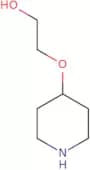
2-(Piperidin-4-yloxy)ethan-1-ol
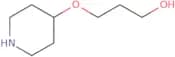
CAS:<p>Versatile small molecule scaffold</p>Formula:C7H15NO2Purity:Min. 95%Molecular weight:145.2 g/mol3-(Piperidin-4-yloxy)propan-1-ol
CAS:<p>Versatile small molecule scaffold</p>Formula:C8H17NO2Purity:Min. 95%Molecular weight:159.23 g/mol9-Benzyl-1,5-dioxa-9-azaspiro[5.5]undecane
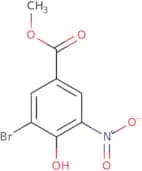
CAS:Versatile small molecule scaffoldFormula:C15H21NO2Purity:Min. 95%Molecular weight:247.33 g/molMethyl 3-bromo-4-hydroxy-5-nitrobenzenecarboxylate
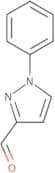
CAS:<p>Versatile small molecule scaffold</p>Formula:C8H6BrNO5Purity:Min. 95%Molecular weight:276.05 g/mol1-Phenyl-1H-pyrazole-3-carbaldehyde
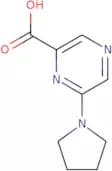
CAS:<p>1-Phenyl-1H-pyrazole-3-carbaldehyde is a pyrazole derivative that is used as a precursor in the synthesis of other compounds. The compound can be synthesized by nitro group reduction of 1,2,3-triazoles followed by chlorination of the resulting hydrazine. This reaction yields phenylhydrazones which undergo dehydrative condensation with carboxylic acids to give pyrazoles. These reactions are reversible and are catalyzed by acid or base. 1-Phenyl-1H-pyrazole-3-carbaldehyde has been shown to react with glucosyl residues in carbohydrates to form acetylated dihydroxyethyl moieties, which have been implicated in the prevention of diabetes and obesity.</p>Formula:C10H8N2OPurity:Min. 95%Molecular weight:172.18 g/mol6-(Pyrrolidin-1-yl)pyrazine-2-carboxylic acid
CAS:Versatile small molecule scaffoldFormula:C9H11N3O2Purity:Min. 95%Molecular weight:193.2 g/mol2-N,6-N-Dimethylpyridine-2,6-diamine
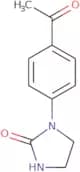
CAS:<p>2-N,6-N-Dimethylpyridine-2,6-diamine is a macrocyclic diamine that has been synthesized in the form of a monoanion. It has an X-ray crystallography with a molecular structure that is consistent with the coordination of copper ions to two nitrogen atoms and two oxygen atoms. The ligand is coordinated in the axial position, with sulfate ions occupying the equatorial positions. The conformation of this compound is linear, which may be due to its negative charge. The crystal structure of 2-N,6-N-Dimethylpyridine-2,6-diamine is hexagonal.</p>Formula:C7H11N3Purity:Min. 95%Molecular weight:137.18 g/mol1-(4-Acetylphenyl)imidazolidin-2-one
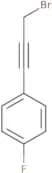
CAS:<p>Versatile small molecule scaffold</p>Formula:C11H12N2O2Purity:Min. 95%Molecular weight:204.22 g/mol1-(3-Bromoprop-1-yn-1-yl)-4-fluorobenzene
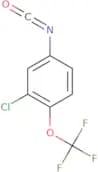
CAS:Versatile small molecule scaffoldFormula:C9H6BrFPurity:Min. 95%Molecular weight:213.05 g/mol2-Chloro-4-isocyanato-1-(trifluoromethoxy)benzene
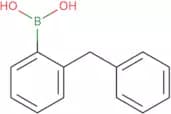
CAS:<p>Versatile small molecule scaffold</p>Formula:C8H3ClF3NO2Purity:Min. 95%Molecular weight:237.56 g/mol(2-Benzylphenyl)boronic acid
CAS:<p>2-Benzylphenylboronic acid is a heterocycle. It is an ester that can be made from the reaction of 2-benzylphenol and borane in the presence of ethanolamine. This compound has a 6-membered ring with three carbon atoms, two of which are attached to the boron atom. Pyrolysis results in the formation of benzene, nitrobenzene, and phenol.</p>Formula:C13H13BO2Purity:Min. 95%Molecular weight:212.05 g/mol(5,6,7,8-Tetrahydro-benzo[4,5]thieno[2,3- D ]pyrimidin-4-ylsulfanyl)-acetic acid
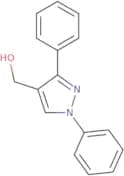
CAS:Versatile small molecule scaffoldFormula:C12H12N2O2S2Purity:Min. 95%Molecular weight:280.4 g/mol(1,3-diphenylpyrazol-4-yl)methanol
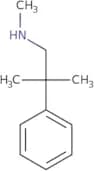
CAS:<p>Versatile small molecule scaffold</p>Formula:C16H14N2OPurity:Min. 95%Molecular weight:250.3 g/molMethyl(2-methyl-2-phenylpropyl)amine
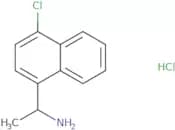
CAS:<p>Versatile small molecule scaffold</p>Formula:C11H17NPurity:Min. 95%Molecular weight:163.26 g/mol1-(4-Chloronaphthalen-1-yl)ethan-1-amine hydrochloride
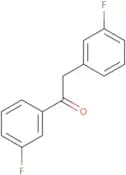
CAS:<p>Versatile small molecule scaffold</p>Formula:C12H13Cl2NPurity:Min. 95%Molecular weight:242.14 g/mol3'-Fluoro-2-(3-fluorophenyl)acetophenone
CAS:Versatile small molecule scaffoldFormula:C14H10F2OPurity:Min. 95%Molecular weight:232.23 g/mol2-Chloro-5-(2-methoxyphenyl)-1,3,4-thiadiazole
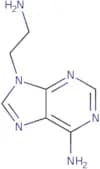
CAS:<p>Versatile small molecule scaffold</p>Formula:C9H7ClN2OSPurity:Min. 95%Molecular weight:226.68 g/mol9-(2-Aminoethyl)-9H-purin-6-amine
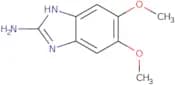
CAS:<p>9-(2-Aminoethyl)-9H-purin-6-amine is a nucleotide analog that has been used as a template for the synthesis of polymers with other heterocycles. The monomeric units are linked by crosslinks, which are formed by reacting two or more chains with an amine group on one of the chains. 9-(2-Aminoethyl)-9H-purin-6-amine is insoluble in water and reacts with cyanogen to form cyanuric acid. The phosphate groups can be reacted with chloride ions to form uracil, which is insoluble in water.</p>Formula:C7H10N6Purity:Min. 95%Molecular weight:178.2 g/mol5,6-Dimethoxy-1H-1,3-benzodiazol-2-amine
CAS:<p>Versatile small molecule scaffold</p>Formula:C9H11N3O2Purity:Min. 95%Molecular weight:193.2 g/mol2-(4-Chlorophenyl)cyclopentan-1-amine hydrochloride
CAS:<p>Versatile small molecule scaffold</p>Formula:C11H15Cl2NPurity:Min. 95%Molecular weight:232.15 g/mol

![9-Benzyl-1,5-dioxa-9-azaspiro[5.5]undecane](/_next/image/?url=https%3A%2Fstatic.cymitquimica.com%2Fproducts%2F3D%2Fthumb-webp%2FQBA25627.webp&w=3840&q=75)

![(5,6,7,8-Tetrahydro-benzo[4,5]thieno[2,3- D ]pyrimidin-4-ylsulfanyl)-acetic acid](/_next/image/?url=https%3A%2Fstatic.cymitquimica.com%2Fproducts%2F3D%2Fthumb-webp%2FQBA27759.webp&w=3840&q=75)