Building Blocks
This section contains fundamental products for the synthesis of organic and biological compounds. Building blocks are the essential starting materials used to construct complex molecules through various chemical reactions. They play a critical role in drug discovery, material science, and chemical research. At CymitQuimica, we offer a diverse range of high-quality building blocks to support your innovative research and industrial projects, ensuring you have the essential components for successful synthesis.
Subcategories of "Building Blocks"
- Boronic Acids & Boronic Acid Derivatives(5,778 products)
- Chiral Building Blocks(1,242 products)
- Hydrocarbon Building Blocks(6,098 products)
- Organic Building Blocks(61,059 products)
Found 199579 products of "Building Blocks"
Sort by
Purity (%)
0
100
|
0
|
50
|
90
|
95
|
100
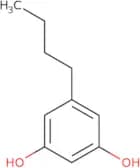
5-Butylbenzene-1,3-diol
CAS:<p>Versatile small molecule scaffold</p>Formula:C10H14O2Purity:Min. 95%Molecular weight:166.22 g/mol1,5,6,7-Tetrahydro-2H-cyclopenta[b]pyridin-2-one
CAS:Versatile small molecule scaffoldFormula:C8H9NOPurity:Min. 95%Molecular weight:135.17 g/molPentanimidamide hydrochloride
CAS:Pentanimidamide hydrochloride is a drug that belongs to the group of aromatic hydrocarbon drugs. It is a potent antihypertensive agent with a rapid onset and long duration of action. Pentanimidamide hydrochloride has been shown to inhibit the production of reactive oxygen species, which are generated by the respiratory chain in mitochondria, and to prevent the formation of pyrazinoic acid, an inhibitor of blood vessel relaxation. This drug also has been shown to reduce blood pressure in animal models by binding to specific receptors on cells in the cardiovascular system. The active form is bound to plasma proteins such as albumin and alpha-1-acid glycoprotein, which are found in high concentrations in erythrocytes. Pentanimidamide hydrochloride also binds to alkynyl groups and phenyl groups, which may be due to its ability to form covalent bonds with these functional groups.Formula:C5H13ClN2Purity:Min. 95%Molecular weight:136.62 g/mol[Ir{dFCF3ppy}2(bpy)]PF6
CAS:Iridium(III) bis-(2-phenylpyridine) (Ir{dFCF3ppy}2(bpy)) is a monomeric amido ligand that can be used in polymerization processes. It has an average molecular weight of 185.8 and a transition temperature of -55°C. Ir{dFCF3ppy}2(bpy) is soluble in organic solvents such as chloroform and acetone and will react with amines, anionic sites, and cycloalkyl groups to form polymers. The yields of the polymerization process are dependent on the starting materials used.Formula:C34H18F16IrN4PPurity:Min. 95%Molecular weight:1,009.7 g/mol1,7-Diazaspiro[4.4]nonane-7-carboxylic acid tert-butyl ester
CAS:Versatile small molecule scaffoldFormula:C12H22N2O2Purity:Min. 95%Molecular weight:226.32 g/molImidazo[1,2-a]pyrazine-2-carbaldehyde
CAS:<p>Versatile small molecule scaffold</p>Formula:C7H5N3OPurity:Min. 95%Molecular weight:147.14 g/mol2-{[(3αR,4S,6R,6αS)-6-Amino-2,2-dimethyltetrahydro-3αH-cyclopenta[d][1,3]-dioxol-4-yl] oxy}-1-ethol
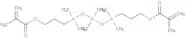
CAS:Versatile small molecule scaffoldFormula:C10H19NO4Purity:Min. 95%Color and Shape:PowderMolecular weight:217.26 g/molMethacryloxypropyl terminated polydimethylsiloxanes
CAS:<p>MW 20,000 - 30,000</p>Formula:C20H40O6Si3Purity:Min. 95%Molecular weight:460.8 g/mol2-[[(3aS,4R,6S,6aa)-4-[7-[[(1R,2S)-2-(3 ,4-Difluorophenyl)cyclopropyl]amino]-5-(propylthio)-3H-[1,2,3]triazolo[4 ,5-d]pyrimidin-3-yl]-2,2-dimethyl-tetrahydro-3aH-cyclopenta[d][1 ,3]dioxol-6-yl]oxy]ethanol
CAS:<p>2-[[(3aS,4R,6S,6aa)-4-[7-[[(1R,2S)-2-(3,4-Difluorophenyl)cyclopropyl]amino]-5-(propylthio)-3H-[1,2,3]triazolo[4,5-d]pyrimidin-3-yl]- 2,2-dimethyl-tetrahydro-3aH-cyclopenta[d][1,3]dioxol-6-yl]oxy]ethanol-d7 is a compound with brominated sparfloxacin. It has various applications in the field of biochemistry and research chemicals. This compound has been found to have interactions with adipocytes and adipose tissues. Additionally, it has shown potential effects on glycan metabolism and potassium ion channels. Furthermore, this compound has been studied for its potential as an herbicide and its interaction with other substances such as</p>Formula:C26H32F2N6O4SPurity:Min. 95%Molecular weight:562.63 g/mol4-Bromopyridine-2,3-diamine
CAS:Versatile small molecule scaffoldFormula:C5H6N3BrPurity:Min. 95%Molecular weight:188.02 g/mol4-Chloro-2-hydroxy-6-methylphenylboronic acid
CAS:<p>Versatile small molecule scaffold</p>Formula:C7H8BClO3Purity:Min. 95%Molecular weight:186.4 g/mol(1R,8S,9s)-Bicyclo[6.1.0]non-4-yn-9-ylmethanol
CAS:(1R,8S,9s)-Bicyclo[6.1.0]non-4-yn-9-ylmethanol is a congener that belongs to the class of monoclonal antibodies. It is a degradable and photophysical agent that enhances ionotropic gelation and proton exchange in an acidic environment. This agent has been shown to react with nucleophilic groups, such as amines and thiols, and has fluorescence properties that are sensitive to pH changes. The reactive nature of this compound makes it useful for the localization of model proteins in analytical chemistry experiments.Formula:C10H14OPurity:Min. 95%Molecular weight:150.22 g/molAdamantane
CAS:<p>Adamantane is a potent antiviral drug for the treatment of influenza. It is an oxidation catalyst that also has biological properties, such as a potent antitumor activity and potent antiviral resistance. Adamantane has been used to treat many human pathogens, including viruses, fungi and bacteria. Adamantane is a skeleton-like structure with four carbons and six hydrogen atoms that can be oxidized to adamantane oxide or reduced to adamantane alcohol. The adamantane molecule binds to the viral protein at a site called the toll-like receptor. This binding prevents viral replication by inhibiting mRNA synthesis in the virus.</p>Formula:C10H16Purity:Min. 95%Color and Shape:White Off-White PowderMolecular weight:136.23 g/mol(1R)-1-(3-Fluoro-4-methylphenyl)ethan-1-amine hydrochloride
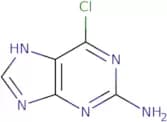
CAS:Versatile small molecule scaffoldFormula:C9H13ClFNPurity:Min. 95%Molecular weight:189.66 g/mol2-Amino-6-chloropurine
CAS:<p>2-Amino-6-chloropurine is a nucleophilic substituent that is used in the synthesis of 2-amino-6-chloropurine. It reacts with hydroxyl groups to form a palladium-catalyzed coupling reaction solution, which is then treated with hydrochloric acid and trifluoroacetic acid. The product is purified by crystallization and recrystallization. This compound has potent antitumor activity against carcinoma cell lines, but it has not been shown to have any effect against Mycobacterium tuberculosis.</p>Formula:C5H4ClN5Purity:Min. 95%Color and Shape:Off-White PowderMolecular weight:169.57 g/mol2-Amino-5-bromo-3-fluorobenzoic acid
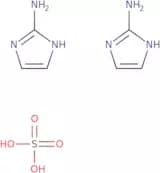
CAS:Versatile small molecule scaffoldFormula:C7H5BrFNO2Purity:Min. 95%Molecular weight:234.03 g/mol2-Aminoimidazole sulfate
CAS:<p>2-Aminoimidazole sulfate is a chemical compound that is used as a transfection reagent. It has been shown to have high transfection efficiency with low cytotoxicity. The diameter of the molecule is in the range of 2 - 3 nm, which allows it to be taken up by cells and thus be active in them. This chemical can be dehydrogenated to form imidazole-2-sulfonic acid, which may interact with other molecules. There have been many advances in this area, including modifications and gaseous forms of the molecule. Research into the interactions of this compound with other chemicals and their effects on cellular uptake are ongoing.</p>Formula:C3H5N3•(H2O4S)0Purity:Min. 95%Color and Shape:Off-White PowderMolecular weight:264.26 g/molMethyl 3-chloro-4-iodobenzoate
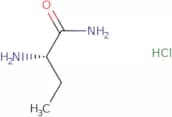
CAS:Versatile small molecule scaffoldFormula:C8H6ClIO2Purity:Min. 95%Molecular weight:296.49 g/mol(S)-2-Aminobutyramide hydrochloride
CAS:(S)-2-Aminobutyramide hydrochloride is a chiral amide compound, which is utilized primarily in scientific research settings. This compound is typically synthesized through the resolution of racemic mixtures or other specialized chemical processes that ensure the purity and stereospecificity required for research purposes.The mode of action of (S)-2-Aminobutyramide hydrochloride revolves around its role as an intermediate in chemical synthesis, serving as a building block for the production of more complex molecules. It has a noteworthy chiral configuration, which makes it an essential component in the formation of enantiomerically pure substances. This aspect is crucial in fields like pharmaceuticals, where stereochemistry can significantly impact biological activity.Its applications extend to various domains such as the synthesis of therapeutic agents, biochemical research, and the development of novel materials. Researchers value it for its ability to contribute to the fine-tuning of molecular assemblies, making it indispensable in studies focused on the interaction and function of chiral molecules. The hydrochloride form aids in its stability and solubility, which are important attributes for laboratory manipulation and experimentation.Formula:C4H10N2O•HClPurity:Min. 95%Color and Shape:White PowderMolecular weight:138.6 g/mol2,6-Dichloro-4-fluorobenzoic acid
CAS:<p>Versatile small molecule scaffold</p>Formula:C7H3Cl2FO2Purity:Min. 95%Molecular weight:209 g/mol

![1,5,6,7-Tetrahydro-2H-cyclopenta[b]pyridin-2-one](/_next/image/?url=https%3A%2Fstatic.cymitquimica.com%2Fproducts%2F3D%2Fthumb-webp%2FNDA49985.webp&w=3840&q=75)

![[Ir{dFCF3ppy}2(bpy)]PF6](/_next/image/?url=https%3A%2Fstatic.cymitquimica.com%2Fproducts%2F3D%2Fthumb-webp%2FSTB77562.webp&w=3840&q=75)
![1,7-Diazaspiro[4.4]nonane-7-carboxylic acid tert-butyl ester](/_next/image/?url=https%3A%2Fstatic.cymitquimica.com%2Fproducts%2F3D%2Fthumb-webp%2FWAB05563.webp&w=3840&q=75)
![Imidazo[1,2-a]pyrazine-2-carbaldehyde](/_next/image/?url=https%3A%2Fstatic.cymitquimica.com%2Fproducts%2F3D%2Fthumb-webp%2FSQB78215.webp&w=3840&q=75)
![2-{[(3αR,4S,6R,6αS)-6-Amino-2,2-dimethyltetrahydro-3αH-cyclopenta[d][1,3]-dioxol-4-yl] oxy}-1-ethol](/_next/image/?url=https%3A%2Fstatic.cymitquimica.com%2Fproducts%2F3D%2Fthumb-webp%2FZKA69355.webp&w=3840&q=75)
![2-[[(3aS,4R,6S,6aa)-4-[7-[[(1R,2S)-2-(3 ,4-Difluorophenyl)cyclopropyl]amino]-5-(propylthio)-3H-[1,…](/_next/image/?url=https%3A%2Fstatic.cymitquimica.com%2Fproducts%2F3D%2Fthumb-webp%2FZKA69326.webp&w=3840&q=75)


![(1R,8S,9s)-Bicyclo[6.1.0]non-4-yn-9-ylmethanol](/_next/image/?url=https%3A%2Fstatic.cymitquimica.com%2Fproducts%2F3D%2Fthumb-webp%2FNAC16690.webp&w=3840&q=75)