Building Blocks
This section contains fundamental products for the synthesis of organic and biological compounds. Building blocks are the essential starting materials used to construct complex molecules through various chemical reactions. They play a critical role in drug discovery, material science, and chemical research. At CymitQuimica, we offer a diverse range of high-quality building blocks to support your innovative research and industrial projects, ensuring you have the essential components for successful synthesis.
Subcategories of "Building Blocks"
- Boronic Acids & Boronic Acid Derivatives(5,778 products)
- Chiral Building Blocks(1,242 products)
- Hydrocarbon Building Blocks(6,098 products)
- Organic Building Blocks(61,084 products)
Found 198714 products of "Building Blocks"
Sort by
Purity (%)
0
100
|
0
|
50
|
90
|
95
|
100
3-[(tert-butoxy)carbonyl]-3-azaspiro[5.5]undecane-9-carboxylic acid
CAS:Versatile small molecule scaffoldFormula:C16H27NO4Purity:Min. 95%Molecular weight:297.4 g/mol4-tert-Butyl-2,6-dimethylphenylsulfur trifluoride
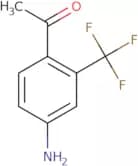
CAS:4-tert-Butyl-2,6-dimethylphenylsulfur Trifluoride is a chemical compound that is used as an intermediate in the synthesis of pharmaceuticals. It has been shown to be effective against 5-HT2C receptors and is used in the treatment of obesity. The mechanism of action for 4-tert-Butyl-2,6-dimethylphenylsulfur Trifluoride is not yet known but it may involve cleavage of amide bonds or stereoisomerism. 4-tert-Butyl-2,6-dimethylphenylsulfur Trifluoride has been synthesized by reacting hydrogen fluoride with sulfur trifluoride in the presence of a base.Formula:C12H17F3SPurity:90%MinColor and Shape:PowderMolecular weight:250.32 g/mol1-(4-Amino-2-trifluoromethyl-phenyl)-ethanone
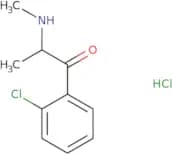
CAS:<p>Versatile small molecule scaffold</p>Formula:C9H8F3NOPurity:Min. 95%Molecular weight:203.16 g/mol1-(2-Chlorophenyl)-2-(methylamino)propan-1-one hydrochloride
CAS:Controlled Product<p>Versatile small molecule scaffold</p>Formula:C10H12ClNO•HClPurity:Min. 95%Color and Shape:PowderMolecular weight:234.12 g/mol1-(2-Amino-4-methylthiazol-5-yl)-2-bromoethanone
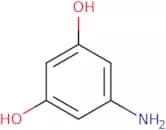
CAS:<p>Versatile small molecule scaffold</p>Formula:C6H7BrN2OSPurity:Min. 95%Molecular weight:235.1 g/mol5-aminoresorcinol
CAS:<p>5-aminoresorcinol is a nucleophilic compound that can be used in oriented photocatalysis. It has good operational stability and high photoreactivity, with a hydroxyl group and an aromatic benzyl group. The product has been shown to have neutral pH levels, which is suitable for the environment. 5-Aminoresorcinol can be reused for photoelectron mineralization and nitrate reduction.</p>Formula:C6H7NO2Purity:Min. 95%Molecular weight:125.13 g/mol4-(Dibromomethyl)-2(1H)-quinolinone
CAS:<p>Please enquire for more information about 4-(Dibromomethyl)-2(1H)-quinolinone including the price, delivery time and more detailed product information at the technical inquiry form on this page</p>Formula:C10H7Br2NOPurity:Min. 95%Molecular weight:316.98 g/mol2,6-Di-tert-butyl-4-(morpholinomethyl)phenol
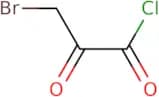
CAS:<p>Please enquire for more information about 2,6-Di-tert-butyl-4-(morpholinomethyl)phenol including the price, delivery time and more detailed product information at the technical inquiry form on this page</p>Formula:C19H31NO2Purity:Min. 95%Molecular weight:305.46 g/mol3-Bromo-2-oxopropanoyl chloride, 50% DCM solution
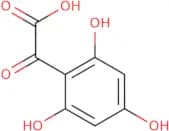
CAS:<p>Versatile small molecule scaffold</p>Formula:C3H2BrClO2Purity:90%MinColor and Shape:PowderMolecular weight:185.4 g/mol2-Oxo-2-(2,4,6-trihydroxyphenyl)acetic acid
CAS:2-Oxo-2-(2,4,6-trihydroxyphenyl)acetic acid is a useful synthetic building block/scaffold.Formula:C8H6O6Purity:Min. 95%Molecular weight:198.13 g/mol4-[(1,1-Dimethylethoxy)carbonyl]-2-thiomorpholineacetic acid
CAS:<p>Please enquire for more information about 4-[(1,1-Dimethylethoxy)carbonyl]-2-thiomorpholineacetic acid including the price, delivery time and more detailed product information at the technical inquiry form on this page</p>Formula:C11H19NO4SPurity:Min. 95%Molecular weight:261.34 g/mol1,1-Dimethylethyl 4-[3-[[4-[[[2-[(2S)-2-cyano-4,4-difluoro-1-pyrrolidinyl]-2-oxoethyl]amino]carbonyl]-6-quinolinyl]methylamino]propy l]-1-piperazinecarboxylate
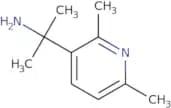
CAS:Please enquire for more information about 1,1-Dimethylethyl 4-[3-[[4-[[[2-[(2S)-2-cyano-4,4-difluoro-1-pyrrolidinyl]-2-oxoethyl]amino]carbonyl]-6-quinolinyl]methylamino]propy l]-1-piperazinecarboxylate including the price, delivery time and more detailed product information at the technical inquiry form on this pageFormula:C30H39F2N7O4Purity:Min. 95%Molecular weight:599.67 g/mol2-(2,6-Dimethylpyridin-3-yl)propan-2-amine
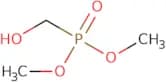
CAS:Please enquire for more information about 2-(2,6-Dimethylpyridin-3-yl)propan-2-amine including the price, delivery time and more detailed product information at the technical inquiry form on this pageFormula:C10H16N2Purity:Min. 95%Molecular weight:164.25 g/molDimethyl (hydroxymethyl)phosphonate
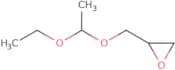
CAS:Dimethyl (hydroxymethyl)phosphonate is a research chemical that has various applications in different fields. It is commonly used as a precursor in the synthesis of organic compounds and pharmaceuticals. Dimethyl (hydroxymethyl)phosphonate has been found to be a potent inhibitor of biosynthesis enzymes, making it useful in drug discovery and development. In addition, this compound has been studied for its electrochemical properties, showing potential for use in electrode materials. It has also been investigated for its antioxidant properties, with studies suggesting that it may have protective effects against oxidative stress. Furthermore, Dimethyl (hydroxymethyl)phosphonate has been used as an intermediate in the production of various chemicals such as potassium, 1-nitropyrene, isobutyl ketone, ascorbic acid, aluminum compounds, alkaloids, isopropyl palmitate, eugenol, methyl ethyl ketone, dimethyl fumarate, andFormula:C3H9O4PPurity:90%MinMolecular weight:140.07 g/mol2,3-Epoxy-1-(1-ethoxyethoxy)propane
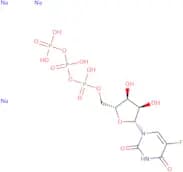
CAS:<p>2,3-Epoxy-1-(1-ethoxyethoxy)propane is a water-insoluble solid that has been shown to form stable complexes with metal ions. It is soluble in hydrochloric acid and is polymerized by cationic polymerization. 2,3-Epoxy-1-(1-ethoxyethoxy)propane reacts with the hydroxyl group of polymers to produce epoxides. The epoxide ring can be opened to produce ethers or oxiranes through ring opening reactions. 2,3-Epoxy-1-(1-ethoxyethoxy)propane is an acidic compound and reacts with water vapor to form hydroxy groups. This compound can also be synthesized by transfer reactions from 1,2,4,5-tetrahydrobenzene and ethylene oxide.</p>Formula:C7H14O3Purity:Min. 95%Molecular weight:146.18 g/mol5-Fluoro-UTP trisodium
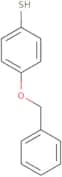
CAS:<p>Please enquire for more information about 5-Fluoro-UTP trisodium including the price, delivery time and more detailed product information at the technical inquiry form on this page</p>Formula:C9H14FN2O15P3•Na3Purity:Min. 95%Molecular weight:571.1 g/mol4-(Benzyloxy)thiophenol
CAS:<p>Versatile small molecule scaffold</p>Formula:C13H12OSPurity:Min. 95%Molecular weight:216.3 g/mol1H-Pyrrole-2,3,4,5-tetracarboxylic acid
CAS:<p>Please enquire for more information about 1H-Pyrrole-2,3,4,5-tetracarboxylic acid including the price, delivery time and more detailed product information at the technical inquiry form on this page</p>Formula:C8H5NO8Purity:Min. 95%Molecular weight:243.13 g/mol2-[4-(3-Hydroxypropyl)-1H-pyrazol-1-yl]acetic acid hydrochloride
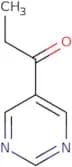
CAS:<p>Versatile small molecule scaffold</p>Formula:C8H13ClN2O3Purity:Min. 95%Molecular weight:220.65 g/mol1-(Pyrimidin-5-yl)propan-1-one
CAS:<p>Versatile small molecule scaffold</p>Formula:C7H8N2OPurity:Min. 95%Molecular weight:136.15 g/mol
![3-[(tert-butoxy)carbonyl]-3-azaspiro[5.5]undecane-9-carboxylic acid](/_next/image/?url=https%3A%2Fstatic.cymitquimica.com%2Fproducts%2F3D%2Fthumb-webp%2FVGA22881.webp&w=3840&q=75)


![4-[(1,1-Dimethylethoxy)carbonyl]-2-thiomorpholineacetic acid](/_next/image/?url=https%3A%2Fstatic.cymitquimica.com%2Fproducts%2F3D%2Fthumb-webp%2FFD183547.webp&w=3840&q=75)
![1,1-Dimethylethyl 4-[3-[[4-[[[2-[(2S)-2-cyano-4,4-difluoro-1-pyrrolidinyl]-2-oxoethyl]amino]carbon…](/_next/image/?url=https%3A%2Fstatic.cymitquimica.com%2Fproducts%2F3D%2Fthumb-webp%2FFD184138.webp&w=3840&q=75)
![2-[4-(3-Hydroxypropyl)-1H-pyrazol-1-yl]acetic acid hydrochloride](/_next/image/?url=https%3A%2Fstatic.cymitquimica.com%2Fproducts%2F3D%2Fthumb-webp%2FGHC96520.webp&w=3840&q=75)