


Building Blocks
This section contains fundamental products for the synthesis of organic and biological compounds. Building blocks are the essential starting materials used to construct complex molecules through various chemical reactions. They play a critical role in drug discovery, material science, and chemical research. At CymitQuimica, we offer a diverse range of high-quality building blocks to support your innovative research and industrial projects, ensuring you have the essential components for successful synthesis.
Subcategories of "Building Blocks"
- Boronic Acids & Boronic Acid Derivatives(5,778 products)
- Chiral Building Blocks(1,242 products)
- Hydrocarbon Building Blocks(6,098 products)
- Organic Building Blocks(61,034 products)
Found 199601 products of "Building Blocks"
Sort by
Purity (%)
0
100
|
0
|
50
|
90
|
95
|
100
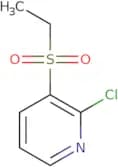
2-Chloro-3-(ethanesulfonyl)pyridine
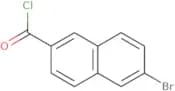
CAS:<p>Versatile small molecule scaffold</p>Formula:C7H8ClNO2SPurity:Min. 95%Molecular weight:205.66 g/mol6-Bromonaphthalene-2-carbonyl chloride
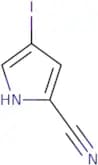
CAS:<p>Versatile small molecule scaffold</p>Formula:C11H6BrClOPurity:Min. 95%Molecular weight:269.52 g/mol4-Iodo-1H-pyrrole-2-carbonitrile
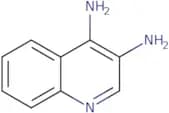
CAS:<p>Versatile small molecule scaffold</p>Formula:C5H3IN2Purity:Min. 95%Molecular weight:218 g/molQuinoline-3,4-diamine
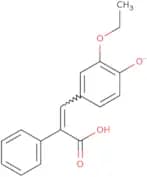
CAS:<p>Quinoline-3,4-diamine is a heterocyclic compound with a nitrogen atom in the ring. It is classified as an aromatic compound and has many different substituents. The most common are the methyl group, ethyl group, and enamine. Quinoline-3,4-diamine is used in the synthesis of pyridine compounds such as carbonyl chlorides and hydroxyl amines. It also reacts with alkoxy groups to form esters. Quinoline-3,4-diamine has been shown to have antioxidant properties and may be useful for treating dementia.</p>Formula:C9H9N3Purity:Min. 95%Molecular weight:159.19 g/mol3-(3-Ethoxy-4-hydroxyphenyl)-2-phenylprop-2-enoic acid
CAS:<p>Versatile small molecule scaffold</p>Formula:C17H15O4Purity:Min. 95%Molecular weight:283.3 g/molPyrazolo[1,5-b]pyridazine-3-carbaldehyde
CAS:<p>Versatile small molecule scaffold</p>Formula:C7H5N3OPurity:Min. 95%Molecular weight:147.13 g/mol2-[(2-Bromophenyl)amino]ethan-1-ol
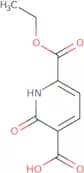
CAS:<p>Versatile small molecule scaffold</p>Formula:C8H10BrNOPurity:Min. 95%Molecular weight:216.07 g/mol6-(Ethoxycarbonyl)-2-hydroxypyridine-3-carboxylic acid
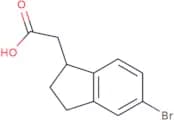
CAS:<p>Versatile small molecule scaffold</p>Formula:C9H9NO5Purity:Min. 95%Molecular weight:211.17 g/mol2-(5-Bromo-2,3-dihydro-1H-inden-1-yl)acetic acid
CAS:<p>Versatile small molecule scaffold</p>Formula:C11H11BrO2Purity:Min. 95%Molecular weight:255.11 g/mol3-Bromo-6,7,8,9-tetrahydro-5H-benzo[7]annulen-5-one
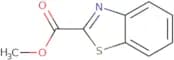
CAS:<p>Versatile small molecule scaffold</p>Formula:C11H11BrOPurity:Min. 95%Molecular weight:239.11 g/molMethyl 1,3-benzothiazole-2-carboxylate
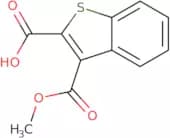
CAS:<p>Versatile small molecule scaffold</p>Formula:C9H7NO2SPurity:Min. 95%Molecular weight:193.22 g/mol3-(Methoxycarbonyl)-1-benzothiophene-2-carboxylic acid
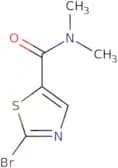
CAS:Versatile small molecule scaffoldFormula:C11H8O4SPurity:Min. 95%Molecular weight:236.25 g/mol2-Bromo-N,N-dimethyl-1,3-thiazole-5-carboxamide
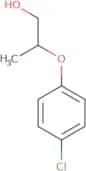
CAS:Versatile small molecule scaffoldFormula:C6H7BrN2OSPurity:Min. 95%Molecular weight:235.1 g/mol(2S)-2-(4-Chlorophenoxy)propan-1-ol
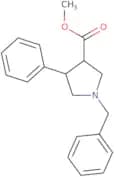
CAS:<p>Versatile small molecule scaffold</p>Formula:C9H11ClO2Purity:Min. 95%Molecular weight:186.63 g/molMethyl DL-1-benzyl-4-phenylpyrrolidine-3-carboxylate
CAS:<p>Versatile small molecule scaffold</p>Formula:C19H21NO2Purity:Min. 95%Molecular weight:295.38 g/mol2-[2-(Carbamoylmethyl)phenyl]acetic acid
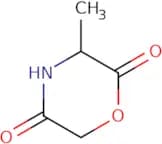
CAS:Versatile small molecule scaffoldFormula:C10H11NO3Purity:Min. 95%Molecular weight:193.2 g/mol3-Methylmorpholine-2,5-dione
CAS:<p>3-Methylmorpholine-2,5-dione is an organic compound with the chemical formula CH3N(CH2)6CH3. It has a molecular weight of 118.14 g/mol and a transition temperature of -78.4 °C. 3-Methylmorpholine-2,5-dione is a colorless oily liquid that is soluble in water and ethanol. It can be used to synthesize polymers such as polymethyl methacrylate (PMMA), polyvinyl chloride, polypropylene, ethylene oxide, and ethylene glycol. 3-Methylmorpholine-2,5-dione can also be used as a polymerization initiator for ring opening polymerizations with stannous octoate or triisobutylaluminum.</p>Formula:C5H7NO3Purity:Min. 95%Molecular weight:129.11 g/mol2-(2-Aminopropyl)phenol
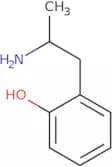
CAS:Controlled Product<p>2-(2-Aminopropyl)phenol is a drug that can be used to treat jaundice. It is an antidote for the treatment of acute and chronic liver disease, including cirrhosis and hepatitis. 2-(2-Aminopropyl)phenol is used to lower blood bilirubin levels in people with high bilirubin levels, such as those with hemolytic disorders or Gilbert's syndrome. This drug also has been shown to reduce the risk of reoccurrence of breast cancer in women who have undergone surgery for this condition. 2-(2-Aminopropyl)phenol binds to serum proteins and may also bind to albumin and haptoglobins in the blood. This compound has a low affinity for erythrocytes and does not affect red blood cells.</p>Formula:C9H13NOPurity:Min. 95%Molecular weight:151.21 g/mol3-(2,2-Dichlorocyclopropyl)propanoic acid
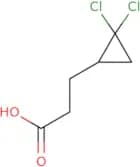
CAS:<p>Versatile small molecule scaffold</p>Formula:C6H8Cl2O2Purity:Min. 95%Molecular weight:183.03 g/mol3-Bromo-[1,2,4]triazolo[4,3-b]pyridazine
CAS:<p>Versatile small molecule scaffold</p>Formula:C5H3BrN4Purity:Min. 95%Molecular weight:199.01 g/mol

![Pyrazolo[1,5-b]pyridazine-3-carbaldehyde](/_next/image/?url=https%3A%2Fstatic.cymitquimica.com%2Fproducts%2F3D%2Fthumb-webp%2FMDA75435.webp&w=3840&q=75)
![2-[(2-Bromophenyl)amino]ethan-1-ol](/_next/image/?url=https%3A%2Fstatic.cymitquimica.com%2Fproducts%2F3D%2Fthumb-webp%2FMDA76220.webp&w=3840&q=75)
![3-Bromo-6,7,8,9-tetrahydro-5H-benzo[7]annulen-5-one](/_next/image/?url=https%3A%2Fstatic.cymitquimica.com%2Fproducts%2F3D%2Fthumb-webp%2FMDA77978.webp&w=3840&q=75)
![2-[2-(Carbamoylmethyl)phenyl]acetic acid](/_next/image/?url=https%3A%2Fstatic.cymitquimica.com%2Fproducts%2F3D%2Fthumb-webp%2FMDA81367.webp&w=3840&q=75)
![3-Bromo-[1,2,4]triazolo[4,3-b]pyridazine](/_next/image/?url=https%3A%2Fstatic.cymitquimica.com%2Fproducts%2F3D%2Fthumb-webp%2FMDA84108.webp&w=3840&q=75)