Building Blocks
This section contains fundamental products for the synthesis of organic and biological compounds. Building blocks are the essential starting materials used to construct complex molecules through various chemical reactions. They play a critical role in drug discovery, material science, and chemical research. At CymitQuimica, we offer a diverse range of high-quality building blocks to support your innovative research and industrial projects, ensuring you have the essential components for successful synthesis.
Subcategories of "Building Blocks"
- Boronic Acids & Boronic Acid Derivatives(5,756 products)
- Chiral Building Blocks(1,242 products)
- Hydrocarbon Building Blocks(6,095 products)
- Organic Building Blocks(61,055 products)
Found 199650 products of "Building Blocks"
Sort by
Purity (%)
0
100
|
0
|
50
|
90
|
95
|
100
5-Bromo-3-methylbenzo[b]thiophene
CAS:<p>Versatile small molecule scaffold</p>Formula:C9H7BrSPurity:Min. 95%Molecular weight:227.12 g/mol2,2,6,6-Tetramethylcyclohexan-1-one
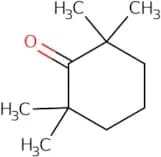
CAS:<p>2,2,6,6-Tetramethylcyclohexan-1-one is a chemical compound with the molecular formula CHO. It is a colorless liquid that boils around 100°C and has a strong odor. 2,2,6,6-Tetramethylcyclohexan-1-one can be used in the dehydrogenation of alicyclic compounds to form alkenes. The reaction proceeds by attack of the intermediate on the double bond and elimination of two hydrogen atoms from an adjacent methyl group. In this process, one molecule of water is also produced. This reaction mechanism can be postulated for homologues as well.</p>Formula:C10H18OPurity:Min. 95%Molecular weight:154.25 g/mol2-Bromo-5,5-dimethyl-1,3-cyclohexanedione
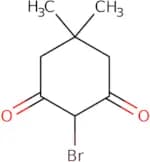
CAS:<p>2-Bromo-5,5-dimethyl-1,3-cyclohexanedione is a molecule that belongs to the class of triethyl orthoformate. It has been shown to have depressant activity in animals by inhibition of amines and deactivation of the brain monoamine oxidase system. The chemical structure of 2-bromo-5,5-dimethyl cyclohexanedione consists of a hydroxy group on the second carbon atom from the left, a chlorine atom on the third carbon atom from the left, and an isomer with a chlorine atom on the fourth carbon atom from the left. The molecular weight of this compound is 180.2 g/mol. It can be synthesized by reacting bromine with dimethoxyacetaldehyde in presence of sodium hydroxide and hydrochloric acid or by dehydrating ethyl formate with hydrogen chloride gas. This chemical can also be used as a precursor for other compounds such as</p>Formula:C8H11BrO2Purity:Min. 95%Molecular weight:219.08 g/mol7-Azaspiro[3.5]nonane-6,8-dione
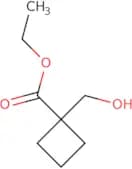
CAS:<p>Versatile small molecule scaffold</p>Formula:C8H11NO2Purity:Min. 95%Molecular weight:153.18 g/molEthyl 1-hydroxymethylcyclobutanecarboxylate
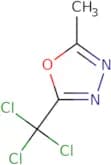
CAS:<p>Versatile small molecule scaffold</p>Formula:C8H14O3Purity:Min. 95%Molecular weight:158.19 g/mol2-Methyl-5-(trichloromethyl)-1,3,4-oxadiazole
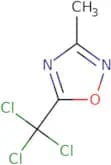
CAS:Versatile small molecule scaffoldFormula:C4H3Cl3N2OPurity:Min. 95%Molecular weight:201.43 g/mol3-Methyl-5-(trichloromethyl)-1,2,4-oxadiazole
CAS:<p>3-Methyl-5-(trichloromethyl)-1,2,4-oxadiazole is an acylation agent that belongs to the group of c3-10 cycloalkyl derivs. It is a colorless, crystalline compound with a strong odor and a melting point of 171°C. 3-Methyl-5-(trichloromethyl)-1,2,4-oxadiazole can be used as an acylating agent for polymers. This chemical has been shown to cause erethism in humans and animals.</p>Formula:C4H3Cl3N2OPurity:Min. 95%Molecular weight:201.44 g/mol5-Methyl-2-oxo-1,3-oxazolidine-4-carboxylic acid
CAS:Versatile small molecule scaffoldFormula:C5H7NO4Purity:Min. 95%Molecular weight:145.11 g/molrac-(3aR,7aR)-Octahydro-1H-indol-2-one
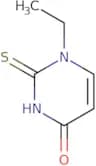
CAS:<p>Versatile small molecule scaffold</p>Formula:C8H13NOPurity:Min. 95%Molecular weight:139.2 g/mol1-Ethyl-2-sulfanyl-1,4-dihydropyrimidin-4-one
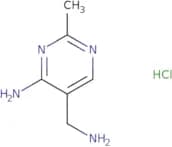
CAS:<p>Versatile small molecule scaffold</p>Formula:C6H8N2OSPurity:Min. 95%Molecular weight:156.21 g/mol5-(Aminomethyl)-2-methylpyrimidin-4-amine HCl
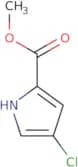
CAS:<p>Versatile small molecule scaffold</p>Formula:C6H11ClN4Purity:Min. 95%Molecular weight:174.63 g/molMethyl 4-chloro-1H-pyrrole-2-carboxylate
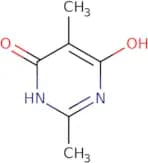
CAS:<p>Methyl 4-chloro-1H-pyrrole-2-carboxylate is a natural product that belongs to the class of pyrroles. It has been used as an insecticide and pheromone, and is also a substrate for the synthesis of other compounds. Methyl 4-chloro-1H-pyrrole-2-carboxylate has been shown to be stereoselective in its activity against insects, particularly moths. This molecule reacts with methyl ketones to form centrosymmetric molecules and is stable at temperatures between -5°C and 100°C. The compound can be purified using chromatography techniques, allowing it to be used in biomolecular research for the study of proteins.</p>Formula:C6H6ClNO2Purity:Min. 95%Molecular weight:159.57 g/mol2,5-Dimethyl-4,6-dihydroxypyrimidine
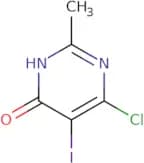
CAS:<p>Versatile small molecule scaffold</p>Formula:C6H8N2O2Purity:Min. 95%Molecular weight:140.14 g/mol6-Chloro-5-iodo-2-methyl-4-pyrimidinol
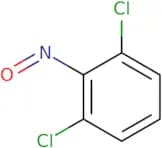
CAS:<p>Versatile small molecule scaffold</p>Formula:C5H4ClIN2OPurity:Min. 95%Molecular weight:270.46 g/mol2,6-Dichloronitrosobenzene
CAS:<p>2,6-Dichloronitrosobenzene is a solvent that is used in the production of textiles and plastics. It can be found as an impurity in solvents such as azobenzene, amines, and nitrosobenzene. 2,6-Dichloronitrosobenzene has been shown to have mutagenic activities and can cause mutations at the base pairs of DNA through mechanisms including oxidative stress and adduct formation with nucleobases. The uptake of this substance by cells may cause cell death due to its high reactivity with cellular components such as proteins and lipids. 2,6-Dichloronitrosobenzene also has a strong pyrylium ionization potential that causes it to form free radicals. 2,6-Dichloronitrosobenzene has been shown to induce cancer in animal models through the activation of carcinogenicity pathways such as p</p>Formula:C6H3Cl2NOPurity:Min. 95%Molecular weight:176 g/mol2-Chloro-6-methylbenzaldehyde
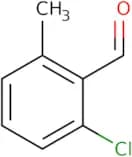
CAS:<p>2-Chloro-6-methylbenzaldehyde is a byproduct of the oxidation of metalloporphyrins. It is an organic compound that has nucleophilic properties and can react with chloride to form sulfoxide. 2-Chloro-6-methylbenzaldehyde can also react with magnesium to form a dihedral molecule, which is an isomer of 2-chloro-6-fluorobenzaldehyde. The nature of this chemical has not yet been determined, but it is known that it reacts with peroxide to produce silicon dioxide.</p>Formula:C8H7ClOPurity:Min. 95%Molecular weight:154.59 g/molPyrazolo[1,5-a]pyrimidin-7-amine
CAS:<p>Pyrazolo[1,5-a]pyrimidin-7-amine is a synthetic compound that was derived from the natural product pyrazolopyrimidine. It has been shown to be an effective inhibitor of growth in human liver cancer cells and in virus replication. Pyrazolo[1,5-a]pyrimidin-7-amine also inhibits the growth of human liver cancer cells by binding to the factor receptor, which is involved in platelet-derived growth. This drug inhibits the production of platelet-derived growth factor (PDGF) by binding to the PDGF receptor on cells. Pyrazolo[1,5-a]pyrimidin-7-amine does not inhibit cell proliferation but rather induces cell death by apoptosis in Mcf-7 human breast cancer cells.</p>Formula:C6H6N4Purity:Min. 95%Molecular weight:134.13 g/mol1-Methyleneindane
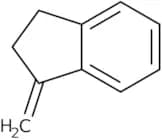
CAS:<p>1-Methyleneindane is a peroxide that has been synthesized to study the mechanistic aspects of hydrogen peroxide as a reactant in Wittig reactions. This molecule also serves as an intermediate in synthesizing phosphonium salts, which have been shown to have potential applications in perfluorinated and alcohol chemistry. The 1-methyleneindane skeleton is made up of two carbonyl groups and an interaction between the singlet state and the carbonyl group can be observed.</p>Formula:C10H10Purity:Min. 95%Molecular weight:130.19 g/mol4-Methylbicyclo[2.2.2]octan-1-amine hydrochloride
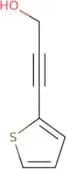
CAS:<p>Versatile small molecule scaffold</p>Formula:C9H18ClNPurity:Min. 95%Molecular weight:175.7 g/mol3-(Thiophen-2-yl)prop-2-yn-1-ol
CAS:<p>Versatile small molecule scaffold</p>Formula:C7H6OSPurity:Min. 95%Molecular weight:138.19 g/mol
![5-Bromo-3-methylbenzo[b]thiophene](/_next/image/?url=https%3A%2Fstatic.cymitquimica.com%2Fproducts%2F3D%2Fthumb-webp%2FBAA19609.webp&w=3840&q=75)

![7-Azaspiro[3.5]nonane-6,8-dione](/_next/image/?url=https%3A%2Fstatic.cymitquimica.com%2Fproducts%2F3D%2Fthumb-webp%2FBAA19586.webp&w=3840&q=75)


![Pyrazolo[1,5-a]pyrimidin-7-amine](/_next/image/?url=https%3A%2Fstatic.cymitquimica.com%2Fproducts%2F3D%2Fthumb-webp%2FBAA19463.webp&w=3840&q=75)
![4-Methylbicyclo[2.2.2]octan-1-amine hydrochloride](/_next/image/?url=https%3A%2Fstatic.cymitquimica.com%2Fproducts%2F3D%2Fthumb-webp%2FBAA19443.webp&w=3840&q=75)