


Building Blocks
This section contains fundamental products for the synthesis of organic and biological compounds. Building blocks are the essential starting materials used to construct complex molecules through various chemical reactions. They play a critical role in drug discovery, material science, and chemical research. At CymitQuimica, we offer a diverse range of high-quality building blocks to support your innovative research and industrial projects, ensuring you have the essential components for successful synthesis.
Subcategories of "Building Blocks"
- Boronic Acids & Boronic Acid Derivatives(5,778 products)
- Chiral Building Blocks(1,242 products)
- Hydrocarbon Building Blocks(6,098 products)
- Organic Building Blocks(61,098 products)
Found 199594 products of "Building Blocks"
Sort by
Purity (%)
0
100
|
0
|
50
|
90
|
95
|
100
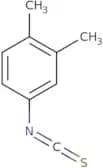
3,4-Dimethylphenyl isothiocyanate
CAS:<p>Versatile small molecule scaffold</p>Formula:C9H9NSPurity:Min. 95%Molecular weight:163.24 g/mol1-Ethyl-3-isothiocyanatobenzene
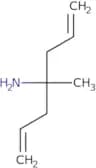
CAS:<p>Versatile small molecule scaffold</p>Formula:C9H9NSPurity:Min. 95%Molecular weight:163.24 g/mol1-Allyl-1-methyl-but-3-enylamine
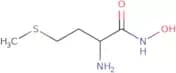
CAS:<p>Versatile small molecule scaffold</p>Formula:C8H15NPurity:Min. 95%Molecular weight:125.21 g/mol(2S)-2-Amino-N-hydroxy-4-(methylsulfanyl)butanamide
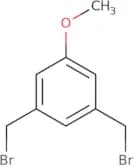
CAS:(2S)-2-Amino-N-hydroxy-4-(methylsulfanyl)butanamide is a ligand that binds to metal ions. It has been shown to bind to the axial coordination site of some transition metals, such as nickel, copper, and zinc. It is classified as a hydroxamic acid and can be used in coordination chemistry. The affinity of (2S)-2-amino-N-hydroxy-4-(methylsulfanyl)butanamide for copper is approximately 100 times stronger than its affinity for nickel. In addition, the red shift of (2S)-2-amino-N-hydroxy-4-(methylsulfanyl)butanamide is a sensitive indicator of the orientation of the ligand in coordination compounds with metal ions.Formula:C5H12N2O2SPurity:Min. 95%Molecular weight:164.23 g/mol1,3-Bis(bromomethyl)-5-methoxybenzene
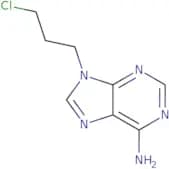
CAS:<p>Versatile small molecule scaffold</p>Formula:C9H10Br2OPurity:Min. 95%Molecular weight:293.98 g/mol9-(3-Chloropropyl)-9H-purin-6-amine
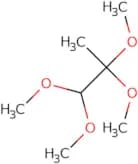
CAS:<p>Versatile small molecule scaffold</p>Formula:C8H10ClN5Purity:Min. 95%Molecular weight:211.65 g/mol1,1,2,2-Tetramethoxypropane
CAS:<p>Versatile small molecule scaffold</p>Formula:C7H16O4Purity:Min. 95%Molecular weight:164.2 g/molDibenzo[b,d]furan-4-ol
CAS:<p>Dibenzo[b,d]furan-4-ol is a biodegradable compound that can be synthesized in a stepwise manner. The compound can be assayed by using different methods including mass spectrometric and hplc analyses to determine the number of carbon atoms and functional groups present in the molecule. Dibenzo[b,d]furan-4-ol is used as a carbon source for many microorganisms. The compound has been shown to hydroxylate under aerobic conditions and also reacts with nitro groups to form nitroso derivatives. Magnetic resonance spectroscopy has been used to study the molecular structure of dibenzo[b,d]furan-4-ol, which has revealed that it is monosubstituted with two methyl groups. This compound is naturally found in filamentous fungi found in tropical regions.</p>Formula:C12H8O2Purity:Min. 95%Molecular weight:184.19 g/mol2-[(2-Methylphenyl)methyl]butanedioic acid
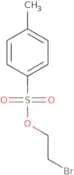
CAS:2-[(2-Methylphenyl)methyl]butanedioic acid is a nitrate that is produced by the conversion of 2-methylbenzylsuccinic acid. It can be used as an electron acceptor in microbial assays and has been shown to have the ability to mineralize carbon sources such as xylene. It has also been shown to be capable of transforming benzoate, benzylsuccinic acid, and other substrates, but it does not form benzaldehyde or other metabolic products. The enzyme responsible for its conversion is a dehydrogenase.Formula:C12H14O4Purity:Min. 95%Molecular weight:222.24 g/mol2-Bromoethyl 4-methylbenzenesulfonate
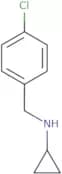
CAS:2-Bromoethyl 4-methylbenzenesulfonate is a molecule that binds to the benzodiazepine receptor and is used in clinical studies. It has been shown to have an uptake of 0.16% per hour, which is much slower than other benzodiazepines such as diazepam. 2-Bromoethyl 4-methylbenzenesulfonate has also been shown to be effective in treating anxiety and depression. The effective dose for this drug is 50 mg/kg, which is much higher than the 10 mg/kg dose of diazepam. This drug has been found to be safe in animals and humans at high doses, but its efficacy against pancreatic cancer remains unknown.Formula:C9H11BrO3SPurity:Min. 95%Molecular weight:279.15 g/molN-(4-Chlorobenzyl)-N-cyclopropylamine
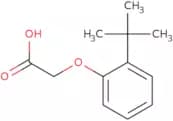
CAS:<p>Versatile small molecule scaffold</p>Formula:C10H12ClNPurity:Min. 95%Molecular weight:181.66 g/mol(2-tert-Butyl-phenoxy)-acetic acid
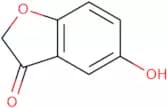
CAS:<p>2-tert-Butyl-phenoxyacetic acid is a chain compound that has a crystal structure with hydrogen bonds. This compound has a disordered conformation and is composed of two dimers connected by hydrogen bonds. The dimers are linked by a benzene ring and form hydrogen-bonded chains. The molecule also has an asymmetric dihedral conformation. 2-tert-Butylphenoxyacetic acid can exist as either of the two conformations, depending on the environment it is in.<br>2-tert-Butylphenoxyacetic acid is soluble in alcohols, ethers, acetone, and chloroform. It has been shown to inhibit the growth of bacteria when used as a preservative agent in food products.</p>Formula:C12H16O3Purity:Min. 95%Molecular weight:208.25 g/mol5-Hydroxy-2,3-dihydro-1-benzofuran-3-one
CAS:Versatile small molecule scaffoldFormula:C8H6O3Purity:Min. 95%Molecular weight:150.13 g/mol3-{2,4-Dioxo-1,3-diazaspiro[4.5]decan-3-yl}propanoic acid
CAS:<p>Versatile small molecule scaffold</p>Formula:C11H16N2O4Purity:Min. 95%Molecular weight:240.26 g/mol3-{2,4-Dioxo-1,3-diazaspiro[4.5]decan-3-yl}propanenitrile
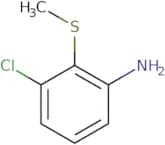
CAS:<p>Versatile small molecule scaffold</p>Formula:C11H15N3O2Purity:Min. 95%Molecular weight:221.26 g/mol3-Chloro-2-(methylsulfanyl)aniline
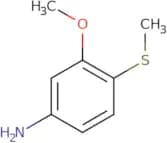
CAS:<p>Versatile small molecule scaffold</p>Formula:C7H8ClNSPurity:Min. 95%Molecular weight:173.66 g/mol3-Methoxy-4-(methylsulfanyl)aniline
CAS:<p>Versatile small molecule scaffold</p>Formula:C8H11NOSPurity:Min. 95%Molecular weight:169.24 g/molN-[(Pentafluorophenyl)methylidene]hydroxylamine
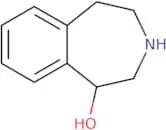
CAS:<p>N-[(Pentafluorophenyl)methylidene]hydroxylamine is a gas that is used as an antibacterial agent. It is proposed to be a triazole derivative and has been shown to inhibit the growth of bacteria by binding to their cell membranes. The mechanism of action may be due to the formation of reactive oxygen species in the bacterial cell membrane, which are generated by cycloadditions with an electron-deficient olefin, such as styrene. This gas is also able to bind with n-oxide groups on benzene molecules, which may explain its effectiveness against benzoyl-containing bacteria.</p>Formula:C7H2F5NOPurity:Min. 95%Molecular weight:211.09 g/mol2,3,4,5-Tetrahydro-1H-3-benzazepin-1-ol
CAS:Versatile small molecule scaffoldFormula:C10H13NOPurity:Min. 95%Molecular weight:163.22 g/molBenzo[b]thiophen-5-ol
CAS:<p>Benzo[b]thiophen-5-ol is a chiral molecule that has been synthesized to be homochiral. It has an active site and selective epoxide hydration activity, which is the rate-limiting step of epoxide ring opening reactions. The mechanism of this reaction is the cleavage of a C–C bond in an epoxide substrate by an O–H or S–H bond in benzo[b]thiophen-5-ol. The nature of this mechanistic bond cleavage reaction is unknown, but it may be due to catalysis by a benzyl group.</p>Formula:C8H6OSPurity:Min. 95%Molecular weight:150.2 g/mol


![Dibenzo[b,d]furan-4-ol](/_next/image/?url=https%3A%2Fstatic.cymitquimica.com%2Fproducts%2F3D%2Fthumb-webp%2FUAA26106.webp&w=3840&q=75)
![2-[(2-Methylphenyl)methyl]butanedioic acid](/_next/image/?url=https%3A%2Fstatic.cymitquimica.com%2Fproducts%2F3D%2Fthumb-webp%2FUAA26311.webp&w=3840&q=75)
![3-{2,4-Dioxo-1,3-diazaspiro[4.5]decan-3-yl}propanoic acid](/_next/image/?url=https%3A%2Fstatic.cymitquimica.com%2Fproducts%2F3D%2Fthumb-webp%2FUAA28294.webp&w=3840&q=75)
![3-{2,4-Dioxo-1,3-diazaspiro[4.5]decan-3-yl}propanenitrile](/_next/image/?url=https%3A%2Fstatic.cymitquimica.com%2Fproducts%2F3D%2Fthumb-webp%2FUAA28300.webp&w=3840&q=75)
![N-[(Pentafluorophenyl)methylidene]hydroxylamine](/_next/image/?url=https%3A%2Fstatic.cymitquimica.com%2Fproducts%2F3D%2Fthumb-webp%2FUAA29227.webp&w=3840&q=75)
![Benzo[b]thiophen-5-ol](/_next/image/?url=https%3A%2Fstatic.cymitquimica.com%2Fproducts%2F3D%2Fthumb-webp%2FUAA30135.webp&w=3840&q=75)