Building Blocks
This section contains fundamental products for the synthesis of organic and biological compounds. Building blocks are the essential starting materials used to construct complex molecules through various chemical reactions. They play a critical role in drug discovery, material science, and chemical research. At CymitQuimica, we offer a diverse range of high-quality building blocks to support your innovative research and industrial projects, ensuring you have the essential components for successful synthesis.
Subcategories of "Building Blocks"
- Boronic Acids & Boronic Acid Derivatives(5,778 products)
- Chiral Building Blocks(1,242 products)
- Hydrocarbon Building Blocks(6,098 products)
- Organic Building Blocks(61,034 products)
Found 199601 products of "Building Blocks"
Sort by
Purity (%)
0
100
|
0
|
50
|
90
|
95
|
100
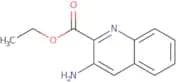
3-Aminoquinolin-2-yl ethyl carbonate
CAS:<p>3-Aminoquinolin-2-yl ethyl carbonate is a versatile compound that has various applications in different fields. It is commonly used for crystallization purposes, as it helps to facilitate the formation of crystals in chemical reactions. Additionally, it has antimuscarinic properties and can be used as an ingredient in medications like tolterodine tartrate, which is used to treat urinary incontinence.</p>Formula:C12H12N2O3Purity:Min. 95%Molecular weight:232.24 g/mol3-(Bromomethyl)quinoxalin-2(1H)-one
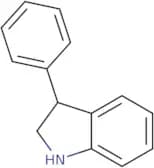
CAS:<p>3-(Bromomethyl)quinoxalin-2(1H)-one is an organic compound that reacts with a variety of aromatic amines and is obtained by condensation of phthalimide with piperidine. This white crystalline solid has been shown to be soluble in water, ethanol, acetone, and ether. The salt of this compound can be prepared by the reaction of 3-(bromomethyl)quinoxalin-2(1H)-one with sodium methoxide or sodium in dimethyl sulfate. 3-(Bromomethyl)quinoxalin-2(1H)-one is used as a reagent for the synthesis of other organic compounds.</p>Formula:C9H7BrN2OPurity:Min. 95%Molecular weight:239.07 g/mol3-Phenyl-2,3-dihydro-1H-indole
CAS:<p>3-Phenyl-2,3-dihydro-1H-indole is a dichlorophenyl that can be oxidized to yield ethylene. It has been shown to have pharmacological properties and potential use as a pharmacological agent. 3-Phenyl-2,3-dihydro-1H-indole is also an anilino heterocycle. It exhibits intestinal activity and coagulant properties.</p>Formula:C14H13NPurity:Min. 95%Molecular weight:195.26 g/mol2-[4-(Trifluoromethyl)phenyl]morpholine oxalate
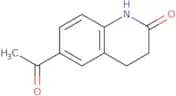
CAS:<p>Versatile small molecule scaffold</p>Formula:C11H12F3NO·C2H2O4Purity:Min. 95%Molecular weight:321.25 g/mol6-Acetyl-1,2,3,4-tetrahydroquinolin-2-one
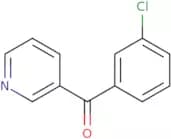
CAS:<p>Versatile small molecule scaffold</p>Formula:C11H11NO2Purity:Min. 95%Molecular weight:189.21 g/mol3-(3-Chlorobenzoyl)pyridine
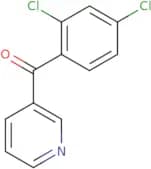
CAS:<p>Versatile small molecule scaffold</p>Formula:C12H8ClNOPurity:Min. 95%Molecular weight:217.65 g/mol3-(2,4-Dichlorobenzoyl)pyridine
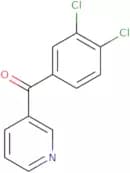
CAS:<p>Versatile small molecule scaffold</p>Formula:C12H7Cl2NOPurity:Min. 95%Molecular weight:252.09 g/mol3-(3,4-Dichlorobenzoyl)pyridine
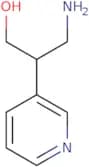
CAS:Versatile small molecule scaffoldFormula:C12H7Cl2NOPurity:Min. 95%Molecular weight:252.09 g/mol3-Amino-2-(pyridin-3-yl)propan-1-ol
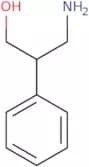
CAS:<p>Versatile small molecule scaffold</p>Formula:C8H12N2OPurity:Min. 95%Molecular weight:152.19 g/mol3-Amino-2-phenylpropan-1-ol
CAS:3-Amino-2-phenylpropan-1-ol is a compound that is the product of the reaction between an amine and an aldehyde. It can be synthesized by reacting an amine with an aldehyde in the presence of hydrochloric acid, and it can be used to produce other compounds such as lysergic acid and 3-hydroxypropylamine. This compound has been shown to react with isocyanates to form oximes, which are useful in organic synthesis. 3-Amino-2-phenylpropan-1-ol also reacts with amines to form imines, which have been shown to have antihistamine effects on rats. 3-Amino-2-phenylpropan-1-ol has been modified structurally, including by modification of its chloride group or by formation of cyclic structures such as lactams or lactones.Formula:C9H13NOPurity:Min. 95%Molecular weight:151.21 g/mol4-{[4-(Propan-2-yl)phenyl]sulfanyl}aniline
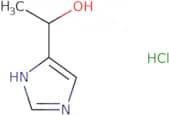
CAS:<p>Versatile small molecule scaffold</p>Formula:C15H17NSPurity:Min. 95%Molecular weight:243.4 g/mol1-(1H-Imidazol-4-yl)ethanol Hydrochloride
CAS:<p>Versatile small molecule scaffold</p>Formula:C5H8N2O·HClPurity:Min. 95%Molecular weight:148.59 g/mol7-benzyl-2-methyl-5,6,7,8-tetrahydropyrido[3,4-d]pyrimidin-4(3H)-one
CAS:Versatile small molecule scaffoldFormula:C15H17N3OPurity:Min. 95%Molecular weight:255.32 g/molPyrido[3,4-d]pyrimidin-4(3H)-one, 5,6,7,8-tetrahydro-2-methyl-, 2HCl
CAS:Versatile small molecule scaffoldFormula:C8H13Cl2N3OPurity:Min. 95%Molecular weight:238.11 g/mol3-[(3-Aminopropyl)(methyl)phosphoryl]propan-1-amine
CAS:Versatile small molecule scaffoldFormula:C7H19N2OPPurity:Min. 95%Molecular weight:178.21 g/mol1H,2H,3H,4H,5H,6H-Cyclopenta[C]pyrrole-1,3-dione
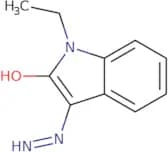
CAS:Versatile small molecule scaffoldFormula:C7H7NO2Purity:Min. 95%Molecular weight:137.14 g/mol1-Ethyl-3-hydrazinylidene-2,3-dihydro-1H-indol-2-one
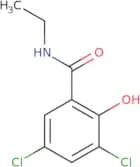
CAS:<p>Versatile small molecule scaffold</p>Formula:C10H11N3OPurity:Min. 95%Molecular weight:189.21 g/mol3,5-Dichloro-N-ethyl-2-hydroxy-benzamide
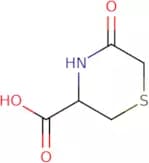
CAS:<p>Versatile small molecule scaffold</p>Formula:C9H9Cl2NO2Purity:Min. 95%Molecular weight:234.08 g/mol(3R)-5-Oxothiomorpholine-3-carboxylic acid
CAS:(3R)-5-Oxothiomorpholine-3-carboxylic acid is a lactam antibiotic that inhibits the growth of bacteria by binding to ribosomes. It acts as an analogue of penicillin, but has a higher affinity for the ribosome. The chemical structure of (3R)-5-oxothiomorpholine-3-carboxylic acid consists of a trifluoroacetate ester at the 3 position, which is responsible for its acidic properties. This drug also contains two functional groups at the 5 position, which are responsible for its ability to interact with sulfoxides and eluting chemicals in chromatography. (3R)-5-Oxothiomorpholine-3-carboxylic acid is used in analytical chemistry as a model for other compounds with similar structures.Formula:C5H7NO3SPurity:Min. 95%Molecular weight:161.18 g/mol3-Methyl-2,3-dihydro-1,3-benzothiazol-2-imine hydroiodide
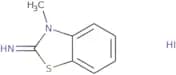
CAS:<p>Versatile small molecule scaffold</p>Formula:C8H9IN2SPurity:Min. 95%Molecular weight:292.14 g/mol

![2-[4-(Trifluoromethyl)phenyl]morpholine oxalate](/_next/image/?url=https%3A%2Fstatic.cymitquimica.com%2Fproducts%2F3D%2Fthumb-webp%2FMCA24372.webp&w=3840&q=75)
![4-{[4-(Propan-2-yl)phenyl]sulfanyl}aniline](/_next/image/?url=https%3A%2Fstatic.cymitquimica.com%2Fproducts%2F3D%2Fthumb-webp%2FMCA24850.webp&w=3840&q=75)
![7-benzyl-2-methyl-5,6,7,8-tetrahydropyrido[3,4-d]pyrimidin-4(3H)-one](/_next/image/?url=https%3A%2Fstatic.cymitquimica.com%2Fproducts%2F3D%2Fthumb-webp%2FMCA25992.webp&w=3840&q=75)
![Pyrido[3,4-d]pyrimidin-4(3H)-one, 5,6,7,8-tetrahydro-2-methyl-, 2HCl](/_next/image/?url=https%3A%2Fstatic.cymitquimica.com%2Fproducts%2F3D%2Fthumb-webp%2FMCA26000.webp&w=3840&q=75)
![3-[(3-Aminopropyl)(methyl)phosphoryl]propan-1-amine](/_next/image/?url=https%3A%2Fstatic.cymitquimica.com%2Fproducts%2F3D%2Fthumb-webp%2FMCA27190.webp&w=3840&q=75)
![1H,2H,3H,4H,5H,6H-Cyclopenta[C]pyrrole-1,3-dione](/_next/image/?url=https%3A%2Fstatic.cymitquimica.com%2Fproducts%2F3D%2Fthumb-webp%2FMCA29138.webp&w=3840&q=75)