Building Blocks
This section contains fundamental products for the synthesis of organic and biological compounds. Building blocks are the essential starting materials used to construct complex molecules through various chemical reactions. They play a critical role in drug discovery, material science, and chemical research. At CymitQuimica, we offer a diverse range of high-quality building blocks to support your innovative research and industrial projects, ensuring you have the essential components for successful synthesis.
Subcategories of "Building Blocks"
- Boronic Acids & Boronic Acid Derivatives(5,756 products)
- Chiral Building Blocks(1,242 products)
- Hydrocarbon Building Blocks(6,095 products)
- Organic Building Blocks(61,055 products)
Found 199650 products of "Building Blocks"
Sort by
Purity (%)
0
100
|
0
|
50
|
90
|
95
|
100
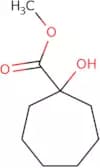
Methyl 1-hydroxycycloheptane-1-carboxylate
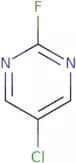
CAS:<p>Versatile small molecule scaffold</p>Formula:C9H16O3Purity:Min. 95%Molecular weight:172.22 g/mol5-Chloro-2-fluoropyrimidine
CAS:<p>Versatile small molecule scaffold</p>Formula:C4H2ClFN2Purity:Min. 95%Molecular weight:132.52 g/mol(2E)-3-[5-(4-Bromophenyl)furan-2-yl]prop-2-enoic acid
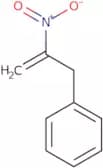
CAS:<p>Versatile small molecule scaffold</p>Formula:C13H9BrO3Purity:Min. 95%Molecular weight:293.11 g/mol(2-Nitroprop-2-en-1-yl)benzene
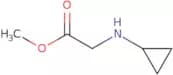
CAS:<p>Versatile small molecule scaffold</p>Formula:C9H9NO2Purity:Min. 95%Molecular weight:163.17 g/molMethyl 2-(cyclopropylamino)acetate
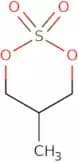
CAS:Methyl 2-(cyclopropylamino)acetate is a macrocyclic compound that has been shown to have anti-inflammatory activities in rats. The optical isomer of methyl 2-(cyclopropylamino)acetate binds to the receptor for histamine, which leads to the inhibition of inflammation. It also inhibits hyperproliferation and hyperproliferative disorders, mediated by its ability to inhibit the production of reactive oxygen species (ROS). Methyl 2-(cyclopropylamino)acetate also has anti-hyperglycemic effects on diabetic mice by inhibiting oxidative stress and ROS production in pancreatic beta cells. This drug has been shown to have neurological effects such as an increase in acetylcholine release and a decrease in acetylcholinesterase activity.Formula:C6H11NO2Purity:Min. 95%Molecular weight:129.16 g/mol5-Methyl-1,3,2λ⁶-dioxathiane-2,2-dione
CAS:<p>Versatile small molecule scaffold</p>Formula:C4H8O4SPurity:Min. 95%Molecular weight:152.17 g/mol5-[(2-Chlorophenyl)methyl]-1,3-oxazolidin-2-one
CAS:<p>Versatile small molecule scaffold</p>Formula:C10H10ClNO2Purity:Min. 95%Molecular weight:211.64 g/mol5-[(2-Methylphenyl)methyl]-1,3-oxazolidin-2-one
CAS:<p>Versatile small molecule scaffold</p>Formula:C11H13NO2Purity:Min. 95%Molecular weight:191.23 g/mol5-[(3-Fluorophenyl)methyl]-1,3-oxazolidin-2-one
CAS:<p>Versatile small molecule scaffold</p>Formula:C10H10FNO2Purity:Min. 95%Molecular weight:195.19 g/mol2-{[2-(Trifluoromethyl)phenyl]methyl}oxirane
CAS:<p>Versatile small molecule scaffold</p>Formula:C10H9F3OPurity:Min. 95%Molecular weight:202.17 g/mol2-[(3-Fluorophenyl)methyl]oxirane
CAS:<p>Versatile small molecule scaffold</p>Formula:C9H9FOPurity:Min. 95%Molecular weight:152.16 g/mol1-Oxa-6-thiaspiro[2.5]octane 6,6-dioxide
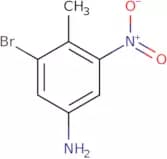
CAS:<p>Versatile small molecule scaffold</p>Formula:C6H10O3SPurity:Min. 95%Molecular weight:162.21 g/mol5-Amino1-bromo-2-methyl-3-nitrobenzene
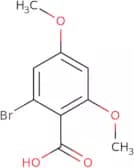
CAS:<p>Versatile small molecule scaffold</p>Formula:C7H7BrN2O2Purity:Min. 95%Molecular weight:231.05 g/mol2-Bromo-4,6-dimethoxybenzoic acid
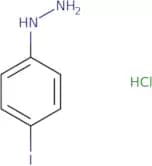
CAS:<p>Versatile small molecule scaffold</p>Formula:C9H9BrO4Purity:Min. 95%Molecular weight:261.07 g/mol4-Iodophenylhydrazine hydrochloride
CAS:<p>4-Iodophenylhydrazine hydrochloride is a phototherapeutic agent that exhibits strong photothermal properties. This compound has been extensively used in the treatment of cancer and, more recently, in the treatment of benign skin lesions such as warts, actinic keratoses, and solar lentigines. 4-Iodophenylhydrazine hydrochloride is synthesized from phenylhydrazine and formaldehyde using sodium hydroxide. The compound is a cyanine dye with a singlet excited state. The photophysical properties of 4-iodophenylhydrazine hydrochloride are sensitive to chlorine gas exposure. 4-Iodophenylhydrazine hydrochloride can be administered topically or intravenously for therapeutic purposes. It has shown efficacy at wavelengths between 650 nm and 850 nm and should not be applied to the eye because it may cause blindness.</p>Formula:C6H8ClIN2Purity:Min. 95%Color and Shape:PowderMolecular weight:270.49 g/mol3-(Chloromethyl)-5H,6H,7H-[1,3]thiazolo[3,2-a]pyrimidine hydrochloride
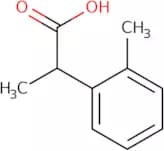
CAS:<p>Versatile small molecule scaffold</p>Formula:C7H10Cl2N2SPurity:Min. 95%Molecular weight:225.14 g/mol2-(2-Methylphenyl)propanoic acid
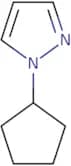
CAS:<p>2-(2-Methylphenyl)propanoic acid is a chiral compound that has the property of racemization. It can be separated into its two enantiomers by countercurrent chromatography, which is based on the principle of countercurrent distribution. The organic layer moves in the opposite direction to the eluent, and this allows for separation of 2-(2-methylphenyl)propanoic acid at any time during the chromatographic process. This is a useful technique for separating stereoisomers, since it can also be used to produce pure enantiomers from racemic mixtures. The formation constant (Kf) and interaction constant (Ki) values were determined using spectrophotometry on a chiral selector and benzene ring respectively.</p>Formula:C10H12O2Purity:Min. 95%Molecular weight:164.2 g/mol1-Cyclopentylpyrazole
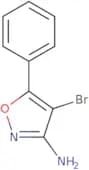
CAS:<p>1-Cyclopentylpyrazole is a chemical compound that belongs to the class of tetrazoles. It can be used as an anticancer agent in skin cancer and other cancers. 1-Cyclopentylpyrazole binds to tyrosine kinases, preventing their activation and blocking the signaling pathway from insulin receptor to insulin receptor substrate (IRS). 1-Cyclopentylpyrazole also inhibits inflammation by inhibiting inflammatory cytokines such as TNF-α and IL-1β. This drug has been shown to have beneficial effects on chronic pain models in rats, with no observed side effects. There are currently no known adverse effects of 1-cyclopentylpyrazole, but it can cause a decrease in HDL cholesterol levels in humans.</p>Formula:C8H12N2Purity:Min. 95%Molecular weight:136.19 g/mol4-Bromo-5-phenyl-1,2-oxazol-3-amine
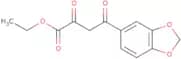
CAS:<p>Versatile small molecule scaffold</p>Formula:C9H7BrN2OPurity:Min. 95%Molecular weight:239.07 g/molEthyl 4-(1,3-dioxaindan-5-yl)-2,4-dioxobutanoate
CAS:<p>Versatile small molecule scaffold</p>Formula:C13H12O6Purity:Min. 95%Molecular weight:264.23 g/mol

![(2E)-3-[5-(4-Bromophenyl)furan-2-yl]prop-2-enoic acid](/_next/image/?url=https%3A%2Fstatic.cymitquimica.com%2Fproducts%2F3D%2Fthumb-webp%2FMCA80635.webp&w=3840&q=75)
![5-[(2-Chlorophenyl)methyl]-1,3-oxazolidin-2-one](/_next/image/?url=https%3A%2Fstatic.cymitquimica.com%2Fproducts%2F3D%2Fthumb-webp%2FMCA82588.webp&w=3840&q=75)
![5-[(2-Methylphenyl)methyl]-1,3-oxazolidin-2-one](/_next/image/?url=https%3A%2Fstatic.cymitquimica.com%2Fproducts%2F3D%2Fthumb-webp%2FMCA82594.webp&w=3840&q=75)
![5-[(3-Fluorophenyl)methyl]-1,3-oxazolidin-2-one](/_next/image/?url=https%3A%2Fstatic.cymitquimica.com%2Fproducts%2F3D%2Fthumb-webp%2FMCA82618.webp&w=3840&q=75)
![2-{[2-(Trifluoromethyl)phenyl]methyl}oxirane](/_next/image/?url=https%3A%2Fstatic.cymitquimica.com%2Fproducts%2F3D%2Fthumb-webp%2FMCA82631.webp&w=3840&q=75)
![2-[(3-Fluorophenyl)methyl]oxirane](/_next/image/?url=https%3A%2Fstatic.cymitquimica.com%2Fproducts%2F3D%2Fthumb-webp%2FMCA82644.webp&w=3840&q=75)
![1-Oxa-6-thiaspiro[2.5]octane 6,6-dioxide](/_next/image/?url=https%3A%2Fstatic.cymitquimica.com%2Fproducts%2F3D%2Fthumb-webp%2FMCA82667.webp&w=3840&q=75)
![3-(Chloromethyl)-5H,6H,7H-[1,3]thiazolo[3,2-a]pyrimidine hydrochloride](/_next/image/?url=https%3A%2Fstatic.cymitquimica.com%2Fproducts%2F3D%2Fthumb-webp%2FMCA83529.webp&w=3840&q=75)