Building Blocks
This section contains fundamental products for the synthesis of organic and biological compounds. Building blocks are the essential starting materials used to construct complex molecules through various chemical reactions. They play a critical role in drug discovery, material science, and chemical research. At CymitQuimica, we offer a diverse range of high-quality building blocks to support your innovative research and industrial projects, ensuring you have the essential components for successful synthesis.
Subcategories of "Building Blocks"
- Boronic Acids & Boronic Acid Derivatives(5,756 products)
- Chiral Building Blocks(1,242 products)
- Hydrocarbon Building Blocks(6,095 products)
- Organic Building Blocks(61,051 products)
Found 199813 products of "Building Blocks"
Sort by
Purity (%)
0
100
|
0
|
50
|
90
|
95
|
100
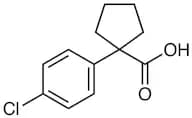
1-(4-Chlorophenyl)-1-cyclopentanecarboxylic Acid
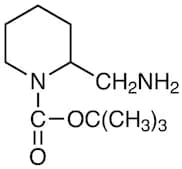
CAS:Formula:C12H13ClO2Purity:>98.0%(GC)(T)Color and Shape:White to Almost white powder to crystalMolecular weight:224.682-(Aminomethyl)-1-tert-butoxycarbonylpiperidine
CAS:Formula:C11H22N2O2Purity:>98.0%(T)Color and Shape:Colorless to Light yellow clear liquidMolecular weight:214.314,8-Bis-n-octyloxybenzo[1,2-b:4,5-b']dithiophene
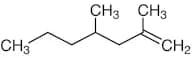
CAS:Formula:C26H38O2S2Purity:>98.0%(GC)Color and Shape:White to Light yellow to Light orange powder to crystalMolecular weight:446.712,4-Dimethyl-1-heptene
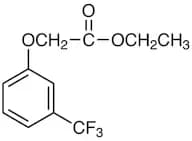
CAS:Formula:C9H18Purity:>98.0%(GC)Color and Shape:Colorless to Almost colorless clear liquidMolecular weight:126.24Ethyl 3-(Trifluoromethyl)phenoxyacetate
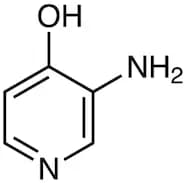
CAS:Formula:C11H11F3O3Purity:>95.0%(GC)Color and Shape:Light yellow to Yellow to Orange clear liquidMolecular weight:248.203-Amino-4-hydroxypyridine
CAS:Formula:C5H6N2OPurity:>98.0%(T)(HPLC)Color and Shape:Light yellow to Brown powder to crystalMolecular weight:110.122-Chloro-5-(trifluoromethyl)phenol
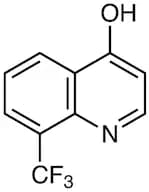
CAS:Formula:C7H4ClF3OPurity:>98.0%(GC)Color and Shape:Light orange to Yellow to Green clear liquidMolecular weight:196.558-(Trifluoromethyl)-4-quinolinol
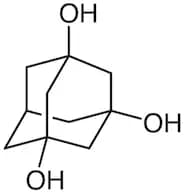
CAS:Formula:C10H6F3NOPurity:>98.0%(GC)(T)Color and Shape:White to Light gray to Light yellow powder to crystalMolecular weight:213.161,3,5-Adamantanetriol
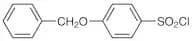
CAS:Formula:C10H16O3Purity:>97.0%(GC)Color and Shape:White to Almost white powder to crystalMolecular weight:184.244-(Benzyloxy)benzenesulfonyl Chloride
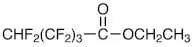
CAS:Formula:C13H11ClO3SPurity:>98.0%(T)Color and Shape:White to Light yellow powder to crystalMolecular weight:282.74Ethyl 5H-Octafluorovalerate
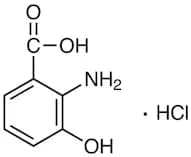
CAS:Formula:C7H6F8O2Purity:>98.0%(GC)Color and Shape:Colorless to Almost colorless clear liquidMolecular weight:274.112-Amino-3-hydroxybenzoic Acid Hydrochloride
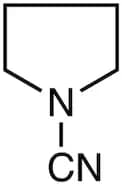
CAS:Formula:C7H7NO3·HClPurity:>98.0%(T)(HPLC)Color and Shape:White to Light yellow to Purple powder to crystalMolecular weight:189.60Pyrrolidine-1-carbonitrile
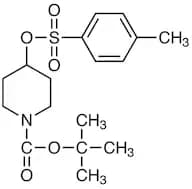
CAS:Formula:C5H8N2Purity:>98.0%(GC)Color and Shape:Colorless to Light orange to Yellow clear liquidMolecular weight:96.131-(tert-Butoxycarbonyl)-4-(p-toluenesulfonyloxy)piperidine
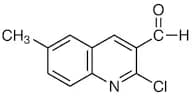
CAS:Formula:C17H25NO5SPurity:>98.0%(HPLC)Color and Shape:White to Almost white powder to crystalMolecular weight:355.452-Chloro-6-methylquinoline-3-carboxaldehyde
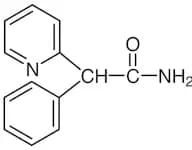
CAS:Formula:C11H8ClNOPurity:>96.0%(GC)Color and Shape:Light orange to Yellow to Green powder to crystalMolecular weight:205.642-Phenyl-2-(2-pyridyl)acetamide
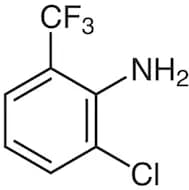
CAS:Formula:C13H12N2OPurity:>98.0%(T)(HPLC)Color and Shape:White to Almost white powder to crystalMolecular weight:212.252-Amino-3-chlorobenzotrifluoride
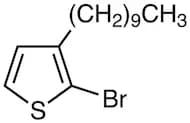
CAS:Formula:C7H5ClF3NPurity:>97.0%(GC)Color and Shape:Colorless to Almost colorless clear liquidMolecular weight:195.572-Bromo-3-decylthiophene
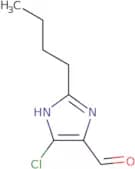
CAS:Formula:C14H23BrSPurity:>97.0%(GC)Color and Shape:Colorless to Light orange to Yellow clear liquidMolecular weight:303.302-Butyl-4-chloro-1H-imidazole-5-carboxaldehyde
CAS:<p>Glyoxal is a chemical compound that has shown to have bactericidal activity against human pathogens such as Mycobacterium tuberculosis, Helicobacter pylori, and Staphylococcus aureus. It is used in the synthesis of heterocyclic amines and can be found as an impurity in imidazole derivatives. Glyoxal is a broad-spectrum antimicrobial that has been shown to inhibit the growth of fungi and bacteria by reacting with functional groups on the microorganisms' cell walls. It reacts with bacterial cell walls by forming an intermediate molecule, which reacts with other molecules present in the microorganism's environment to form carbon dioxide, water, and glyoxal. The reaction time for glyoxal depends on temperature; higher temperatures will result in faster reactions. Techniques used to synthesize glyoxal include dehydration of oximes or by reaction with phosphorus oxychloride.</p>Formula:C8H11ClN2OPurity:Min. 95%Color and Shape:PowderMolecular weight:186.64 g/molRef: 3D-FB19493
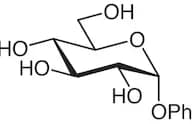
Discontinued productPhenyl α-D-Glucopyranoside
CAS:Formula:C12H16O6Purity:>97.0%(GC)Color and Shape:White to Light yellow powder to crystalMolecular weight:256.25

![4,8-Bis-n-octyloxybenzo[1,2-b:4,5-b']dithiophene](/_next/image/?url=https%3A%2Fstatic.cymitquimica.com%2Fproducts%2F3B%2Fthumb-webp%2FB4396.webp&w=3840&q=75)