Building Blocks
This section contains fundamental products for the synthesis of organic and biological compounds. Building blocks are the essential starting materials used to construct complex molecules through various chemical reactions. They play a critical role in drug discovery, material science, and chemical research. At CymitQuimica, we offer a diverse range of high-quality building blocks to support your innovative research and industrial projects, ensuring you have the essential components for successful synthesis.
Subcategories of "Building Blocks"
- Boronic Acids & Boronic Acid Derivatives(5,778 products)
- Chiral Building Blocks(1,242 products)
- Hydrocarbon Building Blocks(6,098 products)
- Organic Building Blocks(61,034 products)
Found 199601 products of "Building Blocks"
Sort by
Purity (%)
0
100
|
0
|
50
|
90
|
95
|
100
Pyrazolo[1,5-a]pyridin-4-ol
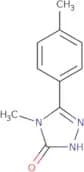
CAS:<p>Pyrazolo[1,5-a]pyridin-4-ol is a heteroaromatic compound that acts as an inhibitor of phosphodiesterase (PDE). It prevents the breakdown of cyclic nucleotides and thus leads to increased levels of cAMP and cGMP. Pyrazolo[1,5-a]pyridin-4-ol has been shown to have bronchodilatory activity in animal models. The drug also inhibits the production of inflammatory mediators such as prostaglandins by inhibiting cyclooxygenases. In addition, pyrazolo[1,5-a]pyridin-4-ol has been shown to be a potential PDE inhibitor replacement for the more commonly used PDE inhibitors such as sildenafil and tadalafil. However, due to its lack of stereochemistry and its bicyclic chemical structure, pyrazolo[1,5-a]</p>Formula:C7H6N2OPurity:Min. 95%Molecular weight:134.14 g/mol4-Methyl-3-(4-methylphenyl)-4,5-dihydro-1H-1,2,4-triazol-5-one
CAS:<p>Versatile small molecule scaffold</p>Formula:C10H11N3OPurity:Min. 95%Molecular weight:189.21 g/molRef: 3D-SEA25823
Discontinued product2-Bromo-1-(2,5-dimethoxyphenyl)ethan-1-ol
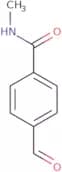
CAS:<p>Versatile small molecule scaffold</p>Formula:C10H13BrO3Purity:Min. 95%Molecular weight:261.11 g/mol4-Formyl-N-methyl-benzamide
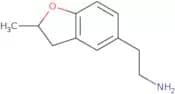
CAS:<p>Versatile small molecule scaffold</p>Formula:C9H9NO2Purity:Min. 95%Molecular weight:163.18 g/mol2-(2-Methyl-2,3-dihydro-1-benzofuran-5-yl)ethan-1-amine
CAS:Controlled Product<p>Versatile small molecule scaffold</p>Formula:C11H15NOPurity:Min. 95%Molecular weight:177.24 g/mol1-(3-Bromophenyl)-6-methyl-1H,4H,5H-pyrazolo[3,4-d]pyrimidin-4-one
CAS:<p>Versatile small molecule scaffold</p>Formula:C12H9BrN4OPurity:Min. 95%Molecular weight:305.13 g/molRef: 3D-GWB99903
Discontinued product2,3-Dimethyl-4-(trifluoromethyl)-2,7-dihydro-6H-pyrazolo[3,4-b]pyridin-6-one
CAS:<p>Versatile small molecule scaffold</p>Formula:C9H8F3N3OPurity:Min. 95%Molecular weight:231.17 g/molRef: 3D-TQB16360
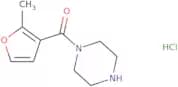
Discontinued product1-(2-Methylfuran-3-carbonyl)piperazine hydrochloride
CAS:<p>Versatile small molecule scaffold</p>Formula:C10H15ClN2O2Purity:Min. 95%Molecular weight:230.69 g/molRef: 3D-TXB38814
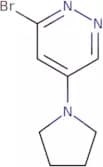
Discontinued product3-Bromo-5-(pyrrolidin-1-yl)pyridazine
CAS:<p>Versatile small molecule scaffold</p>Formula:C8H10BrN3Purity:Min. 95%Molecular weight:228.09 g/molRef: 3D-UPC98750
Discontinued productThieno[2,3-b]pyridine-5-carbonitrile
CAS:<p>Thienopyridine analogs are a class of chemical compounds that function as agonists of the receptor α. These compounds have been shown to inhibit fatty acid oxidation and ATP production in rat liver cells, which may be due to their ability to activate AMP-activated protein kinase (AMPK). Thienopyridine analogs are being investigated for use as anti-inflammatory agents and cancer treatments.</p>Formula:C8H4N2SPurity:Min. 95%Molecular weight:160.2 g/molRef: 3D-WAA34431
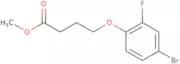
Discontinued productMethyl 4-(4-bromo-2-fluorophenoxy)butanoate
CAS:Controlled Product<p>Versatile small molecule scaffold</p>Formula:C11H12BrFO3Purity:Min. 95%Molecular weight:291.11 g/mol[(2-Oxo-2-phenylethyl)sulfanyl]acetic acid
CAS:<p>[(2-Oxo-2-phenylethyl)sulfanyl]acetic acid is a methyl ester that belongs to the class of alpha,alpha-diphenylacetates. It has been shown to be an effective inhibitor of protein synthesis in bacteria and yeast. This inhibition may be due to its ability to inhibit ribosome function by binding to the 30S subunit of bacterial ribosomes. The acid methyl ester form of [(2-Oxo-2-phenylethyl)sulfanyl]acetic acid is also an inhibitor of protein synthesis in bacteria and yeast, but it does not inhibit ribosome function.</p>Formula:C10H10O3SPurity:Min. 95%Molecular weight:210.25 g/molRef: 3D-XAA53646
Discontinued product2-(3,4-Dichloro-phenyl)-pyrrolidine
CAS:<p>Versatile small molecule scaffold</p>Formula:C10H11Cl2NPurity:Min. 95%Molecular weight:216.11 g/mol3-(2-Bromo-4-methylbenzoyl)-4H,5H,6H-cyclopenta[b]thiophen-2-amine
CAS:<p>Versatile small molecule scaffold</p>Formula:C15H14BrNOSPurity:Min. 95%Molecular weight:336.2 g/molRef: 3D-YWC74274
Discontinued productN-(1-Carbamothioylcyclopentyl)benzamide
CAS:<p>Versatile small molecule scaffold</p>Formula:C13H16N2OSPurity:Min. 95%Molecular weight:248.35 g/molRef: 3D-ZAC49324
Discontinued productN-tert-Butyl 4-nitrophenylsulfonamide
CAS:<p>N-tert-Butyl 4-nitrophenylsulfonamide is a versatile compound with various applications. It can be used as a research chemical in scientific studies or as an ingredient in the synthesis of other compounds. This compound has been found to exhibit antinociceptive properties, making it potentially useful in pain management. Additionally, N-tert-Butyl 4-nitrophenylsulfonamide can act as an electrode material and has been studied for its electrochemical properties. It reacts with certain chemicals such as dioscin, 5-hydroxymethylfurfural (5-HMF), and nicl2, forming new compounds with unique characteristics. Its carbonyl group allows for the formation of N-substituted carbamic acid derivatives, which have shown potential in various fields such as medicinal chemistry and materials science. With its wide range of applications and diverse reactivity, N-tert-Butyl 4-nit</p>Formula:C10H14N2O4SPurity:Min. 95%Molecular weight:258.3 g/molRef: 3D-ZBA69009
Discontinued productBenzenepropanoic acid, 3-[[(1,1-dimethylethoxy)carbonyl]amino]-
CAS:<p>Versatile small molecule scaffold</p>Formula:C14H19NO4Purity:Min. 95%Molecular weight:265.31 g/mol2-(2-methyl-1H-imidazol-1-yl)acetic acid hydrochloride
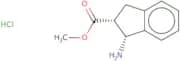
CAS:<p>Versatile small molecule scaffold</p>Formula:C6H9ClN2O2Purity:Min. 95%Molecular weight:176.6 g/molrac-Methyl (1R,2R)-1-amino-2,3-dihydro-1H-indene-2-carboxylate hydrochloride
CAS:<p>Versatile small molecule scaffold</p>Formula:C11H14ClNO2Purity:Min. 95%Molecular weight:227.7 g/molRef: 3D-FCA27000
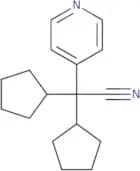
Discontinued product2,2-Dicyclopentyl-2-(pyridin-4-yl)acetonitrile
CAS:<p>Versatile small molecule scaffold</p>Formula:C17H22N2Purity:Min. 95%Molecular weight:254.37 g/molRef: 3D-FDD55406
Discontinued product
![Pyrazolo[1,5-a]pyridin-4-ol](/_next/image/?url=https%3A%2Fstatic.cymitquimica.com%2Fproducts%2F3D%2Fthumb-webp%2FRFA03272.webp&w=3840&q=75)

![1-(3-Bromophenyl)-6-methyl-1H,4H,5H-pyrazolo[3,4-d]pyrimidin-4-one](/_next/image/?url=https%3A%2Fstatic.cymitquimica.com%2Fproducts%2F3D%2Fthumb-webp%2FGWB99903.webp&w=3840&q=75)
![2,3-Dimethyl-4-(trifluoromethyl)-2,7-dihydro-6H-pyrazolo[3,4-b]pyridin-6-one](/_next/image/?url=https%3A%2Fstatic.cymitquimica.com%2Fproducts%2F3D%2Fthumb-webp%2FTQB16360.webp&w=3840&q=75)
![Thieno[2,3-b]pyridine-5-carbonitrile](/_next/image/?url=https%3A%2Fstatic.cymitquimica.com%2Fproducts%2F3D%2Fthumb-webp%2FWAA34431.webp&w=3840&q=75)
![[(2-Oxo-2-phenylethyl)sulfanyl]acetic acid](/_next/image/?url=https%3A%2Fstatic.cymitquimica.com%2Fproducts%2F3D%2Fthumb-webp%2FXAA53646.webp&w=3840&q=75)

![3-(2-Bromo-4-methylbenzoyl)-4H,5H,6H-cyclopenta[b]thiophen-2-amine](/_next/image/?url=https%3A%2Fstatic.cymitquimica.com%2Fproducts%2F3D%2Fthumb-webp%2FYWC74274.webp&w=3840&q=75)
![Benzenepropanoic acid, 3-[[(1,1-dimethylethoxy)carbonyl]amino]-](/_next/image/?url=https%3A%2Fstatic.cymitquimica.com%2Fproducts%2F3D%2Fthumb-webp%2FZFA50604.webp&w=3840&q=75)