


Building Blocks
This section contains fundamental products for the synthesis of organic and biological compounds. Building blocks are the essential starting materials used to construct complex molecules through various chemical reactions. They play a critical role in drug discovery, material science, and chemical research. At CymitQuimica, we offer a diverse range of high-quality building blocks to support your innovative research and industrial projects, ensuring you have the essential components for successful synthesis.
Subcategories of "Building Blocks"
- Boronic Acids & Boronic Acid Derivatives(5,756 products)
- Chiral Building Blocks(1,242 products)
- Hydrocarbon Building Blocks(6,095 products)
- Organic Building Blocks(61,051 products)
Found 199813 products of "Building Blocks"
Sort by
Purity (%)
0
100
|
0
|
50
|
90
|
95
|
100
Methyl 6-cyano-5-fluoropyridine-2-carboxylate
CAS:<p>Versatile small molecule scaffold</p>Formula:C8H5FN2O2Purity:Min. 95%Molecular weight:180.14 g/mol1-Bromo-4-[(difluoromethyl)sulfanyl]benzene
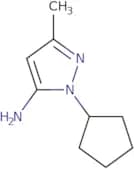
CAS:<p>Versatile small molecule scaffold</p>Formula:C7H5BrF2SPurity:Min. 95%Molecular weight:239.08 g/mol2-Cyclopentyl-5-methyl-2H-pyrazol-3-ylamine
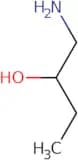
CAS:<p>Versatile small molecule scaffold</p>Formula:C9H15N3Purity:Min. 95%Molecular weight:165.24 g/mol(S)-1-Aminobutan-2-ol
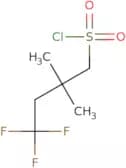
CAS:<p>Versatile small molecule scaffold</p>Formula:C4H11NOPurity:Min. 95%Molecular weight:89.14 g/mol4,4,4-Trifluoro-2,2-dimethylbutane-1-sulfonyl chloride
CAS:<p>Versatile small molecule scaffold</p>Formula:C6H10ClF3O2SPurity:Min. 95%Molecular weight:238.66 g/molRef: 3D-FWC66938
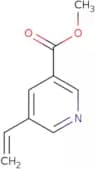
Discontinued product5-Vinylnicotinic acid methyl ester
CAS:<p>5-Vinylnicotinic acid methyl ester belongs to the group of antimicrobial agents. It is a chemical compound that has been shown to be effective against cervical cancer and may have potential as an anticancer drug. 5-Vinylnicotinic acid methyl ester inhibits the growth of human chorionic gonadotropin (HCG) in women, which is a hormone necessary for ovulation and pregnancy. This compound also inhibits the growth of viruses, such as herpes simplex virus type 1 (HSV-1), and bacteria, such as dittrichia sp., which causes inflammation of the throat. 5-Vinylnicotinic acid methyl ester has also been shown to inhibit protein synthesis in human osteosarcoma cells at low concentrations, but not at high concentrations.</p>Formula:C9H9NO2Purity:Min. 95%Molecular weight:163.17 g/molRef: 3D-NBA94067
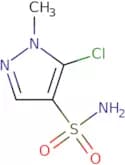
Discontinued product5-Chloro-1-methyl-1H-pyrazole-4-sulfonamide
CAS:<p>Versatile small molecule scaffold</p>Formula:C4H6ClN3O2SPurity:Min. 95%Molecular weight:195.63 g/molRef: 3D-NDA39850
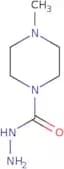
Discontinued product4-Methylpiperazine-1-carbohydrazide
CAS:<p>Versatile small molecule scaffold</p>Formula:C6H14N4OPurity:Min. 95%Molecular weight:158.2 g/molRef: 3D-NDA70165
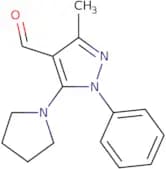
Discontinued product3-Methyl-1-phenyl-5-(pyrrolidin-1-yl)-1H-pyrazole-4-carbaldehyde
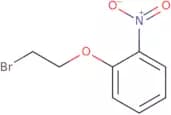
CAS:<p>Versatile small molecule scaffold</p>Formula:C15H17N3OPurity:Min. 95%Molecular weight:255.31 g/mol1-(2-Bromoethoxy)-2-nitrobenzene
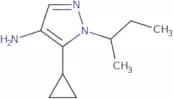
CAS:<p>1-(2-Bromoethoxy)-2-nitrobenzene is a fluorescent ionophore that is used in the production of high-performance liquid chromatography (HPLC) columns. This chemical is synthesized by a stepwise reaction that starts with the formation of an acetonitrile adduct. The acetonitrile group is then removed and replaced with an ethoxy group to form the final product. The synthetic procedure for 1-(2-bromoethoxy)-2-nitrobenzene has been rationalized and it can be recycled using magnesium as a reducing agent. In addition, this chemical has been shown to bind to sensor proteins due to its high affinity for them.</p>Formula:C8H8BrNO3Purity:Min. 95%Molecular weight:246.06 g/mol1-(Butan-2-yl)-5-cyclopropyl-1H-pyrazol-4-amine
CAS:<p>Versatile small molecule scaffold</p>Formula:C10H17N3Purity:Min. 95%Molecular weight:179.26 g/molRef: 3D-GQB45453
Discontinued product1-{3-[(4-Methylphenyl)methoxy]phenyl}piperazine hydrochloride
CAS:<p>Versatile small molecule scaffold</p>Formula:C18H23ClN2OPurity:Min. 95%Molecular weight:318.8 g/molRef: 3D-GBC18041
Discontinued product2-[({12-Oxo-7-thia-9,11-diazatricyclo[6.4.0.0,2,6]dodeca-1(8),2(6),9-trien-10-yl}methyl)sulfanyl]acetic acid
CAS:<p>Versatile small molecule scaffold</p>Formula:C12H12N2O3S2Purity:Min. 95%Molecular weight:296.4 g/molRef: 3D-ZEB92070
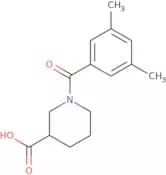
Discontinued product1-(3,5-Dimethylbenzoyl)piperidine-3-carboxylic acid
CAS:<p>Versatile small molecule scaffold</p>Formula:C15H19NO3Purity:Min. 95%Molecular weight:261.32 g/molThieno[2,3-b]pyridine-5-carbonitrile
CAS:<p>Thienopyridine analogs are a class of chemical compounds that function as agonists of the receptor α. These compounds have been shown to inhibit fatty acid oxidation and ATP production in rat liver cells, which may be due to their ability to activate AMP-activated protein kinase (AMPK). Thienopyridine analogs are being investigated for use as anti-inflammatory agents and cancer treatments.</p>Formula:C8H4N2SPurity:Min. 95%Molecular weight:160.2 g/molRef: 3D-WAA34431
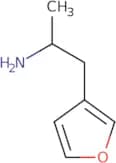
Discontinued product1-(Furan-3-yl)propan-2-amine
CAS:<p>Versatile small molecule scaffold</p>Formula:C7H11NOPurity:Min. 95%Molecular weight:125.17 g/molRef: 3D-KJB11532
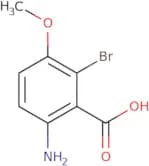
Discontinued product6-Amino-2-bromo-3-methoxybenzoic acid
CAS:<p>Versatile small molecule scaffold</p>Formula:C8H8BrNO3Purity:Min. 95%Molecular weight:246.06 g/molRef: 3D-CGA94638
Discontinued product6-Cyanospiro[3.3]heptane-2-carboxylic acid
CAS:<p>Versatile small molecule scaffold</p>Formula:C9H11NO2Purity:Min. 95%Molecular weight:165.19 g/molRef: 3D-DBA11489
Discontinued product2-Chloro-N-{[3-(2,2,2-trifluoroethoxy)phenyl]methyl}acetamide
CAS:<p>Versatile small molecule scaffold</p>Formula:C11H11ClF3NO2Purity:Min. 95%Molecular weight:281.66 g/molRef: 3D-IAC64035
Discontinued product2-[3-(Difluoromethoxy)-4-methoxyphenyl]ethan-1-amine
CAS:Controlled Product<p>Versatile small molecule scaffold</p>Formula:C10H13F2NO2Purity:Min. 95%Molecular weight:217.21 g/molRef: 3D-YHB23469
Discontinued product


![1-Bromo-4-[(difluoromethyl)sulfanyl]benzene](/_next/image/?url=https%3A%2Fstatic.cymitquimica.com%2Fproducts%2F3D%2Fthumb-webp%2FEAA83714.webp&w=3840&q=75)
![1-{3-[(4-Methylphenyl)methoxy]phenyl}piperazine hydrochloride](/_next/image/?url=https%3A%2Fstatic.cymitquimica.com%2Fproducts%2F3D%2Fthumb-webp%2FGBC18041.webp&w=3840&q=75)
![2-[({12-Oxo-7-thia-9,11-diazatricyclo[6.4.0.0,2,6]dodeca-1(8),2(6),9-trien-10-yl}methyl)sulfanyl]a…](/_next/image/?url=https%3A%2Fstatic.cymitquimica.com%2Fproducts%2F3D%2Fthumb-webp%2FZEB92070.webp&w=3840&q=75)
![Thieno[2,3-b]pyridine-5-carbonitrile](/_next/image/?url=https%3A%2Fstatic.cymitquimica.com%2Fproducts%2F3D%2Fthumb-webp%2FWAA34431.webp&w=3840&q=75)
![6-Cyanospiro[3.3]heptane-2-carboxylic acid](/_next/image/?url=https%3A%2Fstatic.cymitquimica.com%2Fproducts%2F3D%2Fthumb-webp%2FDBA11489.webp&w=3840&q=75)
![2-Chloro-N-{[3-(2,2,2-trifluoroethoxy)phenyl]methyl}acetamide](/_next/image/?url=https%3A%2Fstatic.cymitquimica.com%2Fproducts%2F3D%2Fthumb-webp%2FIAC64035.webp&w=3840&q=75)
![2-[3-(Difluoromethoxy)-4-methoxyphenyl]ethan-1-amine](/_next/image/?url=https%3A%2Fstatic.cymitquimica.com%2Fproducts%2F3D%2Fthumb-webp%2FYHB23469.webp&w=3840&q=75)