Acids and Synthetic Reagents
Synthetic reagents are essential for chemical synthesis as they enable faster and cleaner reactions, improving efficiency and product quality. They also facilitate analysis and quality control in various chemical processes. In this section, you will find a wide range of reagents, including chiral auxiliary compounds, organic ligands, polymer-supported reagents, and resins for synthesis. These products are designed to support your research and industrial applications, ensuring high-performance results. At CymitQuimica, we provide a comprehensive selection of high-quality acids and synthetic reagents to meet your specific needs.
Subcategories of "Acids and Synthetic Reagents"
- Chiral Auxiliaries(75 products)
- Miscellaneous Organic Molecules with Isotopical Substitutions(6,183 products)
- Organic Acids and Bases(914 products)
- Organic Ligands(564 products)
- Polymer-supported Reagents(13 products)
- Resins for Synthesis(41 products)
- Various Ionic Liquids(499 products)
Found 7382 products of "Acids and Synthetic Reagents"
Sort by
Purity (%)
0
100
|
0
|
50
|
90
|
95
|
100
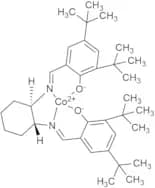
(R,R)-(-)-N,N'-Bis(3,5-ditert-butylsalicylidene)-1,2-cyclohexanediaminocobalt(II)
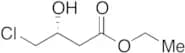
CAS:Controlled ProductFormula:C36H52CoN2O2Color and Shape:NeatMolecular weight:603.74(R)-Ethyl 4-Chloro-3-hydroxybutanoate (~90%)
CAS:Controlled Product<p>Applications (R)-Ethyl 4-chloro-3-hydroxybutanoate is used in biological studies for asymmetric reduction of ethyl 4-chloro-3-oxobutanoate to ethyl (R)-4-chloro-3-hydroxybutanoate with two co-existing, recombinant Escherichia coli strains.<br>References Liu, Y., et al.: Biotech. Lett., 27, 119 (2005);<br></p>Formula:C6H11ClO3Purity:~90%Color and Shape:NeatMolecular weight:166.6Ixabepilone
CAS:Controlled Product<p>Applications Ixabepilone is an anti-tumor agent used in the treatment of patients suffering from solid tumors, such as metastatic breast cancer.<br>References Duska, L. et al.: Gynecol. Oncol., 135, 44 (2014); Deeken, J. et al.: Cancer Chemother. Pharmacol., 73, 1071 (2014);<br></p>Formula:C27H42N2O5SColor and Shape:NeatMolecular weight:506.70tert-Butyl Cyanoacetate
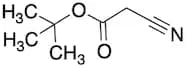
CAS:Controlled ProductFormula:C7H11NO2Color and Shape:NeatMolecular weight:141.176-Methyl-2-pyrazinyl-boronic Acid
CAS:Controlled ProductFormula:C5H7BN2O2Color and Shape:NeatMolecular weight:137.9322’,5’-Dichloroacetophenone
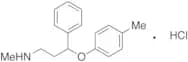
CAS:Controlled ProductFormula:C8H6Cl2OColor and Shape:NeatMolecular weight:189.039p-Methyl Atomoxetine Hydrochloride
CAS:Controlled Product<p>Impurity Atomoxetine EP Impurity C<br>Applications p-Methyl Atomoxetine Hydrochloride (Atomoxetine EP Impurity C) is an impurity of Atomoxetine (A791400), a norepinephrine reuptake inhibitor.<br>References Farid, N.A., et al.: J. Clin. Pharmacol., 25, 296 (1985), Gehlert, D.R., et al.: J. Neurochem., 64, 2792 (1995), Hwamg. et al.: Neurosci. Lett., 265, 151 (1999), Ring, B.J., et al.: Drug Metab. Dispos., 30, 319 (2002),<br></p>Formula:C17H21NO·ClHColor and Shape:NeatMolecular weight:291.822,6-Di-tert-butyl-4-nitrophenol
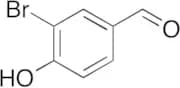
CAS:Controlled Product<p>Applications 2,6-Di-tert-butyl-4-nitrophenol is a potentially powerful uncoupler of ATP-generating oxidative phosphorylation that has been reported to be a contaminant in submarines and indoor spaces, causing a number of objects to turn yellow (even human skin).<br> Not a dangerous good if item is equal to or less than 1g/ml and there is less than 100g/ml in the package<br>References Ball, J., et al.: Science, 272, 101 (1996); Rivera-Nevares, J., et al.: Env. Toxicol. Chem., 14, 251 (1995); Rothweiler, H., et al.: Atm. Env. B: Urb. Atm., 25, 231 (1991)<br></p>Formula:C14H21NO3Color and Shape:NeatMolecular weight:251.323-Bromo-4-hydroxybenzaldehyde
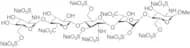
CAS:Controlled ProductFormula:C7H5BrO2Color and Shape:NeatMolecular weight:201.02Fondaparinux Sodium
CAS:Controlled Product<p>Applications Synthetic pentasaccharide corresponding to the anti-thrombin binding site of heparin. Anti-thrombotic.<br>References Herbert, J.M., et al.: Cardiovasc. Drug Rev., 15, 1 (1997), Turpie, A.G.G., et al.: Expert Opin. Drug Saf., 4, 707 (2005),<br></p>Formula:C31H43N3O49S8·10NaColor and Shape:White SolidMolecular weight:1728.082,4,9-trimethylbenzo[b][1,8]naphthyridin-5-amine
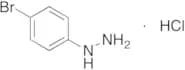
CAS:Controlled ProductFormula:C15H15N3Color and Shape:NeatMolecular weight:237.34-Bromophenylhydrazine Hydrochloride
CAS:Controlled Product<p>Applications 4-Bromophenylhydrazine Hydrochloride is a reactant in the synthesis of fluoro substituted novel pyrazolylpyrazolines scaffold with antibacterial activity, antituberculosis activity against Mycobacterium tuberculosis H37Rv and antimalarial activity against Plasmodium falciparum.<br> Not a dangerous good if item is equal to or less than 1g/ml and there is less than 100g/ml in the package<br>References Karad, S.C., et. al.: Eur. J. Med. Chem., 84, 51 (2014)<br></p>Formula:C6H8BrClN2Color and Shape:NeatMolecular weight:223.5Motesanib
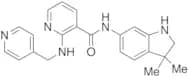
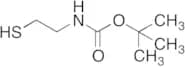
CAS:Controlled Product<p>Applications Motesanib is an oral angiogenesis inhibitor, demonstrates clinical efficacy in advanced thymoma.<br>References Rosen, L., et al.: J. Clin. Oncol., 25, 2369 (2007), Sherman, S., et al.: New Engl. J. Med., 359, 31 (2008),<br></p>Formula:C22H23N5OColor and Shape:NeatMolecular weight:373.452-(Boc-amino)ethanthiol (>90%)
CAS:Controlled ProductFormula:C7H15NO2SPurity:>90%Color and Shape:NeatMolecular weight:177.26Batyl Alcohol
CAS:Controlled Product<p>Applications Batyl Alcohol is used to synthesize amphiphilic alkylglycerolipids with antitumor activities. It is also used in cosmetic compounds for prevention or treatment of erythema or dermatitis or promotion of wound healing.<br>References Ukawa, K., et al.: Chem. Pharma. Bull., 37, 3277 (1989); Schoenrock, U., et al.: Ger. (1995), DE 4420625 C1 19951102.<br></p>Formula:C21H44O3Color and Shape:NeatMolecular weight:344.57Manganese
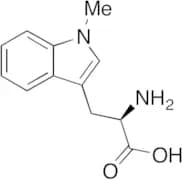
CAS:Controlled Product<p>Applications Manganese is a transition metal which is used as a component in alloys such as stainless steels. Manganese is also a component of many pigments and is used to make catalysts for reduction reactions.<br>References Tambat, S., et al.: World J. Pharm. Res., 6, 1570-1585 (2017); Leonard, D., et al.: ACS Catal., 9, 11125-112129 (2019)<br></p>Formula:MnColor and Shape:NeatMolecular weight:54.941-Methyl-D-tryptophan
CAS:<p>Applications 1-Methyl-D-tryptophan is used in biological studies to determine the effect of IDO2 enzyme (indoleamine-(2,3)-dioxygenase) activity and IDO2-mediated arrest of human T cell proliferation. It reverses IDO-mediated immune suppression<br>References Qian, F., et al.: Cancer Immunology Immunothrapy, 61, 2013 (2012)<br></p>Formula:C12H14N2O2Color and Shape:NeatMolecular weight:218.25Diphenyl Diselenide
CAS:Controlled Product<p>Applications Diphenyl Diselenide is an organoselenium compound with pharmacological properties, including antioxidant, glutathione peroxidase-mimetic, and neuroprotective effects. Studies show that Diphenyl Diselenide has demonstrated anxiolytic effects in rodents and can inhibit biofilm formation by Candida albicans, increasing both ROS production and membrane permeability.<br> Not a dangerous good if item is equal to or less than 1g/ml and there is less than 100g/ml in the package<br>References Hassan, W., et al.: Eur. J. Pharmacol., 761, 341 (2015); Rosseti, I.B., et al.: J. Trace Elem. Med. Bio., 29, 289 (2015); Ibrahim, M., et al.: Prog. Neuro-Psychoph., 54, 187 (2014)<br></p>Formula:C12H10Se2Color and Shape:NeatMolecular weight:312.13L-(-)-Lactide
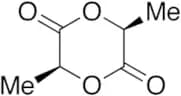
CAS:<p>Applications L-(-)-Lactide is a cyclic lactic acid derivative used in the ring-opening polymerization of Poly-L-lactic acid (PLLA), which is commonly found in biodegradable plastics. Polymers derived from L-(-)-Lactide also provide a therapeutic use in the field of prosthetics as they do not have any adverse effects on proliferation and differentiation of bone cells.<br>References Nakamura, T. et al.: J. Biomed. Mat. Res., 23, 1115 (1999); Otto, T.E. et al.: J. Biomed. Mat. Res., 32, 513 (1996); Kale, G. et al.: Pach. Technol. Sci., 20, 49 (2007);<br></p>Formula:C6H8O4Color and Shape:NeatMolecular weight:144.13





![2,4,9-trimethylbenzo[b][1,8]naphthyridin-5-amine](/_next/image/?url=https%3A%2Fstatic.cymitquimica.com%2Fproducts%2FTR%2Fthumb-webp%2FA613553.webp&w=3840&q=75)