Alcohols
Alcohols are a wide range of organic molecules derived from hydrocarbons that contain one or more hydroxyl groups (OH group). These compounds are essential in various chemical reactions and are widely used in laboratory settings for synthesis, as solvents, and in analytical chemistry. At CymitQuimica, we offer high-quality alcohols prepared for laboratory use, supporting your research and industrial applications with reliable and effective products. Our selection ensures you have the right alcohols for your specific needs, whether for routine laboratory work or specialized research projects.
Subcategories of "Alcohols"
Found 5814 products of "Alcohols"
Sort by
Purity (%)
0
100
|
0
|
50
|
90
|
95
|
100
1,2,3,4-Tetrahydro-4,6-dihydroxy-2-methyl-isoquinoline
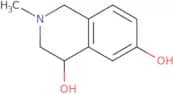
CAS:<p>1,2,3,4-Tetrahydro-4,6-dihydroxy-2-methyl-isoquinoline is a useful building block in the synthesis of various compounds such as pharmaceuticals and pesticides. It is an intermediate for the preparation of other valuable chemicals such as the antihistamine diphenhydramine, which is used to treat allergies. Tetrahydroisoquinoline can also be used as a reagent to synthesize other chemical compounds. This compound has been used in research as well as commercial applications. Tetrahydroisoquinoline is also a versatile scaffold that can be modified to produce different derivatives with different properties.</p>Formula:C10H13NO2Purity:Min. 95%Color and Shape:White PowderMolecular weight:179.22 g/molKushenol W
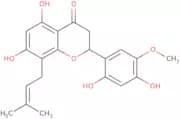
CAS:<p>Kushenol W is a flavonoid compound, which is derived from the root of the Sophora flavescens plant. This plant, commonly known as "Kushen," is an important component in traditional Chinese medicine. The mode of action of Kushenol W involves multiple biological pathways, primarily exerting its effects through anti-inflammatory and anti-tumor activities. It interacts with various molecular targets, modulating pathways associated with oxidative stress and cell proliferation.</p>Purity:Min. 95%2-Carboxy mestanolone methyl ester
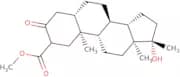
CAS:Controlled Product<p>Please enquire for more information about 2-Carboxy mestanolone methyl ester including the price, delivery time and more detailed product information at the technical inquiry form on this page</p>Formula:C22H34O4Purity:Min. 95%Molecular weight:362.5 g/mol4-[(4-Chlorophenyl)phenylmethyl]-1-piperazineethanol dihydrochloride
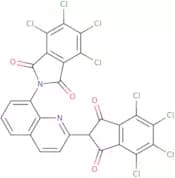
CAS:<p>Please enquire for more information about 4-[(4-Chlorophenyl)phenylmethyl]-1-piperazineethanol dihydrochloride including the price, delivery time and more detailed product information at the technical inquiry form on this page</p>Formula:C19H23ClN2O•(HCl)2Purity:Min. 95%Molecular weight:403.77 g/molPigment Yellow 138;3,4,5,6-Tetrachloro-N-[2-(4,5,6,7-tetrachloro-2,3-dihydro-1,3-dioxo-1H-inden-2-yl)-8-Quinolyl]phthalimide
CAS:<p>Pigment Yellow 138 is a polycarboxylic acid with the chemical formula C8H6Cl4O2. Pigment Yellow 138 has a molecular weight of 434.07 and can be used as a yellow pigment in paint, plastics, and textiles. Pigment Yellow 138 has an acidic pH and can be prepared by reacting phthalic anhydride with sodium hydroxide in aqueous solution to produce the sodium salt of pigment yellow 138. Pigment Yellow 138 is also soluble in hydroxide solutions, which makes it an excellent cross-linking agent for polymers. The color of pigments depends on the size of their particles; pigments with larger particle sizes are more opaque than those with smaller particle sizes.</p>Formula:C26H6Cl8N2O4Purity:Strengh Min 95%.Molecular weight:693.96 g/molMethallyl alcohol
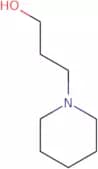
CAS:<p>Methallyl alcohol is a reactive hydroxide solution that is used as an intermediate in the industrial synthesis of polycarboxylic acids, glycol ethers, and other compounds. It reacts with hydrogen chloride to form methallyl chloride, which can be used to produce polymers. Methallyl alcohol can also be used as a reagent for the synthesis of various esters, amides, and other organic compounds. The enzyme inhibitors it produces inhibit reactions involving fatty acid and aliphatic hydrocarbon oxidation. Methallyl alcohol is produced by the reaction of methanol with allyl chloride. This reaction occurs in vivo under acidic conditions.</p>Formula:C4H8OPurity:Min. 98 Area-%Color and Shape:Colorless Clear LiquidMolecular weight:72.11 g/mol3-Piperidin-1-ylpropan-1-ol
CAS:<p>3-Piperidin-1-ylpropan-1-ol is a substance that is structurally related to biperiden and has affinity for the H3 receptor. It has been shown to have a high affinity for the H3 receptor, which is found in high concentration in the rat brain. 3-Piperidin-1-ylpropan-1-ol has been shown to have antagonistic activity against neuropathic pain in rats, by inhibiting the release of norepinephrine from nerve endings. This substance also has antihistaminic properties, which may be due to its ability to inhibit histamine release. 3-Piperidin-1-ylpropan-1-ol is an enantiomer of piperidine, with a slightly higher affinity for the H3 receptor than its mirror image. The racemic mixture isomeric form (i.e., both enantiomers) inhibits the H3 receptor with an equal potency,</p>Formula:C8H17NOPurity:Min. 95%Color and Shape:Colorless Clear LiquidMolecular weight:143.23 g/mol5-Bromo-2-fluorophenol
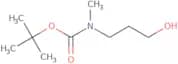
CAS:<p>5-Bromo-2-fluorophenol is an organic solvent that is used in hydrotalcite to extract biphenyl. 5-Bromo-2-fluorophenol has been shown to have a high affinity for the cavity of hydrotalcite, which is a desorption technique. It can also be used to extract supramolecular systems and biomolecules, such as proteins and nucleic acids. The nature of 5-bromo-2-fluorophenol is an aromatic compound with a density of 1.40 g/mL at 20°C and a boiling point of 221°C. 5-Bromo-2-fluorophenol can be eluted using isopropyl alcohol or ethyl acetate, and the transfer rate depends on the nature of the solvent used in elution.</p>Formula:C6H4BrFOPurity:Min. 95%Color and Shape:PowderMolecular weight:191 g/molN-Methyl-N-boc-aminopropan-3-ol
CAS:<p>N-Methyl-N-boc-aminopropan-3-ol is a fine chemical with CAS No. 98642-44-5 that is used in the synthesis of complex compounds, as a reagent for research chemicals, and as a speciality chemical. It is also used in the synthesis of versatile building blocks, reaction components and scaffolds. N-Methyl-N-boc-aminopropan-3-ol has a high quality and can be used as a versatile intermediate or a useful scaffold.</p>Formula:C9H19NO3Purity:Min. 95%Color and Shape:Colourless To Pale Yellow LiquidMolecular weight:189.25 g/mol3-Bromophenol
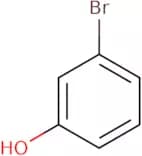
CAS:<p>3-Bromophenol is an organic compound that is a bromophenol. It is used as a fluorometric probe in wastewater treatment and as a tracer for metabolic pathways in the proximal tubules of the kidney. 3-Bromophenol has a molecular weight of 184.16 g/mol and has been shown to be metabolized by bacteria into 2,4-dihydroxyphenylacetic acid (2,4-DPA). 3-Bromophenol can also be synthesized from 2,4-dihydroxyphenylacetic acid using sodium hydroxide solution and carbon source in a synthetic process. This synthetic process can be carried out at room temperature and atmospheric pressure.</p>Formula:C6H5BrOPurity:Min. 98 Area-%Color and Shape:Clear LiquidMolecular weight:173.01 g/mol2-Bromo-6-chlorophenol
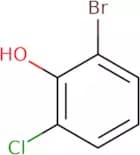
CAS:<p>2-Bromo-6-chlorophenol is a reactive, thiourea-containing compound that undergoes catalytic reactions. 2-Bromo-6-chlorophenol reacts with sulfate in water to form chlorine radicals, which react with other organic compounds to produce chlorinated organic compounds. This reaction can be used for the oxidation of phenols and alcohols to yield chlorinated products. The yields of this process depend on the concentration of acetonitrile used in the reaction. Acetonitrile is also required for the conversion of dichlorinated benzenes to brominated products.</p>Formula:C6H4BrClOPurity:Min. 95%Molecular weight:207.45 g/mol2-(4-Methyl-2-phenyl-1-piperazinyl)-3-pyridinemethanol
CAS:<p>2-(4-Methyl-2-phenyl-1-piperazinyl)-3-pyridinemethanol is an impurity in hexane that is generated during the reaction of pyridine with acetonitrile. The impurity is removed by crystallizing it from methanol. 2-(4-Methyl-2-phenyl-1-piperazinyl)-3-pyridinemethanol has a high efficiency, and can be used to synthesize hexamethyldisiloxane. This product can be used as a metal catalyst for reactions involving alkali metals or metal halides. It can also be used as an alcohol solvent, but not hydrogenated.</p>Formula:C17H21N3OPurity:Min. 95%Color and Shape:White to off white powderMolecular weight:283.37 g/mol(D-Ala2,N-Me-Phe4,methionin(O)-ol5)-Enkephalin trifluoroacetate salt
CAS:<p>D-Ala2,N-Me-Phe4,methionin(O)-ol5)-Enkephalin trifluoroacetate salt H-Tyr-D-Ala-Gly-N-Me-Phe-methionin(O)-ol trifluoroacetate salt is an analog of the endocannabinoid neurotransmitter, anandamide. It has been shown to be effective in the treatment of autoimmune diseases such as multiple sclerosis and inflammatory bowel disease. D-(3R)-3-[(1S,2R,3R,5R) -3-[2-(2,6 dichlorophenyl)ethenyl] -1H -indole]-1 -butanamine trifluoroacetate salt has been shown to inhibit the replication of a number of viruses including human immunodeficiency virus type 1 (HIV). This drug also inhibits the growth of organisms that are resistant</p>Formula:C29H41N5O7SPurity:Min. 95%Molecular weight:603.73 g/mol5-Amino-2-tert-butoxycarbonyl-1,2,3,4-tetrahydroisoquinoline
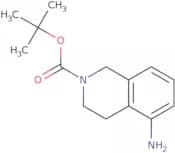
CAS:<p>Please enquire for more information about 5-Amino-2-tert-butoxycarbonyl-1,2,3,4-tetrahydroisoquinoline including the price, delivery time and more detailed product information at the technical inquiry form on this page</p>Formula:C14H20N2O2Purity:Min. 95%Molecular weight:248.32 g/mol1,5-Decalindiol
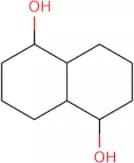
CAS:<p>1,5-Decalindiol is a cyclic alicyclic compound that can be synthesized by the Diels-Alder reaction between 1,5-hexadiene and maleic anhydride. It contains two stereoisomers with different reactivity. One isomer reacts more rapidly than the other one. The termination of 1,5-decalindiol is calcitriol, which can be synthesized by reacting 1,5-decalindiol with naphthalene. The sequence of reactions for the synthesis of 1,5-decalindiol are analyzed in detail. Methoxy groups on the a ring play an important role in the reaction rate of this molecule.<br>1,5-Decalindiol also has an interaction with acetonitrile and a reaction product with dihydroxynaphthalenes.</p>Formula:C10H18O2Purity:Min. 95%Color and Shape:PowderMolecular weight:170.25 g/mol2-[3-(S)-[3-(2-(7-Chloro-2-quinolinyl)ethenyl)phenyl]-3-hydroxypropyl]benzoic acid methyl ester
CAS:<p>2-[3-(S)-[3-(2-(7-Chloro-2-quinolinyl)ethenyl)phenyl]-3-hydroxypropyl]benzoic acid methyl ester is a synthetic compound that can be used as a reagent in the synthesis of polynucleotides and polypeptides. It can also be used as an inhibitor of ketoreductase, which is an enzyme involved in the synthesis of fatty acids and ketones. 2-[3-(S)-[3-(2-(7-Chloro-2-quinolinyl)ethenyl)phenyl]-3-hydroxypropyl]benzoic acid methyl ester has been shown to inhibit the growth of wild type and mutant strains of E. coli. The molecular weight of this compound is 439.</p>Formula:C28H24ClNO3Purity:Min. 95%Molecular weight:457.95 g/molα-Zearalenol
CAS:<p>a-Zearalenol is a steroidal compound that has been shown to be effective in the treatment of autoimmune diseases. It has been found to have a matrix effect on the transcription of genes and can be used in wastewater treatment. Further, it has been shown to inhibit the activity of complex enzymes such as lysyl oxidase and prolyl hydroxylase. The hybridoma cell line was developed for the production of monoclonal antibodies against zearalenone, and an analytical method using LC-MS/MS with fluorescence detection for a-zearalenol was also developed.</p>Formula:C18H24O5Purity:Min. 95%Molecular weight:320.38 g/mol2-Thiopheneethanol tosylate
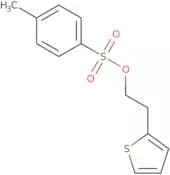
CAS:<p>2-Thiopheneethanol tosylate (2TEtOS) is an antitubercular agent that belongs to the class of thiopheneethanol esters. It is a potent inhibitor of Mycobacterium tuberculosis and other bacteria by blocking the transfer reactions that are required for bacterial growth. The molecular structure of 2TEtOS consists of a thiophene ring with an allyl group attached to it and a chiral sulfur atom in the center. This molecule can be derivatized with various ligands, which enables the control experiments to be performed. 2TEtOS has been shown to have redox potentials and diffraction properties that are similar to those of borohydride reduction agents, suggesting that 2TEtOS may also act as a reducing agent.</p>Formula:C13H14O3S2Purity:Min. 95%Molecular weight:282.38 g/molStigmast-7-enol
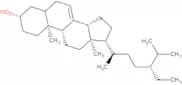
CAS:Controlled Product<p>Stigmast-7-enol is a naturally occurring compound found in plants such as Oroxylum indicum and Carthamus tinctorius. It was first isolated from the plant Stigmasta crispa. The chemical composition of stigmast-7-enol includes a hydroxyl group, a carboxylic acid group, and an ester bond. It has been shown to have hypoglycemic effects in animal models. This compound is stable at acidic pH levels, but is unstable at physiological pH levels. Stigmast-7-enol also binds to the mitochondrial membrane potential and inhibits the synthesis of p-hydroxybenzoic acid in cells.</p>Formula:C29H50OPurity:Min. 95%Molecular weight:414.71 g/molUbiquinol
CAS:<p>Fully reduced form of coenzyme Q10</p>Formula:C59H92O4Purity:Min. 95%Color and Shape:White Yellow PowderMolecular weight:865.36 g/mol

![4-[(4-Chlorophenyl)phenylmethyl]-1-piperazineethanol dihydrochloride](/_next/image/?url=https%3A%2Fstatic.cymitquimica.com%2Fproducts%2F3D%2Fthumb-webp%2FFC33627.webp&w=3840&q=75)




![2-[3-(S)-[3-(2-(7-Chloro-2-quinolinyl)ethenyl)phenyl]-3-hydroxypropyl]benzoic acid methyl ester](/_next/image/?url=https%3A%2Fstatic.cymitquimica.com%2Fproducts%2F3D%2Fthumb-webp%2FFC20038.webp&w=3840&q=75)