


Alcohols
Subcategories of "Alcohols"
Found 5817 products of "Alcohols"
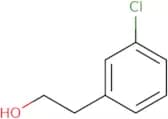
2-(3-Chlorophenyl)ethanol
CAS:2-(3-Chlorophenyl)ethanol (CLPE) is an agonist of the beta-adrenergic receptor. It is used in the treatment of asthma and other pulmonary diseases. CLPE binds to the beta-adrenergic receptor, which increases airway opening by relaxing bronchial smooth muscle. The drug also has a backup effect on the alpha-adrenergic receptors in the lungs, which helps to overcome any adverse effects caused by beta-blockers. CLPE has been shown to be effective in treating asthma attacks that are resistant to inhaled corticosteroids and long-acting β2-agonists. It may be used as an alternative treatment for patients who cannot tolerate or have not responded well to first line treatments such as long acting β2 agonists or inhaled corticosteroids.
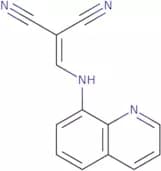
Formula:C8H9ClOPurity:Min. 95%Color and Shape:Clear LiquidMolecular weight:156.61 g/mol((8-Quinolylamino)methylene)methane-1,1-dicarbonitrile
CAS:Please enquire for more information about ((8-Quinolylamino)methylene)methane-1,1-dicarbonitrile including the price, delivery time and more detailed product information at the technical inquiry form on this page
Formula:C13H8N4Purity:Min. 95%Color and Shape:PowderMolecular weight:220.23 g/molRef: 3D-FQ169911
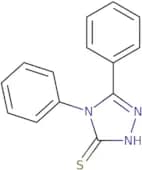
Discontinued product4,5-Diphenyl-4H-1,2,4-triazole-3-thiol
CAS:4,5-Diphenyl-4H-1,2,4-triazole-3-thiol is a thione that has potent antibacterial activity against Gram positive bacteria. It is also used as a building block in the synthesis of polymers for medical use and other applications. 4,5-Diphenyl-4H-1,2,4-triazole-3-thiol has been shown to be photostable in the presence of oxygen. It is not active against Gram negative bacteria and does not show any effect on coccidiosis or cancer. 4,5-Diphenyl-4H-1,2,4-triazole-3-thiol has been shown to have a potent inhibitory effect on human adenocarcinoma cells (A549) at concentrations of 0.25 mM and higher.
Formula:C14H11N3SPurity:Min. 95%Molecular weight:253.32 g/molRef: 3D-FD127124
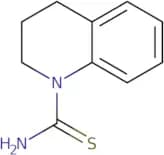
Discontinued productAmino-1,2,3,4-tetrahydroquinol-1-ylmethane-1-thione
CAS:Please enquire for more information about Amino-1,2,3,4-tetrahydroquinol-1-ylmethane-1-thione including the price, delivery time and more detailed product information at the technical inquiry form on this pagePurity:Min. 95%Ref: 3D-FA169182
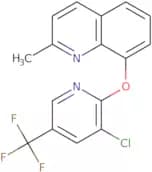
Discontinued product3-Chloro-2-(2-methyl(8-quinolyloxy))-5-(trifluoromethyl)pyridine
CAS:Please enquire for more information about 3-Chloro-2-(2-methyl(8-quinolyloxy))-5-(trifluoromethyl)pyridine including the price, delivery time and more detailed product information at the technical inquiry form on this page
Formula:C16H10ClF3N2OPurity:Min. 95%Color and Shape:PowderMolecular weight:338.71 g/molRef: 3D-FC169546
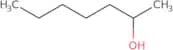
Discontinued product2-Heptanol
CAS:2-Heptanol is a colorless liquid with a pungent odor. It is soluble in water and has a high boiling point. 2-Heptanol is an intermediate in the synthesis of fatty acids, which are used for the production of soaps, lubricants, and waxes. 2-Heptanol reacts with potassium hydroxide to produce potassium 2-heptoxide, which is soluble in water. The reaction products are caproic acid and hydroxy group. The transport properties of this compound are not well known.
Formula:C7H16OPurity:Min. 95%Color and Shape:Clear LiquidMolecular weight:116.2 g/molRef: 3D-FH36709
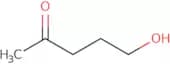
Discontinued product3-Acetyl-1-propanol
CAS:3-Acetyl-1-propanol is a chemical substance that contains a hydroxy group and a hydrogen chloride molecule. The kinetic data for the reaction of 3-acetyl-1-propanol with water vapor has been found to be constant. This reaction is a nucleophilic attack on the C=O bond, which is followed by an intramolecular hydrogen transfer from one of the OH groups to the other. The product of this reaction is 3-hydroxypropanoic acid, which can be converted back to 3-acetyl propanol by hydrolysis. Hydrochloric acid is used as a catalyst in this process.
Formula:C5H10O2Purity:Min. 95%Color and Shape:Colourless To Light (Or Pale) Yellow To Red-Brown LiquidMolecular weight:102.13 g/molRef: 3D-FA04138
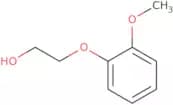
Discontinued product2-(2-Methoxyphenoxy)ethanol
CAS:2-(2-Methoxyphenoxy)ethanol (2-MPE) is a metabolite of propanediol, which is a precursor in the synthesis of polyurethanes. 2-MPE can be oxidized by monooxygenases to form syringyl and other reactive metabolites. Basic hydrolysis may also produce monomers such as phenols, alcohols, and carboxylic acids. Syringyl is one of the metabolic products of 2-MPE, which has been shown to be resistant to degradation by basidiomycete fungi.
Formula:C9H12O3Purity:Min. 95%Molecular weight:168.19 g/molRef: 3D-FM58242
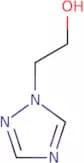
Discontinued product2-(1H-1,2,4-Triazol-1-yl)ethanol
CAS:2-(1H-1,2,4-Triazol-1-yl)ethanol is a synthetic molecule that has been expressed in cyanoalkyl and validated. This molecule can be used as a fluconazole prodrug. The electron density analysis of this compound has shown that it is highly hydrophilic and may be able to penetrate the cell membrane. 2-(1H-1,2,4-Triazol-1-yl)ethanol is bioanalytically equivalent to fluconazole and has shown growth regulating properties. 2-(1H-1,2,4-Triazol-1-yl)ethanol binds to the receptor molecule at low light levels and inhibits the synthesis of DNA by inhibiting RNA polymerase activity.
Formula:C4H7N3OPurity:Min. 95%Molecular weight:113.12 g/molRef: 3D-FT127248
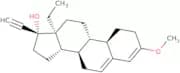
Discontinued product(17a)-13-Ethyl-3-methoxy-18,19-dinorpregna-3,5-dien-20-yn-17-ol
CAS:Controlled ProductPlease enquire for more information about (17a)-13-Ethyl-3-methoxy-18,19-dinorpregna-3,5-dien-20-yn-17-ol including the price, delivery time and more detailed product information at the technical inquiry form on this pageFormula:C22H30O2Purity:Min. 95%Molecular weight:326.47 g/molRef: 3D-FE23118
Discontinued product(1S,2R)-2-Aminocyclohexanol hydrochloride
CAS:Please enquire for more information about (1S,2R)-2-Aminocyclohexanol hydrochloride including the price, delivery time and more detailed product information at the technical inquiry form on this page
Formula:C6H14ClNOPurity:Min. 95%Molecular weight:151.63 g/molRef: 3D-FA140431
Discontinued product2-[(4-Methylbenzenesulfonyl)oxy]ethan-1-ol
CAS:2-[(4-Methylbenzenesulfonyl)oxy]ethan-1-ol is a compound that contains a benzene ring and an ethyl chain. It has the following chemical structure: It is structurally related to benzodiazepine, but with an amide group instead of a diazepine ring. 2-[(4-Methylbenzenesulfonyl)oxy]ethan-1-ol is a membrane stabilizer that inhibits thrombin and can be used as an anticoagulant. This compound also has growth factor activity and can be used in the synthesis of heterocyclic compounds.
Formula:C9H12O4SPurity:Min. 95%Color and Shape:Clear LiquidMolecular weight:216.26 g/molrac 1,2-dioleoyl-3-chloropropanediol
CAS:Rac-1,2-dioleoyl-3-chloropropanediol is a fatty acid and can be used for the preparation of isotopically labelled fatty acids. Rac-1,2-dioleoyl-3-chloropropanediol has been used as an internal standard in the quantification of fatty acid esters in plant oils. The use of rac 1,2-dioleoyl-3-chloropropanediol was found to be appropriate for calibrating liquid chromatography with a quadrupole mass spectrometer.
Formula:C39H71ClO4Purity:Min. 95%Molecular weight:639.43 g/mol2-Amino-1-(2,3-dihydro-benzofuran-5-yl)-ethanol
CAS:Controlled ProductPlease enquire for more information about 2-Amino-1-(2,3-dihydro-benzofuran-5-yl)-ethanol including the price, delivery time and more detailed product information at the technical inquiry form on this pageFormula:C10H13NO2Purity:Min. 95%Molecular weight:179.22 g/molRef: 3D-FA151846
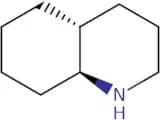
Discontinued producttrans-Decahydroquinoline
CAS:Trans-decahydroquinoline is a chiral compound that can be synthesized by an asymmetric synthesis. It is an amide with a carbonyl group and a dialkylamino group. Trans-decahydroquinoline can be used to synthesize different compounds, such as enantiopure drugs, pharmaceuticals, and agrochemicals. The synthesis of trans-decahydroquinoline can be accomplished through the aldol cyclization or the addition of an acid to the carbonyl group. The magnetic resonance spectroscopy (NMR) and molecular modeling techniques have been used to study its structure and properties.
Formula:C9H17NPurity:Min. 95%Molecular weight:139.24 g/molRef: 3D-FD76040
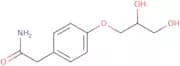
Discontinued productDes(isopropylamino) atenolol diol
CAS:Des(isopropylamino) atenolol diol is a synthetic, high-performance liquid chromatography (HPLC) analyte with an absorbance maximum of 254 nm. It is a white/off-white solid that is soluble in water and has a molecular weight of 187.5 g/mol. This compound can be analyzed using multichannel or liquid chromatographic techniques. Des(isopropylamino) atenolol diol can be used to measure the concentration of various compounds, such as impurities, by elution from the column. The elution profile has been shown to be dependent on the type of sample and technique used for analysis.
Formula:C11H15NO4Purity:Min. 95%Molecular weight:225.24 g/molNaphthalen-2-ethanol
CAS:Naphthalen-2-ethanol is a primary alcohol that has been synthesized and immobilized onto boron nitride. It can be used as a synthetic reaction rate indicator. Naphthalen-2-ethanol is soluble in organic solvents such as methanol, which can be used to determine the concentration of methanol in solution by observing the change in absorbance at 230 nm. This compound has functional groups such as carbinols, which are characterized by their high reactivity and ability to form esters, ethers, amides, or nitriles. Naphthalen-2-ethanol also reacts with lipases to produce polyamines and with chromatography to produce substitutive nomenclature.
Formula:C12H12OPurity:Min. 95%Molecular weight:172.22 g/molRef: 3D-FN146293
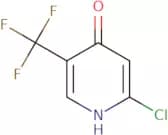
Discontinued product2-Chloro-5-(trifluoromethyl)pyridin-4-ol
CAS:Please enquire for more information about 2-Chloro-5-(trifluoromethyl)pyridin-4-ol including the price, delivery time and more detailed product information at the technical inquiry form on this page
Formula:C6H3ClF3NOPurity:Min. 95%Molecular weight:197.54 g/molRef: 3D-FC154736
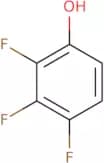
Discontinued product2,3,4-Trifluorophenol
CAS:2,3,4-Trifluorophenol is a chemical control agent that is used as an intermediate in the synthesis of organic compounds. It reacts with hydroxyl groups to form 2,3,4-trifluoroacetophenone from a proton. The compound has low light and x-ray absorption properties and is typically used in liquid crystal compositions. Chemical ionization experiments have shown that 2,3,4-trifluorophenol binds to copper oxide and forms copper trifluoride. This compound also has been found to be conjugated with neutral ph phenols and chlorinated with chlorine atom.
Formula:C6H3F3OPurity:Min. 95%Color and Shape:PowderMolecular weight:148.08 g/mol4-Aminobicyclo[2.2.2]octan-1-ol hydrochloride
CAS:Please enquire for more information about 4-Aminobicyclo[2.2.2]octan-1-ol hydrochloride including the price, delivery time and more detailed product information at the technical inquiry form on this page
Formula:C8H15NO•HClPurity:Min. 95%Molecular weight:177.67 g/molRef: 3D-FA63102
Discontinued product


![2-[(4-Methylbenzenesulfonyl)oxy]ethan-1-ol](/_next/image/?url=https%3A%2Fstatic.cymitquimica.com%2Fproducts%2F3D%2Fthumb-webp%2FFM171828.webp&w=3840&q=75)



![4-Aminobicyclo[2.2.2]octan-1-ol hydrochloride](/_next/image/?url=https%3A%2Fstatic.cymitquimica.com%2Fproducts%2F3D%2Fthumb-webp%2FFA63102.webp&w=3840&q=75)