Amines
Amines are a set of molecules containing an amino functional group (derived from ammonia). This category includes amines at any level of substitution : primary, secondary, tertiary, and ammonium salts. Amines are fundamental in organic synthesis and are widely used in pharmaceuticals, agrochemicals, and materials science. At CymitQuimica, we provide a comprehensive selection of amines to meet your research and industrial needs. Our range ensures access to various amines for diverse chemical processes and innovative research.
Subcategories of "Amines"
- Nitrosamines(2,605 products)
- Primary Amines(30,947 products)
- Quaternary Ammonium Cations and Salts(1,100 products)
- Secondary Amines(20,886 products)
- Tertiary Amines(17,193 products)
Found 8780 products of "Amines"
Sort by
Purity (%)
0
100
|
0
|
50
|
90
|
95
|
100
5-Fluoro-2-Indanamine
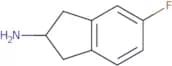
CAS:Controlled ProductPlease enquire for more information about 5-Fluoro-2-Indanamine including the price, delivery time and more detailed product information at the technical inquiry form on this pageFormula:C9H10FNPurity:Min. 95%Molecular weight:151.18 g/mol(2-Aminothiophen-3-yl)(4-bromophenyl)methanone
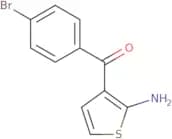
CAS:<p>2-Aminothiophen-3-yl)(4-bromophenyl)methanone is a new compound that is being developed as a potential antiviral agent. Covid-19, the trade name for 2-aminothiophen-3-yl)(4-bromophenyl)methanone, prevents the replication of viruses by binding to their nucleic acids and blocking their ability to produce proteins. Covid-19 has been shown to be effective against both influenza A and B viruses in cellular and animal models. The antiviral activity of Covid-19 is due to its ability to bind to viral nucleic acid, preventing the production of proteins vital for viral replication. This compound has also been shown to have anti-inflammatory properties, which may be due to its ability to inhibit the production of amyloid plaques in mice with Alzheimer's disease.</p>Formula:C11H8BrNOSPurity:Min. 95%Molecular weight:282.16 g/mol(R)-(+)-1-Ethylbenzylamine
CAS:(R)-(+)-1-Ethylbenzylamine is a hydrogenated compound, which means that it contains at least one double bond. It also reacts with other molecules to form new compounds. It can be synthesized in an asymmetric synthesis, which means that the product can have different stereoisomers. This product has a primary amine group and a functional group on the same side of the molecule. The compound is expressed as a white crystalline solid and has been shown to react with glyoxylate to form an iminium ion. The iminium ion is five-membered and has two resonance structures, which are shown in the structural analysis.Formula:C9H13NPurity:Min. 95%Molecular weight:135.21 g/mol5-Amino-2,4-dichlorophenol
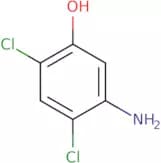
CAS:<p>Please enquire for more information about 5-Amino-2,4-dichlorophenol including the price, delivery time and more detailed product information at the technical inquiry form on this page</p>Formula:C6H5Cl2NOPurity:Min. 95%Color and Shape:PowderMolecular weight:178.02 g/mol3-(Dimethylamino)-1-(1-methyl-1H-indol-2-yl)prop-2-en-1-one
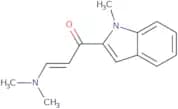
CAS:Controlled ProductPlease enquire for more information about 3-(Dimethylamino)-1-(1-methyl-1H-indol-2-yl)prop-2-en-1-one including the price, delivery time and more detailed product information at the technical inquiry form on this pageFormula:C14H16N2OPurity:Min. 95%Molecular weight:228.29 g/mol3-Methoxy methamphetamine hydrochloride
CAS:Controlled ProductPlease enquire for more information about 3-Methoxy methamphetamine hydrochloride including the price, delivery time and more detailed product information at the technical inquiry form on this pageFormula:C11H18ClNOPurity:Min. 95%Molecular weight:215.72 g/molN-(2-Aminoethyl)piperazine
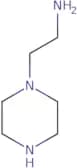
CAS:N-(2-Aminoethyl)piperazine (NAPE) is a chemical compound that can be used as an environmentally friendly catalyst for the degradation of ethylene diamine and other amines. NAPE has been shown to be stable under alkaline conditions, and its fluorescence probe has been used to monitor the progress of the reaction. This compound is a coordination complex with nitrogen atoms at the corners of a square and two amines at opposite corners of the square. The amine groups are coordinated to metal ions in a geometry that is determined by the atomic number of the metal ion. Disulfide bonds form between two cysteine residues on adjacent chains. Glycol ethers can also form disulfide bonds with NAPE, forming glycol ether-NAPE complexes. Antibodies have been shown to bind to glycol ether-NAPE complexes, suggesting that these complexes may play a role in antibody response, although experimental solubility data have not yet confirmed thisFormula:C6H15N3Purity:Min. 95%Molecular weight:129.2 g/molTetramethylammonium hydroxide, 25% aqueous solution
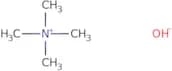
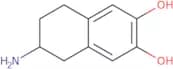
CAS:Tetramethylammonium hydroxide is a strong base that is used in analytical chemistry for the quantitative determination of zirconium. It is an analytical reagent and has a pH of 14. Tetramethylammonium hydroxide forms complexes with metals such as zirconium and titanium, which are then analyzed by various methods such as atomic absorption spectroscopy, x-ray fluorescence spectroscopy, and inductively coupled plasma mass spectrometry. The optimum concentration of tetramethylammonium hydroxide for this application is approximately 25%. Tetramethylammonium hydroxide reacts with p-nitrophenyl phosphate to form a pink product, which can be detected by colorimetric analysis. This reaction also produces hydrogen fluoride gas, which must be removed before the solution can be used again. Tetramethylammonium hydroxide reacts with ammonium to form tetramethylammonium ion and water. It also reactsFormula:C4H13NOPurity:Min. 95%Color and Shape:Clear LiquidMolecular weight:91.15 g/mol6-Amino-5,6,7,8-tetrahydronaphthalene-2,3-diol
CAS:Controlled Product<p>6-Amino-5,6,7,8-tetrahydronaphthalene-2,3-diol is a potent dopamine D2 receptor antagonist. It has been shown to inhibit the light emission of dopamine in vitro. This compound also has a high affinity for 5-HT receptors and has been shown to be a potent agonist at these sites. 6-Amino-5,6,7,8-tetrahydronaphthalene-2,3-diol has been found to induce pluripotent stem cells from human fibroblasts. These cells can differentiate into virtually any cell type in the body and may be used to study diseases such as Parkinson's disease and cancer.</p>Formula:C10H13NO2Purity:Min. 95%Molecular weight:179.22 g/mol1-(RS)-2-(Dibutylamino)-2-[2,7-dichloro-9-(4-chlorobenxylidene)]-9H-fluoren- 4-yl]ethanol - E/Z mixture
CAS:Please enquire for more information about 1-(RS)-2-(Dibutylamino)-2-[2,7-dichloro-9-(4-chlorobenxylidene)]-9H-fluoren- 4-yl]ethanol - E/Z mixture including the price, delivery time and more detailed product information at the technical inquiry form on this pageFormula:C30H32Cl3NOPurity:Min. 95%Molecular weight:528.94 g/mol(4-Bromobenzyl)methylamine hydrochloride
CAS:Controlled Product<p>(4-Bromobenzyl)methylamine hydrochloride is a reagent that is used for the analysis of carboxylic acids. It has been used in a number of studies to analyze cellular metabolism and energy metabolism. This reagent has also been used to study the functional groups of organic acids, as well as their reactivity. (4-Bromobenzyl)methylamine hydrochloride can be used in liquid chromatography or electrospray ionization methods to analyze samples using mass spectrometry.</p>Formula:C8H10BrNPurity:Min. 95%Molecular weight:200.08 g/molFmoc-S-trityl-D-penicillamine
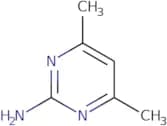
CAS:<p>Please enquire for more information about Fmoc-S-trityl-D-penicillamine including the price, delivery time and more detailed product information at the technical inquiry form on this page</p>Formula:C39H35NO4SPurity:Min. 95%Molecular weight:613.77 g/mol2-Amino-4,6-dimethylpyrimidine
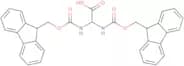
CAS:2-Amino-4,6-dimethylpyrimidine is a molecule that contains a hydroxyl group, copper chloride, nitrogen atoms, sodium carbonate, and hydroxybenzoic acid. The antimicrobial properties of 2-amino-4,6-dimethylpyrimidine are due to the presence of the hydroxyl group and copper chloride in its structure. This compound has been shown to have bactericidal activity against Pseudomonas aeruginosa and other gram-negative bacteria. It also inhibits the growth of these bacteria by interfering with their ability to synthesize proteins. 2-Amino-4,6-dimethylpyrimidine is a molecule that has an octahedral coordination geometry and forms hydrogen bonds with water molecules. It binds to the surface of minerals such as calcite or quartz and can be used for gravimetric analysis.Formula:C6H9N3Purity:Min. 95%Molecular weight:123.16 g/molN,N'-bis-Fmoc-diaminoacetic acid
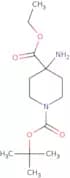
CAS:Please enquire for more information about N,N'-bis-Fmoc-diaminoacetic acid including the price, delivery time and more detailed product information at the technical inquiry form on this pageFormula:C32H26N2O6Purity:Min. 95%Molecular weight:534.56 g/mol1,4-Piperidinedicarboxylic acid, 4-aMino-, 1-(1,1-diMethylethyl) 4-ethyl ester
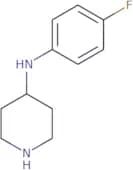
CAS:Please enquire for more information about 1,4-Piperidinedicarboxylic acid, 4-aMino-, 1-(1,1-diMethylethyl) 4-ethyl ester including the price, delivery time and more detailed product information at the technical inquiry form on this pageFormula:C13H25N2O4Purity:Min. 95%Molecular weight:273.35 g/molN-(4-Fluorophenyl)piperidin-4-amine
CAS:Controlled Product<p>Fentanyl is a synthetic opioid that is similar to morphine. It has been used in human studies for its analgesic effects. Fentanyl has been shown to have a high potential for abuse and can cause life-threatening respiratory depression. It can be administered orally, intravenously, or by inhalation. The drug is metabolized by the liver into several inactive metabolites. Fentanyl is an analog of the natural opioid peptide endorphin and binds to δ-opioid receptors in the central nervous system, which are involved in the regulation of pain. This drug also has antinociceptive properties at low doses and δ-opioid agonist activity at higher doses.</p>Formula:C11H15FN2Purity:Min. 95%Molecular weight:194.25 g/mol2-(4-Aminophenylthio)acetic acid
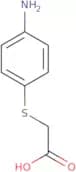
CAS:2-(4-Aminophenylthio)acetic acid is an analytical reagent that is used for the determination of nitrite ion. It reacts with nitrous acid to form a red-colored dye. 2-(4-Aminophenylthio)acetic acid has been shown to be an effective anhydrase inhibitor, which can be used in analytical chemistry as a method for determining the concentration of nitrate ion. This compound also has a constant value of 1.5, which can be used to calculate the concentration of nitric acid in hydrochloric acid by using the following equation: 2 NaOH + HCl → NaCl + 2 H2O 1.5 (aq) + 4H+(aq) → 6H2O(l) 6H2O(l) ÷ 1.5 (mol/L) = 3 mol/L 3 mol/L ÷ 0.037 (mol/g) =Formula:C8H9NO2SPurity:Min. 95%Molecular weight:183.23 g/mol1-(4-(Aminomethyl)phenyl)pyridin-1-ium chloride
CAS:1-(4-(Aminomethyl)phenyl)pyridin-1-ium chloride is a chemical compound that belongs to the class of pyridines and has pinpoint as its molecular weight. It is an ionic liquid that can be used in analytical methods, such as liquid chromatography and ionization techniques, for the identification of unsaturated fatty acids. This compound can be analyzed by gas chromatography with either electron capture detection or chemical ionization. The GC separation column used for this analysis would have to be a phase column with an unsaturated fatty acid stationary phase. GC-EID and GC-CI are two common ionization techniques that could be used in conjunction with this analytical method. The lower limit of detection for this technique is about 0.1 ppm, which makes it a sensitive analytical tool for use in food production and quality control laboratories. The yield of 1-(4-(Aminomethyl)phenyl)pyridin-1-Purity:Min. 95%2-Amino-4-bromopyrimidine
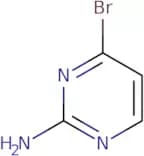
CAS:<p>Please enquire for more information about 2-Amino-4-bromopyrimidine including the price, delivery time and more detailed product information at the technical inquiry form on this page</p>Formula:C4H4BrN3Purity:Min. 95%Color and Shape:White PowderMolecular weight:174 g/molDimethylammonium dichlorotri(mu-chloro)bis[(R)-(+)-5,5'-bis(diphenylphosphino)-4,4'-bi-1,3-benzodioxole]diruthenate(II)
CAS:Controlled ProductPlease enquire for more information about Dimethylammonium dichlorotri(mu-chloro)bis[(R)-(+)-5,5'-bis(diphenylphosphino)-4,4'-bi-1,3-benzodioxole]diruthenate(II) including the price, delivery time and more detailed product information at the technical inquiry form on this pageFormula:C78H64Cl5O8P4Ru2NPurity:Min. 95%Molecular weight:1,646.64 g/mol



![1-(RS)-2-(Dibutylamino)-2-[2,7-dichloro-9-(4-chlorobenxylidene)]-9H-fluoren- 4-yl]ethanol - E/Z mi…](/_next/image/?url=https%3A%2Fstatic.cymitquimica.com%2Fproducts%2F3D%2Fthumb-webp%2FFD71423.webp&w=3840&q=75)