Amines
Amines are a set of molecules containing an amino functional group (derived from ammonia). This category includes amines at any level of substitution : primary, secondary, tertiary, and ammonium salts. Amines are fundamental in organic synthesis and are widely used in pharmaceuticals, agrochemicals, and materials science. At CymitQuimica, we provide a comprehensive selection of amines to meet your research and industrial needs. Our range ensures access to various amines for diverse chemical processes and innovative research.
Subcategories of "Amines"
- Nitrosamines(2,605 products)
- Primary Amines(30,821 products)
- Quaternary Ammonium Cations and Salts(1,099 products)
- Secondary Amines(20,817 products)
- Tertiary Amines(17,117 products)
Found 8778 products of "Amines"
Sort by
Purity (%)
0
100
|
0
|
50
|
90
|
95
|
100
Ammonium molybdate tetrahydrate - ACS
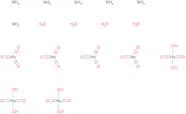
CAS:<p>Ammonium molybdate tetrahydrate (AMT) is a molybdenum compound with the chemical formula (NH4)6Mo7O24·4H2O. It is a yellow crystalline solid that is soluble in water and n-hexane. AMT has been clinically used for the treatment of Wilson's disease, an inherited disorder that causes copper to accumulate in the body. AMT binds to copper ions and prevents them from being absorbed into the bloodstream. The rate of ATP production increases when AMT is added to cells, which may be due to its effect on electron transport or because it inhibits ATPase activity.</p>Formula:(NH4)6Mo7O24•(H2O)4Purity:Min. 95%Color and Shape:White Clear LiquidMolecular weight:1,236 g/molN-α-Boc-Nβ-1-(4,4-dimethyl-2,6-dioxocyclohex-1-ylidene)ethyl-D-2,3-diaminopropionic acid
CAS:<p>Please enquire for more information about N-alpha-Boc-Nbeta-1-(4,4-dimethyl-2,6-dioxocyclohex-1-ylidene)ethyl-D-2,3-diaminopropionic acid including the price, delivery time and more detailed product information at the technical inquiry form on this page</p>Formula:C18H28N2O6Purity:Min. 95%Molecular weight:368.42 g/mol2-(Boc-Aminomethyl)pyrrolidine
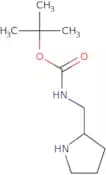
CAS:<p>Please enquire for more information about 2-(Boc-Aminomethyl)pyrrolidine including the price, delivery time and more detailed product information at the technical inquiry form on this page</p>Formula:C10H20N2O2Purity:Min. 95%Molecular weight:200.28 g/molL(+)-2,3-Diaminopropionic acid HCl
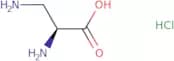
CAS:<p>L(+)-2,3-Diaminopropionic acid HCl is a chiral modifier that is used in the separation of organic compounds. It has been shown to selectively interact with borate, sulfate, and hydroxyapatite. This interaction changes the physical properties of these substances by modifying their surface charge or adsorption capacity. L(+)-2,3-Diaminopropionic acid HCl has also been shown to be useful in diastereoselective reactions. The technique of elution can be used to isolate specific compounds from mixtures using this compound as a modifier. Hydrogen bonding groups and moieties on the functional group are important factors in the specificity of this interaction.END>></p>Formula:C3H8N2O2·HClPurity:Min. 95%Color and Shape:White PowderMolecular weight:140.57 g/mol4,5-Dibromobenzene-1,2-diamine
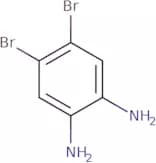
CAS:<p>Dibromobenzene-1,2-diamine (DBD) is a chemical compound that belongs to the group of diamines. It is used in cancer research as an anticancer drug, inhibiting the growth of cancer cells by blocking intracellular calcium levels. DBD has been shown to be effective against pancreatic cancer cells and human cancer cells. The photophysical properties of DBD are determined by its neutral structure and electron deficiency, which makes it a suitable candidate for use in radiation treatment.</p>Formula:C6H6Br2N2Purity:Min. 95%Color and Shape:PowderMolecular weight:265.93 g/mol4-Aminobenzocyclobutene
CAS:<p>4-Aminobenzocyclobutene is a monomer that can be used as a crosslinker. It has been shown to have magnetic properties and is soluble in organic solvents such as dioxane and dichloromethane. 4-Aminobenzocyclobutene readily reacts with paraformaldehyde to form the corresponding paraformaldehyde resin, which is insoluble in water and can be used for the preparation of coatings or adhesives. The hydrosilylation reaction between 4-aminobenzocyclobutene and 3-chloropropyl trimethoxysilane leads to the formation of an aminosilane resin, which exhibits a low water absorption rate and high thermal expansion coefficient. This material can also be used for coating or adhesive applications.</p>Formula:C8H7NPurity:Min. 95%Molecular weight:117.15 g/mol9-Aminoacridine
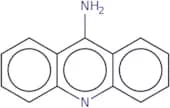
CAS:<p>9-Aminoacridine is a potential anticancer agent that intercalates into the DNA and prevents the replication process. It has been shown to inhibit the growth of bacteria resistant to tetracycline by interfering with bacterial DNA replication. 9-Aminoacridine also has anti-inflammatory properties, which may be due to its inhibition of prostaglandin synthesis.</p>Formula:C13H10N2Purity:Min. 95%Molecular weight:194.23 g/mol2,5-Diaminopyridine
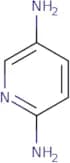
CAS:<p>2,5-Diaminopyridine is an organic compound that is expressed in the human body. It has been shown to inhibit the growth of cells in culture by binding to their DNA and preventing the production of hydrogen bonds. 2,5-Diaminopyridine has also been used clinically to treat inflammatory diseases such as rheumatoid arthritis. The hydrogen bond formation and inhibition of cell growth occurs at a low concentration of 2,5-Diaminopyridine. This drug may have potential as a therapeutic agent for cancer treatment because it inhibits the transcription factor CXCR4.</p>Formula:C5H7N3Purity:Min. 98.0 Area-%Color and Shape:Yellow To Purple To Brown SolidMolecular weight:109.13 g/mol2-(4-((aminothioxomethyl)amino)-3,5-thiazolyl)acetic acid
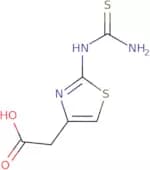
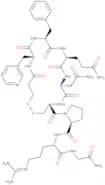
CAS:<p>Please enquire for more information about 2-(4-((aminothioxomethyl)amino)-3,5-thiazolyl)acetic acid including the price, delivery time and more detailed product information at the technical inquiry form on this page</p>Formula:C6H7N3O2S2Purity:Min. 95%Color and Shape:PowderMolecular weight:217.27 g/mol(Deamino-Cys1,b-(3-pyridyl)-D-Ala2,Arg8)-Vasopressin trifluoroacetate salt
CAS:<p>DDAVP is an analogue of vasopressin, which belongs to the class of inositol phosphates. It is a potent agonist for the V1 receptor and has a higher affinity for this receptor than vasopressin. DDAVP also has antagonist properties at the V2 receptor. The biological activity of DDAVP is mediated by its ability to increase phospholipase A2 activity and cause the release of arachidonic acid from membrane phospholipids. This activation causes an increase in prostaglandin synthesis, leading to increased vascular permeability and hypotension. DDAVP may also have antidiuretic effects due to its antagonism of oxytocin receptors.</p>Formula:C45H63N15O11S2Purity:Min. 95%Molecular weight:1,054.21 g/mol4-Nitrophenethylamine HCl
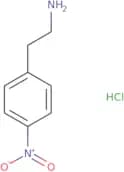
CAS:Controlled Product<p>Intermediate in the synthesis of mirabegron</p>Formula:C8H10N2O2·HClPurity:Min. 95%Color and Shape:Off-White PowderMolecular weight:202.64 g/mol5-Aminopyridine-3-carboxylic acid
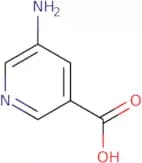
CAS:<p>5-Aminopyridine-3-carboxylic acid (5APC) is a structural analog of nicotinic acid that has been shown to have anti-inflammatory effects. 5APC inhibits the production of inflammatory cytokines, such as IL-10 and IL-17, by inhibiting the activation of NFκB and MAPK pathways. This drug also has significant inhibitory activities against dextran sulfate sodium (DSS)-induced acute colitis in experimental models. 5APC is thought to act by interrupting the assembly of p38 mitogen activated protein kinase (MAPK) and nuclear factor kappa B (NFκB) signaling complexes.</p>Formula:C6H6N2O2Purity:Min. 95%Molecular weight:138.12 g/molGLP-2 (1-33) (human) ammonium acetate salt
CAS:<p>Please enquire for more information about GLP-2 (1-33) (human) ammonium acetate salt including the price, delivery time and more detailed product information at the technical inquiry form on this page</p>Formula:C165H254N44O55SPurity:Min. 95%Molecular weight:3,766.11 g/mol4-Aminophenethyl alcohol
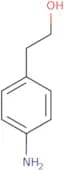
CAS:<p>4-Aminophenethyl alcohol is a monosubstituted, basic compound that is used in the laboratory as a cell culture medium supplement to promote growth of fibroblasts. This compound has been shown to stimulate human intestinal cells and human peripheral blood mononuclear cells. 4-Aminophenethyl alcohol acts as a hydroxyl group donor, which may be due to its ability to form hydrogen ions when reacted with sodium hydroxide solution. The reaction of this compound with diazonium salt produces an intermediate, which can be hydrolyzed by the addition of sodium hydroxide solution. The resultant chloride ion reacts with the aminophenethyldihydroxylamine (APDA) moiety to produce APDCl. This product has been shown to increase the population growth rate of fibroblasts in culture by causing DNA synthesis and protein synthesis. Linear regression analysis revealed that there was no statistically significant difference between the control and experimental groups for either DNA</p>Formula:C8H11NOPurity:Min. 95%Molecular weight:137.18 g/mol1-Aminoadamantane sulphate
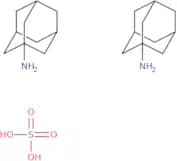
CAS:Controlled Product<p>1-Aminoadamantane sulphate is a drug that has been used for the treatment of autoimmune diseases, such as multiple sclerosis and chronic inflammatory demyelinating polyneuropathy. It inhibits Na channels in nerves and therefore blocks the transmission of nerve impulses. 1-Aminoadamantane sulphate has also shown to inhibit amyloid protein formation, which is associated with Alzheimer's disease. This drug binds to an adenine nucleotide and inhibits the transport of hydrogen fluoride into cells. The drug also has anti-viral properties. 1-Aminoadamantane sulphate is able to bind to calcium ions and prevent the binding of viruses to cells by interfering with their ability to attach themselves to the cell surface.</p>Color and Shape:White Off-White PowderMolecular weight:400.58 g/moltert-Butyl 2-amino-6,7-dihydrothiazolo[5,4-c]pyridine-5(4H)-carboxylate
CAS:<p>Please enquire for more information about tert-Butyl 2-amino-6,7-dihydrothiazolo[5,4-c]pyridine-5(4H)-carboxylate including the price, delivery time and more detailed product information at the technical inquiry form on this page</p>Purity:Min. 95%Fmoc-(3S,4S)-4-amino-3-hydroxy-6-methylheptanoic acid
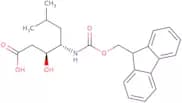
CAS:<p>Fmoc-(3S,4S)-4-amino-3-hydroxy-6-methylheptanoic acid is a pharmacokinetic drug that is under investigation for prostate cancer. It has been shown to inhibit the growth of prostate carcinoma cells and reduce the expression of prostate specific antigen (PSA) in vivo. Fmoc-(3S,4S)-4-amino-3-hydroxy-6-methylheptanoic acid has also been used in bioconjugate chemistry to produce a prodrug that can be taken orally. This prodrug is activated by viral proteases in the stomach, leading to an increase in cytotoxicity against HIV virus and other retroviruses. Fmoc-(3S,4S)-4-amino-3-hydroxy-6-methylheptanoic acid has also been shown to inhibit the production of human serum erythropoietin (EPO).</p>Formula:C23H27NO5Purity:Min. 95%Color and Shape:White To Off-White SolidMolecular weight:397.46 g/mol4-Aminostyrene
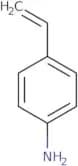
CAS:<p>4-Aminostyrene is a chemical compound that belongs to the class of ethylene diamines. It is a photoelectron acceptor and can be used as a cross-linking agent. 4-Aminostyrene reacts with nitro groups to form polycarboxylic acid amines, which are used in the preparation of model proteins. The use of 4-aminostyrene is limited by its high reactivity with oxygen and light, which leads to degradation.</p>Formula:C8H9NPurity:Min. 95%Color and Shape:Liquid.Molecular weight:119.16 g/molPyrithiamine
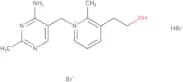
CAS:<p>Pyrithiamine is an antimicrobial agent that inhibits the growth of bacteria by disrupting the disulfide bond between two cysteine residues. It has been shown to inhibit the formation of bacterial spores, which are resistant to many antibiotics. Pyrithiamine also has antioxidant properties and can reduce oxidative stress in neurons, leading to neuronal death. This drug also has a strong effect on energy metabolism and may be used as a treatment for mitochondrial diseases.</p>Formula:C14H20Br2N4OPurity:Min. 95%Molecular weight:420.14 g/mol2-Amino-5-methylpyridine
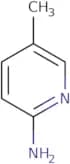
CAS:<p>2-Amino-5-methylpyridine is a chemical compound that belongs to the group of methyl ketones. It has a nitrogen atom and an oxygen atom in its structure, which allows it to form hydrogen bonds with other molecules. 2-Amino-5-methylpyridine can be obtained by reacting hydrochloric acid and xanthone in the presence of a base. The compound is highly reactive and has been shown to have antiinflammatory properties. This can be attributed to its ability to inhibit prostaglandin synthesis. 2-Amino-5-methylpyridine also has fluorescence properties that are sensitive to pH changes and can be used as a probe for metal ions.<br>2-Amino-5-methylpyridine is an organic compound that contains a methyl group, two nitrogen atoms, and one oxygen atom in its chemical structure. This molecule can form hydrogen bonds with other molecules due to its nitrogen atoms and oxygen atom,</p>Formula:C6H8N2Purity:Min. 95%Color and Shape:PowderMolecular weight:108.14 g/mol



![tert-Butyl 2-amino-6,7-dihydrothiazolo[5,4-c]pyridine-5(4H)-carboxylate](/_next/image/?url=https%3A%2Fstatic.cymitquimica.com%2Fproducts%2F3D%2Fthumb-webp%2FFB143127.webp&w=3840&q=75)