Amines
Subcategories of "Amines"
- Nitrosamines(3,126 products)
- Primary Amines(30,967 products)
- Quaternary Ammonium Cations and Salts(1,110 products)
- Secondary Amines(20,913 products)
- Tertiary Amines(17,219 products)
Found 8795 products of "Amines"
rel-[(1R,2R)-2-(Aminomethyl)cyclobutyl]methylamine
CAS:Controlled ProductFormula:C6H14N2Color and Shape:NeatMolecular weight:114.1896-Amino-1,3-dimethyl-5-nitrosouracil
CAS:Controlled ProductApplications 6-Amino-1,3-dimethyl-5-nitrosouracil (cas# 3346-61-0) is a compound useful in organic synthesis.
References Varma, R., et al.: J. Ocular Pharmacol. Ther., 16, 571 (2000),Formula:C6H8N4O3Color and Shape:NeatMolecular weight:184.153-Azidopropan-1-amine Hydrochloride Salt
CAS:Controlled ProductApplications 3-AZIDOPROPAN-1-AMINE (cas# 88192-19-2) is a useful research chemical.
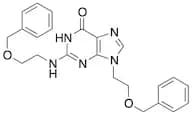
Formula:C3H8N4·HClColor and Shape:NeatMolecular weight:136.589-(2-(Benzyloxy)ethyl)-2-((2-(benzyloxy)ethyl)amino)-1H-purin-6-(9H)-one
Controlled ProductApplications 9-(2-(Benzyloxy)ethyl)-2-((2-(benzyloxy)ethyl)amino)-1H-purin-6-(9H)-one is an intermediate used in the synthesis of 9-(2-Hydroxyethyl)guanine (H942035), which is an impurity of the antiviral agent Acyclovir (A192400). 9-(2-Hydroxyethyl)guanine is a nucleoside phosphotransferase acceptor.
References Kamimura, A. et al.: Agric. Biol. Chem., 37, 2037 (1973);Formula:C23H25N5O3Color and Shape:NeatMolecular weight:419.4765-Phenyl-1,2,4-triazin-3-amine
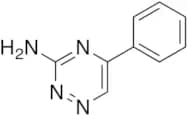
CAS:Controlled ProductApplications 5-PHENYL-1,2,4-TRIAZIN-3-AMINE (cas# 942-60-9) is a useful research chemical.
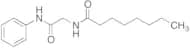
Formula:C9H8N4Color and Shape:Light YellowMolecular weight:172.18N-(2-Oxo-2-(phenylamino)ethyl)octanamide
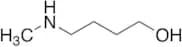
CAS:Controlled ProductFormula:C16H24N2O2Color and Shape:NeatMolecular weight:276.3744-(Methylamino)butan-1-ol
CAS:Controlled ProductFormula:C5H13NOColor and Shape:NeatMolecular weight:103.1632-(4-fluorophenyl)-n-methylethanamine
CAS:Controlled ProductPlease enquire for more information about 2-(4-fluorophenyl)-n-methylethanamine including the price, delivery time and more detailed product information at the technical inquiry form on this page
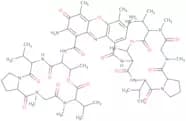
Formula:C9H12FNPurity:Min. 95%Molecular weight:153.2 g/mol7-Aminoactinomycin D
CAS:7-Aminoactinomycin D is a fluorescent DNA dye that is commonly used for the detection or exclusion of non-viable cells in flow cytometric analysis, as it is generally excluded by live cellsFormula:C62H87N13O16Purity:Min. 95%Molecular weight:1,270.43 g/mol[2-(1-Isobutyl-1H-benzimidazol-2-yl)ethyl]amine dihydrochloride
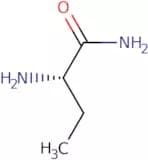
CAS:Controlled ProductPlease enquire for more information about [2-(1-Isobutyl-1H-benzimidazol-2-yl)ethyl]amine dihydrochloride including the price, delivery time and more detailed product information at the technical inquiry form on this pageFormula:C13H19N3Purity:Min. 95%Molecular weight:217.31 g/molL-2-Aminobutanamide
CAS:L-2-Aminobutanamide is a compound that is used as an industrial preparation and as a reagent in kinetic studies. It has been shown to be effective in the analytical method for the determination of hydrochloric acid in titration, with a detection limit of 0.1%. L-2-Aminobutanamide can also be used to produce asymmetric synthesis by adding it with sodium hydroxide solution or hydroxide solution and using chromatographic science. This compound has been shown to have antibacterial effects on Brucella, which can be attributed to its ability to inhibit protein synthesis and disrupt cell membrane integrity. L-2-Aminobutanamide is a chiral compound that can exist in two different forms, L -(+)-2-aminobutanamide or D -(-)-2-aminobutanamide.
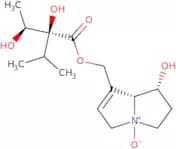
Formula:C4H10N2OPurity:Min. 95%Molecular weight:102.14 g/molLycopsamine N-oxide
CAS:Lycopsamine N-oxide is a pyrrolizidine alkaloid derivative, which is a naturally occurring compound found in certain plant species, particularly within the Boraginaceae family. This compound is typically produced as a secondary metabolite in these plants. Its mode of action involves metabolic activation in the liver, where enzymes convert it into reactive intermediates capable of binding to cellular macromolecules, ultimately leading to toxic effects.
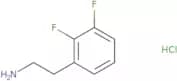
Formula:C15H25NO6Purity:Min. 95%Molecular weight:315.36 g/mol2-(2,3-Difluorophenyl)ethan-1-amine hydrochloride
CAS:Controlled ProductPlease enquire for more information about 2-(2,3-Difluorophenyl)ethan-1-amine hydrochloride including the price, delivery time and more detailed product information at the technical inquiry form on this pageFormula:C8H10ClF2NPurity:Min. 95%Molecular weight:193.62 g/mol3-Amino-1-diphenylmethylazetidine
CAS:3-Amino-1-diphenylmethylazetidine (3ADM) is a dopaminergic antagonist that binds to the D4 receptor. This compound has been shown to have affinity for the D4 receptor and can inhibit the binding of dopamine to its receptors, thereby blocking its effects. 3ADM is a potent antagonist of the dopaminergic system and has been shown to be effective in animal models.
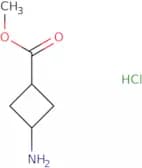
Formula:C16H18N2Purity:Min. 95%Molecular weight:238.33 g/mol(1S,3S)-Methyl 3-aminocyclobutane carboxylate hydrochloride
CAS:Please enquire for more information about (1S,3S)-Methyl 3-aminocyclobutane carboxylate hydrochloride including the price, delivery time and more detailed product information at the technical inquiry form on this page
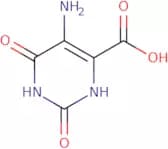
Formula:C6H12ClNO2Purity:Min. 95%Molecular weight:165.62 g/mol5-Aminoorotic acid
CAS:5-Aminoorotic acid is an antimicrobial agent that has been shown to have anticancer activity. It has a nitrogen atom and two oxygen atoms in the molecule. The chemical structure of 5-aminoorotic acid can be determined using NMR spectroscopy and its biological properties are dependent on hydrogen bonding interactions with other molecules. 5-Aminoorotic acid is a chelate ring, which means it can bind to metal ions such as lanthanum (La3+). 5-Aminoorotic acid has been shown to inhibit the glycol oxidation reaction and may also be able to inhibit other enzymatic reactions. This drug is stable for use in model systems and may also be used for cancer treatment.
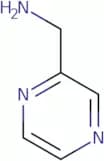
Formula:C5H5N3O4Purity:Min. 95%Molecular weight:171.11 g/mol2-Aminomethylpyrazine
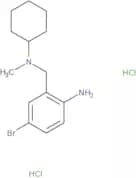
CAS:2-Aminomethylpyrazine (2-AP) is a molecule that has been studied for its potential as an anti-cancer agent. It has been shown to bind to the DNA of tumor cells and prevent them from dividing, leading to cell death. 2-AP also prevents the production of survivin, which is a protein that promotes cancer cell growth and survival. 2-AP can be used in positron emission tomography (PET) scans to detect tumors, and has shown promise in treating acute myeloid leukemia.Formula:C5H7N3Purity:Min. 95%Molecular weight:109.13 g/mol2-Amino-5-bromo-N-cyclohexyl-N-methylbenzylamine dihydrochloride
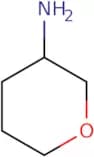
CAS:Please enquire for more information about 2-Amino-5-bromo-N-cyclohexyl-N-methylbenzylamine dihydrochloride including the price, delivery time and more detailed product information at the technical inquiry form on this pageFormula:C14H23BrCl2N2Purity:Min. 95%Color and Shape:PowderMolecular weight:370.16 g/molTetrahydropyran-3-ylamine
CAS:Tetrahydropyran-3-ylamine is a potent and selective inhibitor of dipeptidyl peptidase IV (DPP-IV), an enzyme that plays an important role in the metabolism of proteins. Tetrahydropyran-3-ylamine is used for the treatment of type 2 diabetes and other metabolic disorders. This compound has been shown to inhibit DPP-IV activity in human plasma and in vitro, with IC50 values of 0.6 μM and 0.2 μM respectively. Tetrahydropyran-3-ylamine also inhibits the production of amyloid β peptides, which are associated with Alzheimer's disease. Tetrahydropyran-3-ylamine is orally active and stable at acidic pH levels, making it suitable for oral administration. It has a high degree of crystallinity, with the crystalline substance being thermally stable up to 200°C. TetrahydropyrFormula:C5H11NOPurity:Min. 95%Molecular weight:101.15 g/mol1,5-Bis(4-allyldimethylammoniumphenyl)pentan-3-one, dibromide
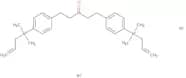
CAS:1,5-Bis(4-allyldimethylammoniumphenyl)pentan-3-one, dibromide is a reversible inhibitor of acetylcholinesterase. It has been shown to inhibit the enzyme activity in vitro and in vivo. 1,5-Bis(4-allyldimethylammoniumphenyl)pentan-3-one, dibromide has been shown to be an effective inhibitor of nicotinic acetylcholine receptors in model organisms such as Xenopus oocytes and Acetylcholine esterase activated rat pheochromocytoma cells. The molecule also inhibits the phosphorylation of pnitrophenyl phosphate by choline kinase. This inhibiting effect on choline kinase leads to a decrease in the concentration of choline available for neurotransmitter synthesis. Monoclonal antibodies against acetylcholinesterase are used to detect thisFormula:C27H38Br2N2OPurity:Min. 95%Molecular weight:566.41 g/mol
![rel-[(1R,2R)-2-(Aminomethyl)cyclobutyl]methylamine](/_next/image/?url=https%3A%2Fstatic.cymitquimica.com%2Fproducts%2FTR%2Fthumb-webp%2FA365730.webp&w=3840&q=75)





![[2-(1-Isobutyl-1H-benzimidazol-2-yl)ethyl]amine dihydrochloride](/_next/image/?url=https%3A%2Fstatic.cymitquimica.com%2Fproducts%2F3D%2Fthumb-webp%2FFI135795.webp&w=3840&q=75)