Amines
Amines are a set of molecules containing an amino functional group (derived from ammonia). This category includes amines at any level of substitution : primary, secondary, tertiary, and ammonium salts. Amines are fundamental in organic synthesis and are widely used in pharmaceuticals, agrochemicals, and materials science. At CymitQuimica, we provide a comprehensive selection of amines to meet your research and industrial needs. Our range ensures access to various amines for diverse chemical processes and innovative research.
Subcategories of "Amines"
- Nitrosamines(2,606 products)
- Primary Amines(30,805 products)
- Quaternary Ammonium Cations and Salts(1,099 products)
- Secondary Amines(20,809 products)
- Tertiary Amines(17,111 products)
Found 8777 products of "Amines"
Sort by
Purity (%)
0
100
|
0
|
50
|
90
|
95
|
100
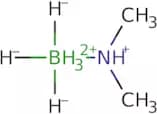
Borane dimethylamine complex
CAS:<p>Please enquire for more information about Borane dimethylamine complex including the price, delivery time and more detailed product information at the technical inquiry form on this page</p>Formula:C2H10BNPurity:Min. 95%Color and Shape:White Clear LiquidMolecular weight:58.92 g/molN-Methoxymethyl-N-(trimethylsilylmethyl)benzylamine
CAS:<p>N-Methoxymethyl-N-(trimethylsilylmethyl)benzylamine is a chiral, electron deficient reagent that reacts with aldehydes and boronic esters to form products with high chemical yields. This compound can be used as a catalyst for acylation reactions, such as the synthesis of p-nitrophenol. N-Methoxymethyl-N-(trimethylsilylmethyl)benzylamine is synthesized by the reaction of trifluoroacetic acid and an amine, followed by chloroformate displacement. The product is then reacted with acylating agents in the presence of catalysts.</p>Formula:C13H23NOSiPurity:Min. 95%Color and Shape:Clear Colourless To Pale Yellow LiquidMolecular weight:237.41 g/mol4-Nitrophenethylamine
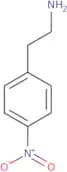
CAS:Controlled Product<p>4-Nitrophenethylamine is a synthetic chemical that is used as an antigen to raise antibodies. It is used in the detection of chemical substances that are associated with the production of histamine and acetylcholine. This chemical has been shown to inhibit the reaction between nitro and acylation, which can lead to the formation of carcinogenic nitrosamines. 4-Nitrophenethylamine also has an inhibitory effect on oxidases and amines, which are enzymes found in cells. This chemical binds to amide groups in proteins and inhibits their activity.</p>Formula:C8H10N2O2Purity:Min. 95%Color and Shape:LiquidMolecular weight:166.18 g/mol2-[4-(Diethylamino)-2-hydroxybenzoyl]benzoic acid hexyl ester
CAS:<p>2-[4-(Diethylamino)-2-hydroxybenzoyl]benzoic acid hexyl ester is a sunscreen agent that has been shown to be effective against the formation of skin cancer. This compound is a white powder that can be used as a cream or lotion and is typically applied to the skin before going out in the sun. 2-[4-(Diethylamino)-2-hydroxybenzoyl]benzoic acid hexyl ester absorbs ultraviolet radiation, preventing it from penetrating the skin and causing damage. The compound also acts as an antioxidant, protecting cells from oxidative stress.</p>Formula:C24H31NO4Purity:Min. 95%Color and Shape:PowderMolecular weight:397.51 g/mol2-Chloro-N-[2-(diethylamino)ethyl]-4-quinolinecarboxamide
CAS:<p>2-Chloro-N-[2-(diethylamino)ethyl]-4-quinolinecarboxamide is a carboxamide analog of dibucaine. It is synthesized from chloroacetyl chloride and isatin in the presence of sodium hydroxide. The synthesis has been scaled to an industrial level. 2-Chloro-N-[2-(diethylamino)ethyl]-4-quinolinecarboxamide has been shown to have analgesic properties, similar to those of dibucaine. Radiolysis of this compound gives a carboxylic acid and a heterocyclic ring product.</p>Formula:C16H20ClN3OPurity:95%MinColor and Shape:PowderMolecular weight:305.8 g/mol4-Amino-5-methoxy-2-methylbenzenesulfonic acid
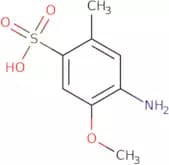
CAS:<p>4-Amino-5-methoxy-2-methylbenzenesulfonic acid is a compound that has been used as an additive to analytical reagents in order to improve their sensitivity. This compound is used as the sodium salt, which is water soluble and has a high degree of reproducibility. 4-Amino-5-methoxy-2-methylbenzenesulfonic acid has also been used for the validation of analytical methods, including calibration and cytotoxicity testing. The validation procedure includes colorants, spectra analysis, impurities, and solvents.</p>Formula:C8H11NO4SPurity:Min. 95%Color and Shape:PowderMolecular weight:217.24 g/molN,N'-Dibenzylethylenediamine diacetate
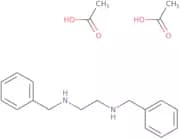
CAS:Controlled Product<p>N,N'-Dibenzylethylenediamine diacetate is a diagnostic agent that is used to detect penicillin in blood samples. It reacts with the drug by forming a red-colored product, which can be detected with an ultraviolet light. This reaction is inhibited by cefapirin sodium and benzathine. The detection of penicillin in maternal blood has been shown to be significantly higher during the first trimester of pregnancy than during any other time period. Penicillin has also been shown to be effective against syphilis and streptococcal pharyngitis (strep throat), although it is not recommended for treatment trials because of its tendency to cause allergic reactions.</p>Formula:C16H20N2•(C2H4O2)2Purity:Min. 95%Molecular weight:360.45 g/mol2-[(5-Chloropyridin-2-yl)amino]-2-oxoacetic acid ethyl ester monohydrochloride
CAS:<p>Intermediate in the synthesis of edoxaban</p>Formula:C9H9ClN2O3·HClPurity:Min. 95%Molecular weight:265.09 g/molEthyl 4-amino-2-mercaptopyrimidine-5-carboxylate
CAS:<p>Please enquire for more information about Ethyl 4-amino-2-mercaptopyrimidine-5-carboxylate including the price, delivery time and more detailed product information at the technical inquiry form on this page</p>Formula:C7H9N3O2SPurity:Min. 95%Molecular weight:199.23 g/molAmyloid β-Protein (17-40) ammonium salt
CAS:<p>Please enquire for more information about Amyloid beta-Protein (17-40) ammonium salt including the price, delivery time and more detailed product information at the technical inquiry form on this page</p>Formula:C110H178N26O31SPurity:Min. 95%Molecular weight:2,392.81 g/molN'-Nitrosopentyl-(3-picolyl)amine
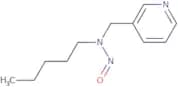
CAS:<p>N'-Nitrosopentyl-(3-picolyl)amine is a research chemical that can be used as a reaction component, reagent, or intermediate. It is a high quality and versatile building block for the synthesis of complex compounds. N'-Nitrosopentyl-(3-picolyl)amine has been shown to be useful as an intermediate in the synthesis of drugs such as pentoxifylline and lodoxamide, which are used to treat respiratory diseases. This chemical is also used to synthesize other compounds that have speciality applications such as pharmaceuticals and rubber additives.</p>Formula:C11H17N3OPurity:Min. 95%Color and Shape:Off-White To Yellow LiquidMolecular weight:207.27 g/mol5-tert-Butyl-1,3,4-oxadiazol-2-amine
CAS:<p>Please enquire for more information about 5-tert-Butyl-1,3,4-oxadiazol-2-amine including the price, delivery time and more detailed product information at the technical inquiry form on this page</p>Formula:C6H11N3OPurity:Min. 95%Molecular weight:141.17 g/mol7-Diethylamino-4-methylcoumarin
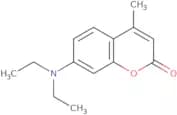
CAS:<p>7-Diethylamino-4-methylcoumarin is a fluorescence probe that can be used in applications such as the study of hydrogen bonding interactions. It is excited by laser light and emits a red-shifted fluorescent light. 7-Diethylamino-4-methylcoumarin is a hydroxyl group analogue of coumarin, which has been shown to have physiological effects on the liver cells. The absorption spectrum of 7-Diethylamino-4-methylcoumarin is sensitive to changes in pH and chemical stability. A decrease in pH increases the intensity of the emission while an increase in pH decreases the intensity of the emission. This compound can also be used to label nucleic acids during polymerase chain reactions (PCR) or for sample preparation before analysis using nuclear magnetic resonance spectroscopy (NMR).</p>Formula:C14H17NO2Purity:Min. 98 Area-%Color and Shape:PowderMolecular weight:231.29 g/molMethyl 2,3-diamino-5-bromobenzoate
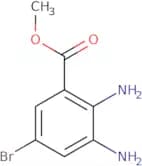
CAS:<p>Please enquire for more information about Methyl 2,3-diamino-5-bromobenzoate including the price, delivery time and more detailed product information at the technical inquiry form on this page</p>Formula:C8H9BrN2O2Purity:Min. 95%Molecular weight:245.07 g/mol2-Amino-5-methoxypyridine
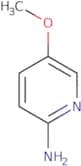
CAS:<p>2-Amino-5-methoxypyridine (2AM5MP) is a synthetic compound that is used to study the nicotinic acetylcholine receptor. It has been shown that 2AM5MP can be used as an agonist for the nicotinic acetylcholine receptor, which may be due to its ability to act as a substrate for amine oxidase. This compound has been shown to have anti-cancer properties and fluoresce when exposed to positron emission tomography (PET) scans. The anti-cancer effects of 2AM5MP are thought to be due to its ability to inhibit cancer cell proliferation and induce cancer cell apoptosis.</p>Formula:C6H8N2OPurity:Min. 95%Molecular weight:124.14 g/molTritylamine
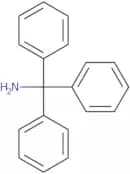
CAS:<p>Tritylamine is an inorganic acid that is synthesized by the reaction of trifluoroacetic acid with ammonia. It can be used to treat autoimmune diseases, such as rheumatoid arthritis, and has been shown to have a beneficial effect on collagen synthesis. Tritylamine has also been studied as a fluorescent probe for the detection of metal ions in biological systems. Tritylamine has been used in asymmetric synthesis and can also inhibit enzymes that catalyze metabolic reactions.</p>Formula:C19H17NPurity:Min. 98 Area-%Color and Shape:White PowderMolecular weight:259.35 g/mol1,6-Diaminohexane dihydrochloride
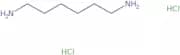
CAS:<p>1,6-Diaminohexane dihydrochloride is a chemical that is used in the analytical method for the determination of p-hydroxybenzoic acid. It has also been used to measure fatty acids and anhydrous sodium. The sample preparation required for this chemical includes mixing with water and adding hydroxyl groups. A toxicological study on 1,6-diaminohexane dihydrochloride shows that it has no acute toxicity in rats. However, it does show some signs of toxicity in rabbits and dogs at high doses. Amine compounds are usually very reactive due to the presence of a lone electron pair on nitrogen.</p>Formula:C6H18Cl2N2Purity:Min. 95%Molecular weight:189.13 g/mol(R,S)-α-Amino-3-hydroxy-5-methyl-4-isoxazolepropionic acid hydrobromide
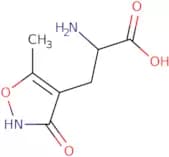
CAS:<p>(R,S)-AMPA is a synthetic analog of the excitatory neurotransmitter glutamate, specifically designed to activate AMPA receptors, a subtype of ionotropic glutamate receptors. These receptors are pivotal in mediating fast synaptic transmission in the central nervous system. (R,S)-AMPA serves as a prototypical agonist for AMPA receptors, facilitating the study of receptor function and synaptic plasticity.</p>Formula:C7H10N2O4•HBrPurity:Min. 95%Molecular weight:267.08 g/molAmmonium isothiocyanate
CAS:<p>Ammonium thiocyanate is a natural compound that is found in the blood of humans and animals. It binds to an antigen-binding molecule and has been shown to be effective against infectious diseases. Ammonium thiocyanate is toxic, so it should only be administered as a last resort for treatment. The toxicity of ammonium thiocyanate can be reduced by complexing with copper chloride or zirconium oxide. Ammonium thiocyanate has also been shown to have high redox potentials, which are indicative of its ability to donate electrons. These properties make ammonium thiocyanate an ideal candidate for use in electrochemical impedance spectroscopy experiments.</p>Formula:CH4N2SPurity:Min. 95%Color and Shape:PowderMolecular weight:76.12 g/molMca-(Asn670,Leu671)-Amyloid β/A4 Protein Precursor770 (667-675)-Lys(Dnp) ammonium acetate salt
CAS:<p>Please enquire for more information about Mca-(Asn670,Leu671)-Amyloid beta/A4 Protein Precursor770 (667-675)-Lys(Dnp) ammonium acetate salt including the price, delivery time and more detailed product information at the technical inquiry form on this page</p>Formula:C68H88N14O27Purity:Min. 95%Molecular weight:1,533.5 g/mol


![2-[4-(Diethylamino)-2-hydroxybenzoyl]benzoic acid hexyl ester](/_next/image/?url=https%3A%2Fstatic.cymitquimica.com%2Fproducts%2F3D%2Fthumb-webp%2FFD161840.webp&w=3840&q=75)
![2-Chloro-N-[2-(diethylamino)ethyl]-4-quinolinecarboxamide](/_next/image/?url=https%3A%2Fstatic.cymitquimica.com%2Fproducts%2F3D%2Fthumb-webp%2FFC20289.webp&w=3840&q=75)
![2-[(5-Chloropyridin-2-yl)amino]-2-oxoacetic acid ethyl ester monohydrochloride](/_next/image/?url=https%3A%2Fstatic.cymitquimica.com%2Fproducts%2F3D%2Fthumb-webp%2FFC63138.webp&w=3840&q=75)