Amines
Amines are a set of molecules containing an amino functional group (derived from ammonia). This category includes amines at any level of substitution : primary, secondary, tertiary, and ammonium salts. Amines are fundamental in organic synthesis and are widely used in pharmaceuticals, agrochemicals, and materials science. At CymitQuimica, we provide a comprehensive selection of amines to meet your research and industrial needs. Our range ensures access to various amines for diverse chemical processes and innovative research.
Subcategories of "Amines"
- Nitrosamines(2,605 products)
- Primary Amines(30,821 products)
- Quaternary Ammonium Cations and Salts(1,099 products)
- Secondary Amines(20,817 products)
- Tertiary Amines(17,117 products)
Found 8778 products of "Amines"
Sort by
Purity (%)
0
100
|
0
|
50
|
90
|
95
|
100
4-(2',4'-Dimethoxyphenyl-Fmoc-aminomethyl)-phenoxymethyl-polystyrene resin (200-400 mesh)
<p>Please enquire for more information about 4-(2',4'-Dimethoxyphenyl-Fmoc-aminomethyl)-phenoxymethyl-polystyrene resin (200-400 mesh) including the price, delivery time and more detailed product information at the technical inquiry form on this page</p>Purity:Min. 95%(3R)-3-[(tert-Butoxycarbonyl)amino]-4-(2,4-difluorophenyl)butanoic acid
CAS:<p>Please enquire for more information about (3R)-3-[(tert-Butoxycarbonyl)amino]-4-(2,4-difluorophenyl)butanoic acid including the price, delivery time and more detailed product information at the technical inquiry form on this page</p>Formula:C15H19F2NO4Purity:Min. 95%Molecular weight:315.31 g/mol2-[4-(Diethylamino)-2-hydroxybenzoyl]benzoic acid hexyl ester
CAS:<p>2-[4-(Diethylamino)-2-hydroxybenzoyl]benzoic acid hexyl ester is a sunscreen agent that has been shown to be effective against the formation of skin cancer. This compound is a white powder that can be used as a cream or lotion and is typically applied to the skin before going out in the sun. 2-[4-(Diethylamino)-2-hydroxybenzoyl]benzoic acid hexyl ester absorbs ultraviolet radiation, preventing it from penetrating the skin and causing damage. The compound also acts as an antioxidant, protecting cells from oxidative stress.</p>Formula:C24H31NO4Purity:Min. 95%Color and Shape:PowderMolecular weight:397.51 g/mol2-Chloro-N-[2-(diethylamino)ethyl]-4-quinolinecarboxamide
CAS:<p>2-Chloro-N-[2-(diethylamino)ethyl]-4-quinolinecarboxamide is a carboxamide analog of dibucaine. It is synthesized from chloroacetyl chloride and isatin in the presence of sodium hydroxide. The synthesis has been scaled to an industrial level. 2-Chloro-N-[2-(diethylamino)ethyl]-4-quinolinecarboxamide has been shown to have analgesic properties, similar to those of dibucaine. Radiolysis of this compound gives a carboxylic acid and a heterocyclic ring product.</p>Formula:C16H20ClN3OPurity:95%MinColor and Shape:PowderMolecular weight:305.8 g/mol6-Aminochrysene
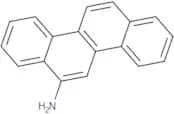
CAS:<p>Inhibitor of benzopyrene metabolism</p>Formula:C18H13NPurity:Min. 95%Color and Shape:Slightly Yellow PowderMolecular weight:243.3 g/molMidodrine
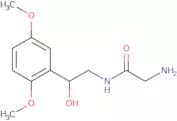
CAS:Controlled Product<p>2-Amino-N-[2-(2,5-dimethoxyphenyl)-2-hydroxyethyl]-acetamide is a drug that has been used to treat a variety of diseases and conditions. It is an alpha adrenergic agonist that works by stimulating the alpha receptors in the body, which increase blood pressure and improve blood flow. This drug also has significant effects on energy metabolism, including the production of ATP. 2-Amino-N-[2-(2,5-dimethoxyphenyl)-2-hydroxyethyl]-acetamide is used to treat patients with congestive heart failure who are taking low doses of midodrine hydrochloride or nonsteroidal antiinflammatory drugs.</p>Formula:C12H18N2O4Purity:Min. 95%Color and Shape:PowderMolecular weight:254.28 g/moltrans-1,2-Diaminocyclohexane-N,N,N',N'-tetraacetic acid monohydrate
CAS:<p>Trans-1,2-Diaminocyclohexane-N,N,N',N'-tetraacetic acid monohydrate (CDTA) is a chelating agent that has been shown to be effective in the treatment of some cancers. CDTA has been shown to inhibit the growth of tumor cells by binding to lysine residues on histones and DNA and inhibiting their acetylation. CDTA also prevents the genotoxicity induced by irradiation. CDTA can be used as an adjuvant in cancer therapy due to its ability to inhibit histone deacetylase activity. Trans-1,2-Diaminocyclohexane-N,N,N',N'-tetraacetic acid monohydrate is synthesized from two amino acids: lysine and glutamic acid. This molecule is a polymeric compound composed of cyclic molecules linked together through amide bonds. These polymers are linear chains of</p>Formula:C14H22N2O8·H2OColor and Shape:White PowderMolecular weight:364.35 g/mol2-Amino-5,6-dihydro-4H-benzothiazol-7-one
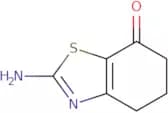
CAS:<p>2-Amino-5,6-dihydro-4H-benzothiazol-7-one is a thiourea that is used as a reactant in the synthesis of brominated compounds. It reacts with ethanol to form 2,5,6-triaminopyrimidine and hydrogen bromide. This reaction occurs in the presence of acid such as hydrochloric acid or acetic acid. The reflux reaction is commonly conducted at elevated temperatures and pressures.</p>Purity:Min. 95%(2-Methoxypropyl)amine hydrochloride
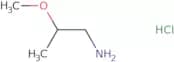
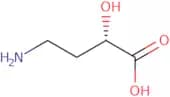
CAS:<p>2-Methoxypropyl)amine hydrochloride (2MPPA) is a versatile building block that can be used in the synthesis of complex compounds. It is a research chemical that is used as a reagent and as a speciality chemical for the production of pharmaceuticals, agrochemicals, and other organic chemicals. 2MPPA can be used as an intermediate in the manufacture of useful scaffolds or useful reaction components. This product has CAS number 70807-90-8 and is of high quality.</p>Formula:C4H11NO·HClPurity:Min. 95%Color and Shape:SolidMolecular weight:125.6 g/mol(S)-(-)-4-Amino-2-hydroxybutyric acid
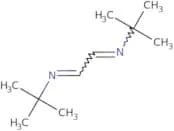
CAS:<p>(S)-(-)-4-Amino-2-hydroxybutyric acid is an antibacterial agent that binds to the bacterial ribosome and prevents protein synthesis. It has been shown to be active against a range of bacteria, including Mycobacterium tuberculosis, Salmonella typhimurium, Staphylococcus aureus, and Streptococcus pyogenes. (S)-(-)-4-Amino-2-hydroxybutyric acid is also used in the analytical determination of other substances such as trifluoroacetic acid and malic acid. The pH optimum for this compound's activity is between 6.5 and 8.5.</p>Formula:C4H9NO3Purity:Min. 95%Color and Shape:White To Yellow SolidMolecular weight:119.12 g/molN,N'-Ethane-1,2-diylidenebis(2-methylpropan-2-amine)
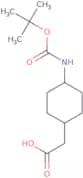
CAS:<p>Please enquire for more information about N,N'-Ethane-1,2-diylidenebis(2-methylpropan-2-amine) including the price, delivery time and more detailed product information at the technical inquiry form on this page</p>Formula:C10H20N2Purity:Min. 95%Color and Shape:PowderMolecular weight:168.28 g/molBoc-trans-4-aminocyclohexane acetic acid
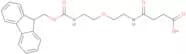
CAS:<p>Please enquire for more information about Boc-trans-4-aminocyclohexane acetic acid including the price, delivery time and more detailed product information at the technical inquiry form on this page</p>Formula:C13H23NO4Molecular weight:257.33 g/molN-(Fmoc-5-amino-3-oxa-pentyl)succinamic acid
CAS:<p>N-(Fmoc-5-amino-3-oxa-pentyl)succinamic acid is a high quality chemical that is used as an intermediate in the production of pharmaceuticals and other fine chemicals. It is also a reagent for use in peptide synthesis. N-(Fmoc-5-amino-3-oxa-pentyl)succinamic acid has a CAS No. 669073-62-5 and can be used as a useful scaffold for the production of complex compounds. This compound is also useful for research purposes, due to its versatility as a building block with speciality chemical applications.</p>Formula:C23H26N2O6Purity:Min. 95%Molecular weight:426.46 g/molAzido-PEG2-amine
CAS:<p>Azido-PEG2-amine is a PEG compound with two different functional groups (also known as heterobifunctional). Unlike homobifunctional PEG compounds (same functional group on both ends), this type of compounds are more versatile as have two different anchor points. Azido-PEG2-amine is used as a linker and spacer to add a PEG moiety, via pegylation (a bioconjugation technique) to proteins, peptides, oligonucleotides, small molecules and nanoparticles.</p>Formula:C6H14N4O2Purity:Min. 95%Color and Shape:Clear LiquidMolecular weight:174.2 g/molO-Bis(2-aminoethoxy)benzene
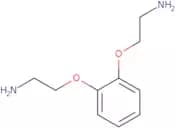
CAS:<p>O-Bis(2-aminoethoxy)benzene is a cyclic compound that has a predominantly thionyl character. It has an amide group, which is formed by the condensation of two carboxylic acids. O-Bis(2-aminoethoxy)benzene can act as a ligand for metal ions in the form of an anion or chloride ion, and it also interacts with neutral ligands. This compound can be used to prepare ferrocenyl derivatives through alkylation. The interaction between O-Bis(2-aminoethoxy)benzene and ferrocene was studied using voltammetry.</p>Formula:C10H16N2O2Purity:Min. 95%Molecular weight:196.25 g/mol4-Aminobutyrophenone
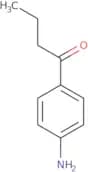
CAS:<p>4-Aminobutyrophenone is a butyrophenone, a nitro compound that is the amine derivative of 4-aminobutyric acid. This product is used as a control agent in pest control and as an intermediate for pharmaceuticals and dyes. It has been used to produce methemoglobin, which is used to treat nitrate poisoning. 4-Aminobutyrophenone undergoes acylation reactions with chloride or sulfoxide groups to form chlorohydrins and thiohydrins respectively. These products are bioisosteres of the carbonyl group, which can be hydrolyzed with acid or alkali to produce carboxylic acids or alcohols respectively. Friedel-Crafts acylation with phenol gives benzoylphenylhydroxylamine, which can be oxidized by hydrogen peroxide to give the corresponding nitro compound.</p>Formula:C10H13NOColor and Shape:PowderMolecular weight:163.22 g/molN-1-Z-1,6-diaminohexane·HCl
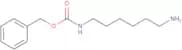
CAS:<p>Please enquire for more information about N-1-Z-1,6-diaminohexane·HCl including the price, delivery time and more detailed product information at the technical inquiry form on this page</p>Formula:C14H22N2O2·HClPurity:Min. 95%Molecular weight:286.8 g/mol4-Aminopicolinic acid
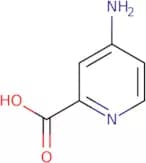
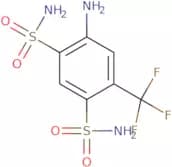
CAS:<p>4-Aminopicolinic acid is a synthetic amine that has been shown to activate plant science. 4-Aminopicolinic acid is a cyclic peptide with two subunits, one of which is 4-amino-3-pyridinecarboxylic acid. This compound has been synthesized from picolinic acid, an agriculturally important compound that is found in plant and animal tissues. The synthesis of 4-aminopicolinic acid involves the reaction of picolinic acid with nitrous oxide, followed by hydrolysis and oxidation to form the desired product. Hplc analyses have confirmed the presence of picolinic acid in extracts from various plants containing this compound.</p>Formula:C6H6N2O2Purity:Min. 95%Color and Shape:White To Beige Or Pink To Light Brown SolidMolecular weight:138.12 g/mol4-Amino-6-(trifluoromethyl)benzene-1,3-disulfonamide
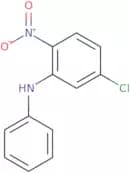
CAS:<p>4-Amino-6-(trifluoromethyl)benzene-1,3-disulfonamide (4AFBDS) is a chemical compound that can be used for the treatment of wastewater. It has shown to be effective against anhydrase, which is an enzyme that catalyzes the conversion of water to hydrogen peroxide and hydroxide ion. 4AFBDS also attenuates oxidative stress in cardiac cells and inhibits the production of active oxygen species by inhibiting the activity of carbonic anhydrase. The chromatographic method used to detect 4AFBDS was found to be more sensitive than a standard colorimetric assay, making it a better tool for detecting this compound in wastewater samples. br> br> br> br> br> This compound has been shown to have inhibitory effects on e3 ubiquitin ligase, which plays a role in protein degradation via aut</p>Formula:C7H8F3N3O4S2Purity:Min. 95%Molecular weight:319.28 g/mol5-Chloro-2-nitrodiphenylamine
CAS:<p>5-Chloro-2-nitrodiphenylamine is a synthetic dyestuff that belongs to the class of acridones. It can be used as an anti-epileptic drug, although it has not been approved for this use in any country. 5-Chloro-2-nitrodiphenylamine is manufactured by reacting a 6-carboxylic acid with an organic solvent and ammonolysis. This chemical is also known as 6'-chloroacridone and is used in the production of dyes and pigments. The manufacturing process produces impurities such as chloride, which must be removed by evaporation. Nitro groups are introduced during the manufacturing process to improve the dye's stability and color fastness under light exposure.</p>Formula:C12H9ClN2O2Purity:Min. 95%Color and Shape:Orange To Red SolidMolecular weight:248.66 g/mol


![(3R)-3-[(tert-Butoxycarbonyl)amino]-4-(2,4-difluorophenyl)butanoic acid](/_next/image/?url=https%3A%2Fstatic.cymitquimica.com%2Fproducts%2F3D%2Fthumb-webp%2FFB99243.webp&w=3840&q=75)
![2-[4-(Diethylamino)-2-hydroxybenzoyl]benzoic acid hexyl ester](/_next/image/?url=https%3A%2Fstatic.cymitquimica.com%2Fproducts%2F3D%2Fthumb-webp%2FFD161840.webp&w=3840&q=75)
![2-Chloro-N-[2-(diethylamino)ethyl]-4-quinolinecarboxamide](/_next/image/?url=https%3A%2Fstatic.cymitquimica.com%2Fproducts%2F3D%2Fthumb-webp%2FFC20289.webp&w=3840&q=75)