Amines
Amines are a set of molecules containing an amino functional group (derived from ammonia). This category includes amines at any level of substitution : primary, secondary, tertiary, and ammonium salts. Amines are fundamental in organic synthesis and are widely used in pharmaceuticals, agrochemicals, and materials science. At CymitQuimica, we provide a comprehensive selection of amines to meet your research and industrial needs. Our range ensures access to various amines for diverse chemical processes and innovative research.
Subcategories of "Amines"
- Nitrosamines(2,605 products)
- Primary Amines(30,821 products)
- Quaternary Ammonium Cations and Salts(1,099 products)
- Secondary Amines(20,817 products)
- Tertiary Amines(17,117 products)
Found 8778 products of "Amines"
Sort by
Purity (%)
0
100
|
0
|
50
|
90
|
95
|
100
Didecylamine
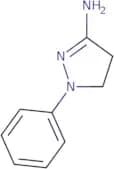
CAS:<p>Didecylamine is an amine that can be used as a cross-linking agent in the production of polyurethane foam. It is synthesized from acetaldehyde, which reacts with hydroxyl groups in the presence of sodium carbonate. The reaction product has a carbonyl group and two hydrochloric acid molecules. Didecylamine has been shown to have transport properties and is used in fatty acid synthesis. This compound also has liver cell toxicity and has been shown to cause cross-linking of human liver cells. Didecylamine binds to cationic surfactants, metal chelates, or multi-walled carbon particles by forming hydrogen bonds with their amines. It also undergoes frequency shifts and can be used as an amine reactant for the production of polyurethane foam due to its high boiling point.</p>Formula:C20H43NPurity:Min. 95%Molecular weight:297.56 g/mol1-Phenyl-4,5-dihydro-1H-pyrazol-3-amine
CAS:<p>1-Phenyl-4,5-dihydro-1H-pyrazol-3-amine is an organic compound that is used as a reagent in the synthesis of other compounds. It is a dimeric compound that can be synthesized by electrolysis. It has been shown to have kinetic and potential properties, which are determined by its anilines and pyridines. 1-Phenyl-4,5-dihydro-1H-pyrazol-3-amine can also be synthesized from ethanolamine and copper (II) salts. This technique involves the electrochemical oxidation of copper, followed by reduction with acetonitrile. The resulting 1-(aminomethyl)-4,5 dihydro pyrazole 3 amine can then be used for further reactions.</p>Formula:C9H11N3Purity:Min. 95%Molecular weight:161.2 g/molH-Glu-Leu-Asp-[(2R,4S,5S)-5-amino-4-hydroxy-2,7-dimethyl-octanoyl]-Val-Glu-Phe-Gly-Gly-D-Arg-D-Arg-D-Arg-D-Arg-D-Arg-D-Arg-D-Arg-D-A rg-D-Arg-OH trifluoroacetate salt
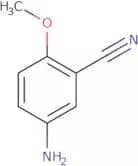
CAS:<p>Please enquire for more information about H-Glu-Leu-Asp-[(2R,4S,5S)-5-amino-4-hydroxy-2,7-dimethyl-octanoyl]-Val-Glu-Phe-Gly-Gly-D-Arg-D-Arg-D-Arg-D-Arg-D-Arg-D-Arg-D-Arg-D-A rg-D-Arg-OH trifluoroacetate salt including the price, delivery time and more detailed product information at the technical inquiry form on this page</p>Formula:C102H183N45O26Purity:Min. 95%Molecular weight:2,455.83 g/mol5-Amino-2-methoxybenzonitrile
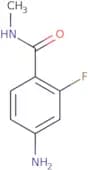
CAS:<p>Please enquire for more information about 5-Amino-2-methoxybenzonitrile including the price, delivery time and more detailed product information at the technical inquiry form on this page</p>Formula:C8H8N2OPurity:Min. 95%Molecular weight:148.16 g/molN-Methyl-2-fluoro-4-aminobenzamide
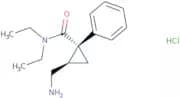
CAS:<p>N-Methyl-2-fluoro-4-aminobenzamide is a toxic compound that is commonly used as a reagent in chemical synthesis and research. It has been studied for its potential use in medicine, particularly in the treatment of castration-resistant prostate cancer. N-Methyl-2-fluoro-4-aminobenzamide acts as a nucleophilic agent, participating in reactions that involve the addition of an acyl group to a target molecule. Its stable formyl group allows for efficient reaction yields and reliable results. However, due to its toxic nature, caution must be exercised when handling this compound.</p>Formula:C8H9FN2OPurity:Min. 95%Molecular weight:168.17 g/mol(E)-2-(Aminomethyl)-N,N-diethyl-1-phenylcyclopropanecarboxamideHydrochloride
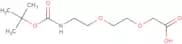
CAS:Controlled Product<p>Levomilnacipran is a serotonin-norepinephrine reuptake inhibitor (SNRI) that is used for the treatment of major depressive disorder and fibromyalgia. It has been shown to have antidepressant effects in patients with major depressive disorder and fibromyalgia. Levomilnacipran inhibits the reuptake of serotonin and norepinephrine by blocking the transporter proteins in these neurotransmitter pathways, increasing their availability to interact with receptors in the brain. Levomilnacipran also has been found to inhibit aminotransferase activity, which may be responsible for its hepatotoxicity.</p>Formula:C15H23ClN2OPurity:Min. 95%Molecular weight:282.81 g/molN-(tert-Butyloxycarbonyl)-8-amino-3,6-dioxaoctanoic acid
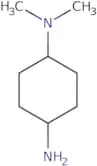
CAS:<p>N-(tert-Butyloxycarbonyl)-8-amino-3,6-dioxaoctanoic acid is a potential drug for hypercholesterolemia. It has been shown to lower LDL cholesterol and triglycerides levels in monkeys. The compound is orally bioavailable and can be taken orally. This drug also has the potential to be developed as a PCSK9 (proprotein convertase subtilisin/kexin type 9) inhibitor.</p>Formula:C11H21NO6Purity:Min. 95%Color and Shape:Clear LiquidMolecular weight:263.29 g/molN,N-Dimethyl-cyclohexane-1,4-diamine
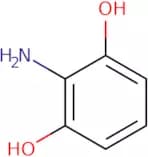
CAS:<p>Please enquire for more information about N,N-Dimethyl-cyclohexane-1,4-diamine including the price, delivery time and more detailed product information at the technical inquiry form on this page</p>Formula:C8H18N2Purity:Min. 95%Molecular weight:142.24 g/mol2-Aminoresorcinol
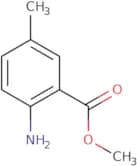
CAS:<p>2-Aminoresorcinol is a synthetic chemical compound that inhibits the reaction of amines with chlorine atoms. It is used as an intermediate in the production of resorcinol and 2-aminophenol. The reaction mechanism involves the formation of a chloramine (chlorine atom attached to an amine) which, in turn, reacts with malonic acid to produce an intermediate that undergoes intramolecular hydrogen transfer. This reaction results in the formation of a chloroform molecule. A second step involves hydroxylation by hydrochloric acid, which leads to the formation of chloral hydrate. In this way, 2-aminoresorcinol can be used for the synthesis of both resorcinol and 2-aminophenol. 2-Aminoresorcinol is also known for its inhibitory effects on certain reactions involving amines and sulfur compounds such as thiourea and carbonyl compounds such as malonic acid.</p>Formula:C6H7NO2Purity:Min. 95%Color and Shape:White To Dark Brown SolidMolecular weight:125.13 g/molMethyl 2-amino-5-methylbenzoate
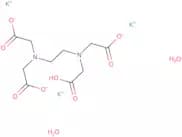
CAS:<p>Methyl 2-amino-5-methylbenzoate is a chemical substance that is a precursor for the synthesis of picolinic acid. It also has an antitumor activity against various cancer cell lines and microcapsules. In addition, methyl 2-amino-5-methylbenzoate can be used as a reagent in the preparation of amines and sample preparation. The chemical reactions of methyl 2-amino-5-methylbenzoate are catalyzed by hydrochloric acid and sulfamoyl chloride. This chemical substance reacts with carbonyl groups to form nitro compounds.</p>Formula:C9H11NO2Purity:Min. 95%Molecular weight:165.19 g/molEthylenediaminetetraacetic acid tripotassium salt dihydrate
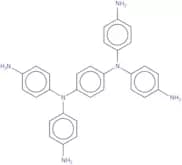
CAS:<p>Ethylenediaminetetraacetic acid tripotassium salt dihydrate is an anticoagulant that can be used as a coagulant for blood samples. It is often used in polymerase chain reactions to synthesize DNA, or to isolate and purify genomic DNA. This compound has ferroelectric properties and can be used as a target cell in optical imaging applications. Ethylenediaminetetraacetic acid tripotassium salt dihydrate is also used in the production of polyurethanes and as a polymerization inhibitor in cinnamon oil.</p>Formula:C10H13K3N2O8·2H2OPurity:Min. 95%Molecular weight:442.54 g/molN,N,N',N'-Tetrakis(4-aminophenyl)-1,4-phenylenediamine
CAS:<p>TPD is a versatile building block and intermediate that is used as a research chemical and speciality chemical. TPD is an important and useful scaffold in organic chemistry, which can be used to produce various compounds. It is also a reagent for the synthesis of low-molecular-weight compounds with a wide range of applications, such as pharmaceuticals, agrochemicals, dyes, fragrances, etc. TPD is soluble in water and can be easily purified by recrystallization or column chromatography. TPD has been shown to have high quality and purity because it does not contain any impurities.</p>Formula:C30H28N6Purity:Min. 95%Color and Shape:Brown PowderMolecular weight:472.59 g/mol(2-{Ethyl-[4-(4-nitro-phenylazo)-phenyl]-amino}-ethoxy)-acetic acid-4-nitro-phenyl ester
CAS:<p>Please enquire for more information about (2-{Ethyl-[4-(4-nitro-phenylazo)-phenyl]-amino}-ethoxy)-acetic acid-4-nitro-phenyl ester including the price, delivery time and more detailed product information at the technical inquiry form on this page</p>Formula:C24H23N5O7Purity:Min. 95%Molecular weight:493.47 g/mol([D2]Gly4)-Cholecystokinin Octapeptide (sulfated) ammonium salt
<p>Please enquire for more information about ([D2]Gly4)-Cholecystokinin Octapeptide (sulfated) ammonium salt including the price, delivery time and more detailed product information at the technical inquiry form on this page</p>Formula:C49H60D2N10O16S3Purity:Min. 95%Molecular weight:1,145.28 g/mol3-Amino-2-bromo-6-chloropyridine
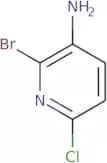
CAS:<p>Please enquire for more information about 3-Amino-2-bromo-6-chloropyridine including the price, delivery time and more detailed product information at the technical inquiry form on this page</p>Formula:C5H4BrClN2Purity:Min. 95%Molecular weight:207.46 g/mol4-Aminobutyrophenone
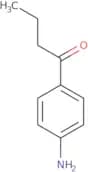
CAS:<p>4-Aminobutyrophenone is a butyrophenone, a nitro compound that is the amine derivative of 4-aminobutyric acid. This product is used as a control agent in pest control and as an intermediate for pharmaceuticals and dyes. It has been used to produce methemoglobin, which is used to treat nitrate poisoning. 4-Aminobutyrophenone undergoes acylation reactions with chloride or sulfoxide groups to form chlorohydrins and thiohydrins respectively. These products are bioisosteres of the carbonyl group, which can be hydrolyzed with acid or alkali to produce carboxylic acids or alcohols respectively. Friedel-Crafts acylation with phenol gives benzoylphenylhydroxylamine, which can be oxidized by hydrogen peroxide to give the corresponding nitro compound.</p>Formula:C10H13NOColor and Shape:PowderMolecular weight:163.22 g/mol1-Fluoro-3-phenylpropan-2-amine
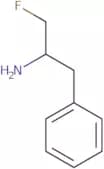
CAS:Controlled Product<p>Please enquire for more information about 1-Fluoro-3-phenylpropan-2-amine including the price, delivery time and more detailed product information at the technical inquiry form on this page</p>Formula:C9H12FNPurity:Min. 95%Color and Shape:Clear LiquidMolecular weight:153.2 g/mol12-Amino minocycline
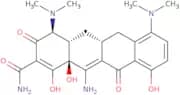
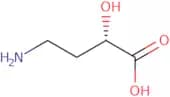
CAS:<p>Please enquire for more information about 12-Amino minocycline including the price, delivery time and more detailed product information at the technical inquiry form on this page</p>Formula:C23H28N4O6Purity:90% MinMolecular weight:456.49 g/mol(S)-(-)-4-Amino-2-hydroxybutyric acid
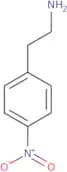
CAS:<p>(S)-(-)-4-Amino-2-hydroxybutyric acid is an antibacterial agent that binds to the bacterial ribosome and prevents protein synthesis. It has been shown to be active against a range of bacteria, including Mycobacterium tuberculosis, Salmonella typhimurium, Staphylococcus aureus, and Streptococcus pyogenes. (S)-(-)-4-Amino-2-hydroxybutyric acid is also used in the analytical determination of other substances such as trifluoroacetic acid and malic acid. The pH optimum for this compound's activity is between 6.5 and 8.5.</p>Formula:C4H9NO3Purity:Min. 95%Color and Shape:White To Yellow SolidMolecular weight:119.12 g/mol4-Nitrophenethylamine
CAS:Controlled Product<p>4-Nitrophenethylamine is a synthetic chemical that is used as an antigen to raise antibodies. It is used in the detection of chemical substances that are associated with the production of histamine and acetylcholine. This chemical has been shown to inhibit the reaction between nitro and acylation, which can lead to the formation of carcinogenic nitrosamines. 4-Nitrophenethylamine also has an inhibitory effect on oxidases and amines, which are enzymes found in cells. This chemical binds to amide groups in proteins and inhibits their activity.</p>Formula:C8H10N2O2Purity:Min. 95%Color and Shape:LiquidMolecular weight:166.18 g/mol


![H-Glu-Leu-Asp-[(2R,4S,5S)-5-amino-4-hydroxy-2,7-dimethyl-octanoyl]-Val-Glu-Phe-Gly-Gly-D-Arg-D-Arg…](/_next/image/?url=https%3A%2Fstatic.cymitquimica.com%2Fproducts%2F3D%2Fthumb-webp%2FFG111107.webp&w=3840&q=75)
![(2-{Ethyl-[4-(4-nitro-phenylazo)-phenyl]-amino}-ethoxy)-acetic acid-4-nitro-phenyl ester](/_next/image/?url=https%3A%2Fstatic.cymitquimica.com%2Fproducts%2F3D%2Fthumb-webp%2FFE111186.webp&w=3840&q=75)
![([D2]Gly4)-Cholecystokinin Octapeptide (sulfated) ammonium salt](/_next/image/?url=https%3A%2Fstatic.cymitquimica.com%2Fproducts%2F3D%2Fthumb-webp%2FFG110020.webp&w=3840&q=75)