Amines
Amines are a set of molecules containing an amino functional group (derived from ammonia). This category includes amines at any level of substitution : primary, secondary, tertiary, and ammonium salts. Amines are fundamental in organic synthesis and are widely used in pharmaceuticals, agrochemicals, and materials science. At CymitQuimica, we provide a comprehensive selection of amines to meet your research and industrial needs. Our range ensures access to various amines for diverse chemical processes and innovative research.
Subcategories of "Amines"
- Nitrosamines(2,606 products)
- Primary Amines(30,821 products)
- Quaternary Ammonium Cations and Salts(1,099 products)
- Secondary Amines(20,817 products)
- Tertiary Amines(17,117 products)
Found 8778 products of "Amines"
Sort by
Purity (%)
0
100
|
0
|
50
|
90
|
95
|
100
12-Amino minocycline
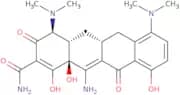
CAS:<p>Please enquire for more information about 12-Amino minocycline including the price, delivery time and more detailed product information at the technical inquiry form on this page</p>Formula:C23H28N4O6Purity:90% MinMolecular weight:456.49 g/mol(Deamino-Cys1,Leu4,Lys8)-Vasopressin trifluoroacetate salt
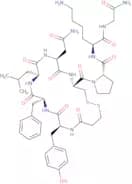
CAS:<p>Vasopressin is a hormone that belongs to the family of peptide hormones. Vasopressin has been shown to be localized in many tissues, including the brain, where it acts as a neurotransmitter and neuromodulator. Vasopressin is released by the paraventricular nucleus of the hypothalamus and stored in the posterior pituitary gland, from which it is released into the circulation when needed. Vasopressin binds to V1 receptors and causes an increase in cytosolic calcium levels through activation of voltage-gated calcium channels. It also stimulates cell growth and proliferation through activation of tyrosine kinase receptors on cells.</p>Formula:C47H67N11O11S2Purity:Min. 95%Molecular weight:1,026.23 g/mol2-[(1S)-1-Aminopropyl]-5-fluoro-3-phenyl-4(3H)-quinazolinone
CAS:Controlled Product<p>Intermediate in the synthesis of idelalisib (CAL 101)</p>Formula:C17H16FN3OPurity:Min. 95%Molecular weight:297.33 g/mol1-Aminononadecane
CAS:<p>1-Aminononadecane is a monolayer, which is a type of thin film that consists of two layers of molecules. It consists of fatty acids, which are long-chain carboxylic acid molecules, and particle, which is the smallest part of a substance. 1-Aminononadecane has been shown to be biocompatible with cells when mixed with amines, such as amino acids and proteins. The film also has phase transition temperature between -20°C and +100°C, viscosity values that range from 10-6 to 10-1 Pa·s for polymer films (10 Pa·s for pure 1-aminononadecane), reaction vessel where it is made in an organic solvent or water at neutral pH, and chemical structures that include both aromatic hydrocarbons and unsaturated alkyl chains.</p>Formula:C19H41NPurity:Min. 95%Color and Shape:White PowderMolecular weight:283.54 g/mol2-Bromobenzo[d]thiazol-6-amine
CAS:<p>Please enquire for more information about 2-Bromobenzo[d]thiazol-6-amine including the price, delivery time and more detailed product information at the technical inquiry form on this page</p>Formula:C7H5BrN2SPurity:Min. 95%Molecular weight:229.1 g/mol(2R)-2-Aminopropanamide
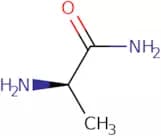
CAS:<p>(2R)-2-Aminopropanamide is a chemical compound that is classified as an amide. It has been shown to inhibit bacterial growth and induce apoptosis in mammalian cells, but not in bacteria. This drug has a number of hydrogen bonding interactions with the carbonyl group and amide functional groups and can bind to affinity ligands with hydrogen bonding interactions. (2R)-2-Aminopropanamide inhibits the activity of enzymes that are involved in the synthesis of d-alanine, which is a precursor for protein synthesis. It also inhibits the enzyme glutamine synthase, which plays a key role in building up nitrogen reserves in bacteria. The drug binds to DNA by forming hydrogen bonds with the phosphate backbone and intercalates into double-stranded DNA by forming van der Waals interactions with base pairs.</p>Formula:C3H8N2OPurity:Min. 95%Molecular weight:88.11 g/molFmoc-L-α-aminobutyric acid
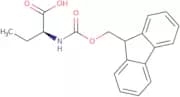
CAS:<p>Fmoc-L-alpha-aminobutyric acid is a synthetic amino acid that is used as a linker in solid-phase peptide synthesis. It is also used to synthesize analogs of the serine protease NS3, which are postulated to inhibit hepatitis C virus replication by preventing the release of viral RNA from infected cells. Fmoc-L-alpha-aminobutyric acid has been shown to have anti-viral activity against the influenza virus and HIV.</p>Formula:C19H19NO4Purity:Min. 98 Area-%Color and Shape:PowderMolecular weight:325.36 g/mol(S)-N-Carbobenzyloxy-4-amino-2-hydroxybutyric acid
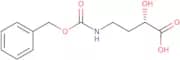
CAS:<p>(S)-N-Carbobenzyloxy-4-amino-2-hydroxybutyric acid is a benzene ring with a carboxylic acid group. It has the ability to modify polylactic acid, polycarbonate, and other polymers. The chain can be modified to include amino groups or antibacterial groups. (S)-N-Carbobenzyloxy-4-amino-2-hydroxybutyric acid also has antibacterial properties and is compatible with polylactic acid, which makes it ideal for use in polymer modifications.</p>Formula:C12H15NO5Purity:Min. 95%Molecular weight:253.25 g/mol2-Amino-3-fluorobenzoic acid ethyl ester
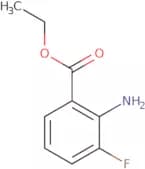
CAS:<p>Please enquire for more information about 2-Amino-3-fluorobenzoic acid ethyl ester including the price, delivery time and more detailed product information at the technical inquiry form on this page</p>Formula:C9H10FNO2Purity:Min. 95%Color and Shape:PowderMolecular weight:183.18 g/mol(2S,3S,5S)-5-tert-Butyloxycarbonylamino-2-amino-3-hydroxy-1,6-diphenylhexane succinate
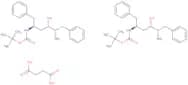
CAS:<p>Please enquire for more information about (2S,3S,5S)-5-tert-Butyloxycarbonylamino-2-amino-3-hydroxy-1,6-diphenylhexane succinate including the price, delivery time and more detailed product information at the technical inquiry form on this page</p>Formula:(C23H32N2O3)2•C4H6O4Purity:Min. 95%Molecular weight:887.11 g/mol2,5-Diaminopyridine
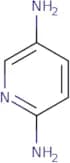
CAS:<p>2,5-Diaminopyridine is an organic compound that is expressed in the human body. It has been shown to inhibit the growth of cells in culture by binding to their DNA and preventing the production of hydrogen bonds. 2,5-Diaminopyridine has also been used clinically to treat inflammatory diseases such as rheumatoid arthritis. The hydrogen bond formation and inhibition of cell growth occurs at a low concentration of 2,5-Diaminopyridine. This drug may have potential as a therapeutic agent for cancer treatment because it inhibits the transcription factor CXCR4.</p>Formula:C5H7N3Purity:Min. 98.0 Area-%Color and Shape:Yellow To Purple To Brown SolidMolecular weight:109.13 g/molN-(tert-Butyloxycarbonyl)-8-amino-3,6-dioxaoctanoic acid
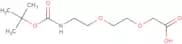
CAS:<p>N-(tert-Butyloxycarbonyl)-8-amino-3,6-dioxaoctanoic acid is a potential drug for hypercholesterolemia. It has been shown to lower LDL cholesterol and triglycerides levels in monkeys. The compound is orally bioavailable and can be taken orally. This drug also has the potential to be developed as a PCSK9 (proprotein convertase subtilisin/kexin type 9) inhibitor.</p>Formula:C11H21NO6Purity:Min. 95%Color and Shape:Clear LiquidMolecular weight:263.29 g/molPent-4-enylamine
CAS:<p>Pent-4-enylamine is a nitrogen nucleophile that can react with alkenes to form compounds. Pent-4-enylamine reacts quickly with alcohols and ethers in the presence of an acid catalyst to produce an alkene. Pent-4-enylamine has been used in food chemistry as a reactive intermediate for the formation of functional groups, such as amines, hydroxyl groups, and nitriles. It is also a model system for studying aminoalkenes and their reactions with other functional groups. Pent-4-enylamine has been shown to be a reactive heterocycle that forms 5 membered heteroaryl rings using structural analysis and model system studies.</p>Formula:C5H11NPurity:Min. 95%Molecular weight:85.15 g/mol(R)-3-[((tert-Butoxy)carbonyl)amino]-4-(2,5-difluorophenyl)butanoic acid
CAS:<p>Please enquire for more information about (R)-3-[((tert-Butoxy)carbonyl)amino]-4-(2,5-difluorophenyl)butanoic acid including the price, delivery time and more detailed product information at the technical inquiry form on this page</p>Formula:C15H19F2NO4Purity:Min. 95%Molecular weight:315.31 g/molAminocaproic acid
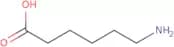
CAS:<p>Aminocaproic acid is a non-specific lysing agent that is used in the treatment of acute blood clots. Aminocaproic acid has minimal toxicity and low-dose effects, and can be used for the treatment of thrombotic disorders. It also has biological properties that are different from those of aminocaproate, which can lead to a more rapid dissolution of the clot. Aminocaproic acid is an organic compound that belongs to the class of dicarboxylic acids. It is synthesized from two molecules of aminoacetic acid by the enzyme aminocaproic acid synthetase. The synthesis occurs in a two-step process: first, caprylic acid reacts with ATP to form aminopropyl-adenylate (APA), followed by hydrolysis by APA lyase to form aminocaproic acid.</p>Formula:C6H13NO2Color and Shape:PowderMolecular weight:131.17 g/molEthyl 3-(pyridin-2-ylamino)propanoate
CAS:<p>Ethyl 3-(pyridin-2-ylamino)propanoate is a thrombin inhibitor that can be used for the treatment of cancer. Ethyl 3-(pyridin-2-ylamino)propanoate is a reactive, profile compound with electrons and hydrogen bonds. It has been shown to have anticancer activity in vitro and in vivo, inhibiting tumor cell growth by inhibiting DNA synthesis. This molecule also has anti-inflammatory properties, which may be due to its ability to inhibit platelet aggregation.</p>Formula:C10H14N2O2Purity:Min. 95 Area-%Color and Shape:PowderMolecular weight:194.23 g/molN,4-Dimethyl-1-(phenylmethyl)-3-piperidinamine hydrochloride (1:2)
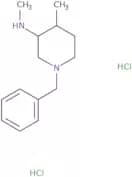
CAS:<p>Intermediate in the synthesis of tofacitinib</p>Formula:C14H24N2Cl2Purity:Min. 95%Molecular weight:291.26 g/mol3-[(Dimethylamino)methyl]-1,2,4-oxadiazol-5-amine hydrochloride
CAS:<p>3-[(Dimethylamino)methyl]-1,2,4-oxadiazol-5-amine hydrochloride is a versatile building block that is used as an intermediate in the synthesis of fine chemicals. It is also a useful scaffold for the synthesis of biologically active compounds and research chemicals. 3-[(Dimethylamino)methyl]-1,2,4-oxadiazol-5-amine hydrochloride can be prepared by reacting methylamine with 2-aminothiophenol in the presence of a base. This reagent is also useful for the preparation of other compounds such as carbamates and cyclic ureas.</p>Formula:C5H10N4O•HClPurity:Min. 95%Color and Shape:PowderMolecular weight:178.62 g/molMca-(Asn670,Leu671)-Amyloid β/A4 Protein Precursor770 (667-675)-Lys(Dnp) ammonium acetate salt
CAS:<p>Please enquire for more information about Mca-(Asn670,Leu671)-Amyloid beta/A4 Protein Precursor770 (667-675)-Lys(Dnp) ammonium acetate salt including the price, delivery time and more detailed product information at the technical inquiry form on this page</p>Formula:C68H88N14O27Purity:Min. 95%Molecular weight:1,533.5 g/molGly-Amyloid b-Protein (15-25)-Gly-ε-aminocaproyl(-Lys)6
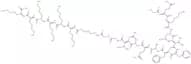
CAS:<p>Please enquire for more information about Gly-Amyloid b-Protein (15-25)-Gly-epsilon-aminocaproyl(-Lys)6 including the price, delivery time and more detailed product information at the technical inquiry form on this page</p>Formula:C105H178N28O26Purity:Min. 95%Molecular weight:2,248.71 g/mol

![2-[(1S)-1-Aminopropyl]-5-fluoro-3-phenyl-4(3H)-quinazolinone](/_next/image/?url=https%3A%2Fstatic.cymitquimica.com%2Fproducts%2F3D%2Fthumb-webp%2FFA96431.webp&w=3840&q=75)

![2-Bromobenzo[d]thiazol-6-amine](/_next/image/?url=https%3A%2Fstatic.cymitquimica.com%2Fproducts%2F3D%2Fthumb-webp%2FFB144124.webp&w=3840&q=75)

![(R)-3-[((tert-Butoxy)carbonyl)amino]-4-(2,5-difluorophenyl)butanoic acid](/_next/image/?url=https%3A%2Fstatic.cymitquimica.com%2Fproducts%2F3D%2Fthumb-webp%2FFB103971.webp&w=3840&q=75)

![3-[(Dimethylamino)methyl]-1,2,4-oxadiazol-5-amine hydrochloride](/_next/image/?url=https%3A%2Fstatic.cymitquimica.com%2Fproducts%2F3D%2Fthumb-webp%2FFD135937.webp&w=3840&q=75)