Amines
Amines are a set of molecules containing an amino functional group (derived from ammonia). This category includes amines at any level of substitution : primary, secondary, tertiary, and ammonium salts. Amines are fundamental in organic synthesis and are widely used in pharmaceuticals, agrochemicals, and materials science. At CymitQuimica, we provide a comprehensive selection of amines to meet your research and industrial needs. Our range ensures access to various amines for diverse chemical processes and innovative research.
Subcategories of "Amines"
- Nitrosamines(2,606 products)
- Primary Amines(30,805 products)
- Quaternary Ammonium Cations and Salts(1,099 products)
- Secondary Amines(20,809 products)
- Tertiary Amines(17,111 products)
Found 8777 products of "Amines"
Sort by
Purity (%)
0
100
|
0
|
50
|
90
|
95
|
100
4-Aminopicolinic acid
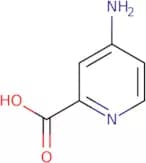
CAS:<p>4-Aminopicolinic acid is a synthetic amine that has been shown to activate plant science. 4-Aminopicolinic acid is a cyclic peptide with two subunits, one of which is 4-amino-3-pyridinecarboxylic acid. This compound has been synthesized from picolinic acid, an agriculturally important compound that is found in plant and animal tissues. The synthesis of 4-aminopicolinic acid involves the reaction of picolinic acid with nitrous oxide, followed by hydrolysis and oxidation to form the desired product. Hplc analyses have confirmed the presence of picolinic acid in extracts from various plants containing this compound.</p>Formula:C6H6N2O2Purity:Min. 95%Color and Shape:White To Beige Or Pink To Light Brown SolidMolecular weight:138.12 g/mol(2R,3S)-3-Amino-2-hydroxy-3-phenylpropanoic acid hydrochloride
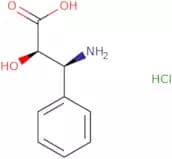
CAS:<p>(2R,3S)-3-Amino-2-hydroxy-3-phenylpropanoic acid hydrochloride is an organic compound that is used in the manufacture of taxol, an anticancer drug. It is synthesized by reacting chloroacetic acid with a metal hydroxide, such as sodium hydroxide or potassium hydroxide. The reaction proceeds spontaneously to form the enantiomerically pure (2R,3S) form and unreacted (2S,3R) form. The (2R,3S) enantiomer has been found to be more reactive than the (2S,3R) form. Quaternary ammonium salts are formed when the (2R,3S) enantiomer reacts with quaternary ammonium compounds such as benzyltrimethylammonium chloride. This compound can also be used in catalytic reactions to produce drugs such as carbapenems and pen</p>Formula:C9H12ClNO3Purity:Min. 95%Molecular weight:217.65 g/molN-Methyl-N-((3R,4R)-4-methylpiperidin-3-yl)-7H-pyrrolo[2,3-d]pyrimidin-4-amine
CAS:<p>Intermediate in the synthesis of tofacitinib</p>Formula:C13H19N5Purity:Min. 95%Molecular weight:245.32 g/mol1,3,4-Oxadiazol-2-amine
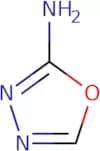
CAS:<p>1,3,4-Oxadiazol-2-amine is a synthetic compound that belongs to the group of peptidomimetics. It is an alkylating agent that has been shown to inhibit glycogen synthase kinase 3 (GSK3) and prevent the formation of amyloid plaques in Alzheimer's disease. 1,3,4-Oxadiazol-2-amine also has antibacterial activity against Gram-positive and Gram-negative bacteria. This compound can be synthesized by reacting chloroacetaldehyde with 2-(2'-aminophenoxy)ethanol in the presence of acid. The molecular weight for this compound is 167.260 g/mol. Crystals are obtained from melting the substance at 180 °C under vacuum and then allowing it to cool down to room temperature over a period of 4 hours. The crystal system for this molecule is monoclinic and its space group is P21/c. X-ray diffraction</p>Formula:C2H3N3OPurity:Min. 95%Molecular weight:85.06 g/mol5-Amino-2-methoxy-4-methylpyridine
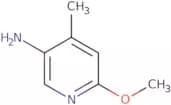
CAS:<p>5-Amino-2-methoxy-4-methylpyridine is a small molecule that inhibits bromodomains. Bromodomains are protein domains that bind to acetylated lysine residues on histones. 5-Amino-2-methoxy-4-methylpyridine binds to the bromodomain, preventing the acetylated lysine residues from binding with other proteins and inhibiting transcription. This drug has been shown to be effective in treating prostate cancer by interacting with the androgen receptor. 5-Amino-2-methoxy-4-methylpyridine also interacts with ATPase, which may lead to increased levels of ATP production, and has been shown to have antitumor effects in vitro.</p>Formula:C7H10N2OPurity:Min. 95%Molecular weight:138.17 g/molN,N-Dimethyl-1,1,2,2-tetrafluoroethylamine
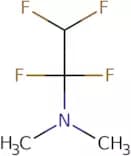
CAS:<p>Dimethyl 1,1,2,2-tetrafluoroethylamine (DMTFEA) is a fluorinated compound that contains a cyclohexane ring. It can be synthesized using pyrazoles and reaction solution. DMTFEA has functional groups such as halides, fluorine and chlorine. DMTFEA is acidic and has the structural formula of CF3CF=N-CH2CH2COOH. This chemical can also be synthesized by reacting chloroacetic acid with dimethylamine. The pharmacokinetic properties of DMTFEA are not well-known, but it does have ester compounds that are synthetic in nature.</p>Formula:C4H7F4NPurity:Min. 95%Molecular weight:145.1 g/molMethyl 2,3-diamino-5-bromobenzoate
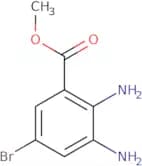
CAS:<p>Please enquire for more information about Methyl 2,3-diamino-5-bromobenzoate including the price, delivery time and more detailed product information at the technical inquiry form on this page</p>Formula:C8H9BrN2O2Purity:Min. 95%Molecular weight:245.07 g/molMethyl 3-amino-5-(trifluoromethyl)benzoate
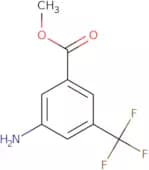
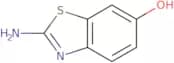
CAS:<p>Please enquire for more information about Methyl 3-amino-5-(trifluoromethyl)benzoate including the price, delivery time and more detailed product information at the technical inquiry form on this page</p>Formula:C9H8F3NO2Purity:Min. 95%Molecular weight:219.16 g/mol2-Amino-6-hydroxybenzothiazole
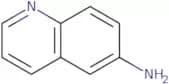
CAS:<p>2-Amino-6-hydroxybenzothiazole is a chemical compound that has been shown to have chemiluminescence properties. It is produced in vivo by the synthetase enzyme from the amino acid L-phenylalanine and hydroxybenzothiazole. The compound is expressed in basophilic leukemia cells, which are cells that stain with basic dyes. 2-Amino-6-hydroxybenzothiazole can be used as a marker of these cells in vitro. A second order rate constant of 1.5 × 10 M−1 s−1 was determined for this reaction, which is consistent with other reactions of this type. 2-Amino-6-hydroxybenzothiazole has also been shown to be effective at treating cancer and inflammatory bowel disease by enhancing growth factor production and inhibiting cell proliferation.</p>Formula:C7H6N2OSPurity:Min. 95%Color and Shape:White To Grey SolidMolecular weight:166.2 g/mol6-Aminoquinoline
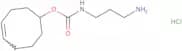
CAS:<p>6-Aminoquinoline is a chemical compound that is used as an intermediate in the synthesis of other compounds. It has been found to be effective in inhibiting the growth of human cancer cells and cell lines by binding to amines, which are important for cell proliferation. 6-Aminoquinoline also inhibits epidermal growth factor (EGF) and its receptor, which may be due to its ability to inhibit the transfer of phosphate groups from ATP to EGF. 6-Nitroquinoline, which is derived from 6-aminoquinoline, has been shown to have antiinflammatory activity.</p>Formula:C9H8N2Purity:Min. 95%Color and Shape:Yellow PowderMolecular weight:144.17 g/molTCO-amine hydrochloride
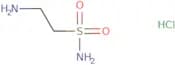
CAS:<p>Please enquire for more information about TCO-amine hydrochloride including the price, delivery time and more detailed product information at the technical inquiry form on this page</p>Formula:C12H22N2O2•HClPurity:Min. 95%Color and Shape:PowderMolecular weight:262.78 g/mol2-Aminoethanesulphonamide monohydrochloride
CAS:<p>2-Aminoethanesulphonamide monohydrochloride is a perovskite with a hexagonal shape. It has been shown to interact with the pharmacophore of the enzyme cytochrome P450, and it has been optimized for the reaction by altering its structure. This product is soluble in gaseous form, but can also be used as a solid. 2-Aminoethanesulphonamide monohydrochloride has an absorption maximum at 325 nm and emits fluorescence at 420 nm. It is used in devices that detect ionizing radiation.</p>Formula:C2H8N2O2S•HClPurity:Min. 95%Color and Shape:PowderMolecular weight:160.62 g/molAmmonium molybdate tetrahydrate - ACS
CAS:<p>Ammonium molybdate tetrahydrate (AMT) is a molybdenum compound with the chemical formula (NH4)6Mo7O24·4H2O. It is a yellow crystalline solid that is soluble in water and n-hexane. AMT has been clinically used for the treatment of Wilson's disease, an inherited disorder that causes copper to accumulate in the body. AMT binds to copper ions and prevents them from being absorbed into the bloodstream. The rate of ATP production increases when AMT is added to cells, which may be due to its effect on electron transport or because it inhibits ATPase activity.</p>Formula:(NH4)6Mo7O24•(H2O)4Purity:Min. 95%Color and Shape:White Clear LiquidMolecular weight:1,236 g/mol4-Nitrophenethylamine
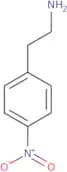
CAS:Controlled Product<p>4-Nitrophenethylamine is a synthetic chemical that is used as an antigen to raise antibodies. It is used in the detection of chemical substances that are associated with the production of histamine and acetylcholine. This chemical has been shown to inhibit the reaction between nitro and acylation, which can lead to the formation of carcinogenic nitrosamines. 4-Nitrophenethylamine also has an inhibitory effect on oxidases and amines, which are enzymes found in cells. This chemical binds to amide groups in proteins and inhibits their activity.</p>Formula:C8H10N2O2Purity:Min. 95%Color and Shape:LiquidMolecular weight:166.18 g/molTetraethylammonium tetrafluoroborate
CAS:<p>Tetraethylammonium tetrafluoroborate is a diamagnetic chemical species that reacts with water, forming the hydrated salt tetraethylammonium hydroxide. Tetraethylammonium tetrafluoroborate has a high resistance to oxidation and reduction reactions. It can be used as an electrolyte in electrochemistry and as a thermal expansion agent in plastics. The potentials of this substance are around +1 V, which makes it useful for electrochemical impedance spectroscopy. Tetraethylammonium tetrafluoroborate is activated by organic solvents, but not by water vapor.</p>Formula:C8H20N·BF4Color and Shape:White Off-White PowderMolecular weight:217.06 g/molTridodecylmethylammonium chloride
CAS:<p>Tridodecylmethylammonium chloride (TDMAC) is a biocompatible and non-toxic polymer that is used in the manufacture of sensors. TDMAC can be used as a coating on electrodes to increase their sensitivity to changes in pH and ionic strength. TDMAC is also used as a blood substitute, and has been shown to have anticoagulant properties. TDMAC has been shown to be effective at preventing heparin-induced thrombocytopenia when combined with dextran sulfate. This polymer has also been studied for use in biosensors and bioelectrochemical impedance spectroscopy devices.</p>Formula:C37H78ClNPurity:Min. 95%Color and Shape:White To Off-White SolidMolecular weight:572.47 g/molN-1-Z-1,6-diaminohexane·HCl
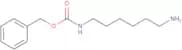
CAS:<p>Please enquire for more information about N-1-Z-1,6-diaminohexane·HCl including the price, delivery time and more detailed product information at the technical inquiry form on this page</p>Formula:C14H22N2O2·HClPurity:Min. 95%Molecular weight:286.8 g/mol6-Aminopicolinamide
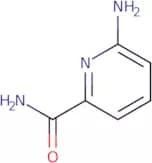
CAS:<p>6-Aminopicolinamide is a metabolite of nicotinamide, which can be found in the urine of humans and animals. 6-Aminopicolinamide has been shown to have anti-leukemic activity against experimental leukemias in animals. The mechanism of action is not well understood but may involve inhibition of nucleotide synthesis or the inhibition of dehydrogenase activity. Clinical trials are underway to determine its efficacy as an anti-tumor agent.</p>Formula:C6H7N3OPurity:Min. 95%Molecular weight:137.14 g/mol2-[[2-(Dimethylaminomethyl)-1,3-thiazol-4-yl]methylsulfanyl]ethanamine
CAS:<p>2-[[2-(Dimethylaminomethyl)-1,3-Thiazol-4-Yl]Methylsulfanyl]Ethanamine is a compound that exhibits unique characteristics and properties. It has a high viscosity and is commonly used as a plasticizer in polyvinyl materials. The compound contains hydroxyl groups that contribute to its versatility in various applications.<br><br>One notable feature of 2-[[2-(Dimethylaminomethyl)-1,3-Thiazol-4-Yl]Methylsulfanyl]Ethanamine is its ability to interact with TGF-beta (transforming growth factor beta), a protein involved in cell growth and differentiation. This interaction can modulate the signaling pathways regulated by TGF-beta, making it potentially useful in biomedical research.<br><br>The compound also possesses photoreactive properties, particularly when combined with benzoate derivatives. This makes it suitable for use in photoreactions and other light-induced processes.<br><br>Additionally, 2-[[2</p>Formula:C9H17N3S2Purity:Min. 95%Molecular weight:231.38 g/mol4-Aminophenethyl alcohol
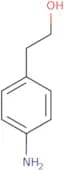
CAS:<p>4-Aminophenethyl alcohol is a monosubstituted, basic compound that is used in the laboratory as a cell culture medium supplement to promote growth of fibroblasts. This compound has been shown to stimulate human intestinal cells and human peripheral blood mononuclear cells. 4-Aminophenethyl alcohol acts as a hydroxyl group donor, which may be due to its ability to form hydrogen ions when reacted with sodium hydroxide solution. The reaction of this compound with diazonium salt produces an intermediate, which can be hydrolyzed by the addition of sodium hydroxide solution. The resultant chloride ion reacts with the aminophenethyldihydroxylamine (APDA) moiety to produce APDCl. This product has been shown to increase the population growth rate of fibroblasts in culture by causing DNA synthesis and protein synthesis. Linear regression analysis revealed that there was no statistically significant difference between the control and experimental groups for either DNA</p>Formula:C8H11NOPurity:Min. 95%Molecular weight:137.18 g/mol

![N-Methyl-N-((3R,4R)-4-methylpiperidin-3-yl)-7H-pyrrolo[2,3-d]pyrimidin-4-amine](/_next/image/?url=https%3A%2Fstatic.cymitquimica.com%2Fproducts%2F3D%2Fthumb-webp%2FFM154245.webp&w=3840&q=75)


![2-[[2-(Dimethylaminomethyl)-1,3-thiazol-4-yl]methylsulfanyl]ethanamine](/_next/image/?url=https%3A%2Fstatic.cymitquimica.com%2Fproducts%2F3D%2Fthumb-webp%2FFD22345.webp&w=3840&q=75)