Amines
Amines are a set of molecules containing an amino functional group (derived from ammonia). This category includes amines at any level of substitution : primary, secondary, tertiary, and ammonium salts. Amines are fundamental in organic synthesis and are widely used in pharmaceuticals, agrochemicals, and materials science. At CymitQuimica, we provide a comprehensive selection of amines to meet your research and industrial needs. Our range ensures access to various amines for diverse chemical processes and innovative research.
Subcategories of "Amines"
- Nitrosamines(2,606 products)
- Primary Amines(30,805 products)
- Quaternary Ammonium Cations and Salts(1,099 products)
- Secondary Amines(20,809 products)
- Tertiary Amines(17,111 products)
Found 8777 products of "Amines"
Sort by
Purity (%)
0
100
|
0
|
50
|
90
|
95
|
100
(2S)-2-Amino-4-methyl-1-[(2R)-2-methyloxiranyl]-1-pentanone trifluoroacetate
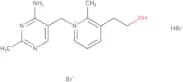
CAS:Controlled Product<p>Please enquire for more information about (2S)-2-Amino-4-methyl-1-[(2R)-2-methyloxiranyl]-1-pentanone trifluoroacetate including the price, delivery time and more detailed product information at the technical inquiry form on this page</p>Formula:C9H17NO2•C2HF3O2Purity:Min. 95%Color and Shape:PowderMolecular weight:285.26 g/molPyrithiamine
CAS:<p>Pyrithiamine is an antimicrobial agent that inhibits the growth of bacteria by disrupting the disulfide bond between two cysteine residues. It has been shown to inhibit the formation of bacterial spores, which are resistant to many antibiotics. Pyrithiamine also has antioxidant properties and can reduce oxidative stress in neurons, leading to neuronal death. This drug also has a strong effect on energy metabolism and may be used as a treatment for mitochondrial diseases.</p>Formula:C14H20Br2N4OPurity:Min. 95%Molecular weight:420.14 g/mol4-Amino-6-chloro-1,3-benzenedisulfonamide
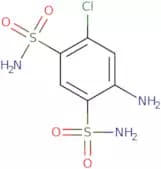
CAS:<p>4-Amino-6-chloro-1,3-benzenedisulfonamide is a natural substance that has been used in Chinese medicine preparations for the treatment of cardiac problems. It belongs to the class of organic compounds called benzenedisulfonamides. 4-Amino-6-chloro-1,3-benzenedisulfonamide is produced by the bacterial enzyme aminase from amino acid and benzoic acid. The adsorption mechanism of 4-Amino-6-chloro-1,3-benzenedisulfonamide is not fully understood, but it is believed that the benzyl groups are key players in this process. The high affinity of 4-Amino-6-chloro1,3 benzenedisulfonamide to proteins may be due to its ability to form hydrogen bonds with protein side chains, such as serine or threonine residues. 4 Amino</p>Formula:C6H8ClN3O4S2Purity:Min. 95%Color and Shape:White To Light Brown SolidMolecular weight:285.73 g/mol3-Amino-4-fluorobenzoic acid
CAS:<p>3-Amino-4-fluorobenzoic acid is a hydrocarbon that is used as an analgesic. It has been shown to be nontoxic and has analgesic effects in the intestinal tract. 3-Amino-4-fluorobenzoic acid also has radiopaque properties, which makes it useful for diagnosis and treatment of certain types of cancer and other tumors. The analgesic effect of 3-amino-4-fluorobenzoic acid may be due to its ability to act as a competitive antagonist at the N -methyl--aspartate (NMDA) receptor, which is important in pain perception.</p>Formula:C7H6FNO2Purity:Min. 95%Molecular weight:155.13 g/molRR,R)-(-)-N,N'-bis(3,5-di-tert-butylsalicylidene)-1,2-cyclohexanediamine
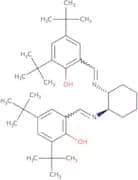
CAS:<p>RR,R)-(-)-N,N'-bis(3,5-di-tert-butylsalicylidene)-1,2-cyclohexanediamine is a coordination compound that is used as a catalyst in organic chemistry. It has been shown to catalyze the reaction of benzaldehyde with nitroethane to give phenylamine. RR,R)-(-)-N,N'-bis(3,5-di-tert-butylsalicylidene)-1,2-cyclohexanediamine also catalyzes the reaction of cyclohexanol with nitroethane to give phenylethylene. The selectivity of this catalyst depends on the site of adsorption and the ligand. This compound has been shown to be electrocatalytic by promoting the oxidation of anilines at a platinum electrode in water solution with an applied potential.</p>Formula:C36H54N2O2Purity:Min. 95%Molecular weight:546.83 g/molTetra-n-propylammonium hydrogen sulfate
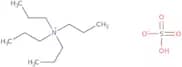
CAS:<p>Tetra-n-propylammonium hydrogen sulfate (TPAS) is a pharmaceutical dosage that consists of tetra-n-propylammonium ions and hydrogen sulfate anions. It has a diameter of about 2 nm, and can be detected by fluorescence techniques. TPAS has shown to have pharmacologic activities, including the ability to react with hydrogen fluoride in solution to form a precipitate that can be used as a sample preparation reagent. TPAS also has been shown to produce dehydrating effects on chloride in an alicyclic system.</p>Formula:C12H29NO4SPurity:Min. 95%Molecular weight:283.43 g/mol12-Amino minocycline
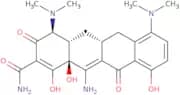
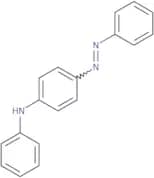
CAS:<p>Please enquire for more information about 12-Amino minocycline including the price, delivery time and more detailed product information at the technical inquiry form on this page</p>Formula:C23H28N4O6Purity:90% MinMolecular weight:456.49 g/mol4-(Phenylazo)diphenylamine
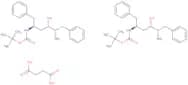
CAS:<p>4-(Phenylazo)diphenylamine is a phenylazodiphenyl amine that is soluble in nonpolar solvents. It has been used as a dye for the detection of heavy metals, such as mercury and lead. This compound can be synthesized by trimerization of nitrobenzene with ammonia and phenol in acidic conditions. 4-(Phenylazo)diphenylamine has been used for the detection of chloride ions, boron nitride, or other impurities in pharmaceutical products due to its high sensitivity.</p>Formula:C18H15N3Purity:Min. 95%Molecular weight:273.33 g/mol(2S,3S,5S)-5-tert-Butyloxycarbonylamino-2-amino-3-hydroxy-1,6-diphenylhexane succinate
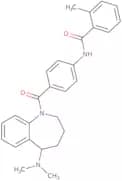
CAS:<p>Please enquire for more information about (2S,3S,5S)-5-tert-Butyloxycarbonylamino-2-amino-3-hydroxy-1,6-diphenylhexane succinate including the price, delivery time and more detailed product information at the technical inquiry form on this page</p>Formula:(C23H32N2O3)2•C4H6O4Purity:Min. 95%Molecular weight:887.11 g/molMozavaptan
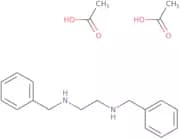
CAS:Controlled Product<p>Mozavaptan is a pharmacological agent that acts as a vasopressin V2 receptor antagonist. It is derived through synthetic chemical processes designed to target specific neurohormonal pathways in the body. Mozavaptan exerts its effects by inhibiting the action of vasopressin, a hormone that promotes water reabsorption in the kidneys. By blocking the vasopressin receptors, it enhances water excretion and corrects imbalances in electrolyte levels, particularly addressing conditions like hyponatremia.</p>Formula:C27H29N3O2Purity:Min. 98 Area-%Color and Shape:PowderMolecular weight:427.54 g/molN,N'-Dibenzylethylenediamine diacetate
CAS:Controlled Product<p>N,N'-Dibenzylethylenediamine diacetate is a diagnostic agent that is used to detect penicillin in blood samples. It reacts with the drug by forming a red-colored product, which can be detected with an ultraviolet light. This reaction is inhibited by cefapirin sodium and benzathine. The detection of penicillin in maternal blood has been shown to be significantly higher during the first trimester of pregnancy than during any other time period. Penicillin has also been shown to be effective against syphilis and streptococcal pharyngitis (strep throat), although it is not recommended for treatment trials because of its tendency to cause allergic reactions.</p>Formula:C16H20N2•(C2H4O2)2Purity:Min. 95%Molecular weight:360.45 g/mol4-[4-(4-Methyloxy-phenyl)-piperazin-1-yl]-phenylamine
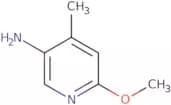
CAS:<p>4-Methyloxy-phenyl)-piperazin-1-yl]-phenylamine is an organic compound that has a reactive silicon group. It contains two phenyl groups, one of which is attached to the silicon. This compound exhibits phase equilibrium in water and can be used as a monomer for fabricating inorganic materials with orderly patterns, such as glass and metal oxides. This product also has impurities and can be grown at different rates depending on the conditions, such as temperature. The optical properties of 4-methyloxy-phenyl)-piperazin-1-yl]-phenylamine are dependent on its environment and it has been shown to have exothermic properties when reacting with iron powder.</p>Formula:C17H21N3OPurity:Min. 95%Molecular weight:283.37 g/mol5-Amino-2-methoxy-4-methylpyridine
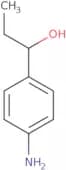
CAS:<p>5-Amino-2-methoxy-4-methylpyridine is a small molecule that inhibits bromodomains. Bromodomains are protein domains that bind to acetylated lysine residues on histones. 5-Amino-2-methoxy-4-methylpyridine binds to the bromodomain, preventing the acetylated lysine residues from binding with other proteins and inhibiting transcription. This drug has been shown to be effective in treating prostate cancer by interacting with the androgen receptor. 5-Amino-2-methoxy-4-methylpyridine also interacts with ATPase, which may lead to increased levels of ATP production, and has been shown to have antitumor effects in vitro.</p>Formula:C7H10N2OPurity:Min. 95%Molecular weight:138.17 g/mol4-Aminophenyl ethyl carbinol
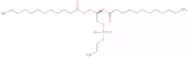
CAS:<p>Please enquire for more information about 4-Aminophenyl ethyl carbinol including the price, delivery time and more detailed product information at the technical inquiry form on this page</p>Formula:C9H13NOPurity:Min. 95%Color and Shape:PowderMolecular weight:151.21 g/mol1,2-Dilauroyl-sn-glycero-3-phosphoethanolamine
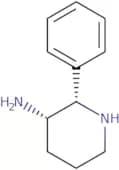
CAS:<p>1,2-Dilauroyl-sn-glycero-3-phosphoethanolamine (DLPE) is a lipid molecule that can induce phase transition in aqueous solutions. DLPE is an active ingredient in nonsteroidal anti-inflammatory drugs and has been shown to inhibit the activity of enzymes such as cyclooxygenase and lipoxygenase. DLPE also inhibits the growth of infectious organisms such as Escherichia coli and HIV by inhibiting receptor activity. DLPE binds to receptors on the surface of cells, which prevents these cells from releasing inflammatory cytokines.</p>Formula:C29H58NO8PPurity:Min. 95%Color and Shape:PowderMolecular weight:579.75 g/mol(2S,3S)-(-)-3-Amino-2-phenylpiperidine
CAS:<p>The process of asymmetric epoxidation is used to convert alkenes into epoxides in a single step. This reaction is catalyzed by the use of a chiral catalyst with an enantiomeric excess (ee) greater than 50%. The reactants are added to the catalyst and hydrogen peroxide, which oxidizes the alkenes. The resulting epoxides can be isolated from the reaction mixture by distillation or extraction. Factors that affect this reaction include the type of reactant, solvent, temperature, and pressure.</p>Formula:C11H16N2Purity:Min. 95%Molecular weight:176.26 g/mols-2-(4-Aminobenyl)-diethylenetriamine penta-tert-butyl acetate
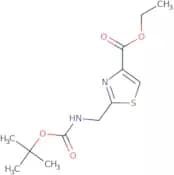
CAS:<p>Please enquire for more information about s-2-(4-Aminobenyl)-diethylenetriamine penta-tert-butyl acetate including the price, delivery time and more detailed product information at the technical inquiry form on this page</p>Purity:Min. 95%Color and Shape:Clear LiquidMolecular weight:779.02 g/molEthyl 2-((tert-butoxycarbonylamino)methyl)thiazole-4-carboxylate
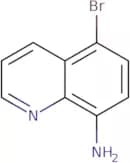
CAS:<p>Please enquire for more information about Ethyl 2-((tert-butoxycarbonylamino)methyl)thiazole-4-carboxylate including the price, delivery time and more detailed product information at the technical inquiry form on this page</p>Formula:C12H18N2O4SPurity:Min. 95%Molecular weight:286.35 g/mol5-Bromoquinolin-8-amine
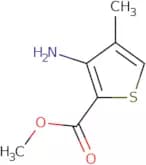
CAS:<p>5-Bromoquinolin-8-amine is a topoisomerase inhibitor that can be used as an antitumor agent. It has been shown to inhibit the growth of tumor cell lines and suppress the growth of colon carcinoma cells in rats and human colon carcinomas in mice. 5-Bromoquinolin-8-amine interacts with DNA, specifically inhibiting the formation of supercoiled DNA. This interaction may lead to the inhibition of tumor cell growth. 5-Bromoquinolin-8-amine also inhibits protein synthesis by interacting with proteins at the ribosomal level, leading to inhibited cell growth.</p>Formula:C9H7BrN2Purity:Min. 95%Molecular weight:223.07 g/mol3-Amino-4-methyl-thiophen-2-carboxylic acid methyl ester
CAS:<p>3-Amino-4-methylthiophen-2-carboxylic acid methyl ester (3AMTC) is a novel compound that has been shown to have antihypertensive activity, as well as other pharmacological actions. 3AMTC is an allosteric modulator of α7 nicotinic acetylcholine receptors, which are found in the central and peripheral nervous system. The efficacy of 3AMTC was evaluated using magnetic resonance spectroscopy to measure the effects on mouse tumor cells. This compound showed no carcinogenic potential, which may be due to its inability to cross the blood brain barrier.</p>Purity:Min. 95%Molecular weight:171.22 g/mol
![(2S)-2-Amino-4-methyl-1-[(2R)-2-methyloxiranyl]-1-pentanone trifluoroacetate](/_next/image/?url=https%3A%2Fstatic.cymitquimica.com%2Fproducts%2F3D%2Fthumb-webp%2FFA100028.webp&w=3840&q=75)


![4-[4-(4-Methyloxy-phenyl)-piperazin-1-yl]-phenylamine](/_next/image/?url=https%3A%2Fstatic.cymitquimica.com%2Fproducts%2F3D%2Fthumb-webp%2FFM25923.webp&w=3840&q=75)